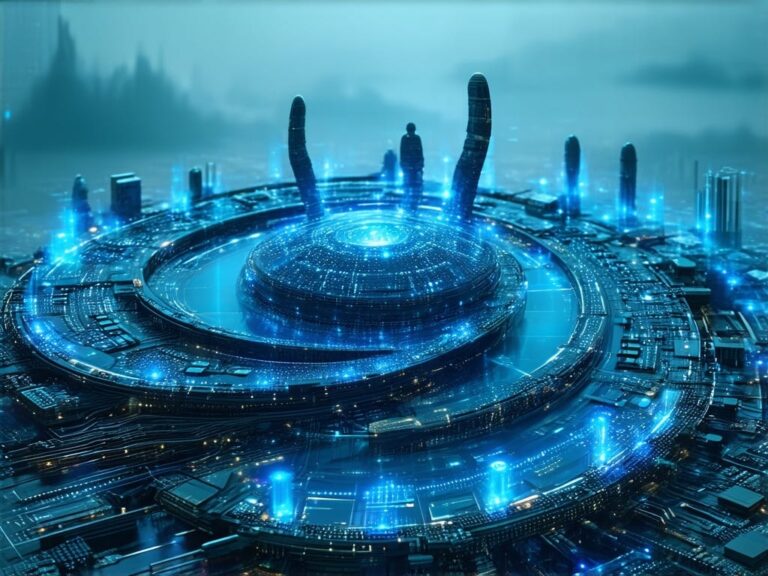
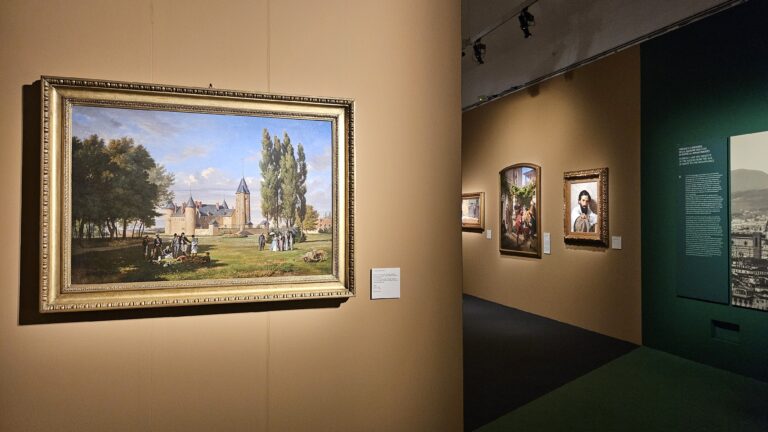
"All this he saw, for one moment breathless and intense, vivid on the morning sky; and still, as he looked, he lived; and still, as he lived, he wondered."

What the fuck did I just watch?

Yoshitaka Amano‘s Angel’s Egg, it’s the simple answer: a 1985 animated movie directed by Mamoru Oshii (Ghost in the Shell). Following Amano’s exhibition here in Italy and the movie’s anniversary, it had been re-released in theatres but I had missed, I was curious, so I said to myself Why not?

Well, there are some reasons not to, if I have to be completely honest.

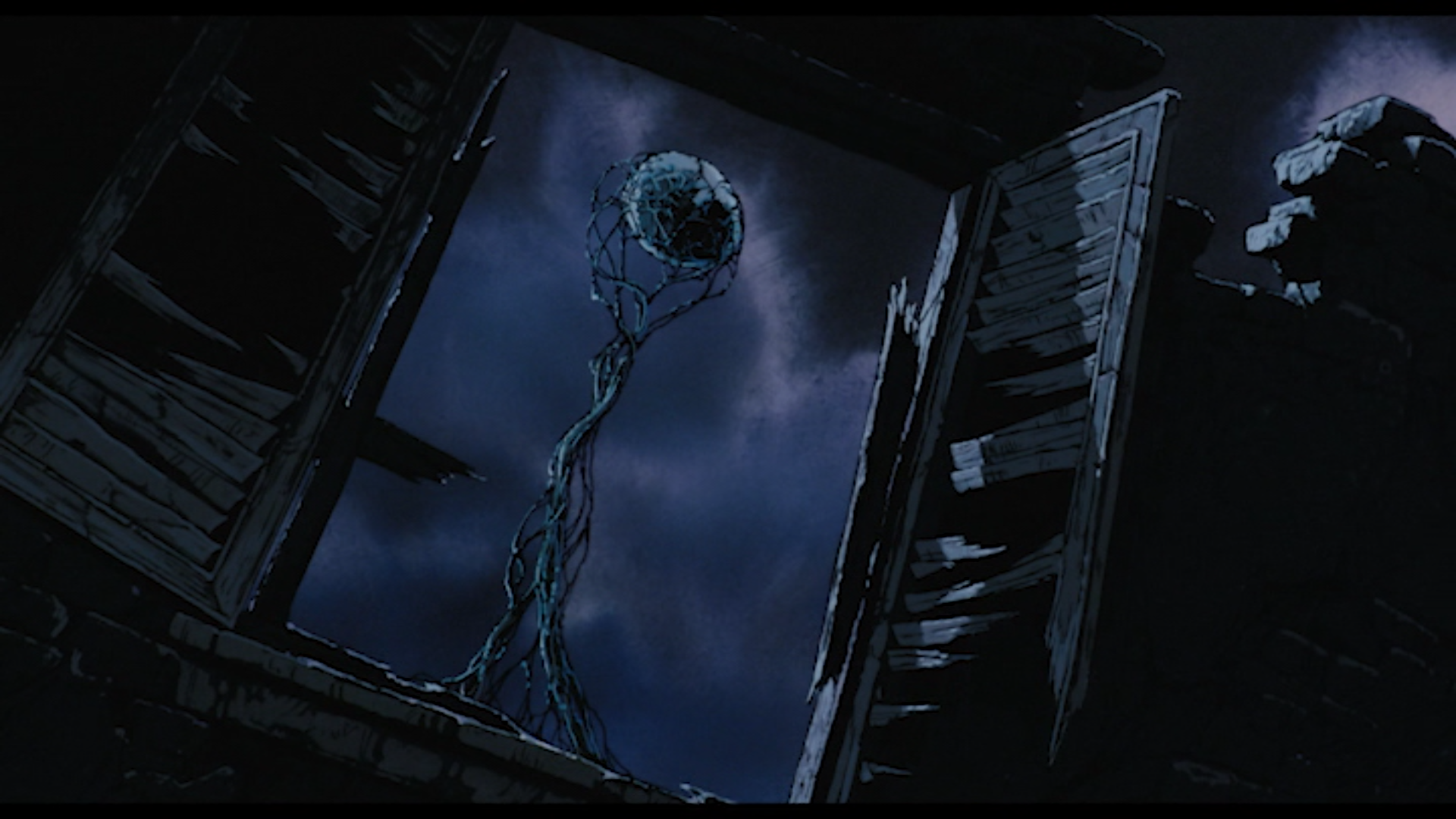
Visually, the movie is glorious, of course. Though human characters are a little rough around the edges (with the notable exception of when the girl transforms into a young woman upon hitting the water, by the end of the movie), the environment is beautifully treated, from the machinery to the city in ruin, down to the human shadows and the… well, the… ok, I’ll say it: the flying fishes.

Why are there flying fishes? Nobody knows, but they’re bad. Beware of the flying fishes.
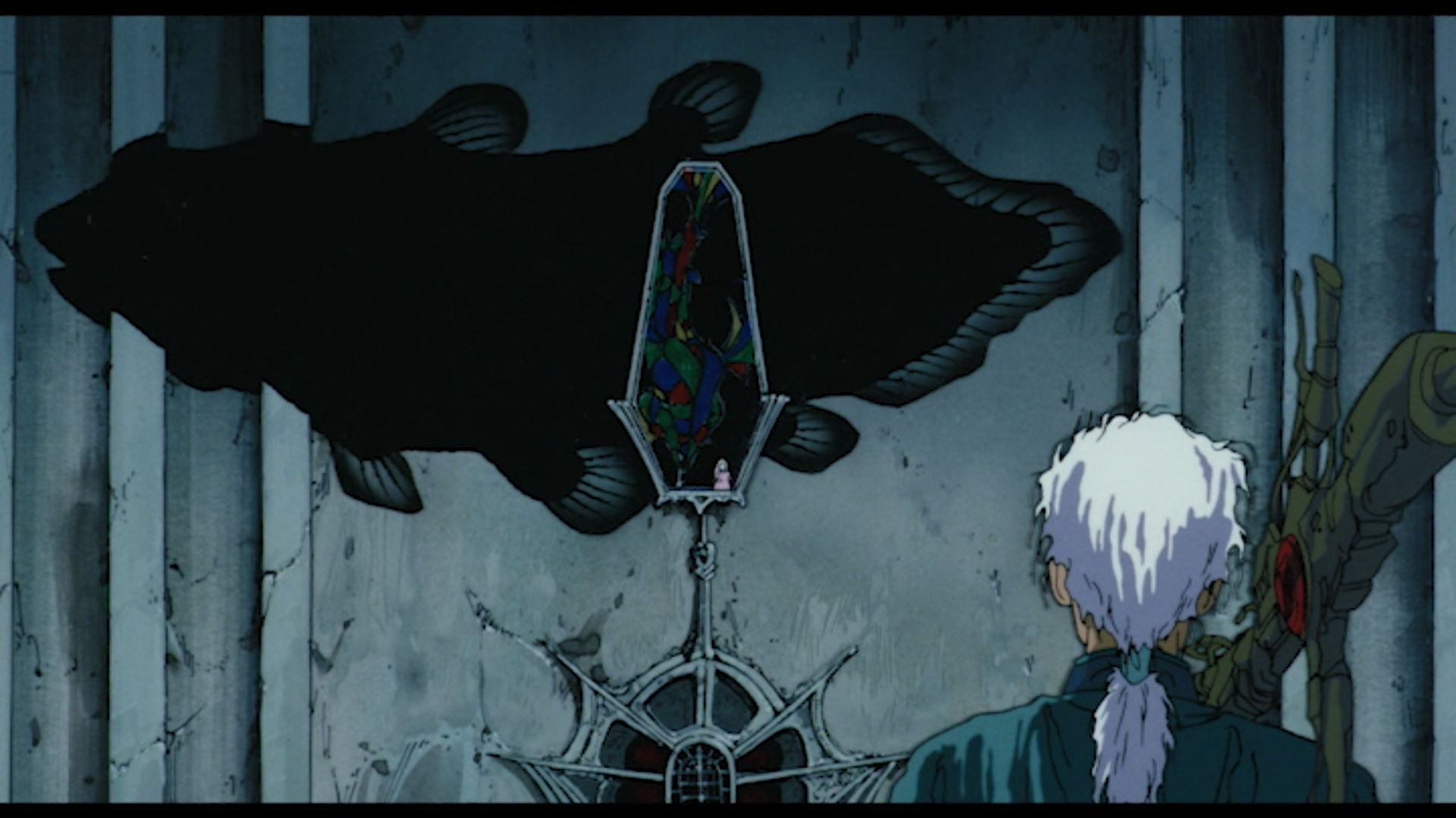
What’s the story about? Hard to say. There’s this girl with an egg, and she’s protecting the egg, refusing to say what’s inside. The boy, on the other hand, comes from a military convoy and insists he wants to know what’s inside the egg. They start travelling together for no apparent reason.

Water starts rising and partially submerges the city in ruin. It seems normal. There’s no one around.

The two keep talking (and talking, and talking) but they say very little. At a certain point, it seems the whole thing is faith and hope versus disillusionment and materialism. I honestly couldn’t tell you. There’s also some circular narration stuff going on. It’s obscure. According to Oshii himself, it’s purposefully obscure, and that always earns a fuck you on my behalf.

So yeah, the drawings, music, everything is beautiful, and you can say it’s a masterpiece all you want, but if I wanted to imagine a story by watching some pictures, I would have probably gone to see a painting.
books and literature

In the (Digital) Swarm

Byung-Chul Han is a contemporary German philosopher born in Korea whose work explores the transformation of subjectivity, power, and social relations in late modern and digital societies. In the Swarm fits within this broader inquiry, focusing specifically on the effects of digital communication on perception,

Read More »
architecture, engineering and construction

One can easily say Dynamo

1. Prologue: The Add-On Debate (or, a False Choice) 1.1 “Use an Add-On” vs “Everyone Should Code” There are two stock answers that reliably surface whenever automation in BIM is mentioned: The second one is disarmingly simple: spend those five bucks and just use an

Read More »
Share on LinkedIn
Throw on Reddit
Roll on Tumblr
Mail it
No Comments

Post A Comment

This site uses Akismet to reduce spam. Learn how your comment data is processed.

RELATED POSTS

In the (Digital) Swarm

Byung-Chul Han is a contemporary German philosopher born in Korea whose work explores the transformation of subjectivity, power, and social relations in late modern and digital societies. In the Swarm fits within this broader inquiry, focusing specifically on the effects of digital communication on perception,

Read More

One can easily say Dynamo

1. Prologue: The Add-On Debate (or, a False Choice) 1.1 “Use an Add-On” vs “Everyone Should Code” There are two stock answers that reliably surface whenever automation in BIM is mentioned: The second one is disarmingly simple: spend those five bucks and just use an

Read More

The Painters of the Revolution

I have a problem with the artistic current of the Macchiaioli, and my problem is that I always get them mixed up with Divisionism. And I don’t like Divisionism, so I almost skipped this exhibition, and that would have been a shame because I do

Read More