
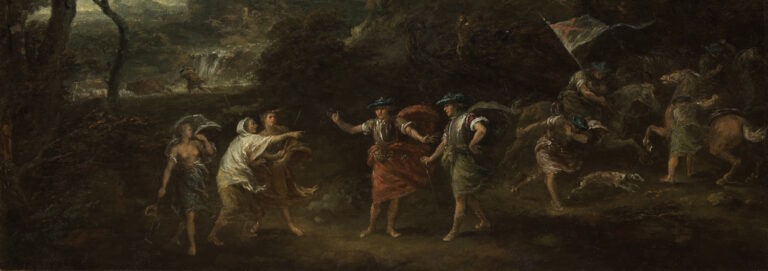
This is a classical recipe for marinated boar baked with scallions. If you want something older, here you can find a Roman recipe (and the picture in the header).
Ingredients (serves 6 people):
- 1 kg of boar meat, chopped and suitable for a stew;
- 400 grams of scallion;
- a pinch of fresh marjoram;
- some sage leaves;
- abundant thyme;
- around 10 juniper berries;
- 1 litre of red wine with character (an aged Sangiovese from Tuscany would do);
- a glass of red vinegar (better if it’s from Sangiovese too);
- olive oil;
- black pepper;
- salt.
Recipe:
Chop the meat if it’s not chopped already and remember that you have to marinate it first. If you skip this passage, the meat will have an extremely strong flavour, and some people might not like it.
Place the meat pieces in a container that will allow you to cover them with red, wasting the least amount possible: the wine will not be drinkable when the meat is done marinating it. No, I really mean it. Don’t try to drink it.
The meat should stay in wine for at least 12 hours, with a handful of salt and juniper berries. Some people recommend leaving it for 6 hours, changing the wine with some fresh one, and then leaving if again for 6 hours. I guess it depends on how tough the boar was and how much of a fight it put up before ending up in your pantry.
When the meat is done marinating, take it away from the wine and pepper it. Place it in a pan with some olive oil, the vinegar, and bake it in the oven for around half an hour at 200°C.
Meanwhile, mince the scallions and put them in a separate pan, with more olive oil, the sage leaves (you can either mince them or leave them whole), the thyme and the marjoram. Leave them on the fire until they turn blonde, then take them away and add them to the meat. Finish cooking.

Did you know?
Juniper is considered a “Christmas tree”.
Many classical authors, from Pliny to Dioscurides, believed the scent of juniper could keep snakes away, and juice from its leaves and fresh berries was believed to cure the venomous bites of vipers and other snakes, some parts of Italy started the tradition of burning a branch of juniper on Christmas Eve, to keep evil away and as an allusion to the salvific destiny of Jesus. Juniper is also prickly, an allusion to the iconic crown of thorn, and its berries are bitter as the “chalice” Christ asked his father to take away from him in the Gethsemane garden.
A further connection between juniper branches and Christmas is made through a legend that says this tree was the only one to offer its branches to the Holy Family as they were fleeing to Egypt.
Other applications included making a decoction from the branch before burning it, and bathing one in this water would chase away sloth.
The resulting cinder had a usage too: aside from being a symbol of humility, it was believed that a mixture of juniper ash and water could cure leprosy.
In Germany, juniper hosts a female spirit, Frau Waccholder, who can be summoned and persuaded to act when thieves have taken something dear to you. If she hears your prayers, the thief will be summoned to appear in front of you and will be compelled to give back what they stole.





No Comments