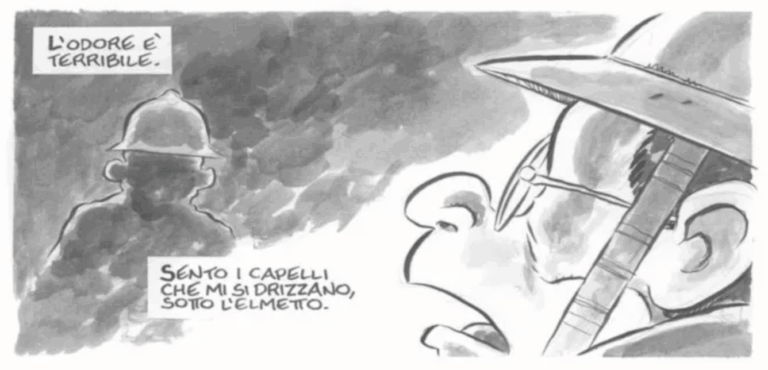
"All this he saw, for one moment breathless and intense, vivid on the morning sky; and still, as he looked, he lived; and still, as he lived, he wondered."

#ChthonicThursday: the Amduat

Alternatively translated “That Which Is In the Afterworld” or “Text of the Hidden Chamber Which is in the Underworld”, and called Kitab al-Akhira in Arabic, the Amduat is a funerary text from the New Kingdom and it has been found inscribed on the walls of tombs such as the one of Thutmose III, whose entire tomb is thought to mirror the geography of the afterlife.

The text recounts the journey of Ra, the Egyptian sun god, as he travels daily through the underworld from sunset in the west to sunrise in the east. This journey symbolizes continual death and rebirth, with the sun ‘dying’ at sunset and being ‘reborn’ at dawn, and it’s one hell of a journey (quite literally). According to belief, the deceased Pharaoh underwent the same journey, ultimately being reborn to join Ra eternally. Numerous gods and goddesses, including Khepri, Isis, and Osiris, assist both Ra and the departed soul on this voyage in the Duat, alongside many unnamed or unknown deities.

As well as enumerating and naming the inhabitants of the Duat, which we find in other texts, the Amduat is unique because it dives into detail about the geography of the Egyptian Underworld.

The Duat is divided into twelve regions, as many as the hours of the night, each of them inhabited by allies and presenting different adversaries for the Pharaoh and the Sun God’s conjoined journey. The Amduat catalogues these deities and creatures, such as the serpent of Mehen or the ‘World Encircler’, and portrays their varied roles in aiding or obstructing Ra and the departed soul. Primarily, the Amduat provides guidance to the pharaoh by unveiling the names and attributes of these entities, so that this knowledge will empower him to seek assistance or counter their influence, and detailing the geography as a proper map, to ease the journey.

Today on my Patreon we take a look at these twelve sections.

books and literature

Snow Country

Sometimes you read a book with beautiful prose and well-constructed characters but, when you put it down, you couldn’t tell the plot if your life depended upon it. Kawabata Yasunari‘s Snow Country is one of these books. Born in 1899, the author won the Nobel

Read More »
books and literature

War and Peace

I’m satisfied.Satisfied and surprised.Satisfied because this book, since reading the Peanuts as a child, is the Ultimate Achievement. Once you’ve read it, you feel you can achieve everything. You could even be the first beagle to land on the moon.And satisfied because… by God, this

Read More »
architecture, engineering and construction

A New Vision for the Learning Crisis

The end of 2024 brought us no grand educational reckoning, no moment of consensus that we need to reimagine how adults learn. Instead, through 2025, we’ve settled into a peculiarly quiet collective exhaustion with the pandemic’s educational experiments, paired with a creeping anxiety that something

Read More »
Share on LinkedIn
Throw on Reddit
Roll on Tumblr
Mail it
No Comments

Post A Comment

This site uses Akismet to reduce spam. Learn how your comment data is processed.

RELATED POSTS

Snow Country

Sometimes you read a book with beautiful prose and well-constructed characters but, when you put it down, you couldn’t tell the plot if your life depended upon it. Kawabata Yasunari‘s Snow Country is one of these books. Born in 1899, the author won the Nobel

Read More

War and Peace

I’m satisfied.Satisfied and surprised.Satisfied because this book, since reading the Peanuts as a child, is the Ultimate Achievement. Once you’ve read it, you feel you can achieve everything. You could even be the first beagle to land on the moon.And satisfied because… by God, this

Read More

A New Vision for the Learning Crisis

The end of 2024 brought us no grand educational reckoning, no moment of consensus that we need to reimagine how adults learn. Instead, through 2025, we’ve settled into a peculiarly quiet collective exhaustion with the pandemic’s educational experiments, paired with a creeping anxiety that something

Read More