
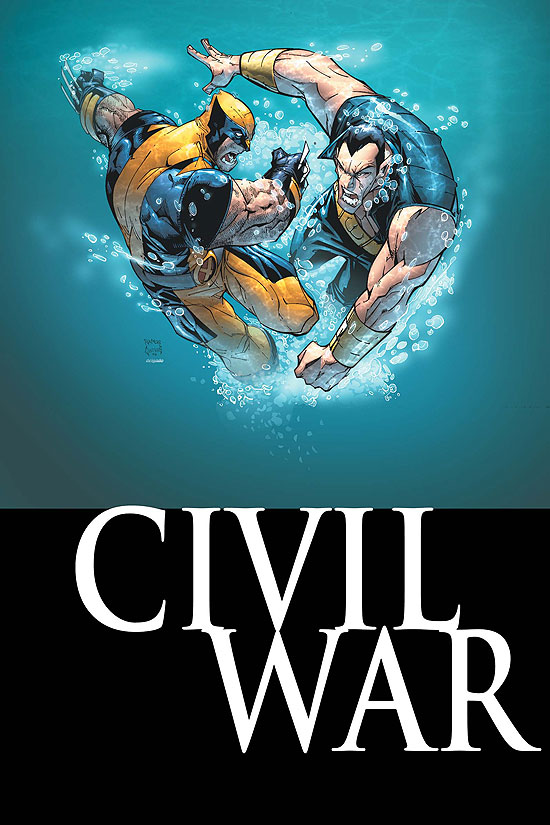
 Castigo (Vengeance da Wolverine #45 dell’ottobre 2006). Continuano le avventure di Wolverine vendicatore solitario in piena Civil War, tutte con lo stesso incipit (“Mi chiamo Wolverine. Sono il migliore in quello che faccio…”). L’impressione è ormai quella di una storia leggera, con discrete caratterizzazioni dei personaggi, ma più un divertissment che qualcosa alla ricerca dell’effetto drammatico. Le solite battute più o meno buone (“gli atlantidei hanno un odore tutto loro, pare sushi ammollato nella benzina”), la solita intensa azione solitaria con Tony Stark che compare a sprazzi, la solita caccia all’uomo. Il tutto risulterebbe persino gradevole, se non ci fossero i disegni assolutamente atroci di Ramos (si veda la scena in cui la “segretaria” di Namor dovrebbe urlare di dolore…).
La casa del sangue e del dolore (House of blood and sorrow, da Giant-Size Wolverine #1 del dicembre 2006). Anche questa volta una storia riempitiva non collocata temporalmente, di cui potezialmente ci importa poco, si rivela la migliore storia dell’albo. Una provincia agricola arretrata, una tecnologia “aliena” piovuta dal cielo, una popolazione inferocita ed un orrore nascosto nel granaio. Riecheggia di Lovecraft (presente L’orrore di Dunwich?) e Bierce, e anche un po’ di Ritorno al Futuro (presente quando la DeLorean si ritrova in un granaio del 1955?), questa storia di David Lapham è forse la migliore dell’albo, benché corredata dai disegni di David Aja che, aggravati dall’inchiostratore compulsivo José Villarrubia, non sono esattamente il mio genere.
Il prezzo dell’amicizia (The price of friendship! da New Excalibur #7 del luglio 2006). Forse decolla. Claremont riprende alcuni temi già utilizzati in X-treme X-men (il telepate potentissimo, le difese mentali di Sage, …), ma troppo in fretta e con minore efficacia. Solo verso la fine la caratterizzazione di Cain fa guadagnare punti ad una storia decisamente sotto gli standard del grande autore. Nel prossimo numero alla formazione si aggiungerà la sua Psylocke: speriamo sia sufficiente a fargli recuperare la forma.




4 Comments
caffeina66
Posted at 18:11h, 26 JuneMa ciao! Che posto è questo? Mi sa che devo farci un giro…..
Shelidon
Posted at 09:17h, 27 JuneUn posto bizzarro… Prego, accomodati! ^__^
heraclitus
Posted at 14:28h, 27 Juneaspetto di leggere questo – e soprattutto il prossimo ;-) – numero, anche se so già dove porterà…
Shelidon
Posted at 16:33h, 27 JuneDal prossimo numero dovrebbe iniziare anche la mini di Nightcrawler…