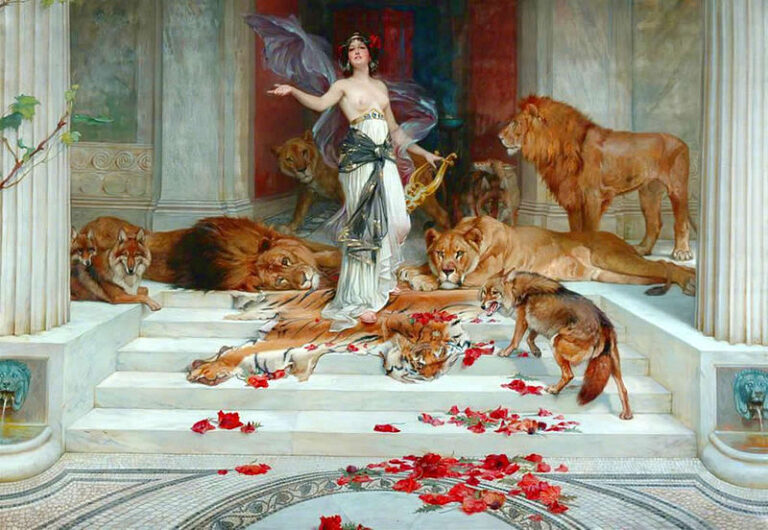
"All this he saw, for one moment breathless and intense, vivid on the morning sky; and still, as he looked, he lived; and still, as he lived, he wondered."

War and Peace

I’m satisfied.
Satisfied and surprised.
Satisfied because this book, since reading the Peanuts as a child, is the Ultimate Achievement. Once you’ve read it, you feel you can achieve everything. You could even be the first beagle to land on the moon.
And satisfied because… by God, this is good. And if you learn to go with the flow, not to overthink all the secondary characters, and different names, and war manoeuvres, I swear the prose flows like water, you care about characters and the whole point of how history works makes perfect sense. It’s a book you shouldn’t be scared of. Just take your time and go with it.

But why did I do this? Well, that’s a longer story.

There’s a comedian I follow, and along the road she founded a book club. The goal of the club was simple: to read some classics they made us readh in high school, with the eyes of the functional adults we definitely aren’t, and see whether they really were masterpieces (and we simply weren’t ready for them) or they are what we Italians call “mattoni”, pieces of brick, heavy and undigestible. Their first experiment was Flaubert’s Madame Bovary, and I didn’t tag along with them because I have vague and loathful memories of that book. As a second, they took the chance of the movie and did a reading of Wuthering Heights. I did a re-read with them. For their next fatigue, there was a poll, and at a certain point, it almost seemed like another book was winning, an Italian classic I thoroughly despise because it’s basically the work of a bourgeois Catholic telling the working class to stay meek and never rebel ’cause the Providence will look out for them. Fuck that guy. In order for that book not to win, there was a massive voting for the underdog, and that was War and Peace. I never wanted to read it, but I wanted not to re-read the other one. So, here we are.
Summertime

Omeros in the Caribbeans

Derek Walcott was a Saint Lucian poet, playwright, and painter, and one of the major voices of Caribbean literature. He won the Nobel Prize in Literature in 1992, and his work often explores Caribbean history, identity, colonial inheritance, and the meeting of European and African

Read More »
books and literature

Ioanna Papadopoulou’s The Castaway and the Witch

I had a genuine “oh shit” moment when I read the author’s preface saying this was darker than “Winter Harvest” because – and I absolutely ADORED “Winter Harvest” – that was pitch-black dark. I thought “we’re all going to die”. This maybe has something to

Read More »
Summertime

The Path You Have to Sing

Alexis Wright‘s Carpentaria, an epic work set in a fictional town called Desperance, opens before there are any people in it at all: an ancestral serpent, “a creature larger than storm clouds,” descends from the stars and drags itself across the wet clay of the

Read More »
Share on LinkedIn
Throw on Reddit
Roll on Tumblr
Mail it
No Comments

Post A Comment

This site uses Akismet to reduce spam. Learn how your comment data is processed.

RELATED POSTS

Omeros in the Caribbeans

Derek Walcott was a Saint Lucian poet, playwright, and painter, and one of the major voices of Caribbean literature. He won the Nobel Prize in Literature in 1992, and his work often explores Caribbean history, identity, colonial inheritance, and the meeting of European and African

Read More

Ioanna Papadopoulou’s The Castaway and the Witch

I had a genuine “oh shit” moment when I read the author’s preface saying this was darker than “Winter Harvest” because – and I absolutely ADORED “Winter Harvest” – that was pitch-black dark. I thought “we’re all going to die”. This maybe has something to

Read More

The Path You Have to Sing

Alexis Wright‘s Carpentaria, an epic work set in a fictional town called Desperance, opens before there are any people in it at all: an ancestral serpent, “a creature larger than storm clouds,” descends from the stars and drags itself across the wet clay of the

Read More