
I rarely review the classics, because Time is a better judge and there must be a reason if they’re classics, which doesn’t mean you’re bound to like them but it does mean that our opinion (yours and mine, I mean) are scarcely relevant. This time I fear I must make an exception, because people need to be warned of how dreadful William Makepeace Thackeray’s “satirical” novel Vanity Fair is.
The novel’s complete title is Vanity Fair: A Novel without a Hero, it was published around 1848, and I read it because I’m part of an eccentric book club whose mission is to read the classics and see whether, when we were forced to read them in school, they really sucked or we were simply not read.
This being the mission, it was bound to happen: Vanity Fair sucks.
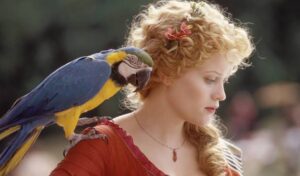
Set during and after the Napoleonic Wars, it traces the intertwined lives of two young women, Becky Sharp and Amelia Sedley: Amelia starts as a wealthy woman and then her family falls into disgrace; Becky starts poor and disgraced, but her wit and intellect help her rise, until their fortune is reversed once more.
But I’m making it sound interesting.
The book is an appalling collection of events half-narrated and extensively commented by an author whose voice comes across as vainer than all the “vanities” he’s describing, whose opinion of women as as infuriating as the one he has for honest men, whose idea of vanity encompasses pretty much anything one might do, and who seems to be utterly oblivious of how one man (or woman) could make a living in the society he’s so artfully describing (to use a word that appears a million times through the text). Becky is far from vain: she’s a woman who starts working as a governess and has zero intention of remaining one, and we’re immediately shown how right she is when her elderly master tries to marry her. Amelia is an innocent woman who’s tricked into marrying a man who’s an unfaithful gambler.
Labelling them as vanity, Thackeray gives us a stretched account of people’s misfortunes, struggles and mistakes, all while bullying them with remarks and never offering a “not vain” alternative of what they should have done in his own opinion. Remember that this was published thirty years after Jane Austen gave us a depiction of that very same society, and a much better portrait of what might really happen to a woman when she has no fortune, no prospect, no marriage.
Thackeray thinks it’s all a caprice of fickle creatures.
Fuck him.



No Comments