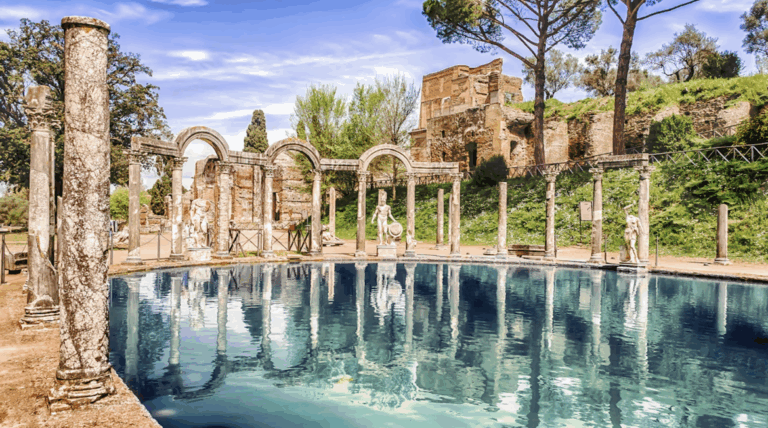
"All this he saw, for one moment breathless and intense, vivid on the morning sky; and still, as he looked, he lived; and still, as he lived, he wondered."

Two Queer Japanese stories

This Italian booklet is actually a collection of two short stories, one by the elusive writer Nagareyama Ryñnosuke and one by the better-known Takeda Rintaro, and they’re both absolutely worthy of your time.

Two stories, one from the point of view of a man who turns into a woman at night and one from the point of view of a writer who returns to the place where he grew up as a child and accidentally meets a prostitute whom he thinks is a woman.

Nagareyama Ryūnosuke is a mysterious Japanese pseudonymous writer associated with the “ero‑guro” movement and queer underground currents of early‑20th‑century Japan. Very little is known about him, and most of what survives is filtered through this 1930s text, titled Ero‑guro danshō nikki (1933), which literally translates as “Erotic‑Grotesque Young Man’s Diary”, the Erotic-Grotesque being the ero-guro current we were talking about.

Takeda Rintarō (1904–1946) takes a different angle on the topic: he was a social critic, associated with leftist literature, and his work focused on exposing the harsh lives and working conditions of the urban poor, especially in cities like Osaka and Tokyo. In this story, he bunches together homeless, veterans, and the male prostitute who wishes to become a woman and have a child of her own.

Two stories between World War I and II, two stories balancing on the verge of modernity and voicing some of humanity’s most ancient sentiments: the notion of self and the will to find happiness. Dysphoria didn’t have a name, back then, and yet these stories resound loudly as stories that matter, that need to be told in their simplicity, in the apparent hollowness of their anguish, in the stark reality that queer people’s stories matter, they always have, and they always will.

Summertime

The Seduction of Place

We’re closing out the month a little differently than we opened it, and we’re circling back to the city since many of you will be doing just that. What’s left of August won’t be organised into weekly themes with a Wednesday essay tying them together:

Read More »
architecture, engineering and construction

Ruins and Memory

Every text this week has been trying to answer some version of the same question: what, exactly, does a ruined building (or district, or city) owe the people still standing near it, and what do we owe to the ruin itself out of respect for

Read More »
Summertime

The Prison and the Railway Station

We already encountered W.G. Sebald with his The Rings of Saturn, and today I’d like to bring you his last novel, Austerlitz, published in 2001. The story follows a man named Jacques Austerlitz while he slowly uncovers the truth about his origins and his traumatic

Read More »
Share on LinkedIn
Throw on Reddit
Roll on Tumblr
Mail it
No Comments

Post A Comment

This site uses Akismet to reduce spam. Learn how your comment data is processed.

RELATED POSTS

The Seduction of Place

We’re closing out the month a little differently than we opened it, and we’re circling back to the city since many of you will be doing just that. What’s left of August won’t be organised into weekly themes with a Wednesday essay tying them together:

Read More

Ruins and Memory

Every text this week has been trying to answer some version of the same question: what, exactly, does a ruined building (or district, or city) owe the people still standing near it, and what do we owe to the ruin itself out of respect for

Read More

The Prison and the Railway Station

We already encountered W.G. Sebald with his The Rings of Saturn, and today I’d like to bring you his last novel, Austerlitz, published in 2001. The story follows a man named Jacques Austerlitz while he slowly uncovers the truth about his origins and his traumatic

Read More