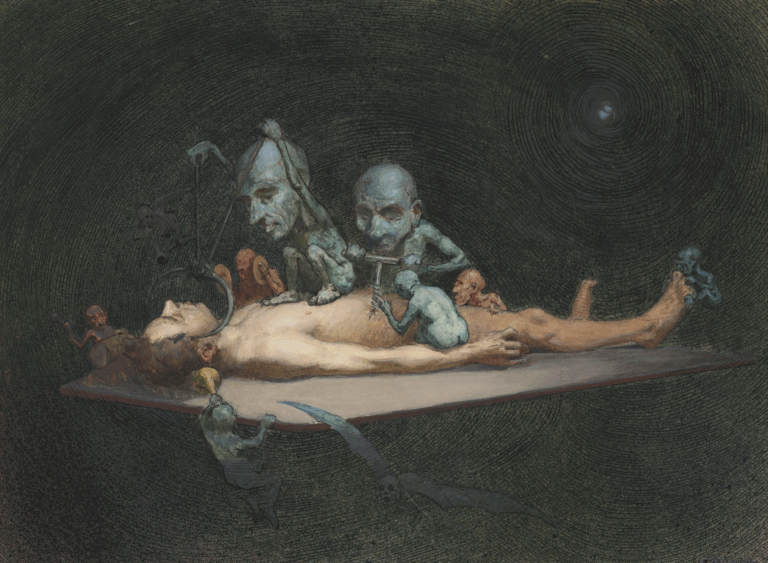
"All this he saw, for one moment breathless and intense, vivid on the morning sky; and still, as he looked, he lived; and still, as he lived, he wondered."

Tony Wolf’s Winter Tale (2): The Lost Expedition

Do you remember the Italian illustrator and author who went by Tony Wolf? I already showed you some pictures and told you the story of when the Woodland folks, particularly a couple of mice-ladies, came together in order to weave a winter coat for a couple of deers.

The next book in the series follows a flood (why is there always a flood, in children’s books?) and our Woodland friends find themselves in a strange realm, where there be gnomes. The gnomes become a part of the narrative and this second book, just like the first, follows a seasonal cycle of episodes and winter features a couple of them, particularly the one in which the doctor catches a cold and the one in which an expedition to gather berries gets lots in the snow.

My favourite is the second one, because it has adventure, mystery, danger, and a need for berries that are probably used to make schnapps or something.
A group of very desperate gnomes decides to go out anyway, regardless of the bad weather, because they really really really need berries and of course they prove themselves unable to come back. When they see that their friends are not returning, the a rescue team is called and we’re super lucky that they’re using birds who do not migrate.

They find the merry group camped out in the woods and of course the outcome is that they are saved and they are warmed up with what the author later tells us is “apple juice” (but we all know better, don’t we?). The rescue sledge originally featured a red cross but was later redrawn with a green four-leave clover. It’s only one of the many edits of this story, although the absolute worst came in the fairy book. But that’s a story for another time.

architecture, engineering and construction

Artificial Integrity in the Age of Anxiety

In 1947, British-American poet W.H. Auden published The Age of Anxiety, a long poem subtitled “A Baroque Eclogue”. In a nutshell, four strangers meet in a bar on Third Avenue in Manhattan, on All Souls’ Night, so it’s even seasonal, in the middle of a

Read More »
Spooktober

Spooktober 2026 – That’s a wrap!

…and that’s a wrap! Eighteen classic stories, if my math is correct, 29 posts, and the candle’s waning. It’s almost time. Are you all set up? Who are you celebrating with, and what are you dressed up as? Whether it’s true crime or contemporary politicians

Read More »
books and literature

Bulgakov’s The Fatal Eggs

Mikhail Bulgakov (Kyiv, 1891–1940) was a novelist, playwright, and former physician, whom I’m sure you know for The Master and Margarita, published posthumously. His work blends sharp satire, fantasy, grotesque comedy, and moral seriousness, often targeting Soviet bureaucracy and ideological hypocrisy, but I had no

Read More »
Share on LinkedIn
Throw on Reddit
Roll on Tumblr
Mail it
No Comments

Post A Comment

This site uses Akismet to reduce spam. Learn how your comment data is processed.

RELATED POSTS

Artificial Integrity in the Age of Anxiety

In 1947, British-American poet W.H. Auden published The Age of Anxiety, a long poem subtitled “A Baroque Eclogue”. In a nutshell, four strangers meet in a bar on Third Avenue in Manhattan, on All Souls’ Night, so it’s even seasonal, in the middle of a

Read More

Spooktober 2026 – That’s a wrap!

…and that’s a wrap! Eighteen classic stories, if my math is correct, 29 posts, and the candle’s waning. It’s almost time. Are you all set up? Who are you celebrating with, and what are you dressed up as? Whether it’s true crime or contemporary politicians

Read More

Bulgakov’s The Fatal Eggs

Mikhail Bulgakov (Kyiv, 1891–1940) was a novelist, playwright, and former physician, whom I’m sure you know for The Master and Margarita, published posthumously. His work blends sharp satire, fantasy, grotesque comedy, and moral seriousness, often targeting Soviet bureaucracy and ideological hypocrisy, but I had no

Read More