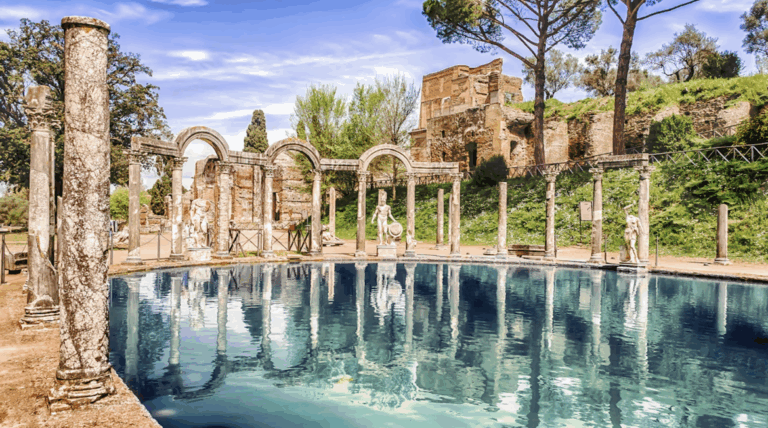
"All this he saw, for one moment breathless and intense, vivid on the morning sky; and still, as he looked, he lived; and still, as he lived, he wondered."

The Singing Hills Cycle

The Single Hills cycle is a group of short novels by Nghi Vo, a queer Vietnamese-American author, and they centre around the character of Chih, a non-binary monk whose job is to record stories with the aid of their familiar spirit with a perfect memory. I’ve read three of them so far: The Empress of Salt and Fortune, When the Tiger Came Down the Mountains, and Into the Riverlands, and I’m currently reading the fourth title in the cycle, Mammoths at the Gate.

The beauty of these stories, aside from a strong worldbuilding of non-Western influence, is in the centrality of the story itself: the monk Chih either listens or tells a tale, and the tale within the tale is the main character. It evolves, we discover hidden truths about it, we care for it and anguish for its wellbeing, just like the monk.

Of the three novels, The Empress of Salt and Fortune remains my favourite, as the tale is told through the exploration of objects discovered in a long-abandoned shelter where the titular Empress spent years in exile, and the truth it unveils is very powerful.
Into the Riverlands is very nice too, a little slow to take off, but it has a good pace and the description of martial arts, a novelty in the series, are very well-crafted. I was expecting the final revelation to be something different.
My least favourite is When the Tiger Came Down the Mountains. The premise was fine, I kept loving the universe and the story in two versions was interesting but the execution felt a bit rushed, the two versions of the story didn’t complement each other enough to explain some plot holes you’re left with, and I would have loved for a third truth to emerge but we’re sadly left with an epilogue that doesn’t feel like one.

Still, I highly recommend the cycle, and I think I’ll keep reading as many as the author wants to write.

Summertime

The Seduction of Place

We’re closing out the month a little differently than we opened it, and we’re circling back to the city since many of you will be doing just that. What’s left of August won’t be organised into weekly themes with a Wednesday essay tying them together:

Read More »
architecture, engineering and construction

Ruins and Memory

Every text this week has been trying to answer some version of the same question: what, exactly, does a ruined building (or district, or city) owe the people still standing near it, and what do we owe to the ruin itself out of respect for

Read More »
Summertime

The Prison and the Railway Station

We already encountered W.G. Sebald with his The Rings of Saturn, and today I’d like to bring you his last novel, Austerlitz, published in 2001. The story follows a man named Jacques Austerlitz while he slowly uncovers the truth about his origins and his traumatic

Read More »
Share on LinkedIn
Throw on Reddit
Roll on Tumblr
Mail it
No Comments

Post A Comment

This site uses Akismet to reduce spam. Learn how your comment data is processed.

RELATED POSTS

Ruins and Memory

Every text this week has been trying to answer some version of the same question: what, exactly, does a ruined building (or district, or city) owe the people still standing near it, and what do we owe to the ruin itself out of respect for

Read More

The Prison and the Railway Station

We already encountered W.G. Sebald with his The Rings of Saturn, and today I’d like to bring you his last novel, Austerlitz, published in 2001. The story follows a man named Jacques Austerlitz while he slowly uncovers the truth about his origins and his traumatic

Read More

Someone Has to Clean Up

Wisława Szymborska was a Polish poet, essayist, and translator, born in 1923 and awarded the Nobel Prize in Literature in 1996 for poetry marked by a sharp, ironic awareness of human life and history. Map: Collected and Last Poems is an English-language volume of Szymborska’s

Read More