
We’re closing out the month a little differently than we opened it, and we’re circling back to the city since many of you will be doing just that. What’s left of August won’t be organised into weekly themes with a Wednesday essay tying them together: instead, five books, standing on their own, that I think belong on any architect’s shelf regardless of what week or theme they’d technically fit under, and I want to start with the one that did more to form how I actually think about cities than anything else on this list.
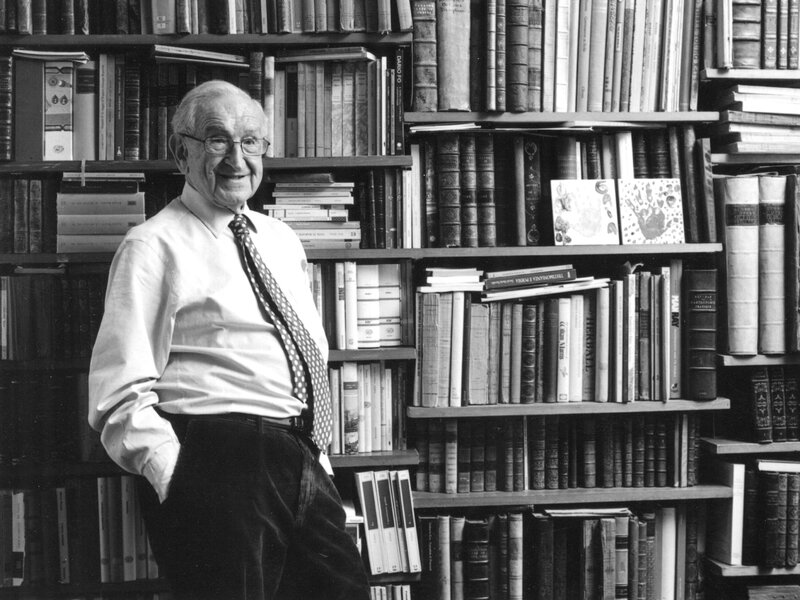
Joseph Rykwert was born in Warsaw in 1926, into a prosperous Jewish family, and fled with his parents to England in 1939, aged thirteen, on the eve of the war. He trained as an architect at the Bartlett and the Architectural Association, fell in with the circle of émigré scholars around the Warburg Institute, and spent the following six decades writing on architectural history and theory with unparalleled range and moral seriousness. He taught at Essex, at Cambridge as Slade Professor, and finally at the University of Pennsylvania as the Paul Philippe Cret Professor, with visiting stints at Princeton, Harvard, and Cooper Union along the way. His books — The Idea of a Town, On Adam’s House in Paradise, The Necessity of Artifice, The Dancing Column, and eventually The Seduction of Place — form one of the more genuinely wide-ranging bodies of architectural theory produced in the last century, built by someone whose own experience of displacement sits underneath almost everything he wrote about what makes a place matter at all. He was awarded the RIBA Royal Gold Medal in 2014, one of only four critics ever to receive it, and he died in London in October 2024, aged ninety-eight. I love everything this man wrote.
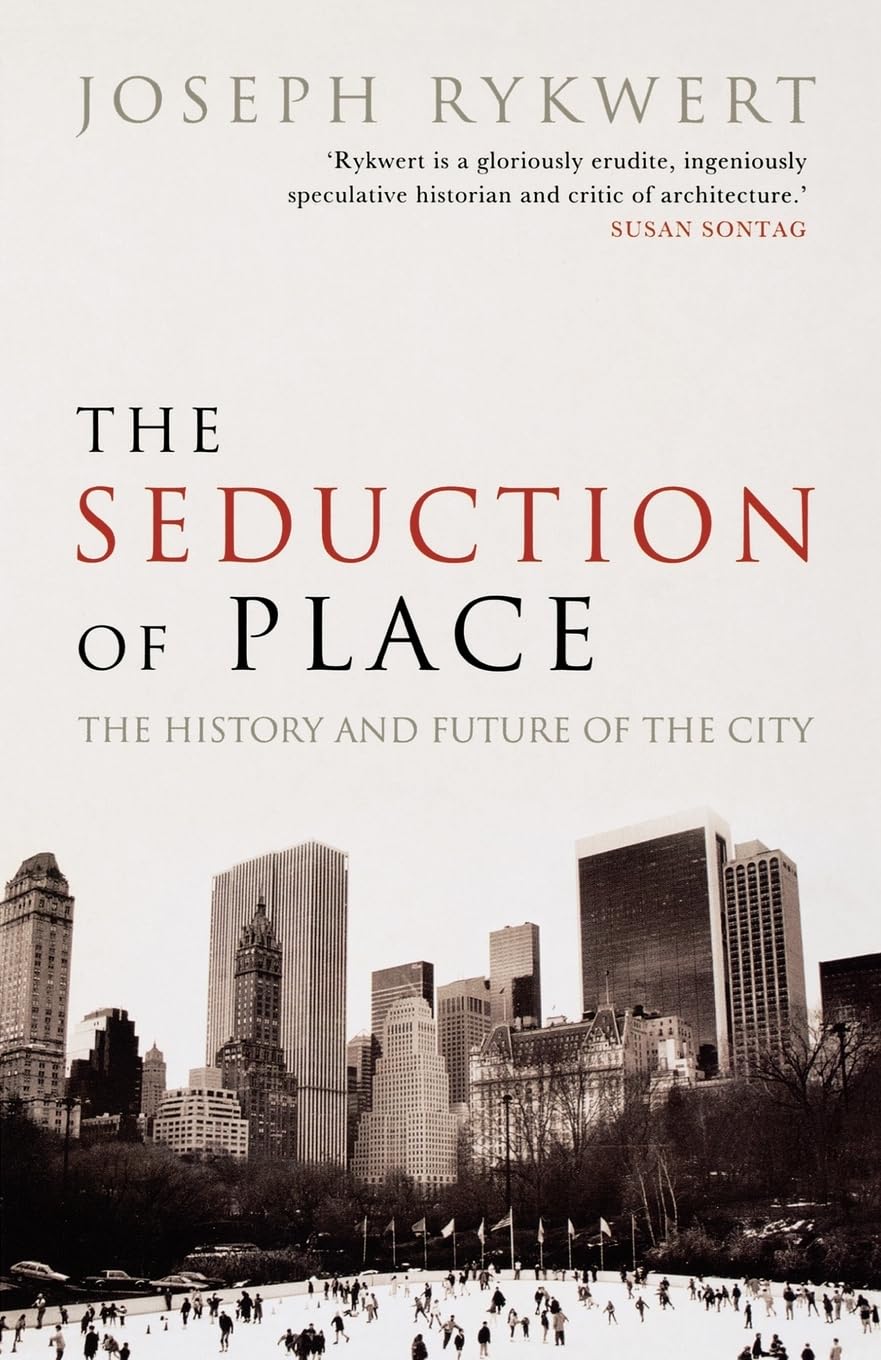
The Seduction of Place, published in 2000, came late in his career and turns his full attention to the modern city, and its argument is stated plainly enough: cities are not the outgrowth of vast, impersonal, immutable forces, economic or otherwise; they are, in his own phrase, “a willed artifact, a human construct in which many conscious and unconscious factors played their part.” That sentence is aimed squarely at the two laziest habits architects and planners fall into when talking about a city: on one side, treating urban form as an inevitability, the natural residue of capital, geography, and demographic pressure that nobody actually chose; on the other side, treating it as a problem solvable once and for all by the right masterplan, imposed from above with enough confidence.
Rykwert spends the book moving through Haussmann’s Paris, Georgian London, the sprawl of Mexico City and Cairo, the planned capitals of Brasilia and New Delhi, and finally New York, and at every stop his argument is that somebody chose something, for reasons that can be recovered and examined, and somebody could have chosen otherwise.

What I still find revolutionary is his refusal to treat the messiness of an unplanned city as a failure waiting to be corrected: of a city defined by conflict and improvisation rather than any single coherent image, he writes that “the lack of any coherent, explicit, image may therefore, in our circumstances, be a positive virtue, not a fault at all, or even a problem.” This runs directly against the instinct that produced Brasilia and New Delhi, cities imposed with total formal clarity and, in Rykwert’s own unsparing assessment, a considerably weaker relationship to the actual desires of the people living in them than the unplanned, contradictory cities they were meant to improve on. He isn’t arguing for chaos as an aesthetic. He’s arguing that legibility from an aerial photograph and legibility to the people who actually live somewhere are not the same achievement, and that architecture has a long, well-documented habit of confusing the two.
I read this book early enough in my own training that it’s hard now to separate what I think from what Rykwert convinced me of. The idea that a city’s form is a record of choices rather than a fact of nature — that Milan looks the way it does because people, across centuries, chose this over available alternatives, and that the same is true of whatever gets built next — has never left. It’s probably the single closest thing I have to a prime directive. Everything else on this closing list, in one way or another, is arguing with, or from inside, that same conviction.




No Comments