
I have a problem with the artistic current of the Macchiaioli, and my problem is that I always get them mixed up with Divisionism. And I don’t like Divisionism, so I almost skipped this exhibition, and that would have been a shame because I do like these guys.
The name Macchiaioli is derived from the Italian word macchia (literally “spot” or “patch”), hence my confusion, and sometimes you hear that it was initially used derisively by critics to describe their work as mere blotches of colour rather than carefully finished canvases, but I found out that there’s another layer to that: “macchia” also means wilderness and the “macchiaiola” was a woman who lived and worked into the wild, a recurrent character in these painters, active primarily in Tuscany in the second half of the 1800s.
So let’s see who these guys were, and some of the splendid paintings on show these days at Palazzo Reale here in Milan.
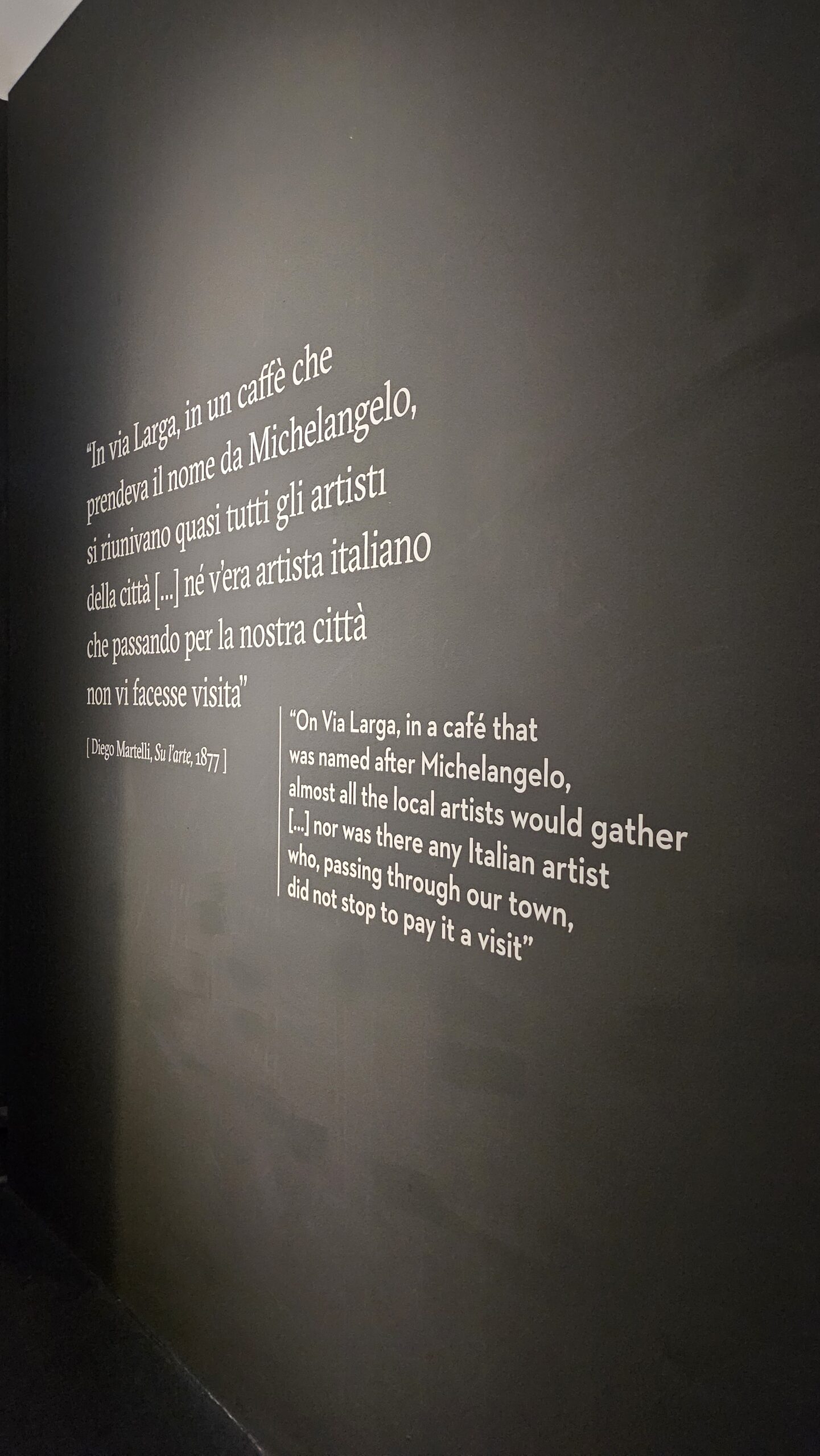
Local impressionists?
Impressionism developed across the Alps in France, as we know, with its official birth marked by the first independent exhibitions in the 1870s.
Superficially, both the Macchiaioli and the Impressionists shared a fascination with painting en plein air, a focus on the effects of natural light, and some scenes drawn from modern life rather than historical or mythological subjects. For this reason, art historians have sometimes described the Macchiaioli as Italy’s Impressionists, but things are more complicated than that.
Amongst the most meaningful distinctions that separate the two movements, the Macchiaioli developed their ideas within the specific social pressures and patriotic idealisms of the Risorgimento, the widespread insurrectionist movement that led to Italy’s unification.
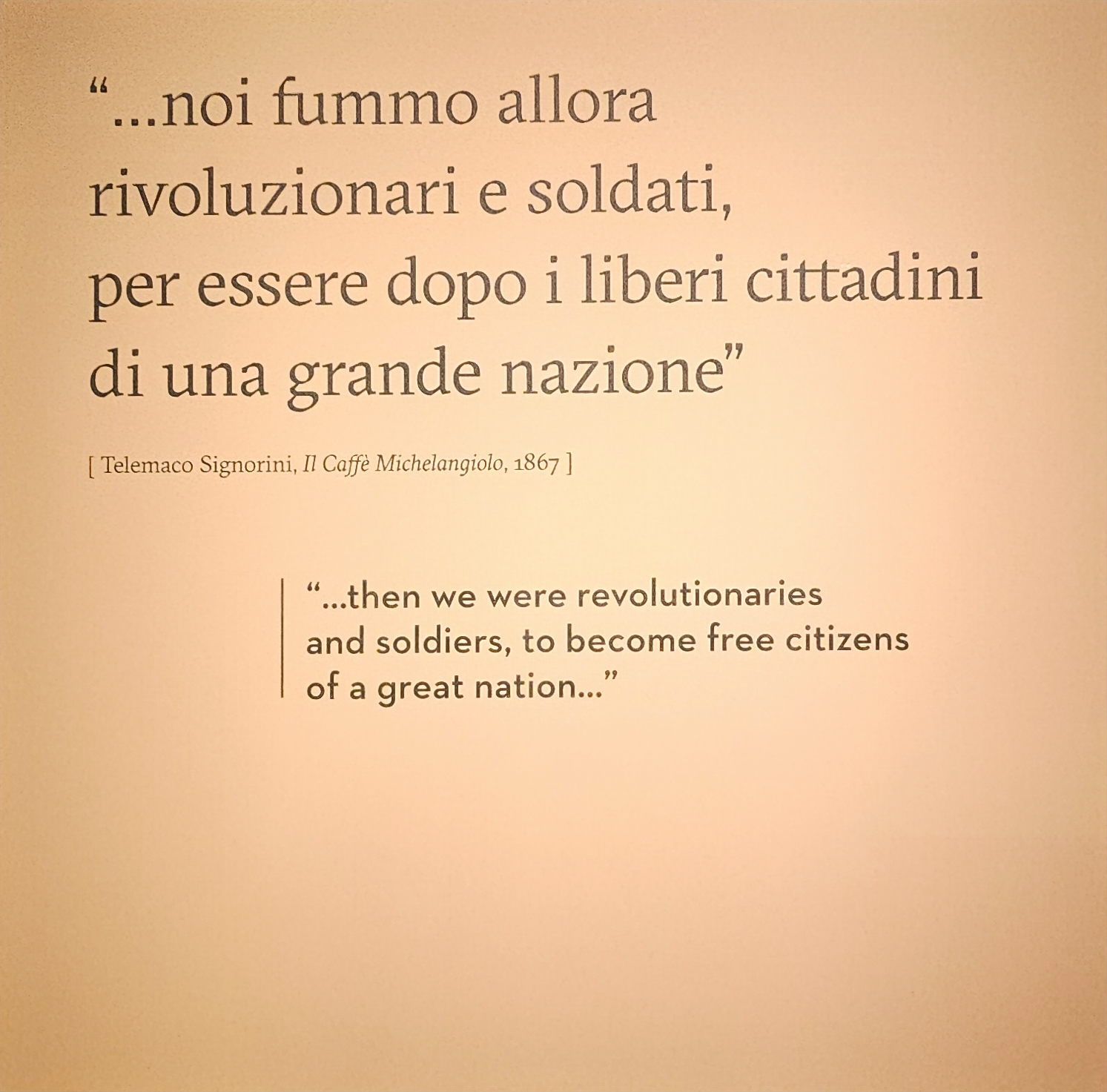
Also, while French Impressionists pursued an almost scientific exploration of colour and optical phenomena, the Macchiaioli maintained a stronger connection to tonal contrasts and structural form, anchored in Old Master traditions and an immediate, tactile engagement with nature, and indulged in historical subjects, especially when it gave them the chance to push the ideals of Italy’s unification.
This parallel, yet distinct, relationship means that rather than seeing the Macchiaioli as precursors or imitations, we should recognise them as a unique modernist current, born from Italy’s own cultural upheavals and contributing, in its own way, to the broader redefinition of European painting in the 19th century. Sometimes, two groups of people can have the same idea.
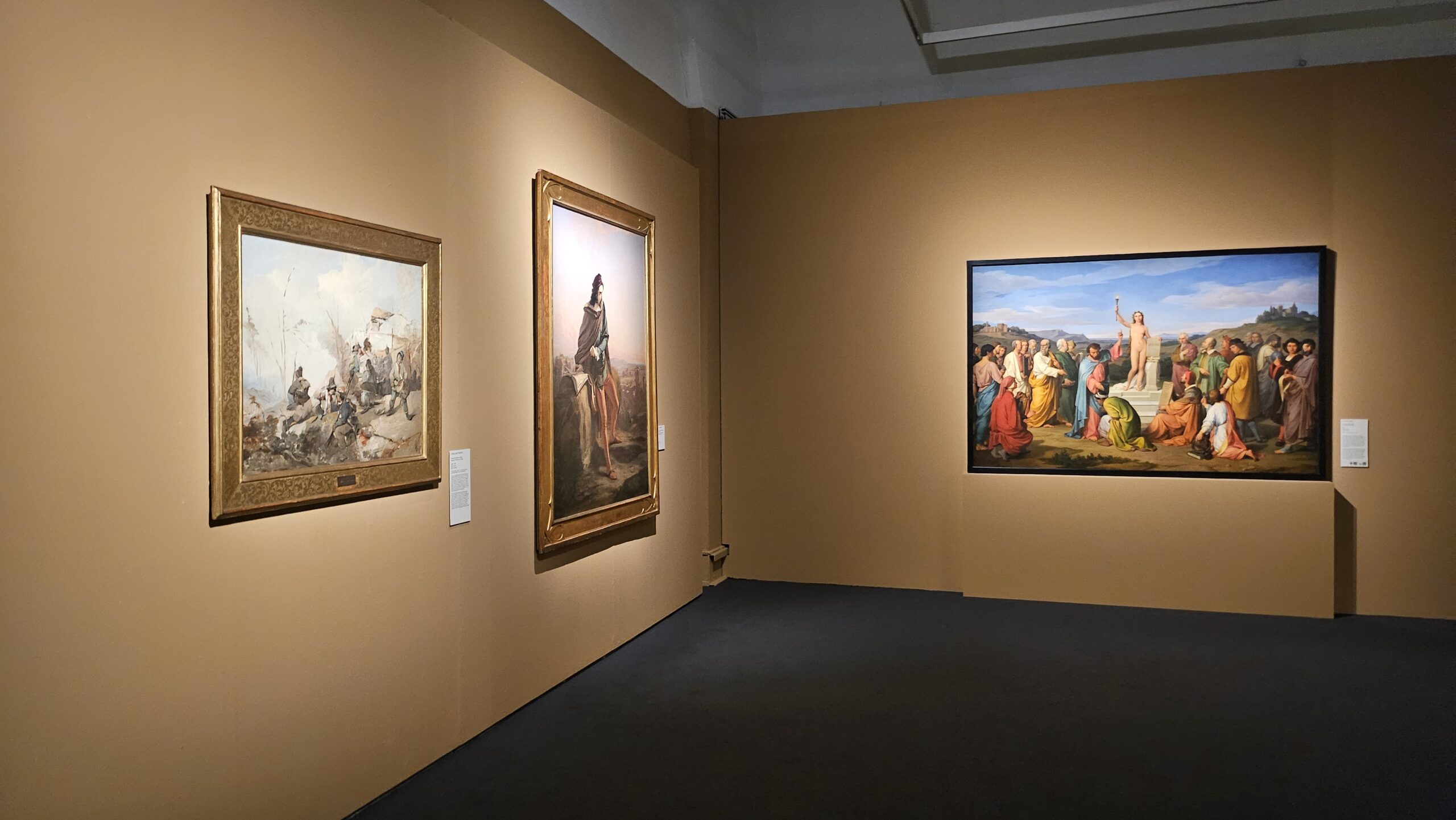
The Painters of the Revolution
The origins of the Macchiaioli are inseparable from the turbulent political and social context of mid-19th-century Italy, the long struggle for Italian unification and independence that we call Risorgimento. The period not only reshaped the peninsula’s political map but also stirred a powerful cultural awakening. Many of the Macchiaioli were politically engaged; some participated directly in the 1848 uprisings, and figures such as Telemaco Signorini and Giovanni Fattori carried Mazzinian and liberal ideals into their art. Their rejection of academic art mirrored a broader rejection of outdated institutions and a belief in authentic experience, whether in the civic sphere or before nature itself.
This intertwining of artistic and political renewal meant that their work matched stylistic revolt and a cultural affirmation that aimed to define a modern Italian identity through truth to nature, genre scenes of rural and civic life, and an unidealized depiction of contemporary reality.
Disillusionment and the end of the movement
If the Macchiaioli were born in the heat of the Risorgimento, they matured in its shadow. The same generation of artists who had embraced the promise of national renewal in the 1850s and 1860s found themselves, by the 1870s and 1880s, confronting a far more ambiguous reality: political unification had been achieved in 1861 and completed in 1870 with the annexation of Rome, but the new Kingdom of Italy did not reflect the republican ideas by many of its intellectual and artistic supporters. Economic inequality persisted, regional divisions deepened, and the moral fervour of revolutionary struggle gave way to bureaucratic consolidation and political compromise. The new state proved fragile and uneven. Industrialisation advanced slowly. The South faced repression and poverty, laying the basis for inequalities that are still rampant today. Veterans of the wars of independence often returned to civilian life without recognition or support. The myth of unity was increasingly at odds with social reality.
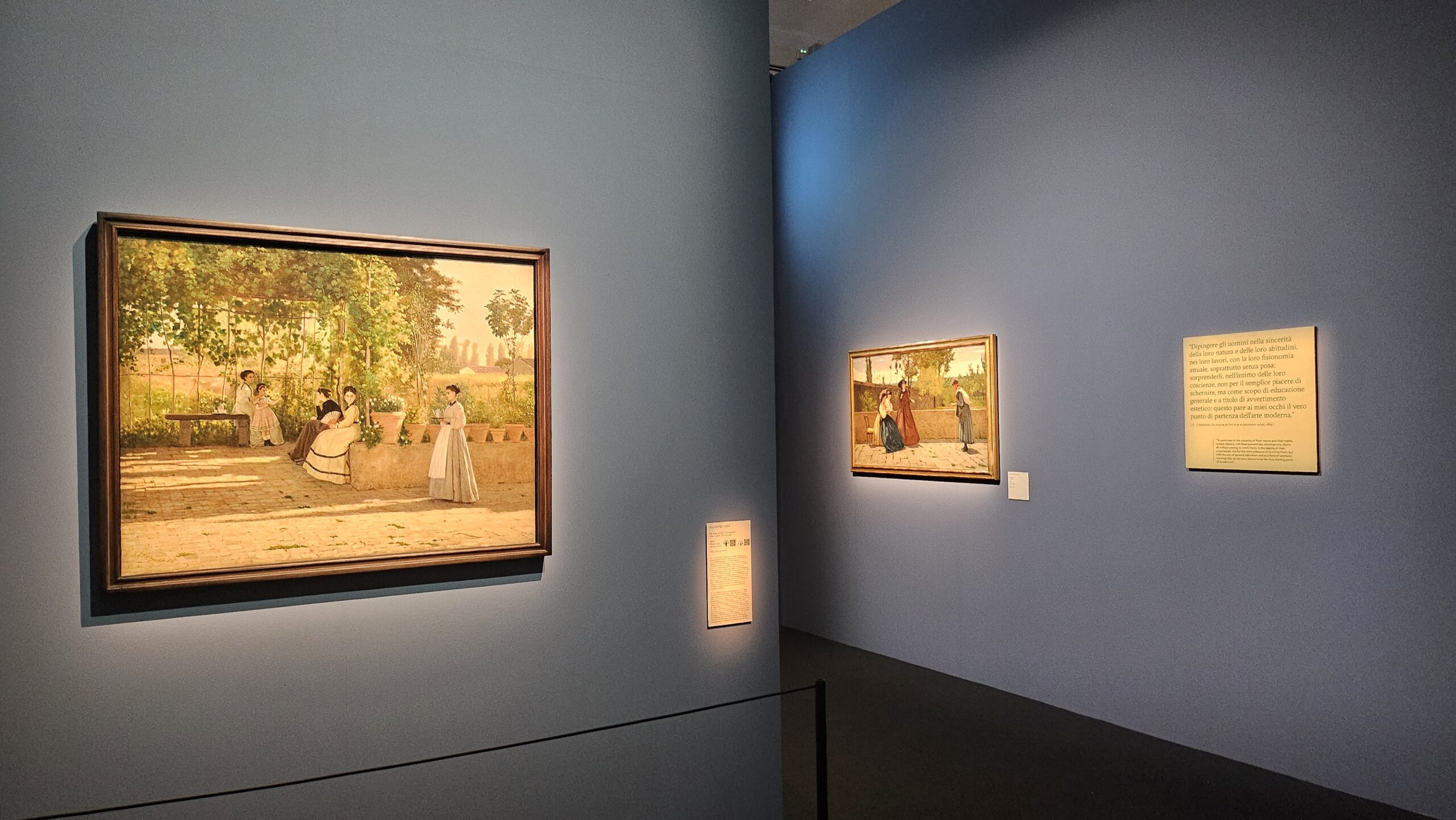
For several of the Macchiaioli, this transition was experienced as a personal betrayal, and many felt guilty, unwillingly complicit.
In their early years, painters such as Giovanni Fattori, Telemaco Signorini, and Silvestro Lega had believed that artistic renewal and political renewal were inseparable. Their rejection of academic conventions paralleled a rejection of Austria’s domination and of the conservative cultural institutions that symbolised the old order. Painting from life and embracing contemporary subjects were both technical and ethical decisions. Truth to vision mirrored truth to the nation. Yet once unification was achieved, the heroic narrative dissolved.
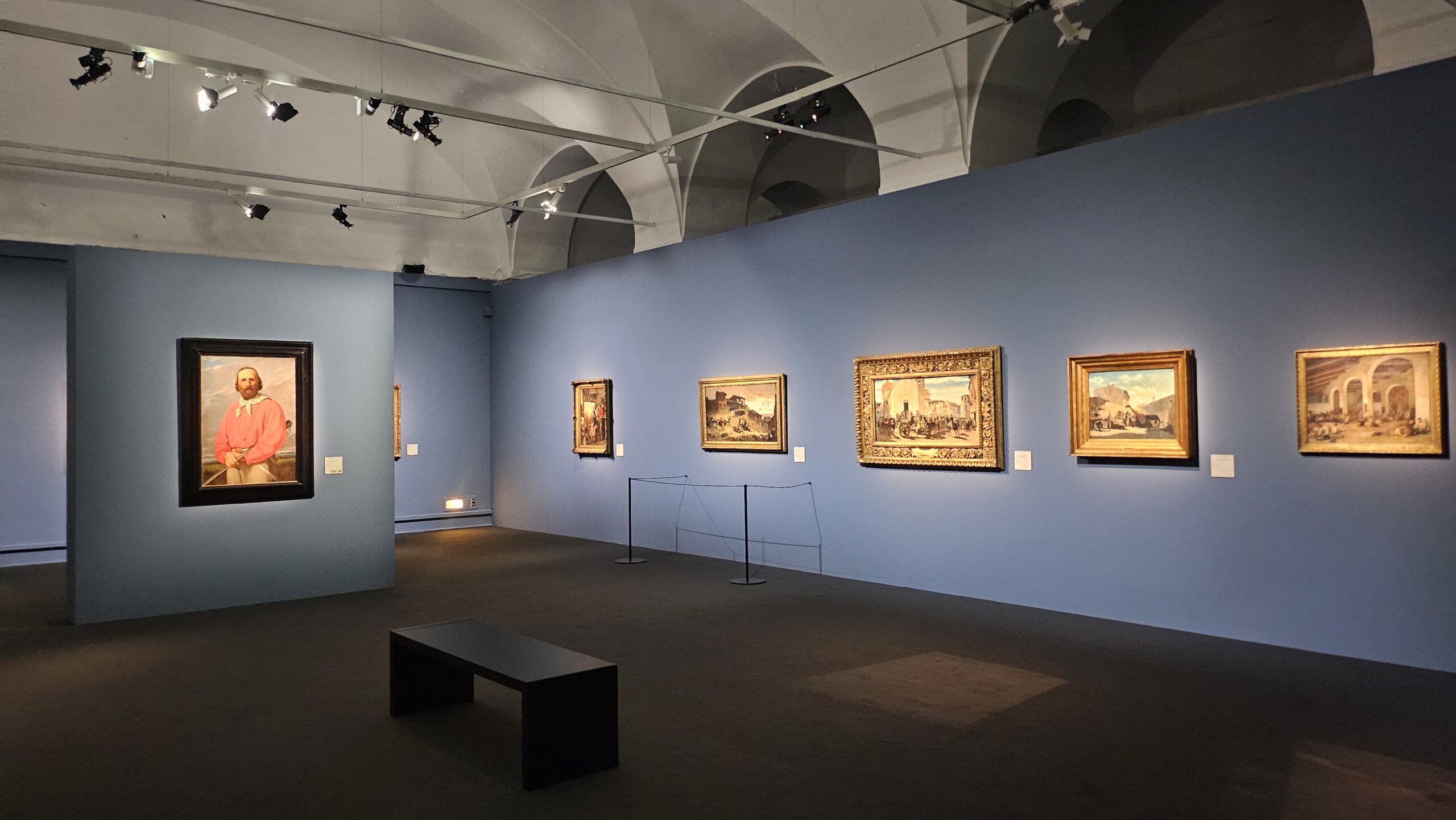
This tension is visible in the later works of the movement: Fattori’s battle scenes, never heroic in the first place, shift in tone further; while earlier canvases had portrayed military life with a kind of sober dignity, later works emphasise exhaustion, stillness, and the quiet aftermath of conflict. Soldiers are depicted resting, waiting, or riding across vast, empty landscapes. The drama of combat gives way to a mood of suspension. The grand narrative of patriotic sacrifice feels muted, almost hollow.
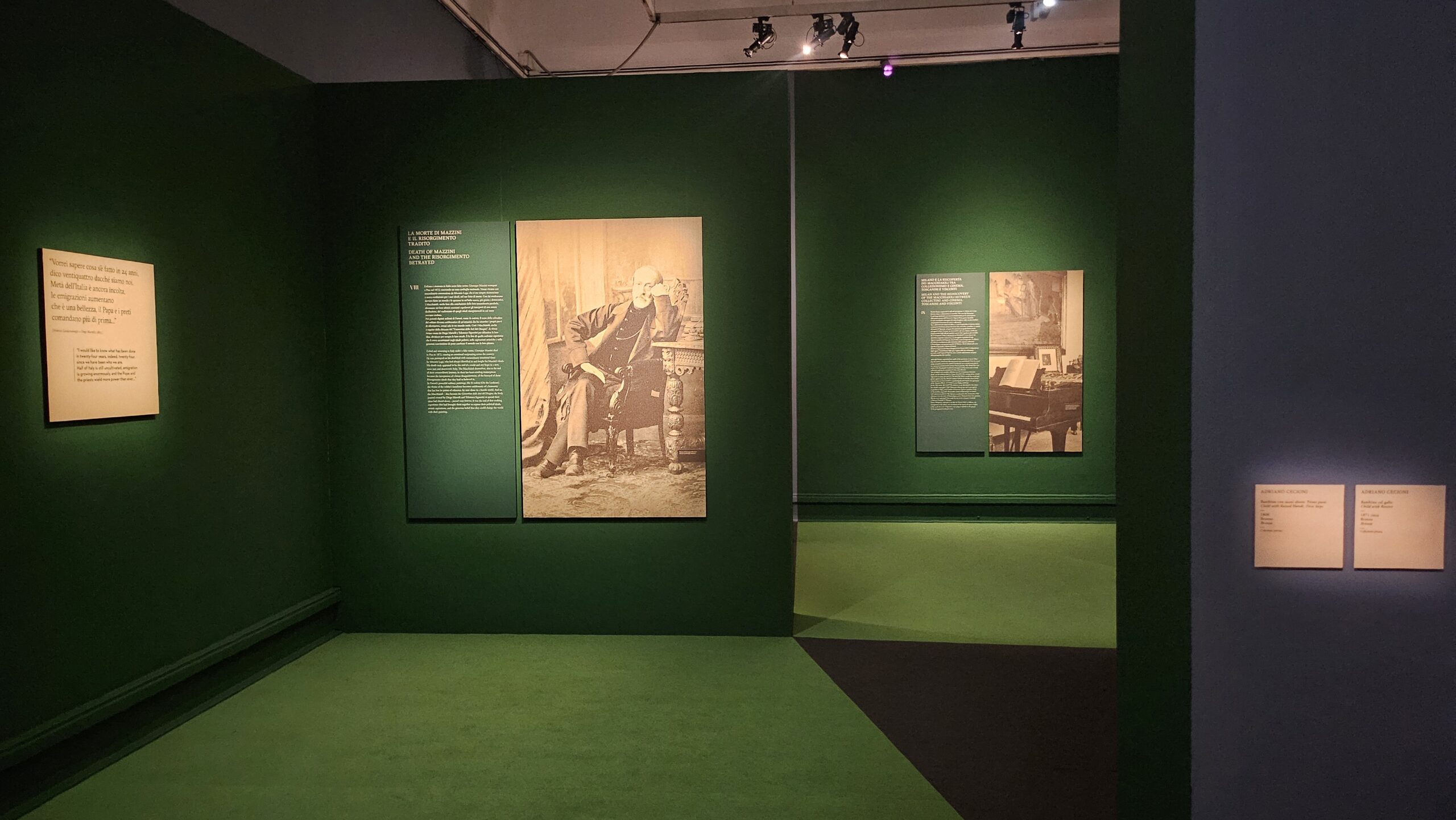
Signorini’s urban scenes likewise acquire a sharper social edge. His depictions of prisons, hospitals, and impoverished neighbourhoods reveal a country struggling with modernity’s harsher realities. Rather than celebrating a unified Italy, these works expose its fractures. The light remains, but it illuminates unease.
The movement’s gradual dissolution was not the result of a single rupture but of several converging forces. One was generational fatigue. By the 1870s, the core members of the group were no longer young rebels meeting at the Caffè Michelangiolo in Florence to debate aesthetics and politics. They were established artists, some financially insecure, some increasingly isolated. The cohesive energy of the early years dispersed into individual trajectories.
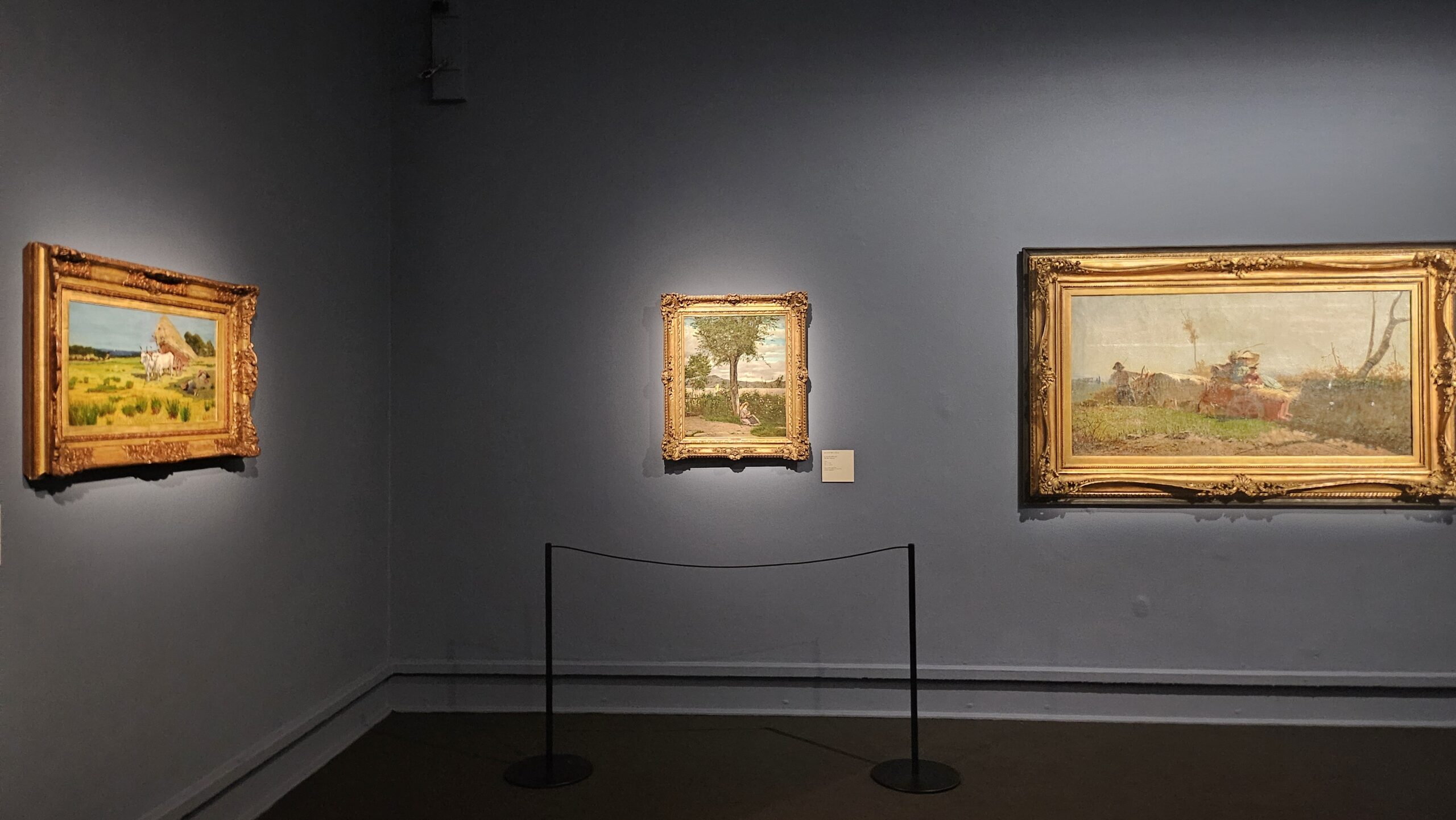
Another factor was the changing artistic climate in Europe. French Impressionism, with its bold public exhibitions and expanding market, began to dominate the discourse of modern painting. While the Macchiaioli had anticipated certain aspects of Impressionist practice — especially plein air painting and the study of natural light — their tonal and structural approach differed fundamentally. The French movement’s emphasis on optical immediacy and broken colour, combined with its international visibility, made it appear more radically modern. Italian art institutions and collectors, often conservative and cautious, did not fully recognise the historical significance of the Macchiaioli’s earlier innovations.
Ironically, the artists who had once been criticised as reckless revolutionaries now found themselves overshadowed by a new avant-garde abroad and insufficiently supported at home. The Italian art market remained fragile, and state patronage was limited. Some members of the group adapted stylistically; others withdrew into quieter, more introspective modes of painting. The shared identity of the “Macchiaioli” gradually dissolved into a loose historical label. I feel a strong pull for this subtle but pervasive sense of disenchantment: the Risorgimento had promised regeneration — moral, social, and cultural — but it delivered compromise and continuity instead. The monarchy replaced foreign rule, but power structures often remained intact. The dream of a civic republic inspired by Mazzinian ideals faded into parliamentary pragmatism.
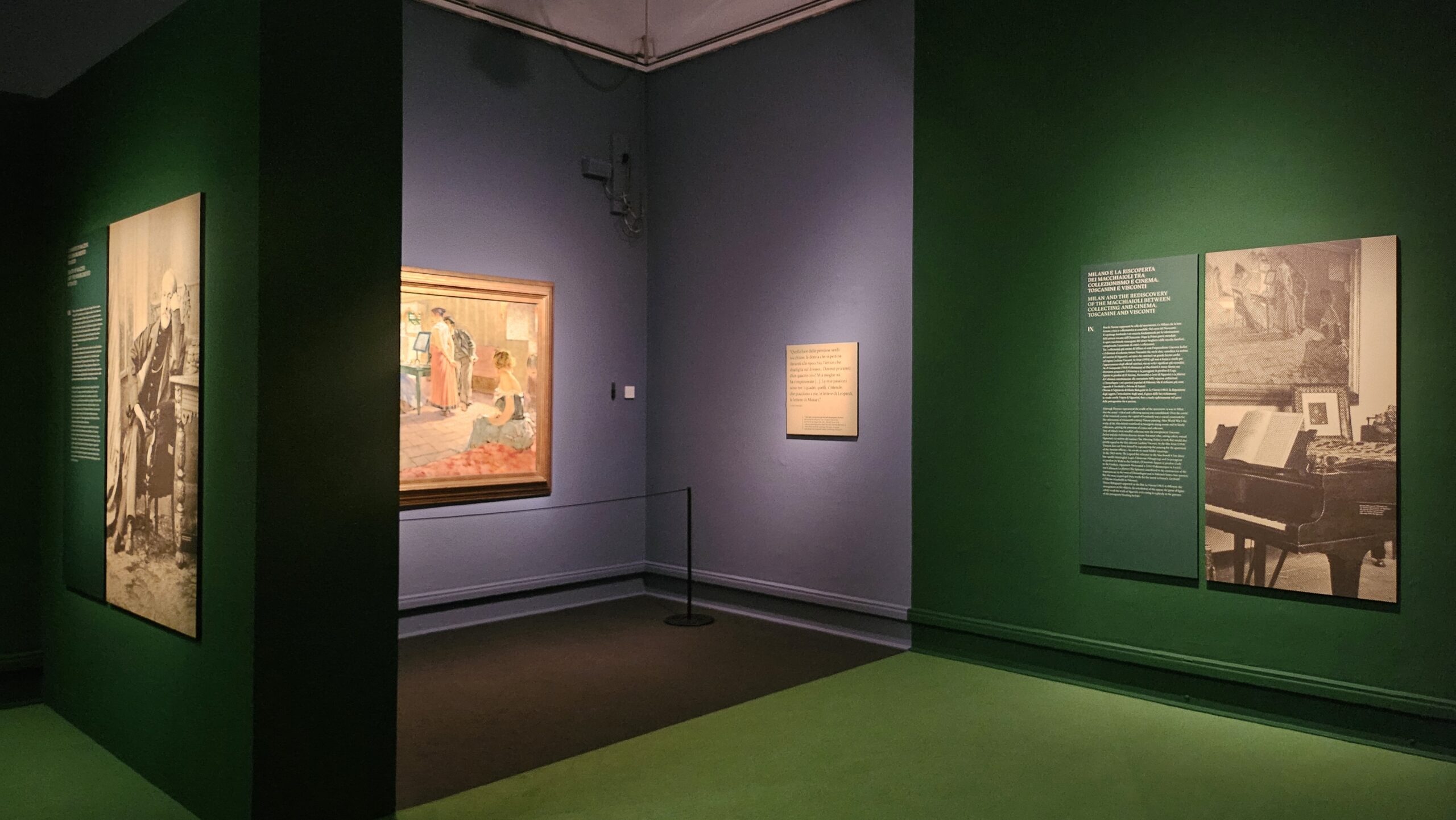
The exhibition
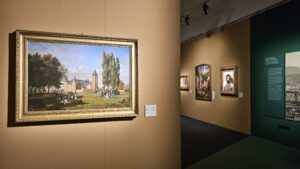
The exhibition claims to offer one of the most comprehensive retrospectives ever devoted to this pivotal Italian movement: it’ll be on display till 14 June, and it brings together over one hundred works, loaned by Italy’s foremost museums and important private collections including the Accademia di Belle Arti and the Pinacoteca di Brera, the Uffizi Galleries and Palazzo Pitti in Florence, the Museo Civico Giovanni Fattori in Livorno, and others.
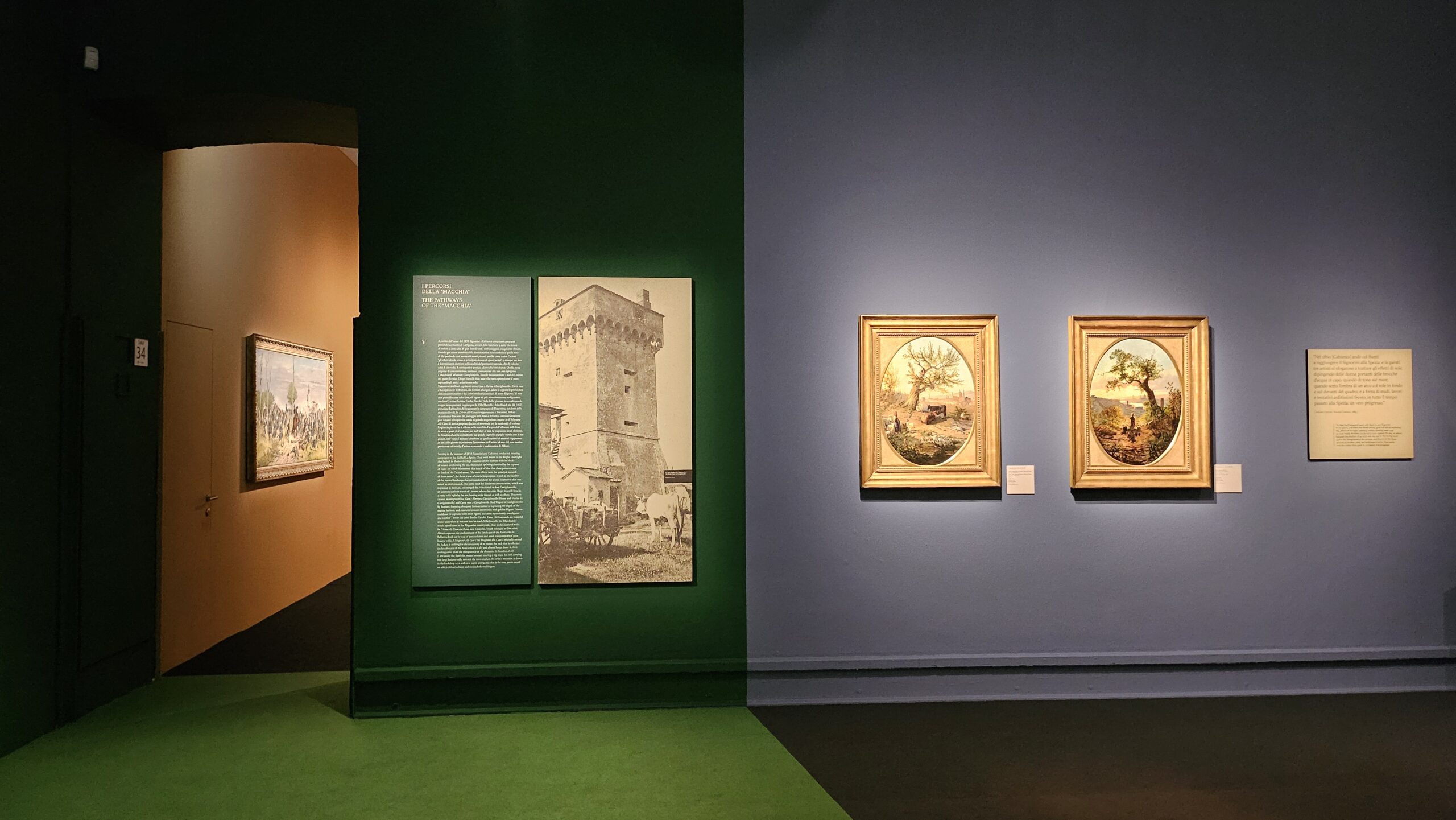
Organised as a thematic and chronological journey in nine sections, the exhibition guides the visitor through the birth, evolution, and legacy of the Macchiaioli between 1848 and 1872. Each section functions almost like a distinct room or chapter in the story, illustrating key moments from early aspirations and plein air experiments to the group’s engagement with Risorgimento ideals and the later reflections on artistic modernity, and the staging works marvellously through the usage of colours: green portions of floor and walls are sketched as beams of light that guide you through the curated pathway. Not a new concept, but a splendidly executed one.
Giovanni Boldini: my favourite
Among the names orbiting the Macchiaioli, Giovanni Boldini occupies a singular position, close enough to absorb their lessons and distant enough to transform them entirely. If Fattori embodied moral gravity and Lega quiet intimacy, Boldini injected cosmopolitan ambition and a refined theatricality into his works and, naturally, he’s my favourite of the lot.
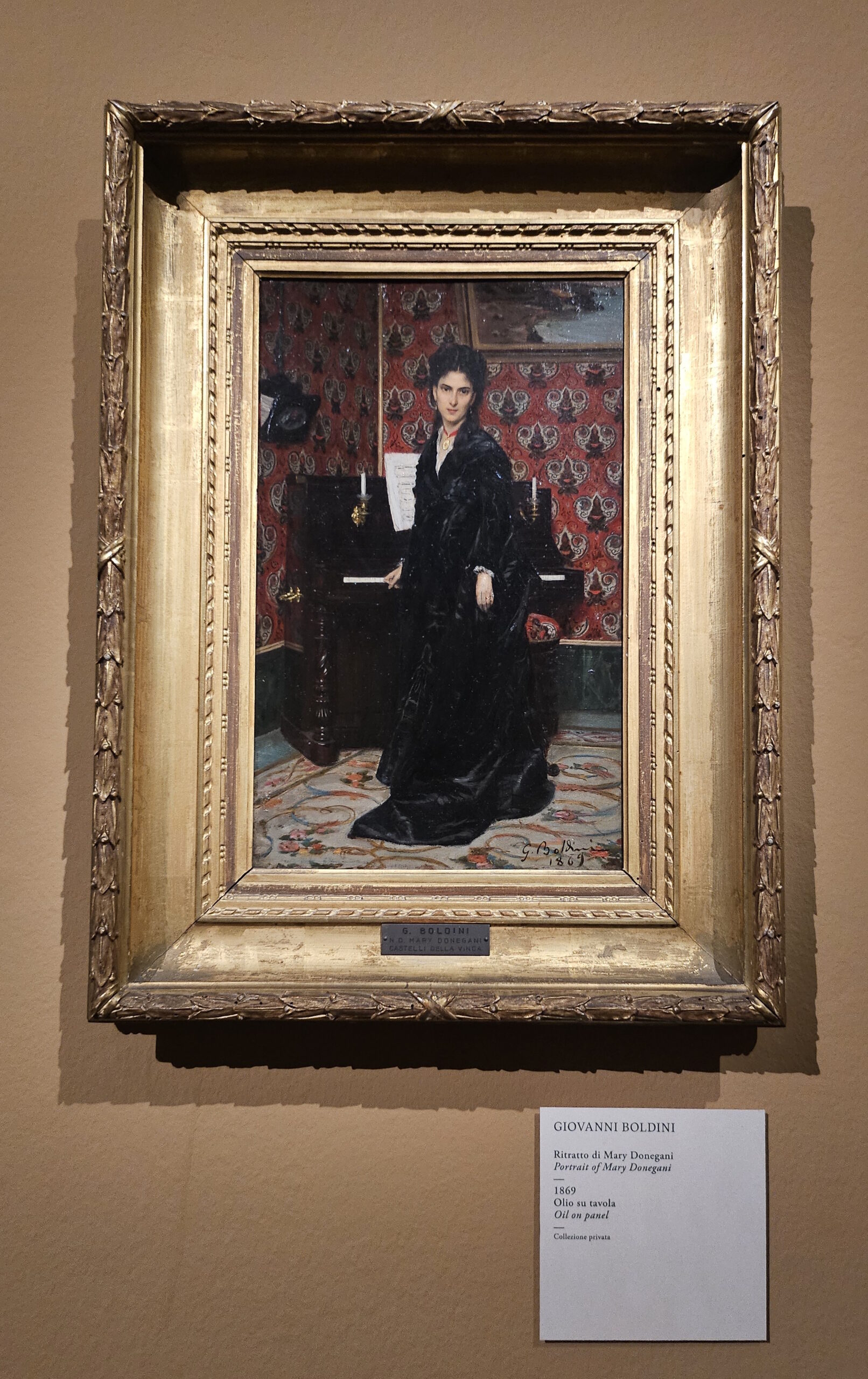
Born in Ferrara in 1842, Boldini moved to Florence in the early 1860s where he gravitated toward the circle of artists gathering at the Caffè Michelangiolo in Via Larga; he encountered the Macchiaioli at a formative moment, absorbing their insistence on painting from life and their structural approach to light and tonal contrast and yet these early Florentine works — intimate interiors, portraits, and scenes of bourgeois domesticity — already show a perceptible difference: Boldini’s brush is more fluid, his figures more animated, his gaze subtly more psychological. While the core Macchiaioli were deeply rooted in the Tuscan landscape and in the civic ethos of the Risorgimento, Boldini’s temperament was outward-looking.
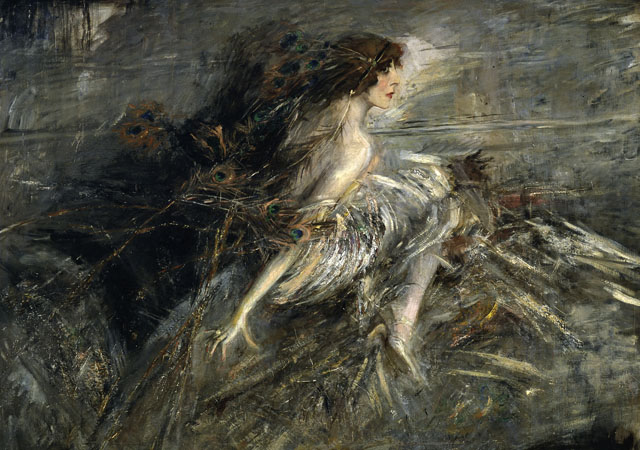
In 1871, he left for Paris, the capital of modern art and modern society, and this move was decisive. In the French capital, Boldini reinvented himself as a portraitist of international high society, his subjects being aristocrats, actresses, financiers, and women whose presence defined the social imagination of the Belle Époque. His brushwork became increasingly dynamic: elongated silhouettes, sweeping lines, fabrics rendered in flashes of light.
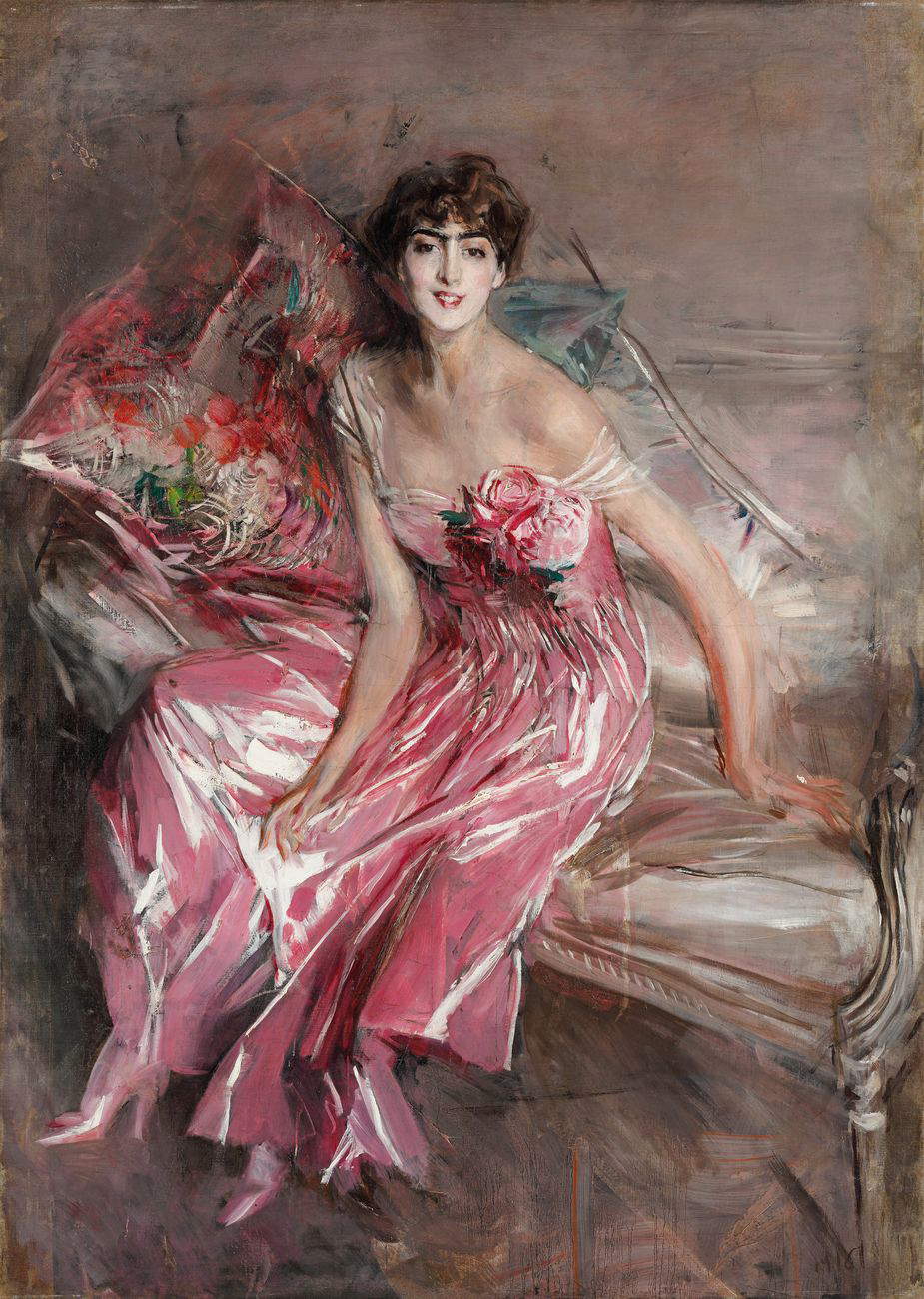
At the end, he’ll be more of a futurist ante litteram, except he doesn’t capture the speed of machines but the movement of high society. Women seem to glide across the canvas, caught mid-gesture, their bodies elongated into almost calligraphic forms. The brushstroke becomes expressive in a way that anticipates aspects of early modernism. If the Macchiaioli were tied to the ethical seriousness of the Risorgimento, Boldini belongs to a later, more ambiguous Europe that was urban, elegant, restless. He left behind the political urgency that had shaped the Tuscan circle and entered a world defined by speed, fashion, and social reinvention. Some critics have seen this as a betrayal of the movement’s original spirit; others interpret it as its evolution. After all, modernity in Italy did not end with unification. It expanded, fragmented, and globalised.
Telemaco Signorini: my Second Favourite
If Boldini represents the centrifugal force of the Macchiaioli — the outward flight toward Parisian elegance — Telemaco Signorini embodies their most restless and critical core, and he’s sometimes described the restless conscience of the movement. Painter, intellectual, polemicist, and tireless observer of modern life, Signorini is a guy after my own heart.
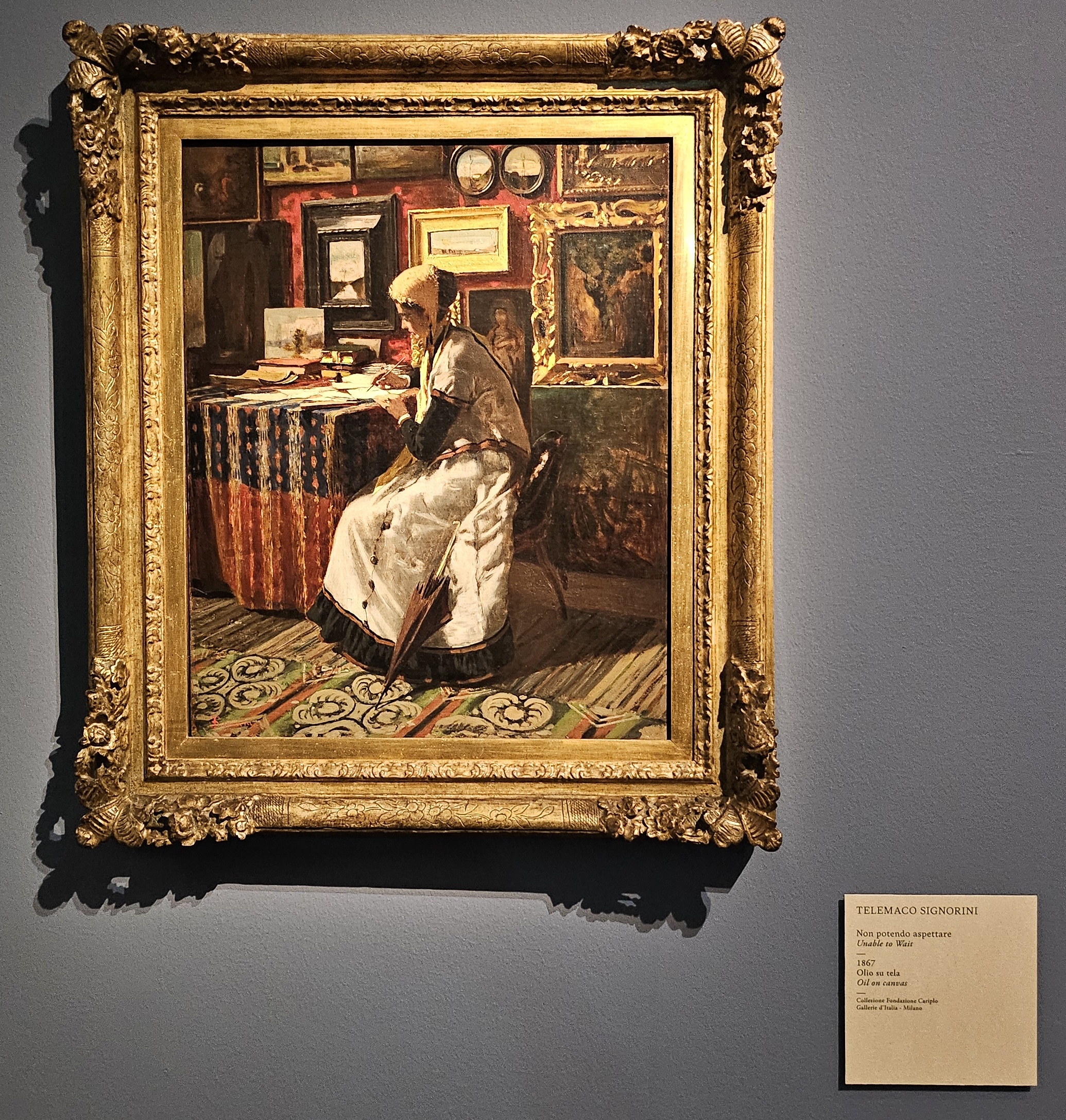
Born in Florence in 1835, Signorini grew up in an artistic environment — his father was a court painter — but quickly distanced himself from academic conventions and, at the Caffè Michelangiolo, he became one of the most articulate defenders of the new approach to painting, advocating for a radical break with formulaic history painting and idealised composition. For him, it wasn’t just about technical innovation: light and shadow, rendered through tonal contrasts, were tools to strip reality of rhetoric and seek truth.
In the 1860s and 1870s, Signorini travelled widely, including extended stays in Paris and London, and these journeys sharpened his awareness of European modernity, also expanding his pictorial vocabulary. He encountered contemporary French painting, absorbed elements of realism and urban observation, and returned to Italy with a broader, more international perspective. I guess I like the Macchiaioli most when they get out of Tuscany?
The “Macchiaiola”
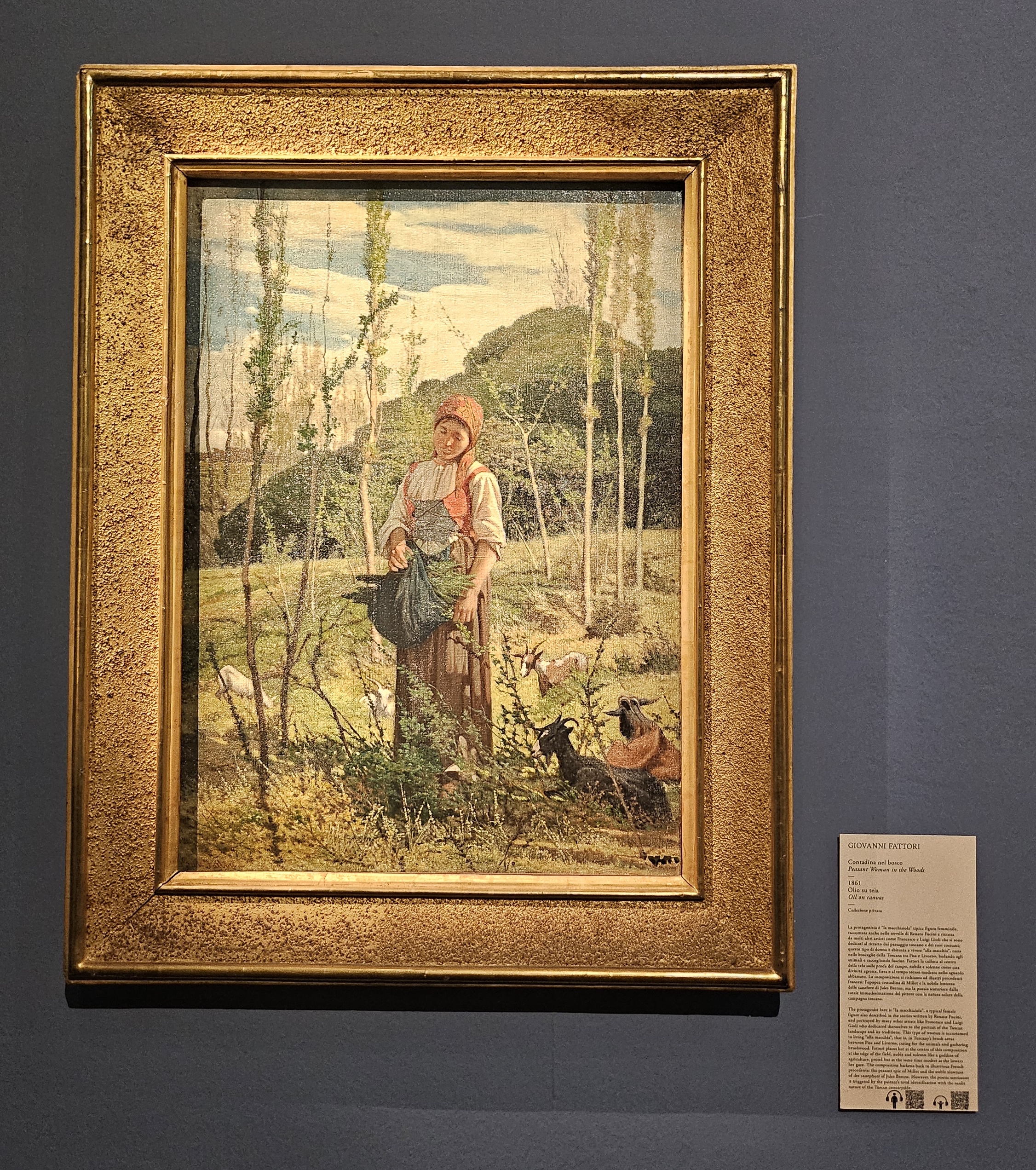
This was a surprise, as I never connected the idea of “macchia” to the double meaning of wilderness. According to the curators, as they explain for Giovanni Fattori’s splendid Peasant Woman in the Woods, the “macchiaiola” is a female figure also described in the stories written by Renato Fucini, and portrayed by many other artists like Francesco and Luigi Gioli. She is deeply connected with the Tuscan landscape and its traditions, especially between Pisa and Livorno, and it’s a type of woman who is accustomed to living “alla macchia,” as we call the Mediterranean maquis, caring for the animals and gathering brushwood.
In this painting, Fattori places her at the centre of this composition at the edge of the field, noble and solemn like a goddess of agriculture, proud but at the same time down-to-earth. The composition harkens back to illustrious French precedents: the peasant epic of Millet and the noble slowness of the canephors of Jules Breton. However, the poetic sentiment is triggered by the painter’s total identification with the sunlit nature of the Tuscan countryside.
Giovanni Bastianini: the unexpected sculptor
Another thing I did not expect was to find a sculptor in the exhibition, and yet here we are.
Born in Fiesole in 1830, Bastianini trained as a sculptor and became renowned for his refined busts and reliefs inspired by the Italian Renaissance, representing a fascinating counterpoint to the artistic movement’s approach. His technical mastery was extraordinary; his idea was to look backwards in order to redefine authenticity. So convincing were his evocations of quattrocento sculpture that several of his works were initially mistaken for genuine Renaissance artefacts. This ambiguity culminated in one of the most intriguing episodes of 19th-century art history: the controversy over sculptures attributed to masters such as Mino da Fiesole, later revealed to be Bastianini’s own creations. A story so funny that you cannot not love the guy.
The scandal surrounding his “Renaissance” works exposed tensions within the 19th-century art world: between originality and revival, authenticity and attribution, market demand and artistic identity. When collectors and experts discovered that the admired “antique” sculptures were modern creations, reactions were mixed with outrage, embarrassment, and reluctant admiration. Bastianini’s skill had been so persuasive that it challenged the very criteria by which artistic value was assigned.
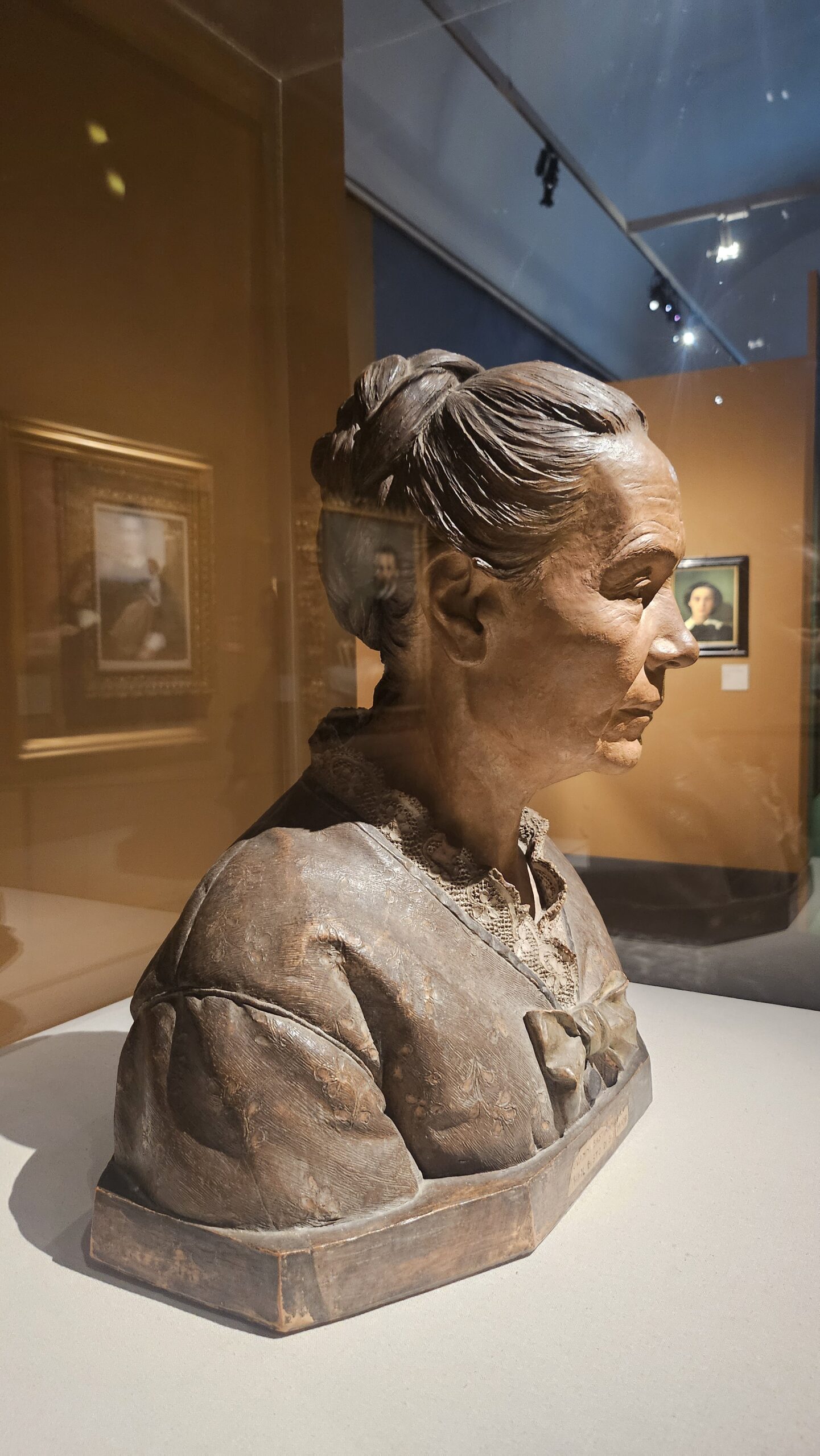
Among the works on display, the wooden bust of Giovanni Bastianini’s mother stands out for its quiet intensity. Carved with refined sensitivity, the portrait evokes the calm gravity of Renaissance sculpture, yet its emotional charge feels unmistakably modern. The surface is treated with restraint, allowing light to rest gently on the planes of the face, while the expression — composed, introspective, almost severe — suggests both dignity and intimacy, but Bastianini shows his top-notch craft in the way he treats laces and fabrics. Just astonishing.
The Final Surprise: Arturo Toscanini and Luchino Visconti
Although Florence was the cradle of the Macchiaioli, their true critical rehabilitation took place elsewhere. As the exhibition text makes clear, it was Milan that consolidated their 20th-century fortune, both in collecting and in cultural influence. This shift from Tuscan avant-garde to Lombard rediscovery is essential to understanding how the movement entered modern visual culture, including cinema, and I didn’t see that coming.
As we were seeing, the Macchiaioli gradually lost centrality in official narratives of modern art after Italy’s unification. By the late 19th century, they were overshadowed internationally by French Impressionism and domestically by newer tendencies, yet their works did not disappear. They migrated into private bourgeois collections, especially in northern Italy. In the early 20th century — particularly after the First World War — Milan became a key marketplace and intellectual hub for 19th-century Tuscan painting. Scholars such as Emilio Cecchi and later Roberto Longhi contributed to reassessing the Macchiaioli within a broader European realism rather than dismissing them as provincial precursors to Impressionism and, by mid-century, exhibitions and acquisitions gradually moved them from private salons into museums, securing their place in Italian art history (if you can’t read Italian, I recommend Norma Broude’s The Macchiaioli: Italian Painters of the Nineteenth Century, Yale University Press, a 1987 book that’s generally available on multiple platforms).
Two figures stand to attention in this scenario: Giacomo Jucker, entrepreneur and refined collector, and Arturo Toscanini, the legendary conductor, who owned Telemaco Signorini’s La toilette del mattino (The Morning Toilet). To fully grasp what the Macchiaioli meant to modernity, though, we need to connect this process of rediscovery with another powerful medium emerging as the dominant visual language of the 20th century: cinema.
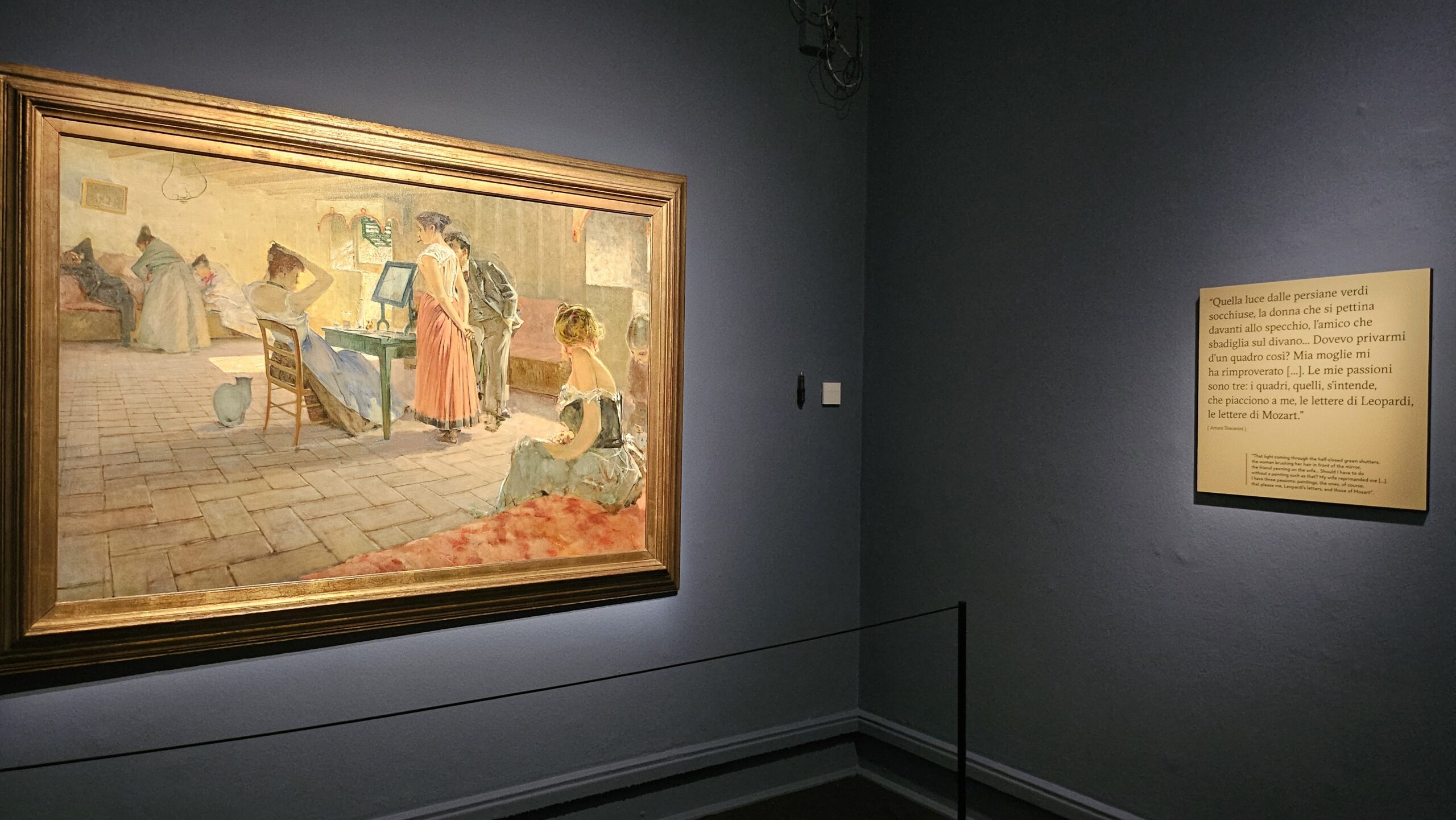
Telemaco Signorini’s La toilette del mattino (c. 1865–1866) is an intimate interior scene that exemplifies the Macchiaioli’s mature approach to domestic modernity: the painting depicts a young woman absorbed in her morning ritual, getting ready for her work, her work being the courtesan in a brothel. Rather than sentimentalising the subject, Signorini approaches it with domestic intimacy and structures the composition through carefully balanced planes of light and shadow: the figure emerges from a subdued, tonally unified space where walls, furnishings, and body are held together by light. The atmosphere is calm yet psychologically charged. The lowered gaze, the stillness of the gesture, and the containment of the interior create a sense of introspection rather than ornament. Unlike academic representations of female toilette — often designed to flatter or eroticize — Signorini’s treatment is sober and observational. The room feels inhabited, real, slightly austere. In this work, everyday life becomes worthy of serious painting, and private domestic space becomes a stage for modern subjectivity.
Arturo Toscanini loved this painting, and he had it above his piano in his residence in Milan.
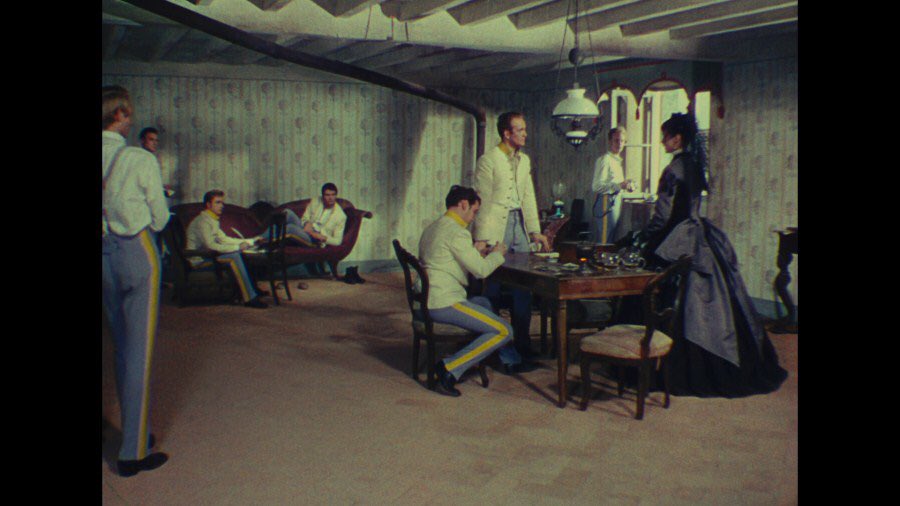
Eventually, Luchino Visconti will walk into that residence and he’ll be thunderstruck by the composition, up to the point of including it meticulously in one of his works: Senso (1954). In the movie, Visconti recreates the atmosphere of the Risorgimento through meticulously composed interiors, and significantly the film opens with music, at La Fenice theatre in Venice during an 1866 performance of Verdi’s Il trovatore, situating the narrative directly within the Austro-Italian conflict. Visconti’s visual language — controlled compositions, chiaroscuro interiors, figures arranged in psychologically charged spaces — echoes the structural discipline of the Macchiaioli. Visconti, himself an aristocrat and intellectual deeply attentive to art history, treated painting as a compositional grammar for cinema, and scholars such as Peter Bondanella have noted that his mise-en-scène frequently draws on 19th-century Italian painting to construct historical atmosphere. Particularly, The Morning Toilet transforms the atmosphere without being a direct quote: the interior of the brother turns into the station of soldiers languidly and morbidly waiting for violence and repression. You can’t get sharper than that.
A more stretched connection is made between the Macchiaioli’s approach to battle scenes and Visconti’s approach in Il Gattopardo (usually translated as The Leopard, a 1963 movie featuring a deeply misunderstood quote about change), where the connection becomes more diffuse. In this meditation on the decline of the Sicilian aristocracy during unification, Visconti integrates visual references to works such as Silvestro Lega’s L’elemosina and La passeggiata in giardino, Giuseppe Abbati and Signorini’s garden scenes and, crucially, Giovanni Fattori’s Garibaldi a Palermo. Fattori’s painting of Garibaldi, in particular, embodies a restrained, almost anti-heroic view of military history, and Visconti’s film similarly avoids triumphant rhetoric. The Macchiaioli’s tonal realism — their emphasis on atmosphere rather than spectacle — finds a cinematic counterpart in Visconti’s painterly pacing. Art historian Giulio Carlo Argan emphasised that the Macchiaioli were fundamentally concerned with the relationship between individual and historical space: Visconti translates that concern into cinema: characters inhabit history not as backdrop but as psychological weight.
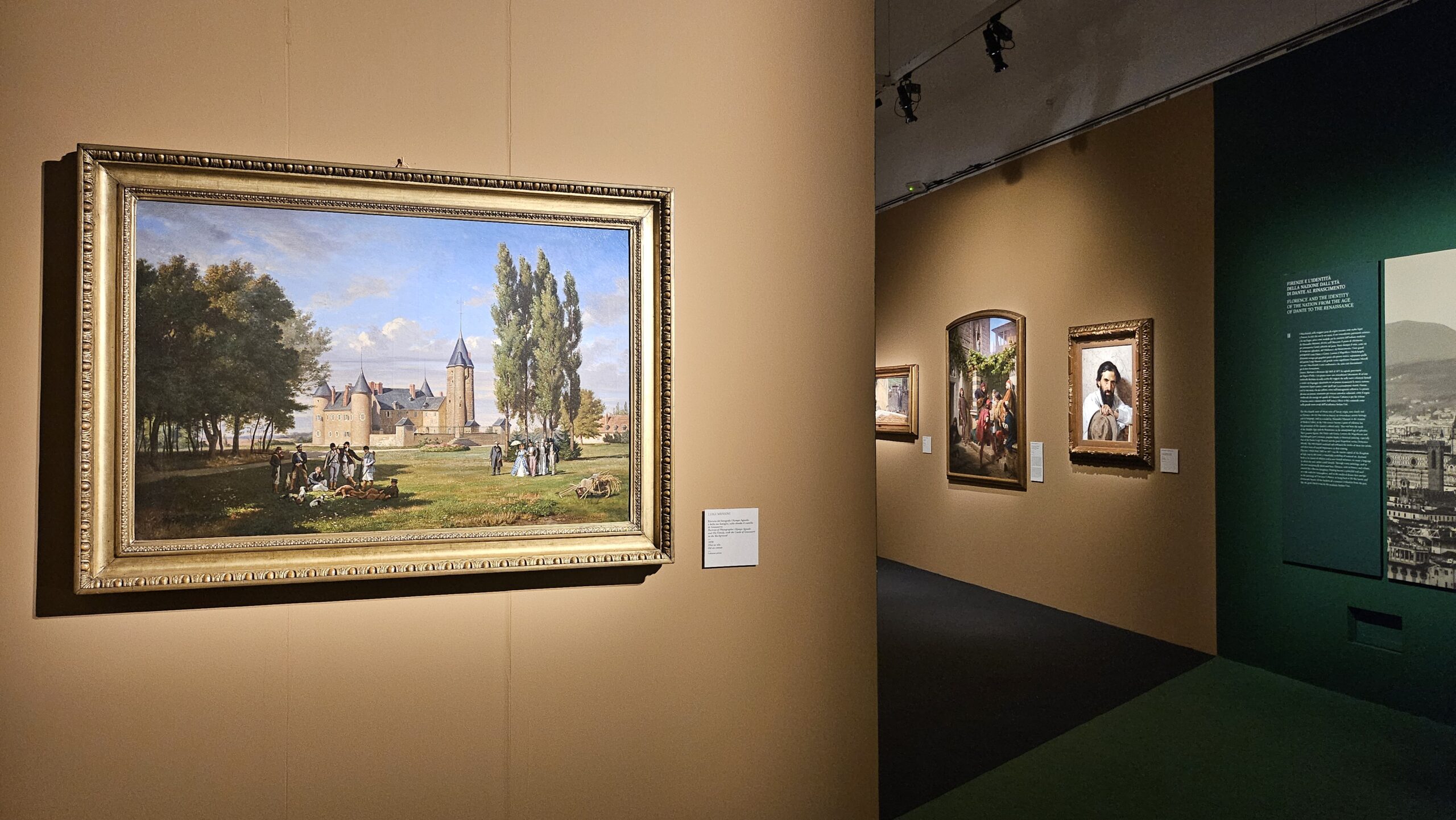
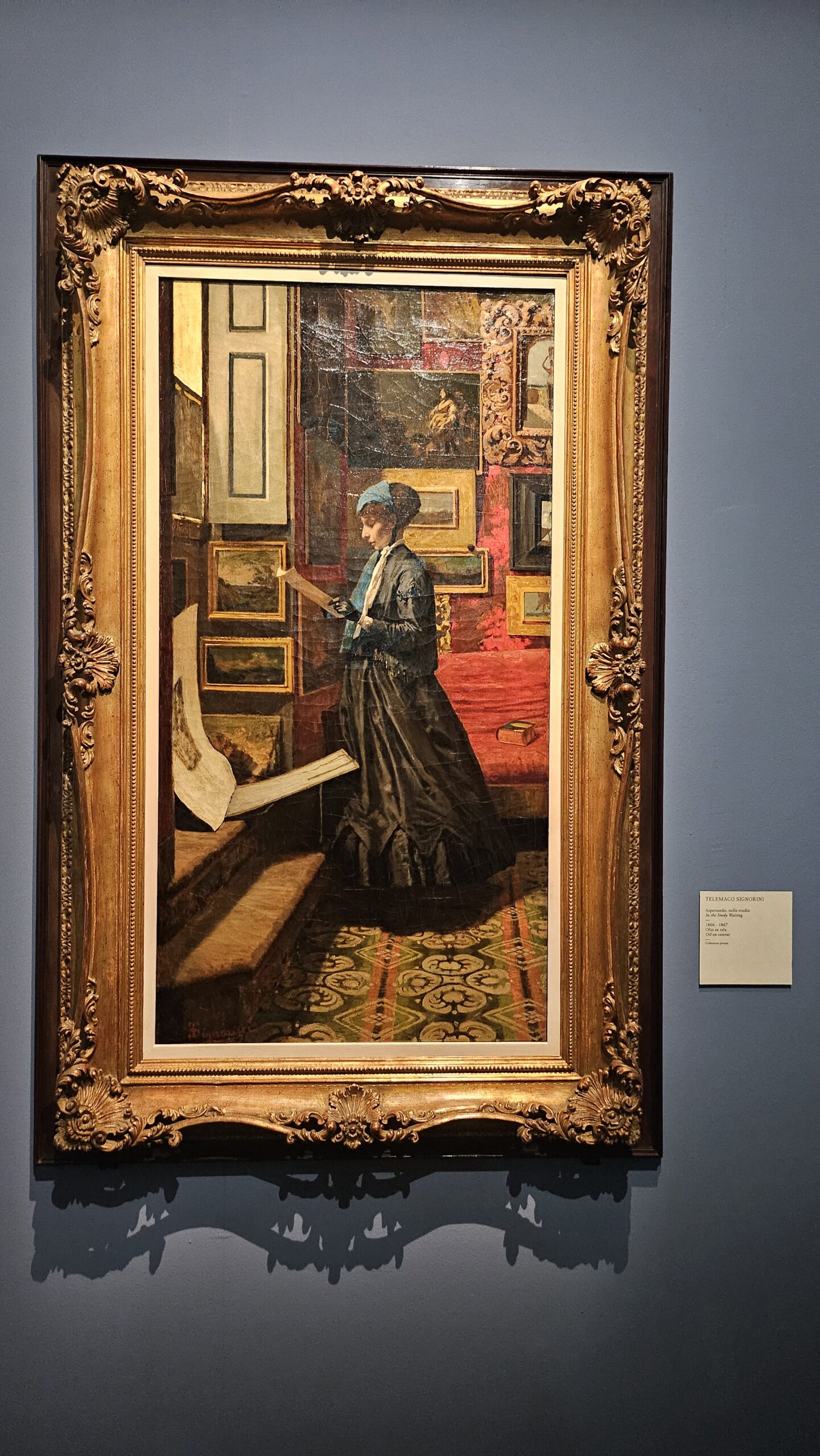
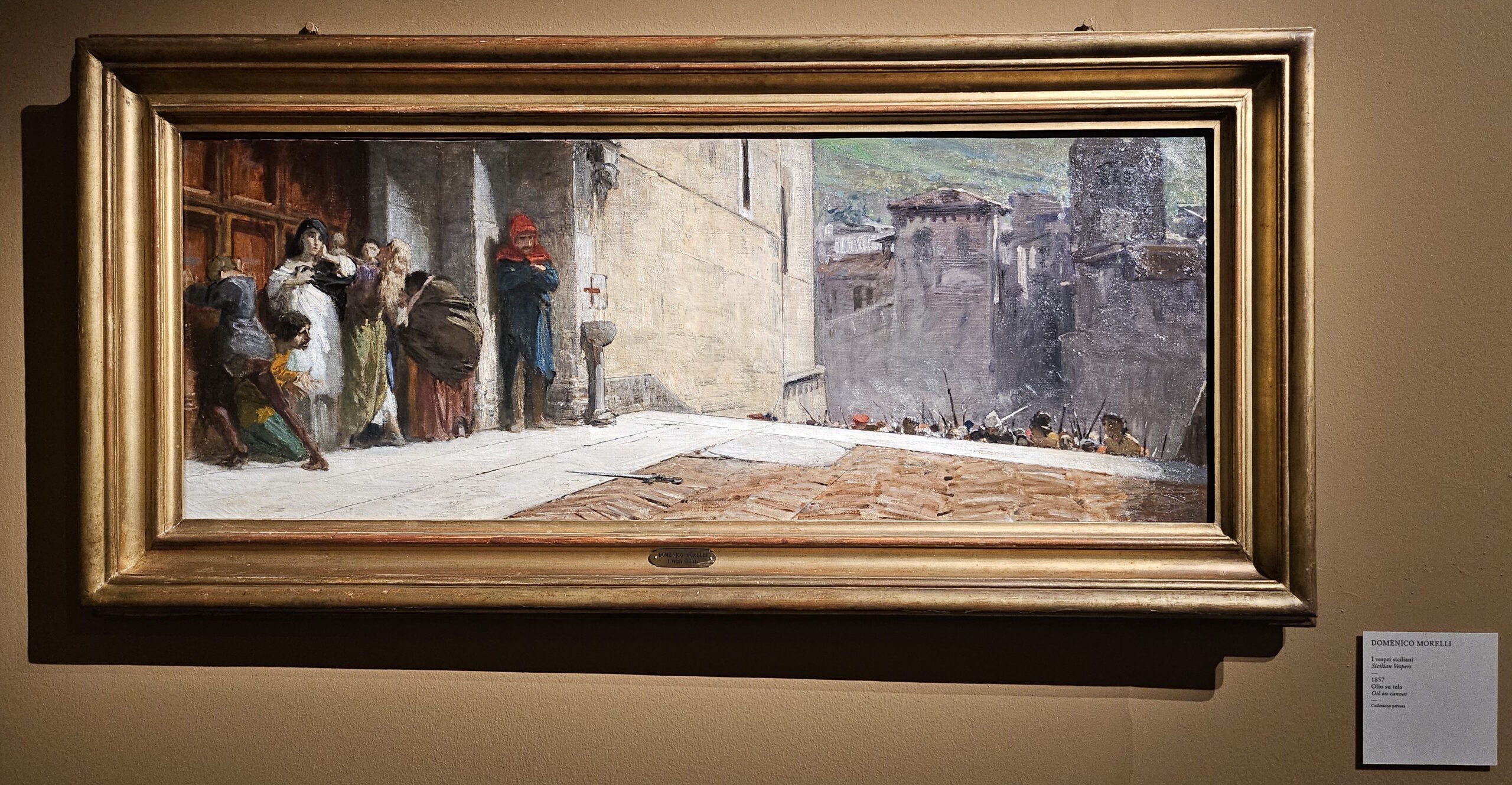
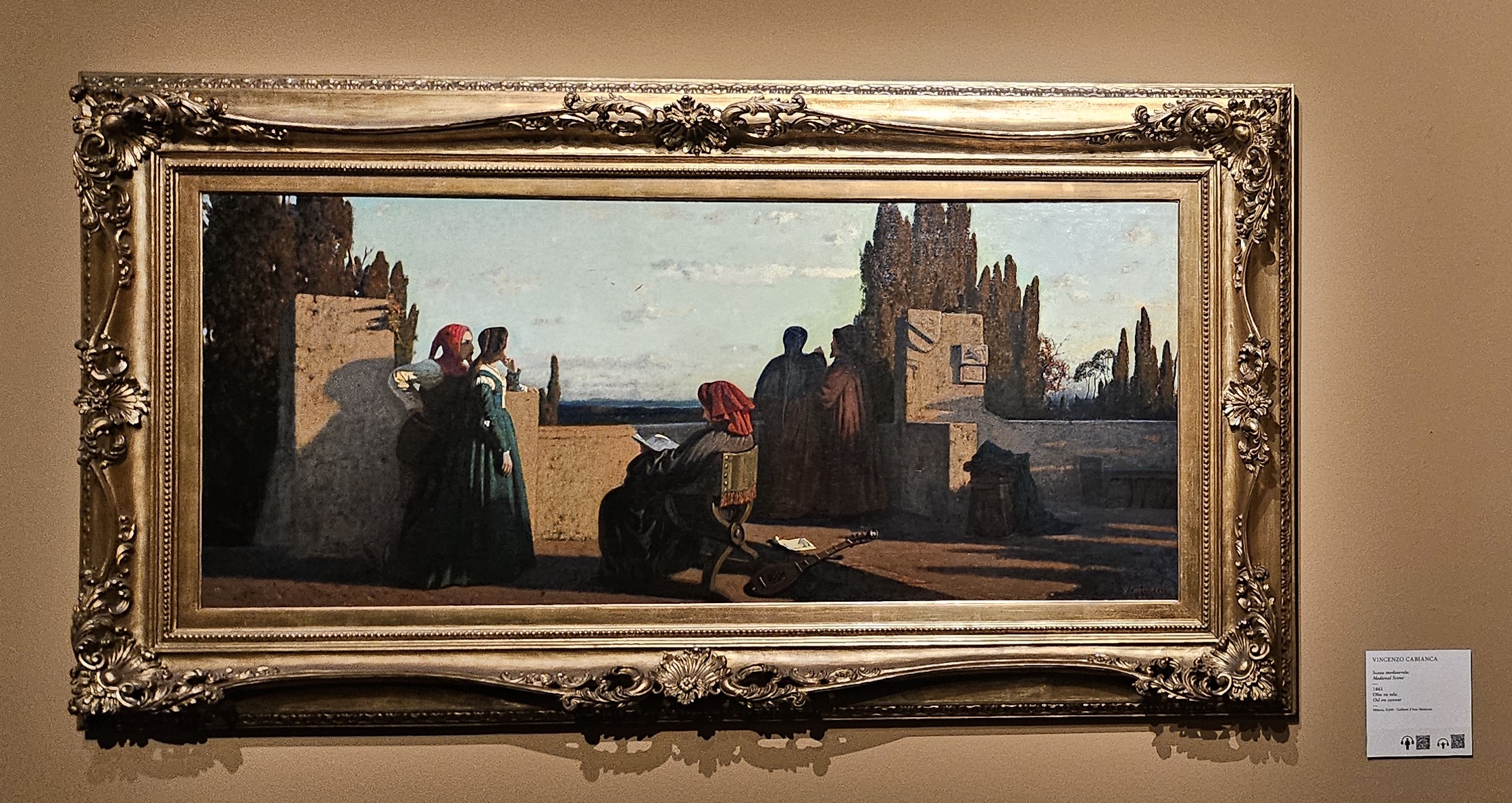
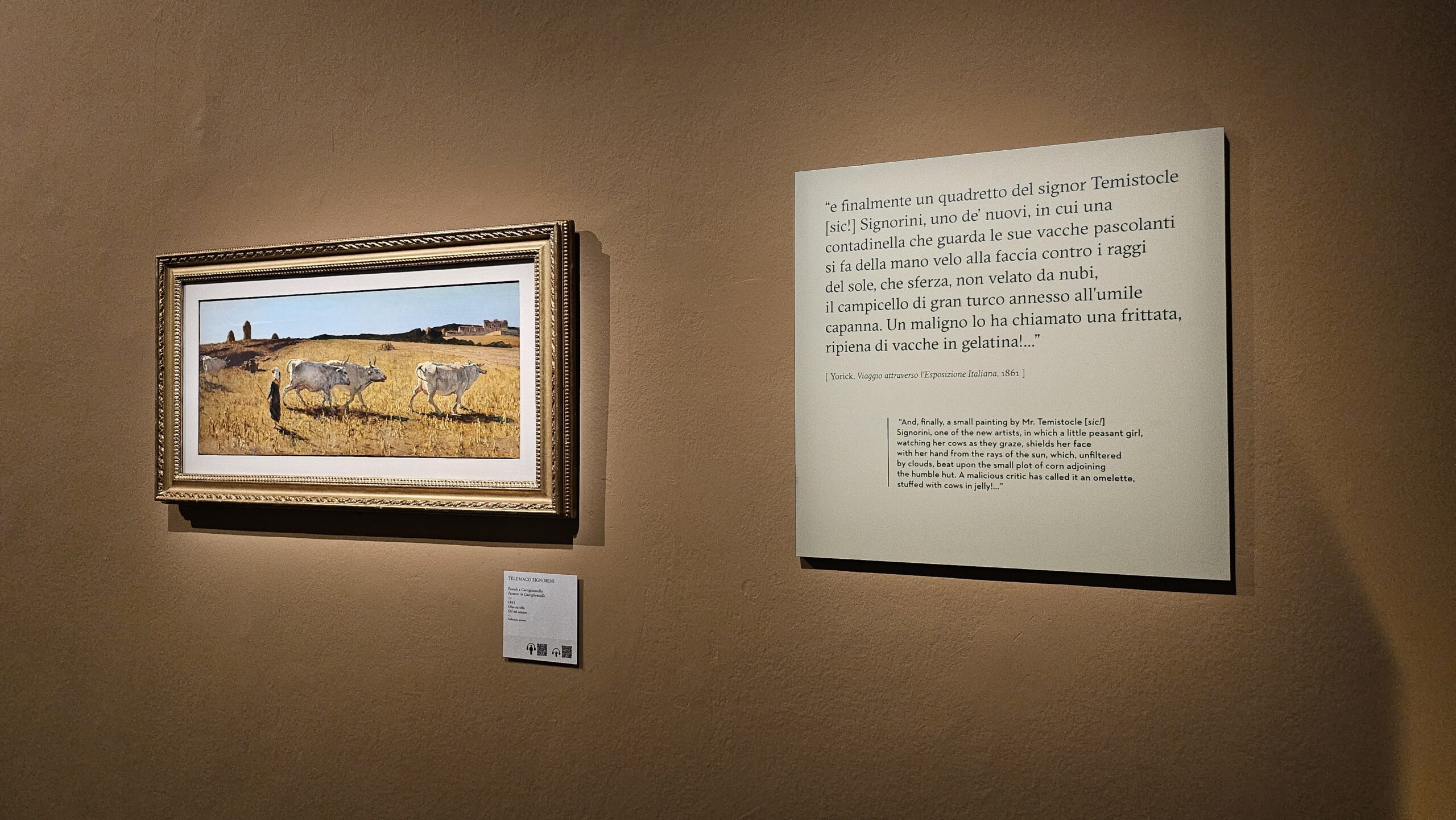
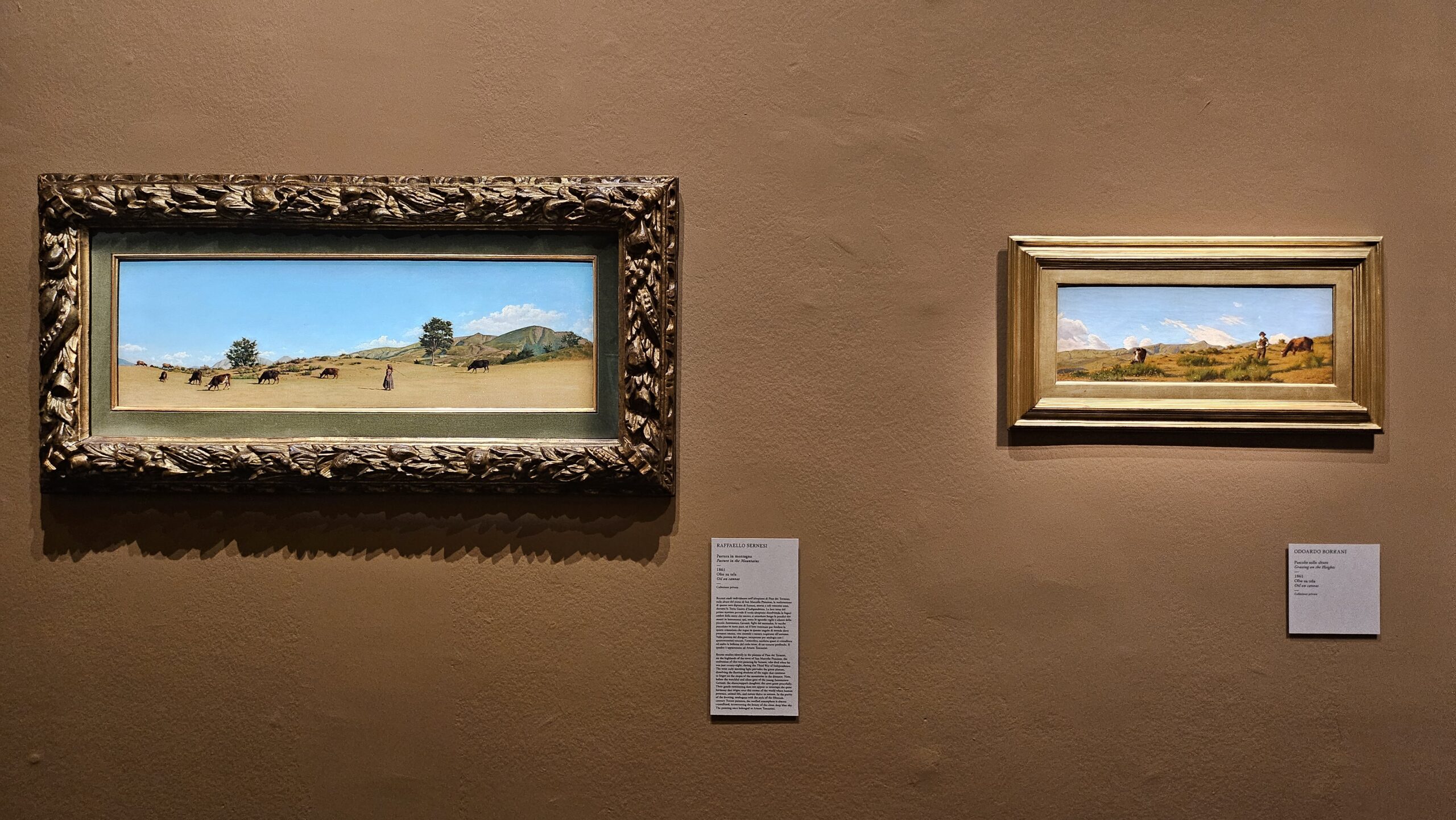
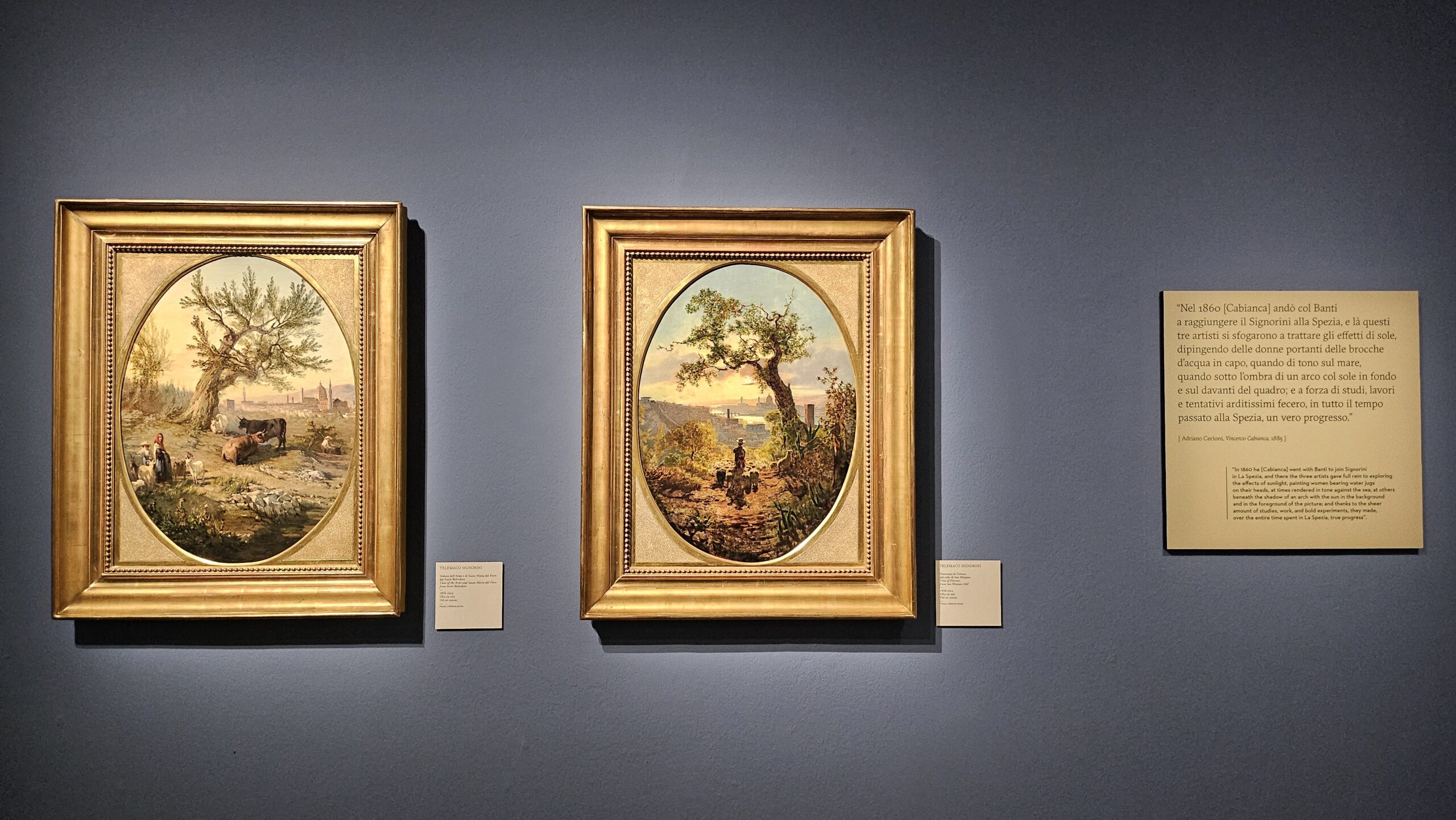
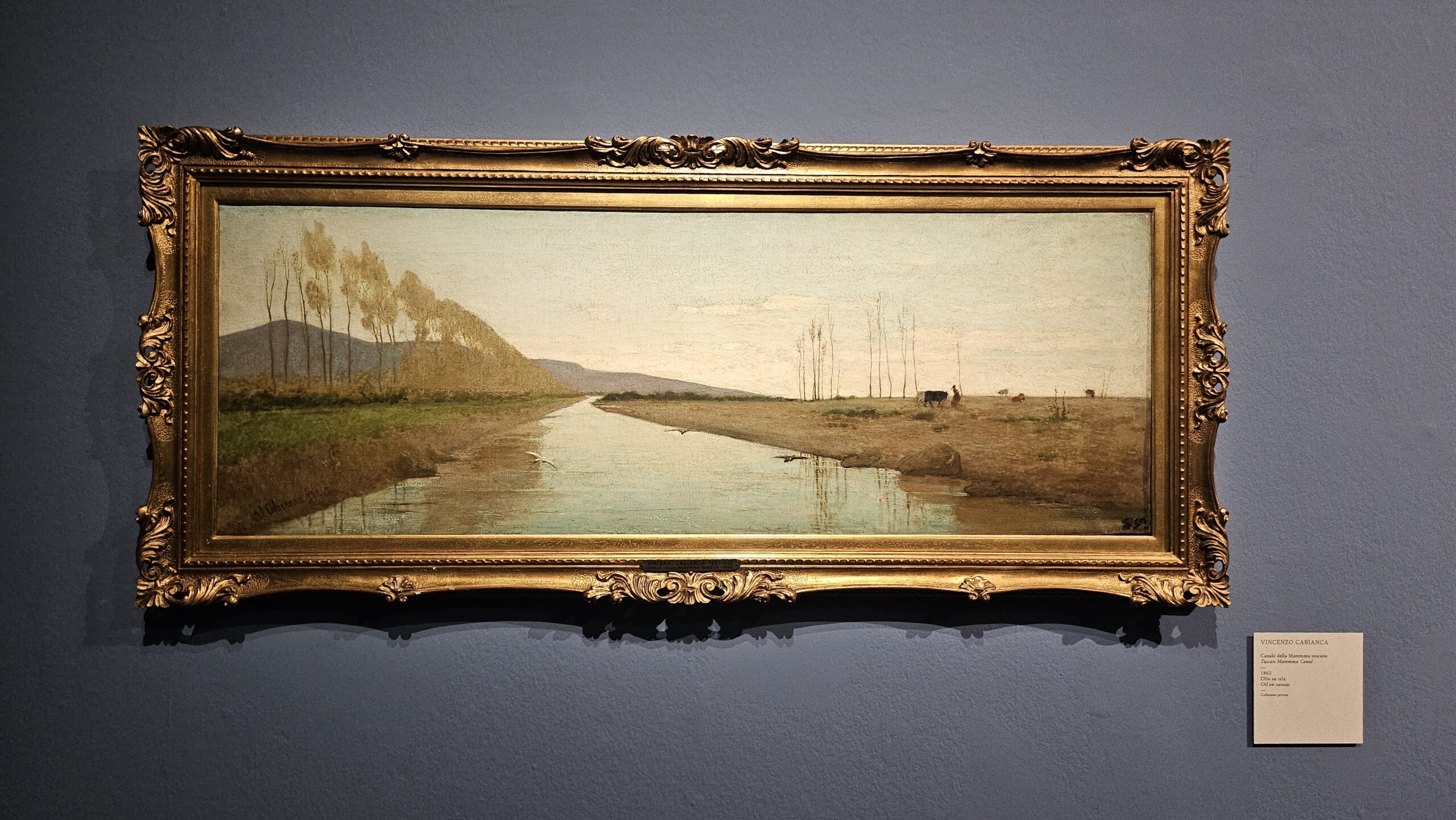
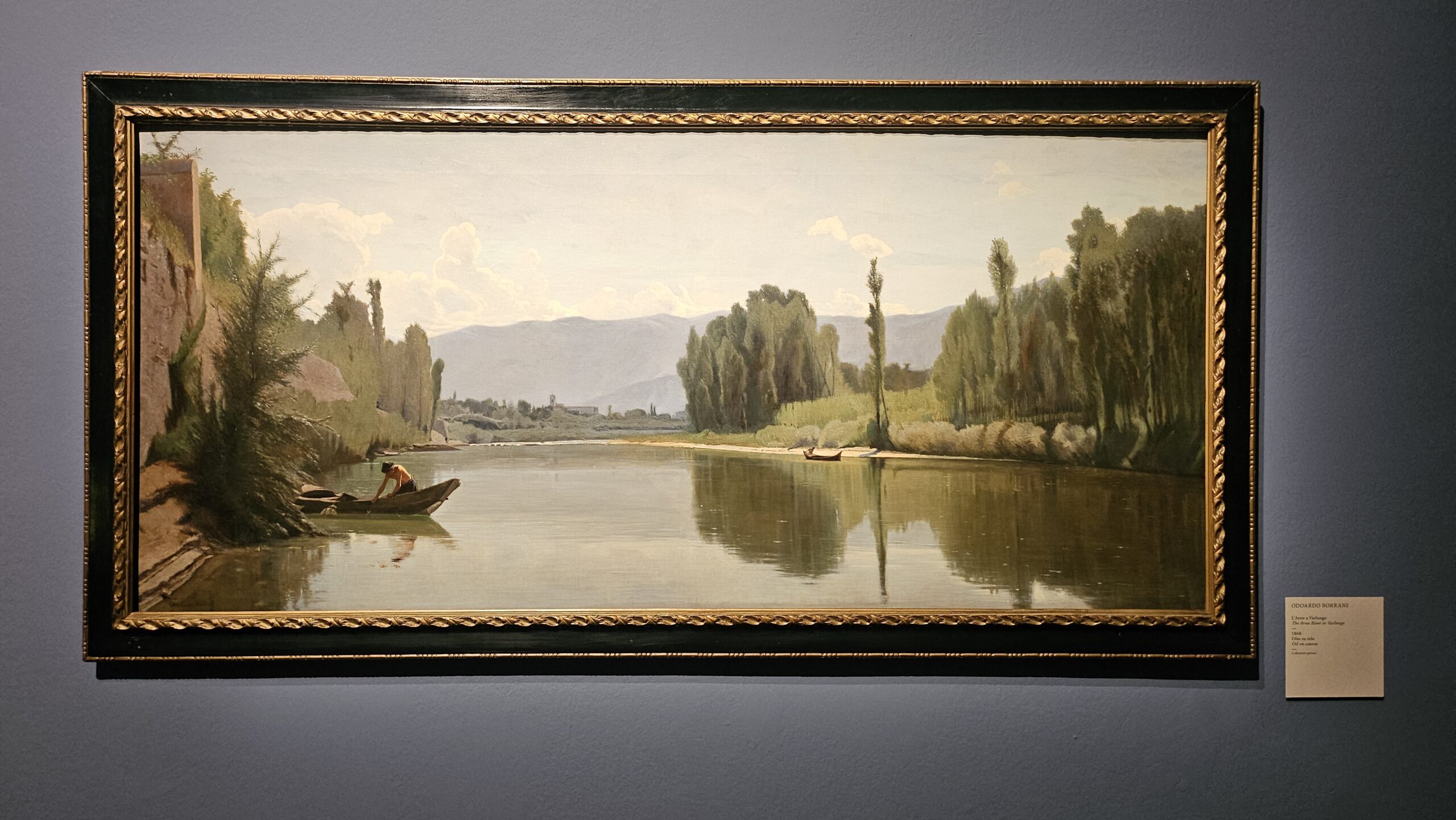
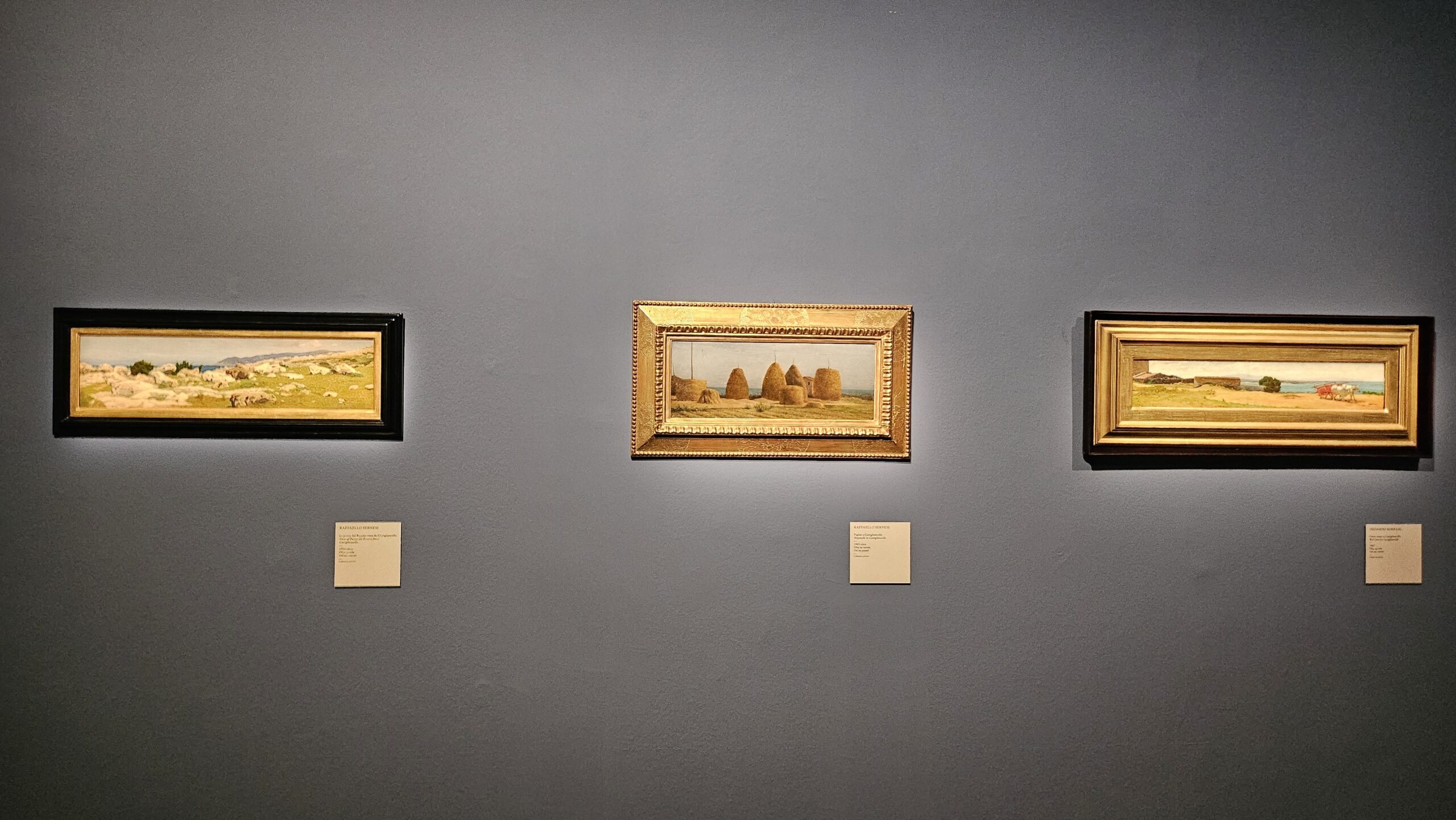
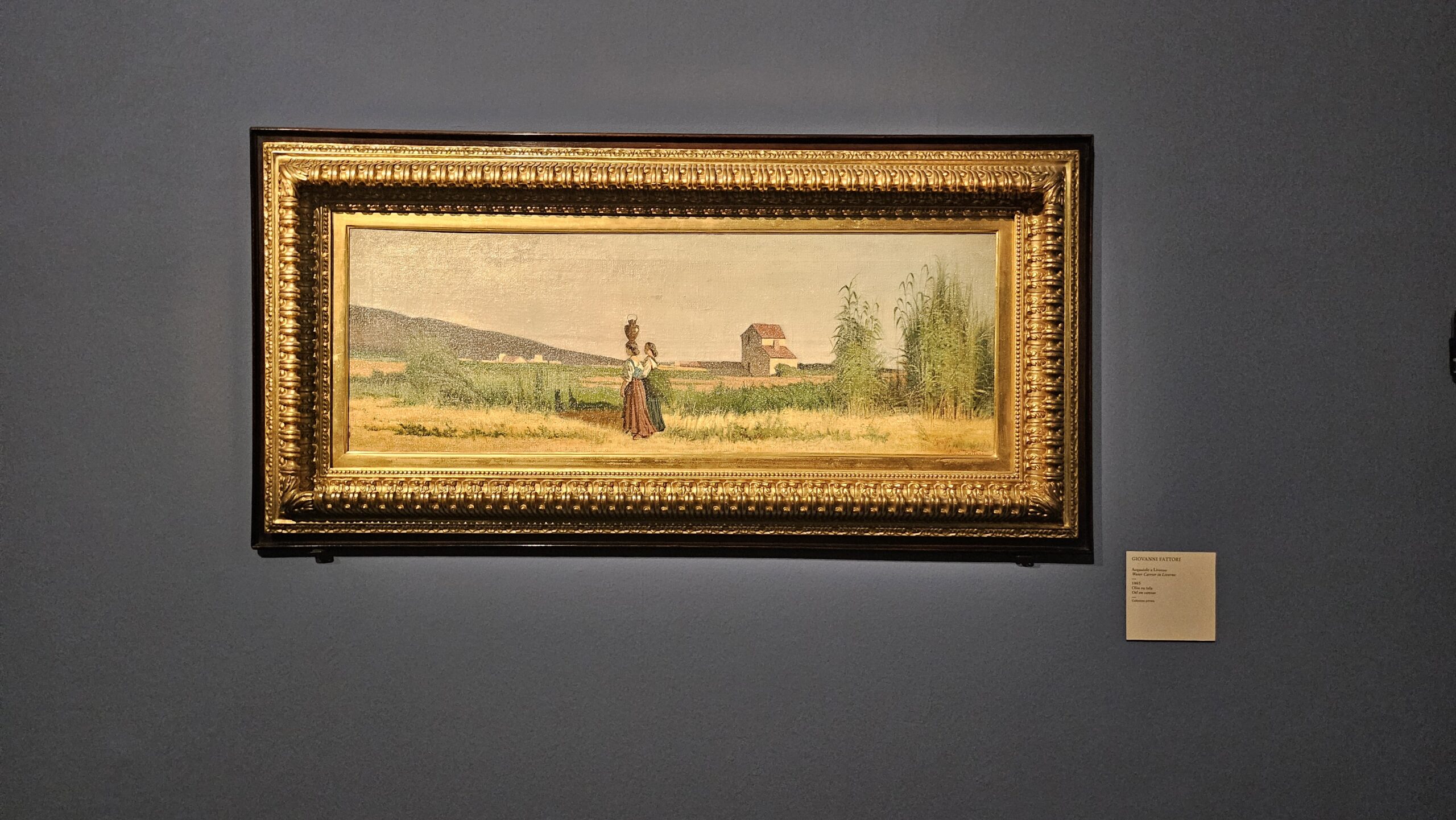
Here are some other pictures of works in the exhibition. Enjoy.


No Comments