
Well, this was odd. I started reading this book because it’s a childhood favourite of many UK people I know, and the charm hits you right from the beginning: this is an adventure like Bedknobs and Broomsticks, like The Goonies and Candleshoe, with witches and pirates and buried treasures and mysterious strangers, and a gag of talking cats who don’t get along with each other.
But is it a good book? That’s a tricky question to ask.
John Masefield: who was this guy?
John Masefield (1878–1967) is an odd fellow in English literature. Best known in his own lifetime as a poet — most famously Sea Fever (1902) — he also wrote novels, travel books, essays, and a small but distinctive body of fiction for younger readers, and The Midnight Folk is the first book in the series. The common traits in his work certainly are a strong attachment to landscape, memory, and oral storytelling traditions, alongside a sensitivity to loss and longing that reflects both personal experience and the wider historical changes that were occurring during the time of his writing.
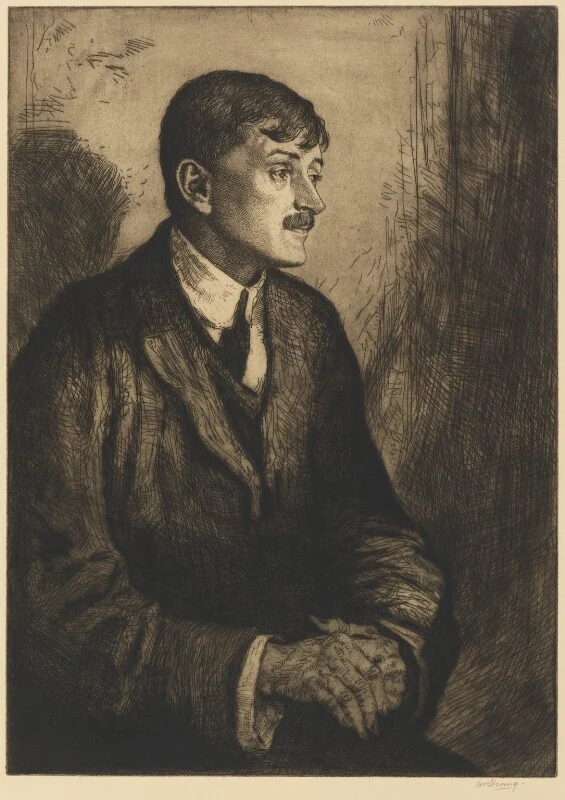
Orphaned at a young age, he was raised by relatives in the countryside in Gloucestershire, and the rural environment left a lasting imprint on his imagination. After a brief and unhappy attempt at being trained for the merchant navy, he spent time wandering and working abroad before returning to England and turning seriously to writing. These experiences contributed to the tension in his work between freedom and constraint, adventure and exile, nostalgia and unease. This is especially true of his children’s books, which resist the moral clarity and narrative neatness typical of early twentieth-century children’s literature.
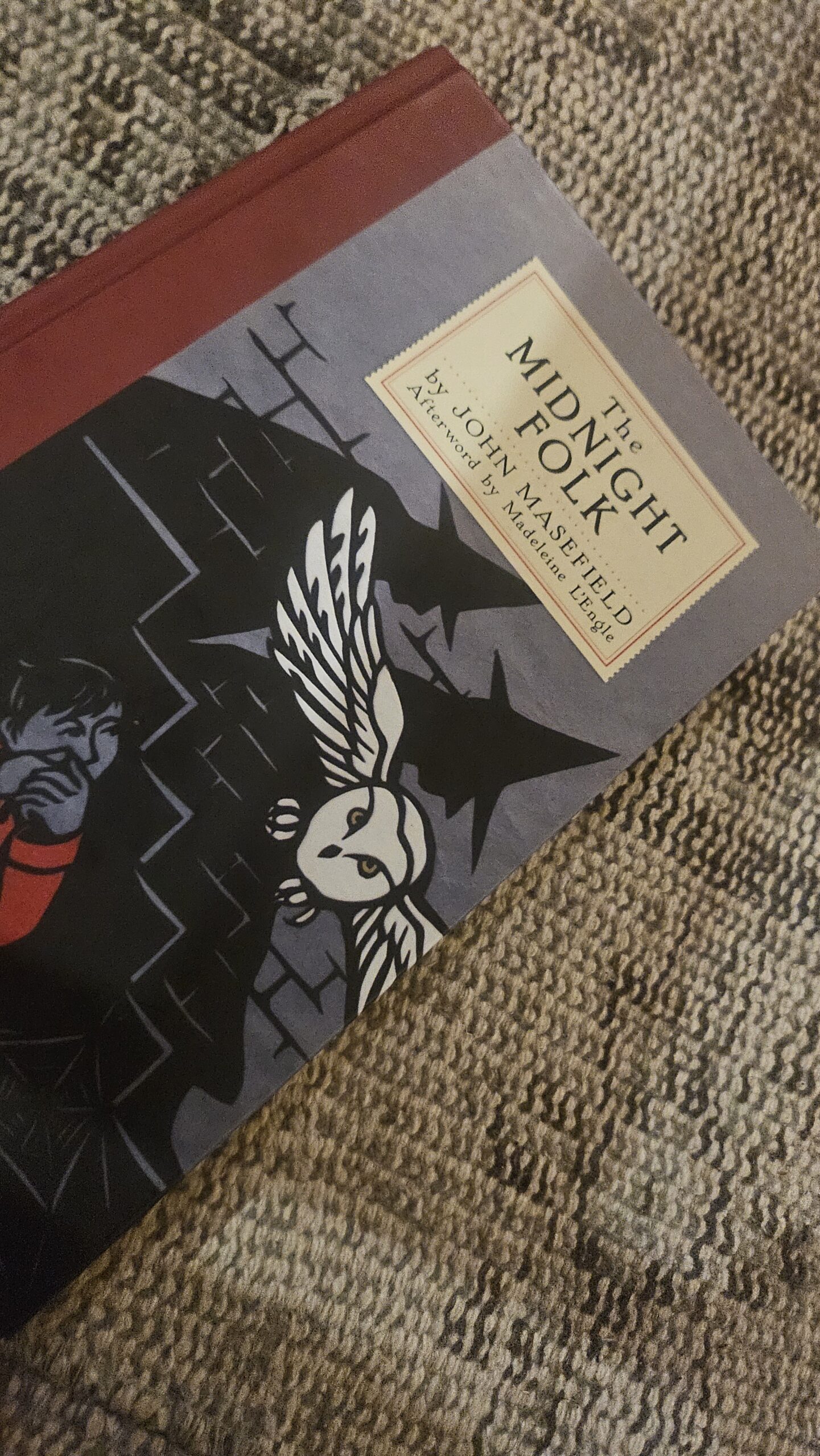
The Midnight Folk
The Midnight Folk was published in 1927, in the interwar period, when British society was still reckoning with the aftermath of the First World War. Children’s literature at the time was undergoing a subtle transformation. Alongside the popularity of high fantasy and adventure stories, there was a growing interest in inward-looking narratives centred on memory, psychology, and the child’s subjective experience. This is when writers such as Kenneth Grahame and Alison Uttley explored childhood as a liminal state — poised between imagination and loss — rather than simply a preparation for adulthood as other authors had done (and will do) in the past.
Masefield’s first novel fits squarely within this trend, but with a tone that is notably more melancholic and elusive. Rather than constructing a secondary fantasy world, one of The Midnight Folk‘s strengths is anchoring its magical elements in the English countryside and in the emotional life of its protagonist. The book draws on folklore, dreams, and half-remembered songs, creating an atmosphere that feels closer to reverie than to conventional plot-driven fantasy. As a reader with a strong interest in folklore, you’re ensnared in that same atmosphere, half-dreaming through the series of adventures that sound like something you should be remembering from somewhere.
This, along with a fragmented structure that sometimes leaves you puzzled with its sudden changes, makes it an interesting read but not something I would recommend. I’m told the second one in the series, The Box of Delights is more accessible and less… well, weird.


No Comments