"All this he saw, for one moment breathless and intense, vivid on the morning sky; and still, as he looked, he lived; and still, as he lived, he wondered."
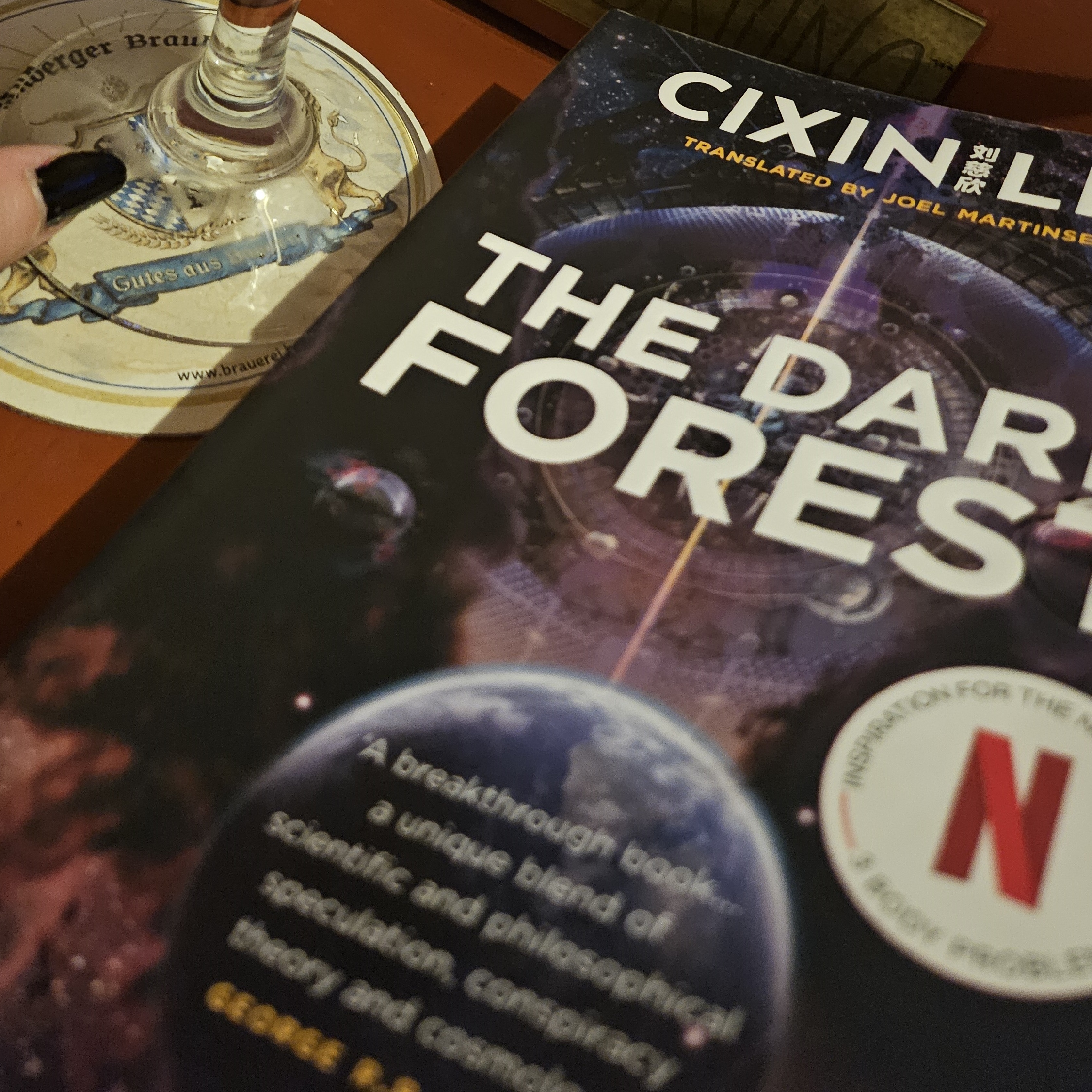
The Dark Forest
This is just the second book I have read by this author, following, of course, the previous title in the series, so I don’t claim to be an expert. Nevertheless, for those who wish to approach and enjoy his work, I can give you two advices so far:
Cixin Liu writes archetypes, so don’t expect characters. One of the most common criticisms I read is that his dialogue is flat and his characters are dull. While I don’t agree on the dialogue (but one should always be mindful to tread carefully while reading a translation), my personal take on characters is that the author’s point isn’t to vividly depict that unique blend of mindset, background and personality we call a character, but to focus on the mindsets instead. If you read him through this lens, you might find a more interesting focus in exploring the different ways a human mind shapes up and responds under a crisis. The first book showed us mostly scientists and researchers, but this second work widens its scope and encompasses politicians, strategists, the military and the laymen. In this, his portraits are never flat, nor are the verbal exchanges between them. The nuances of the different approaches are unparalleled.
Cixin Liu writes in parallels. I already explored this while writing about The Thee Body Problem, but I think it’s amplified in this book. And I can’t really get into details without offering spoilers, but I was amazed at how the wider theory (one of the solutions to that Fermi Paradox every science-fiction lover knows and respects) is explained through the crisis of a handful ships, or the general approach of humanity to a crisis of such magnitude is chiseled into the story-arc of the fourth Wallfacer, and I beg you to keep this in mind while you crawl through the seemingly pointless thousand pages of a random dude doing stuff.
Those two points – just like the two points of a theory you’ll read right away, in a first chapter narrated from the point of view of an ant – come together to create a book that’s tough at first but eventually delivers above and beyond your expectations. And if you do brush up on your Fermi paradox, which I believe is the intention of the author in picking such a title, you’ll be shouting and shaking your book and you’ll be harassing every friend and stranger in the street over the magnificence of the concept in this book, the brilliance of the development in this plot and the sheer magnitude of the delivery.
The picture in the header is a homage by illustrator Xiaolin Zeng, you can find it here.
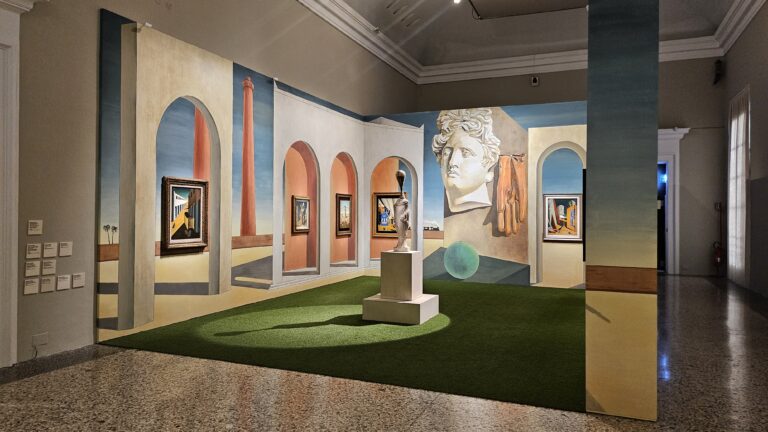
What a splendid exhibition! I was expecting your regular, run-of-the-mill show at Palazzo Reale, which is usually good enough, but I was surprised at the depth and width of this new endeavour, that spans across the city with multiple initiatives and, even within the show
I take issue with this volume, and not because they’re short stories and you’re bound to like some more than the others: they’re all delightful, with very few and negligible exceptions. No, my problem is curatorial: I take issue that instead of grouping all the
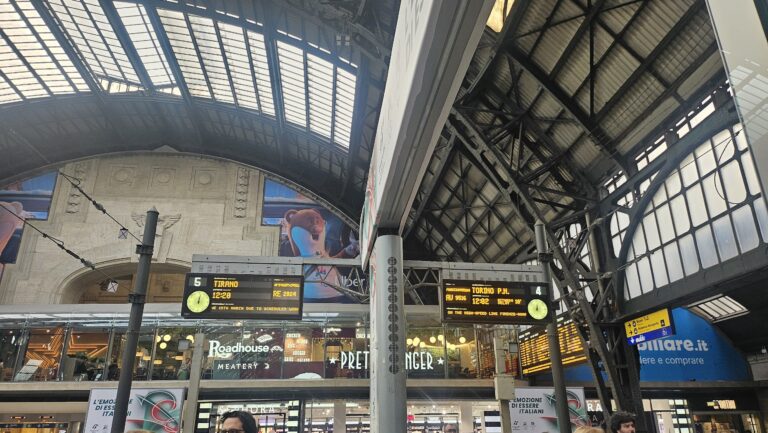
Cara Trenitalia, Quando ero ragazza, ogni tanto mi capitava di prendere il treno da Milano a Tirano, per raggiungere i miei genitori in vacanza sul lago. È un viaggio verso nord, attraverso la Brianza Felix, che molto presto trasforma la campagna in una collina boscosa
What a splendid exhibition! I was expecting your regular, run-of-the-mill show at Palazzo Reale, which is usually good enough, but I was surprised at the depth and width of this new endeavour, that spans across the city with multiple initiatives and, even within the show
I take issue with this volume, and not because they’re short stories and you’re bound to like some more than the others: they’re all delightful, with very few and negligible exceptions. No, my problem is curatorial: I take issue that instead of grouping all the
Cara Trenitalia, Quando ero ragazza, ogni tanto mi capitava di prendere il treno da Milano a Tirano, per raggiungere i miei genitori in vacanza sul lago. È un viaggio verso nord, attraverso la Brianza Felix, che molto presto trasforma la campagna in una collina boscosa
We use cookies on our website to give you the most relevant experience by remembering your preferences and repeat visits. By clicking “Accept”, you consent to the use of ALL the cookies.
This website uses cookies to improve your experience while you navigate through the website. Out of these cookies, the cookies that are categorized as necessary are stored on your browser as they are essential for the working of basic functionalities of the website. We also use third-party cookies that help us analyze and understand how you use this website. These cookies will be stored in your browser only with your consent. You also have the option to opt-out of these cookies. But opting out of some of these cookies may have an effect on your browsing experience.
Necessary cookies are absolutely essential for the website to function properly. This category only includes cookies that ensures basic functionalities and security features of the website. These cookies do not store any personal information.
Any cookies that may not be particularly necessary for the website to function and is used specifically to collect user personal data via analytics, ads, other embedded contents are termed as non-necessary cookies. It is mandatory to procure user consent prior to running these cookies on your website.


No Comments