"All this he saw, for one moment breathless and intense, vivid on the morning sky; and still, as he looked, he lived; and still, as he lived, he wondered."

The Annotated Hound of the Baskervilles

Late-night rejection!

A classic in Gothic fiction even if it doesn’t intend to be in that genre, I couldn’t not include this in our collection on Patreon, since I pay homage to its turning point: “the deck is marked by scratches, powerful, heavy scratches three inches apart like claw prints of a gigantic hound.”

The idea of the hellhound is closely related to the idea of the werewolf, profoundly rooted in folklore and it interests me for many different reasons.

Also, I find it amusing that this novel, one of the most famous in the Sherlock Holmes series, was actually written and published after its author had decided he was done with the character. It really takes a challenge, doesn’t it? This novel predates the events narrated in “The Final Problem” and doesn’t really bring Holmes back to life, thus the readers stayed disappointed until the publishing of “The Empty House” in 1903.

The Hound of the Baskervilles first appeared in the Strand Magazine, divided in monthly parts, from August 1901 to April 1902. You should remember that every time a chapter closes and every time a new one starts. The first book edition was published by George Newnes in 1902, before the ending was published on the magazine, and the first American edition, published by McClure, Phillips & Co., also appeared in 1902, slightly after the British counterpart.

As a reference, if you want to know more, I can’t recommend enough The New Annotated Sherlock Holmes published by W. W. Norton & Company with annotations by Leslie K. Klinger. The Hound of the Baskervilles is annotated in Volume 3.

The book includes notes to the text, an appendix with spectral hounds in British, Hiberian and Norse folklore, and a reading list for more hellish dogs.

Enjoy!

architecture, engineering and construction

You said the same about BIM

Last week I wrote a post about the anxiety many sectors are feeling in the face of AI, and about integrity as a tool to approach the technological shift we’re undergoing. It was a good post. I’m happy about that post. Some people reached out,

Read More »
books and literature

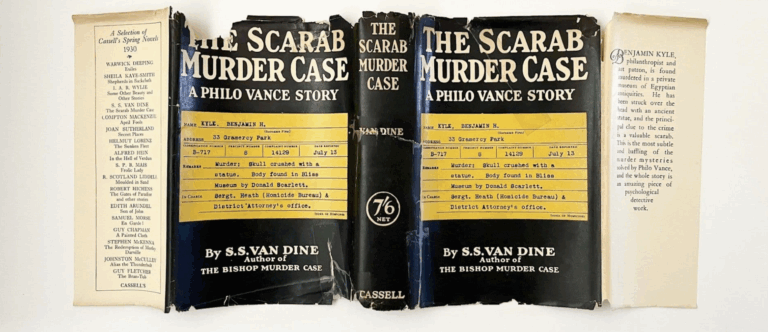
S.S. Van Dine’s The Scarab Murder

S.S. Van Dine was the pen name of Willard Huntington Wright (1888–1939), an art critic, editor, and novelist from the US who created Philo Vance, apparently one of the defining amateur detectives of the Golden Age of detective fiction. The Vance series ran to twelve

Read More »
books and literature

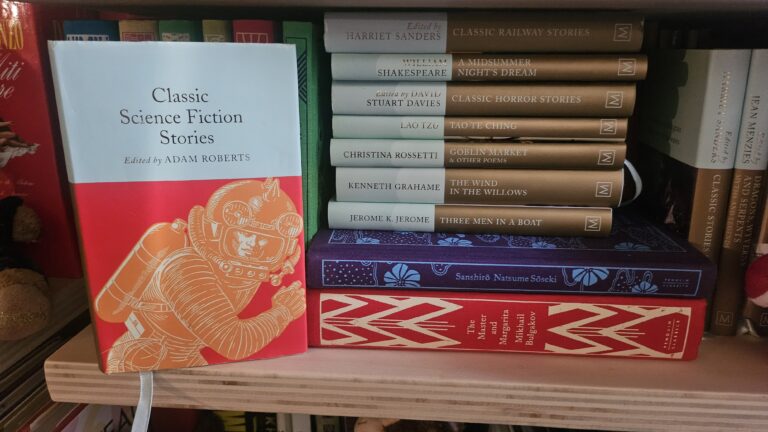
Classic Science Fiction Stories

This is the third collection I read from these charming little light-blue books with the golden pages, and they’re uneven at best. Once again, as such, I have mixed feelings about this collection and I’ll have to proceed scientifically to give a rating, so here

Read More »
Share on LinkedIn
Throw on Reddit
Roll on Tumblr
Mail it
No Comments

Post A Comment

This site uses Akismet to reduce spam. Learn how your comment data is processed.

RELATED POSTS

You said the same about BIM

Last week I wrote a post about the anxiety many sectors are feeling in the face of AI, and about integrity as a tool to approach the technological shift we’re undergoing. It was a good post. I’m happy about that post. Some people reached out,

Read More

S.S. Van Dine’s The Scarab Murder

S.S. Van Dine was the pen name of Willard Huntington Wright (1888–1939), an art critic, editor, and novelist from the US who created Philo Vance, apparently one of the defining amateur detectives of the Golden Age of detective fiction. The Vance series ran to twelve

Read More

Classic Science Fiction Stories

This is the third collection I read from these charming little light-blue books with the golden pages, and they’re uneven at best. Once again, as such, I have mixed feelings about this collection and I’ll have to proceed scientifically to give a rating, so here

Read More