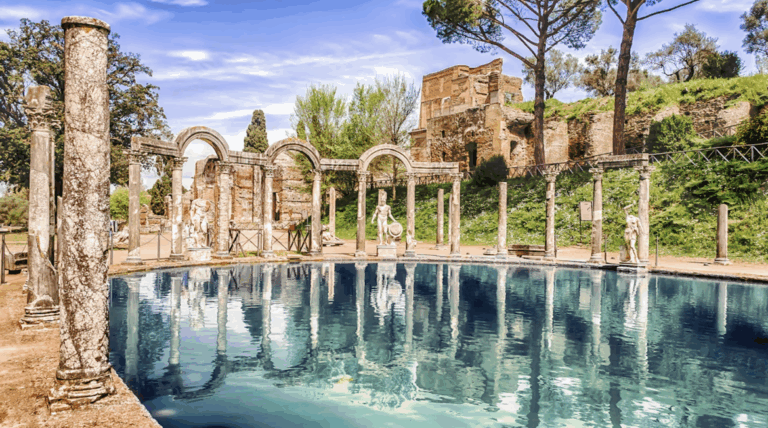
"All this he saw, for one moment breathless and intense, vivid on the morning sky; and still, as he looked, he lived; and still, as he lived, he wondered."

Susanna Clarke’s The Ladies of Grace Adieau

I had forgotten how much I was bored by Clarke’s Jonathan Strange & Mr Norrell, but I trust I’ll like other stuff by the same author and, before tackling Piranesi, I decided to finally approach this one. Not remembering these are spin-off stories from Jonathan Strange & Mr Norrell. So yeah, that might have been my mistake.

But how do you rate a book where half the stories bored you to tears and the other half was masterfully crafted, with memorable characters and a clever use of British folklore?
Scientifically, I’m afraid.

★★ “The Ladies of Grace Adieau,” and I’m being generous: it embodies everything I disliked with Strange & Norrell, particularly this kind of self-absorbed satisfaction in the usage of folklore themes, which I’m sure is very clever and very funny and yet should be at the service of some compelling story;

★ “On Lickerish Hill” has the same problem of the first one, without the owls;

★★★★★ “Mrs Mabb”: wonderful, wonderful, wonderful, featuring themes such as the Wild Hunt and other fairish mischief and yet the main character is very interesting and the whole atmosphere is splendidly British;

★ “The Duke of Wellington Misplaces His Horse” is Neil Gaiman’s fanfiction and I’m less than interested in that, right now (also, there’s a place for fanfiction and it isn’t this one);

★★★★★ “Mr Simoneli or the Fairy Widower”: a splendid tale revolving around the themes of inheritance, of being related to a dark fairy and, most importantly, a masterpiece in depicting glamour from the point of view of someone who’s immune and doesn’t know;

★★★ “Tom Brightwind, or How the Fairy Bridge Was Built at Thoresby” was nice but definitely too long for what it was trying to do;

★★★ “Antickes and Frets” is a nice story featuring some attempted embroidery magic by Mary Queen of the Scots;

★★ “John Uskglass and the Cumbrian Charcoal Burner” would be another one-star story if not for the comic succession of saints.

If I’m doing the math right, I get a little shy of three stars, which is what I’m compelled to give this book. A pity.
Summertime

The Seduction of Place

We’re closing out the month a little differently than we opened it, and we’re circling back to the city since many of you will be doing just that. What’s left of August won’t be organised into weekly themes with a Wednesday essay tying them together:

Read More »
architecture, engineering and construction

Ruins and Memory

Every text this week has been trying to answer some version of the same question: what, exactly, does a ruined building (or district, or city) owe the people still standing near it, and what do we owe to the ruin itself out of respect for

Read More »
Summertime

The Prison and the Railway Station

We already encountered W.G. Sebald with his The Rings of Saturn, and today I’d like to bring you his last novel, Austerlitz, published in 2001. The story follows a man named Jacques Austerlitz while he slowly uncovers the truth about his origins and his traumatic

Read More »
Share on LinkedIn
Throw on Reddit
Roll on Tumblr
Mail it
No Comments

Post A Comment

This site uses Akismet to reduce spam. Learn how your comment data is processed.

RELATED POSTS

Ruins and Memory

Every text this week has been trying to answer some version of the same question: what, exactly, does a ruined building (or district, or city) owe the people still standing near it, and what do we owe to the ruin itself out of respect for

Read More

The Prison and the Railway Station

We already encountered W.G. Sebald with his The Rings of Saturn, and today I’d like to bring you his last novel, Austerlitz, published in 2001. The story follows a man named Jacques Austerlitz while he slowly uncovers the truth about his origins and his traumatic

Read More

Someone Has to Clean Up

Wisława Szymborska was a Polish poet, essayist, and translator, born in 1923 and awarded the Nobel Prize in Literature in 1996 for poetry marked by a sharp, ironic awareness of human life and history. Map: Collected and Last Poems is an English-language volume of Szymborska’s

Read More