"All this he saw, for one moment breathless and intense, vivid on the morning sky; and still, as he looked, he lived; and still, as he lived, he wondered."

Pride Month 2025 – Story of the Day

Christina of Sweden: The Queen Who Refused to Be a Woman

Crowned queen at the age of six and ruling in her own right by eighteen, Christina of Sweden stood as one of the most enigmatic and transgressive monarchs of the 17th century — a woman who refused marriage, dressed in men’s clothing, and filled her court with artists, philosophers, and female companions.

Christina cultivated a persona that rejected femininity and challenged dynastic expectations. She openly declared herself uninterested in marriage, calling it a “horrible and offensive thing.” She wore trousers, collected weapons, and preferred horseback riding to embroidery. But beneath the politics of refusal lay a more intimate rebellion: Christina was deeply attached to women, particularly Ebba Sparre, whom she called her “bedfellow” and “the object of my love.”

Their letters are saturated with romantic longing. While such language has often been dismissed as “romantic friendship,” Christina’s lifelong refusal of heterosexual norms, her masculine self-fashioning, and the central role of women in her emotional life suggest a queer consciousness articulated through sovereign performance.

In 1654, Christina abdicated her throne, converted to Catholicism, and relocated to Rome, where she lived as a patron of the arts and philosophy – continuing to inhabit liminal spaces of gender, faith, and sexuality until her death. She was buried in the Vatican, one of the few women to receive such honour – though she had spent her life rejecting the identity that burial presumed.


Summertime

Ways for an Empire to Become a Ruin

Born Konstantinos Petrou Kavafis in Alexandria in 1863, the poet known as C.P. Cavafy is regarded as the greatest modern Greek poet, though he spent much of his life in the cosmopolitan world of Alexandria. He wrote only about 200 poems, many of them published

Read More »
Summertime

Report from the Besieged City

Zbigniew Herbert was a major 20th-century Polish poet, essayist, and dramatist, born in Lviv in 1924 and associated with a strong moral, anti-totalitarian voice in postwar Polish literature. Report from the Besieged City is one of his best-known poems, first published in English in the

Read More »
architecture, engineering and construction

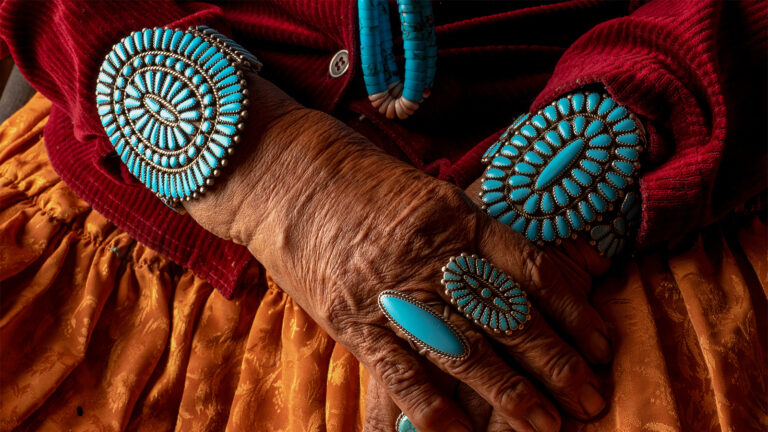
The Anthropology of Turquoise

These last six days have been about materiality: one object, one specific made or found thing, and its exact physical fact being conflated with everything that’s accumulated on top of that fact through use, culture, or attention. A crate. A furrow. A toad in an

Read More »
Share on LinkedIn
Throw on Reddit
Roll on Tumblr
Mail it
No Comments

Post A Comment

This site uses Akismet to reduce spam. Learn how your comment data is processed.

RELATED POSTS

Ways for an Empire to Become a Ruin

Born Konstantinos Petrou Kavafis in Alexandria in 1863, the poet known as C.P. Cavafy is regarded as the greatest modern Greek poet, though he spent much of his life in the cosmopolitan world of Alexandria. He wrote only about 200 poems, many of them published

Read More

Report from the Besieged City

Zbigniew Herbert was a major 20th-century Polish poet, essayist, and dramatist, born in Lviv in 1924 and associated with a strong moral, anti-totalitarian voice in postwar Polish literature. Report from the Besieged City is one of his best-known poems, first published in English in the

Read More

The Anthropology of Turquoise

These last six days have been about materiality: one object, one specific made or found thing, and its exact physical fact being conflated with everything that’s accumulated on top of that fact through use, culture, or attention. A crate. A furrow. A toad in an

Read More