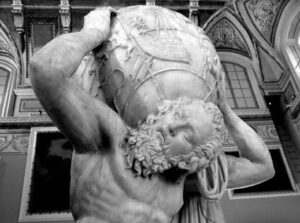
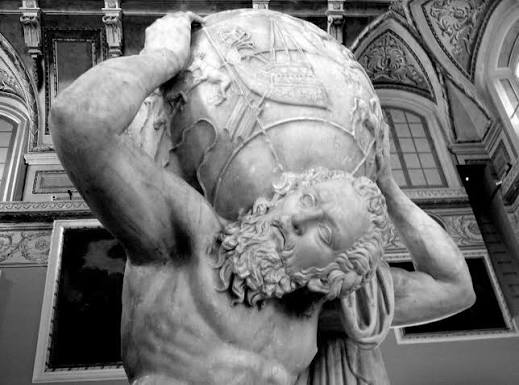
"All this he saw, for one moment breathless and intense, vivid on the morning sky; and still, as he looked, he lived; and still, as he lived, he wondered."

Pride Month 2025 – It’s a Wrap

We Were Always Here: on Memory, Erasure, and the Persistence of Queer History

All month long, we have journeyed through scroll and scripture, painting and poetry, ruin and reliquary, gathering voices, gestures, glances that once defied the world to say: we have always loved differently. These were not abstract symbols or distant metaphors. They were people: monks and mystics, lovers and poets, rulers and rebels, living lives shaped by desire, by ambiguity, by the refusal to be only what they were told they should be.

Too often, those lives have been softened into silence. Queer saints are called “devout companions.” Female lovers are dismissed as “close friends.” Trans figures are flattened into metaphors. Erotic mystics are scrubbed of their flesh and made palatable to tradition. We are told that queerness is a modern invention, that no one was like us then because no one said the words. But this is the paradox: you burn the evidence, then call us imaginary. You erase the love letters, then claim we never loved. You tear pages from the record, then point to the silence as proof we didn’t exist.

And still, here we are: in illuminated margins, in the fervour of a sonnet, in the brushstroke of a hand that lingers too long on another. Not every gaze is friendship. Not every kiss is innocent. Not every martyr is only holy. Sometimes, they are holy and queer.

To call these people “just friends” is not history. It is erasure dressed as restraint.

Queerness is not a historical anomaly. It is a rhythm in the human story: a set of lives, desires, identities, and rebellions that run alongside — and sometimes against — the canon. It is not a footnote. It is the footstep. And so, as Pride Month ends, this is not a closing: it is a charge. To remember that queer people are not seasonal, that our past does not only belong to June. That recovering queer history is not a performance, but a responsibility. Because if we don’t tell these stories, they will be told without us. And if we don’t remember them, they will be forgotten on purpose.

So we say it plainly: queer people existed. Queer people exist. Queer people will exist.
And we will keep digging through the ruins.
And we will keep naming what we find.

books and literature

Il Detective Kindaichi e la Filastrocca del Diavolo

Mi sono avvicinata qualche tempo fa alla serie di gialli giapponesi che vedono come protagonista Kindaichi Kōsuke, scritti da Seishi Yokomizo ed editi in Italia da Sellerio, e devo dire che ho sentimenti contrastanti nei confronti della serie. Da una parte, l’approccio al romanzo giallo

Read More »
books and literature

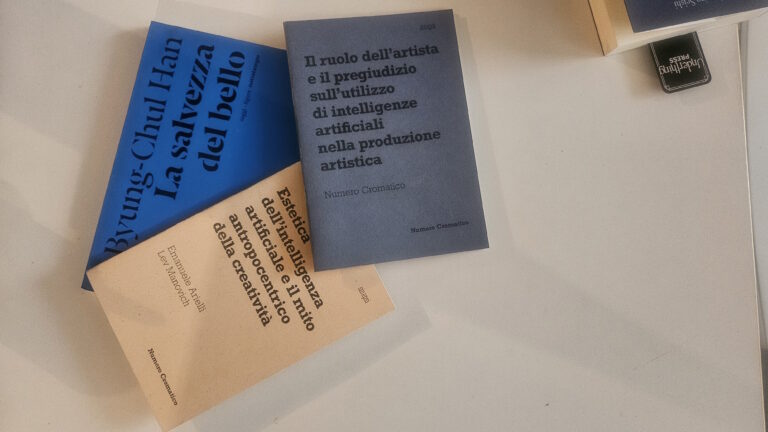
Byung-Chul Han’s “Saving Beauty”

Saving Beauty (La Salvezza del Bello in Italian) is a short philosophical book (original German title: Schönheit retten) by cultural theorist Byung‑Chul Han, and it focuses on a critique of contemporary, consumerist notions of beauty, delving of course with the impact of digital technologies on

Read More »
architecture, engineering and construction

The Saturday Nobody Asked For

Introduction: the question from LinkedIn A friend of mine posted recently about an engineer on their team who had, without being asked, put in an enormous amount of work over a weekend. The post asked a good question: once you’ve seen someone operate at that

Read More »
Share on LinkedIn
Throw on Reddit
Roll on Tumblr
Mail it
No Comments

Post A Comment

This site uses Akismet to reduce spam. Learn how your comment data is processed.

RELATED POSTS

Il Detective Kindaichi e la Filastrocca del Diavolo

Mi sono avvicinata qualche tempo fa alla serie di gialli giapponesi che vedono come protagonista Kindaichi Kōsuke, scritti da Seishi Yokomizo ed editi in Italia da Sellerio, e devo dire che ho sentimenti contrastanti nei confronti della serie. Da una parte, l’approccio al romanzo giallo

Read More

Byung-Chul Han’s “Saving Beauty”

Saving Beauty (La Salvezza del Bello in Italian) is a short philosophical book (original German title: Schönheit retten) by cultural theorist Byung‑Chul Han, and it focuses on a critique of contemporary, consumerist notions of beauty, delving of course with the impact of digital technologies on

Read More

The Saturday Nobody Asked For

Introduction: the question from LinkedIn A friend of mine posted recently about an engineer on their team who had, without being asked, put in an enormous amount of work over a weekend. The post asked a good question: once you’ve seen someone operate at that

Read More