"All this he saw, for one moment breathless and intense, vivid on the morning sky; and still, as he looked, he lived; and still, as he lived, he wondered."

Pierre Paul Rubens’ Pantea

Sir Peter Paul Rubens (28 June 1577 – 30 May 1640) was a Flemish diplomat and one of the most important artists in the Dutch Golden Age. I’m sure you know him.
He ran a very prolific workshop in Antwerp and he worked on several historical and mythological paintings, including a famous
Venus at the Mirror (1613–14), a Diana Returning from Hunt (1615) currently at the Gemäldegalerie Alte Meister in Dresden, and some allegorical works like Pythagoras Advocating Vegetarianism (1618–1630) and Minerva Protecting Peace from Mars (1629–1630), currently at the National Gallery in London.

He was knighted by both Philip IV of Spain and Charles I of England for his diplomatic efforts, his work as a classical scholar and his artistic contribution.
Several of his works were lost during the centuries and are only known through engravings or other reproductions, if any.

Pierre Paul Rubens,
Panthea stabbing herself with a dagger, after the death of her husband Abradates (1635-38)

The painting of Panthea stabbing herself was probably done in Anvers and left the artist’s studio around 1640 when the painter died: the first official record is, in fact, when it went on auction alongside the other works in the artist’s collection.

Its trail is then lost for more than 200 years until it reappears as part of the auction for the collection of Emea Lanfranconi (as lot 604). It was then bought by Charles Sedelmeyer, although probably not on that auction, and it reappeared in 1942 when it was donated by Carlos de Beistegui to the Louvres Museum, where it’s currently preserved. Although being donated in 1942, it was physically transferred there in 1953 only.

The painting is also sometimes referred to as La mort de Didon, regardless of the scene having nothing to do with the character. As you know by now, one dead lady equals the other, in art.


books and literature

Fox Friday: The Fox Woman by Abraham Merritt

The ancient steps wound up the side of the mountain through the tall pines, patience trodden deep into them by the feet of twenty centuries. Some soul of silence, ancient and patient as the steps, brooded over them. They were wide, twenty men could have

Read More »
architecture, engineering and construction

Real-time BIM? Thanks, but no thanks

I know, I know, the new ISO is out and bla bla bla, but I gave you a week of mournful silence last week and, for now, let me quote you Nick Fury. Some weeks ago, I wrote an article on “advanced BIM,” whatever that

Read More »
books and literature

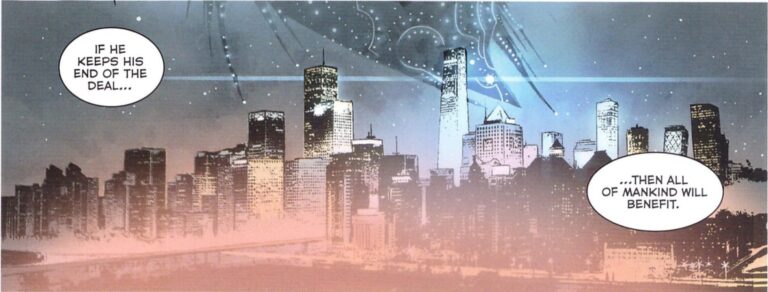
For the Benefit of Mankind

Cixin Liu is one of the most brilliant sci-fi writers of our time and some of his short stories have been adapted into graphic novels.”For the Benefit of Mankind” is a story I found in the collectiontitled after “The Wandering Earrh” and one of the

Read More »
Share on LinkedIn
Throw on Reddit
Roll on Tumblr
Mail it
No Comments

Post A Comment

This site uses Akismet to reduce spam. Learn how your comment data is processed.

RELATED POSTS

Fox Friday: The Fox Woman by Abraham Merritt

The ancient steps wound up the side of the mountain through the tall pines, patience trodden deep into them by the feet of twenty centuries. Some soul of silence, ancient and patient as the steps, brooded over them. They were wide, twenty men could have

Read More

Real-time BIM? Thanks, but no thanks

I know, I know, the new ISO is out and bla bla bla, but I gave you a week of mournful silence last week and, for now, let me quote you Nick Fury. Some weeks ago, I wrote an article on “advanced BIM,” whatever that

Read More

For the Benefit of Mankind

Cixin Liu is one of the most brilliant sci-fi writers of our time and some of his short stories have been adapted into graphic novels.”For the Benefit of Mankind” is a story I found in the collectiontitled after “The Wandering Earrh” and one of the

Read More