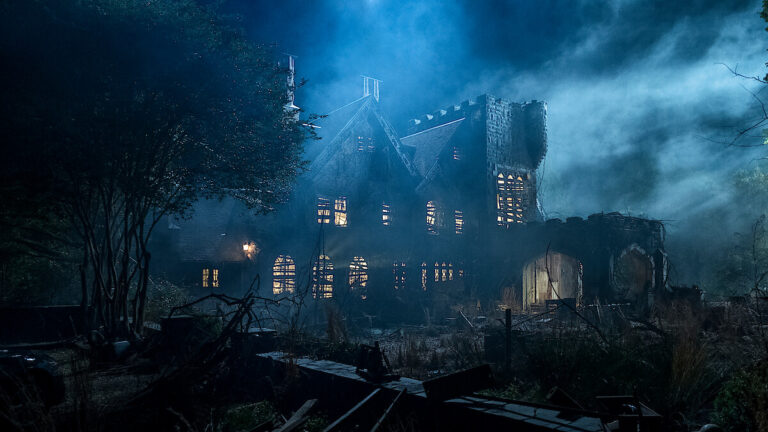
"All this he saw, for one moment breathless and intense, vivid on the morning sky; and still, as he looked, he lived; and still, as he lived, he wondered."

#OTD: William Kidd was born

On this day around 1654, William Kidd was said to be born either in Dundee, Scotland, Greenock or Belfast. He said he came from Dundee in a testimony given to the High Court of Admiralty in 1695 but we know better than to trust him.
Kidd started his maritime career as a respectable privateer, capturing French vessels for the British crown. That was a perfectly honourable trade, in case you’re wondering. It’s true he had already sailed in the Caribbean as a member of a French–English pirate crew of Captain Jean Fantin, and it’s also true he had mutinied, renamed the ship Blessed William and sailed happily towards a British colony to be confirmed captain by the governor, but we don’t talk about that.
By 1695, his new ship, the Adventure Galley, was sailing the Thames and being equipped to hunt pirates. Kidd took pride in personally selecting the crew, and they proved their worth even before leaving for the expedition: as Kidd failed to salute a Navy ship at Greenwich, the ship fired a warning shot, and his men turned around, lowered their pants and slapped their butts.
In September 1696, Kidd departed for the Cape of Good Hope in southern Africa, and this is why he might be of interest to us. A third of his crew died of cholera, the ship was leaking, and his hunt for pirates in Madagascar wasn’t particularly successful. Though Kidd doesn’t feature in the novel I’m currently pitching, I have half a mind to include a mention of him in a novel taking place on the second segment of the voyage.
By 1702, when my novel is set, Kidd had already captured his wealthiest prize: the 400-ton Armenian Quedagh Merchant, captained by an Englishman and protected by a pass from the French East India Company. News reached England, and eventually, Kidd was tried for piracy, found guilty and hanged.
Only one problem, though.
Where’s the treasure?
Spooktober

Spooktober 27 – The Black Monk (2)

Chapter 3 After supper, when the visitors had gone, he went to his room and lay down on the sofa: he wanted to think about the monk. But a minute later Tanya came in. “Here, Andryusha; read father’s articles,” she said, giving him a bundle

Read More »
Spooktober

Spooktober 26 – The Black Monk (1)

Anton Chekhov (1860–1904) was a Russian physician, short-story writer and playwright, and I’m not particularly fond of him, though he’s widely regarded as one of the greatest masters of modern short fiction and who am I to argue? His work is celebrated for its psychological

Read More »
art and fashion

Beauty and Ugliness: an exhibition

A few pictures from the recently closed exhibition on Beauty and Ugliness as an aesthetic paradigma in which what’s ideal and what’s grotesque melt together as sides of the same coin. The exhibition featured works by Brueghel (lent from the other exhibition at Palazzo Reale),

Read More »
Share on LinkedIn
Throw on Reddit
Roll on Tumblr
Mail it
No Comments

Post A Comment

This site uses Akismet to reduce spam. Learn how your comment data is processed.

RELATED POSTS

Spooktober 27 – The Black Monk (2)

Chapter 3 After supper, when the visitors had gone, he went to his room and lay down on the sofa: he wanted to think about the monk. But a minute later Tanya came in. “Here, Andryusha; read father’s articles,” she said, giving him a bundle

Read More

Spooktober 26 – The Black Monk (1)

Anton Chekhov (1860–1904) was a Russian physician, short-story writer and playwright, and I’m not particularly fond of him, though he’s widely regarded as one of the greatest masters of modern short fiction and who am I to argue? His work is celebrated for its psychological

Read More

Beauty and Ugliness: an exhibition

A few pictures from the recently closed exhibition on Beauty and Ugliness as an aesthetic paradigma in which what’s ideal and what’s grotesque melt together as sides of the same coin. The exhibition featured works by Brueghel (lent from the other exhibition at Palazzo Reale),

Read More