
What a splendid exhibition! I was expecting your regular, run-of-the-mill show at Palazzo Reale, which is usually good enough, but I was surprised at the depth and width of this new endeavour, that spans across the city with multiple initiatives and, even within the show itself, isn’t content with presenting a grand parade of every significant artist tha grazed the current but spans from painting to architecture, photography, design and even pop culture.
But let’s proceed with order.
The show and the initiative
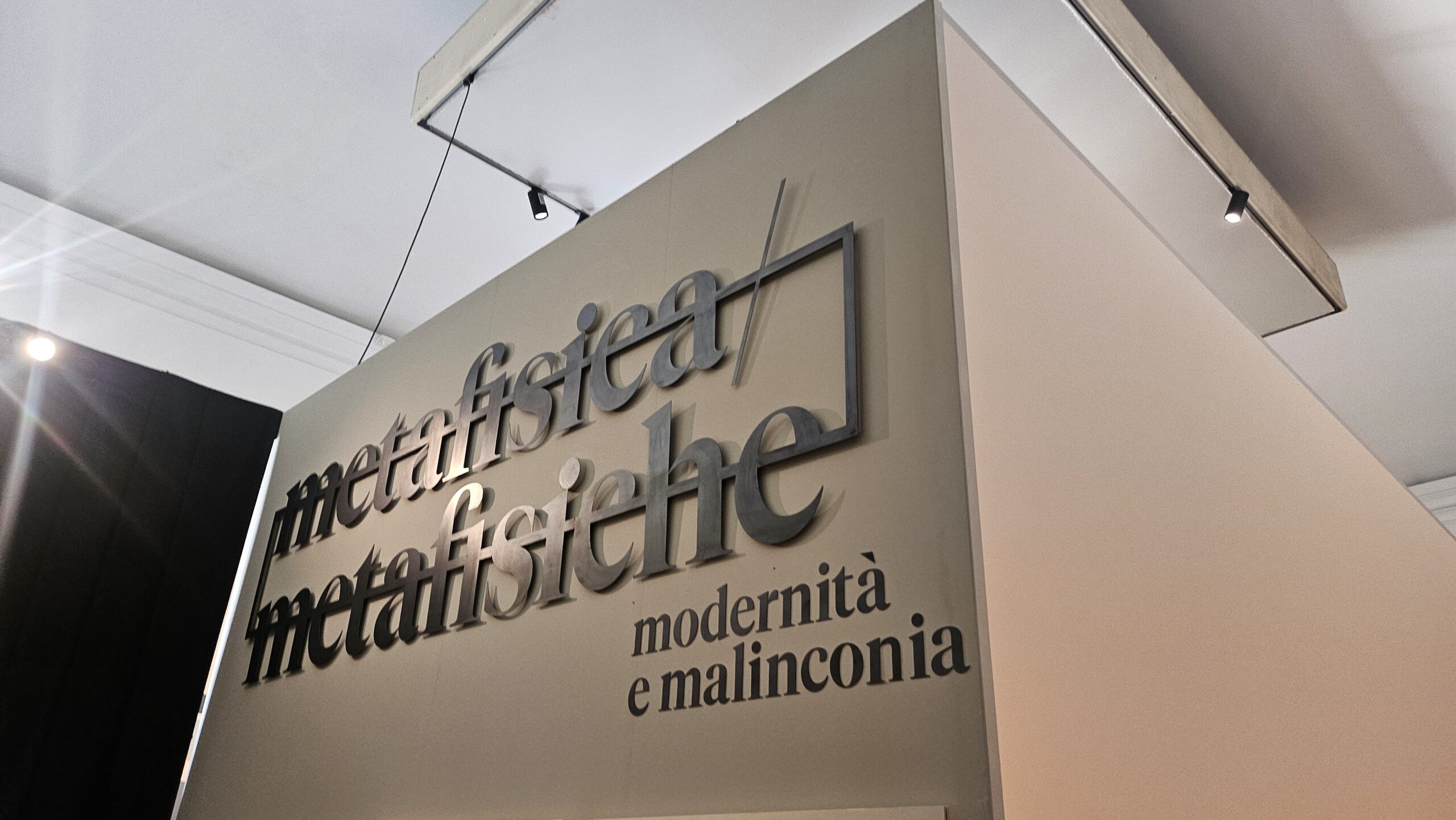
The show is up until June 21st at Palazzo Reale, and it’s one of the most ambitious exhibitions dedicated to the legacy of metaphysical art. Conceived as a large-scale international project and curated by Vincenzo Trione, professor and writer, the show brings together more than 400 works — paintings, sculptures, photographs, drawings, design objects, architectural models, and archival materials — loaned from over 150 institutions, museums, and private collections. And it’s definitely not what you’d expect.
Rather than presenting the Metaphysical movement only as a historical phenomenon, the exhibition aims to explore its long cultural afterlife, placing founding figures such as Giorgio de Chirico, Carlo Carrà, Giorgio Morandi, and Alberto Savinio in dialogue with artists who reinterpreted or transformed the metaphysical sensibility throughout the twentieth and twenty-first centuries.
But this wasn’t enough.
Metafisica / Metafisiche doesn’t stay confined to the rooms of Palazzo Reale, but it’s conceived as a city-wide cultural itinerary, extending across several major institutions in Milan and transforming the urban landscape into a diffuse museum. From Piazza Duomo to Brera, the project unfolds through additional chapters hosted at Museo del Novecento (just across the square from Palazzo Reale), Gallerie d’Italia (near Teatro la Scala), and Palazzo Citterio (within Brera), forming a walkable route of roughly two thousand steps of art.
Each venue adds a different perspective to the narrative. At Gallerie d’Italia, the exhibition is complemented by Gianni Berengo Gardin’s photographic homage to Giorgio Morandi’s studio, while Palazzo Citterio hosts an installation by William Kentridge that revisits Morandi’s legacy through contemporary visual language (and you can take the chance to visit the monographic exhibition on Giovanni Gastel, designed by my very good friend Gianni Fiore).
This multi-institutional approach of the exhibition reflects the broader ambition of the project: to present Metaphysics not merely as a stylistic movement but as a way of seeing the world, a conceptual lens capable of linking modern masters with contemporary artistic practices. The initiative is promoted by the Italian Ministry of Culture and the City of Milan, produced in collaboration with several leading institutions and accompanied by a brick-sized catalogue published by Electa.
In the context of this curatorial project that activates the city itself, inviting visitors to experience Milan through the intellectual and poetic echoes of metaphysical art, you can look up the urban itinerary I proposed a while ago, following the footsteps of Felice Casorati in the wake of a monographic exhibition.
But let’s get to the show.
The installation
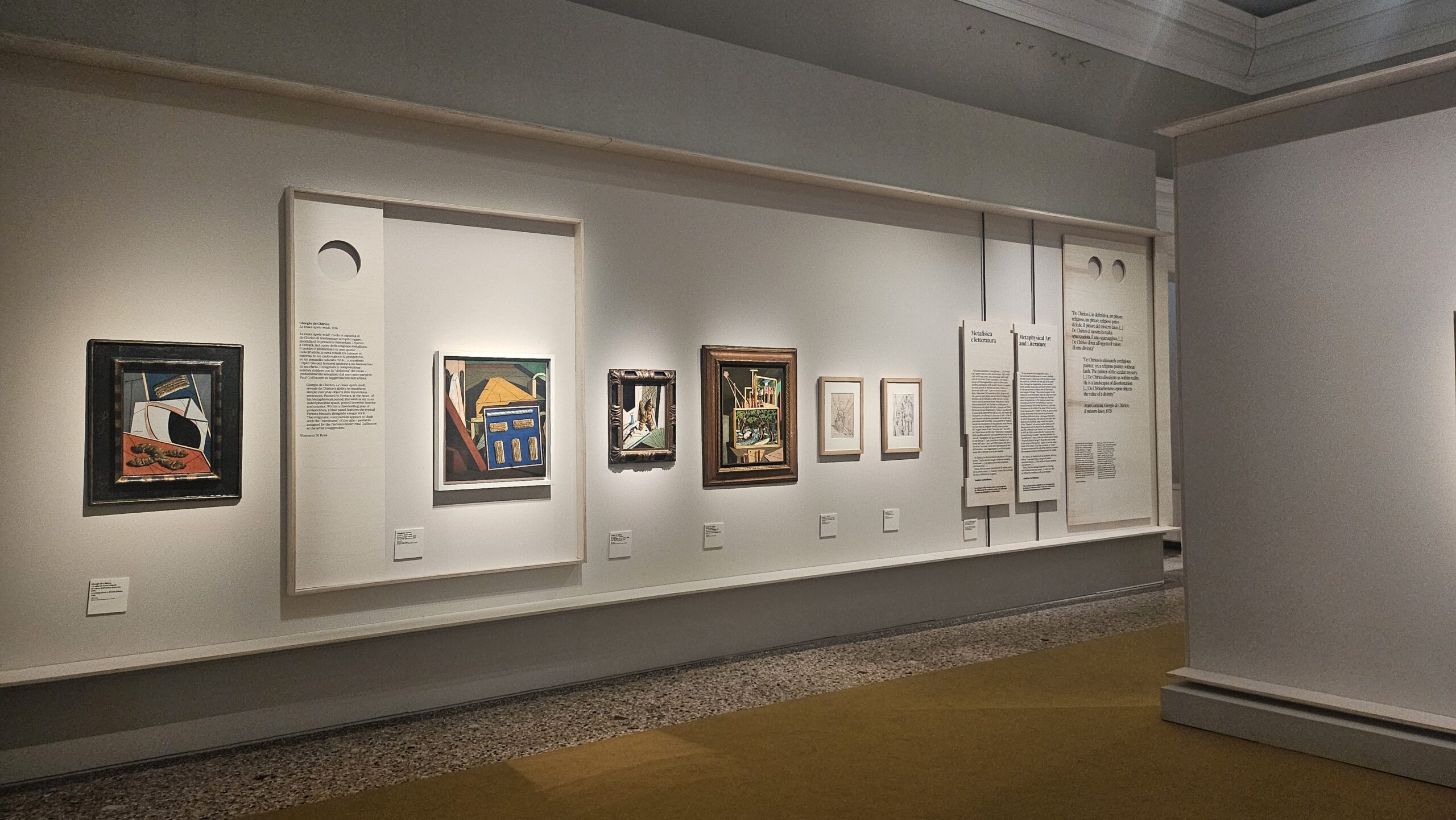
One of the most striking aspects of Metafisica / Metafisiche is the exhibition design by Massimo Curzi, which transforms the galleries of Palazzo Reale into a carefully orchestrated spatial experience deeply imbued with metaphysics in itself and, rather than competing with the artworks as it often happens, the installation establishes a calm and disciplined visual framework that echoes the conceptual language of metaphysical art.
The exhibition is structured around a system of light wooden panels, whose surfaces are punctuated by the precise geometric motifs of circular openings, recessed niches, and linear partitions that recall the architectural fragments often found in metaphysical painting — arcades, windows, frames, and thresholds that suggest spaces beyond the visible — and subtly translate those pictorial structures into the physical environment of the gallery.
The choice of materials plays a crucial role: the wood’s neutral tone introduces a sense of tactility and quiet refinement, while the construction remains deliberately minimal: display platforms, vitrines, and wall structures share the same restrained vocabulary, creating a coherent landscape where sculptures, paintings, design objects, and fashion pieces coexist in harmony. Materials, as such, turn into a chromatic strategy: the installation relies on neutral and muted surfaces — pale wood, soft beige walls, and the natural terrazzo flooring of Palazzo Reale — that function as a calm background against which the works can fully emerge. In this setting, the colours of the paintings — often characterised by intense skies, deep shadows, and saturated architectural forms — gain extraordinary clarity.
The result is an exhibition design that is both discreet and decisive. Curzi’s installation does not impose a narrative; instead, it constructs an ordered and contemplative environment, allowing visitors to move through the galleries as if entering a sequence of metaphysical scenes. Never overwhelming, and yet with character. Not an easy feat to accomplish.
The Exhibition
Brace for impact, because the exhibition will assault you from the very first room, super-dense in art and colours, shapes, mute shadows and austere architecture. While you’re inside, turn around to see the faces of people entering after you, and you’ll see yourself reflected in their reactions.
1. The Painters
1.1. Giorgio De Chirico
At the heart of the exhibition stands Giorgio de Chirico (1888 – 1978), of course, as the artist who conceived and developed the language of Metaphysical painting. Beginning around 1910, de Chirico sought to create images capable of revealing what he called the hidden dimension behind appearances: a mysterious reality that lies beneath the surface of everyday things.
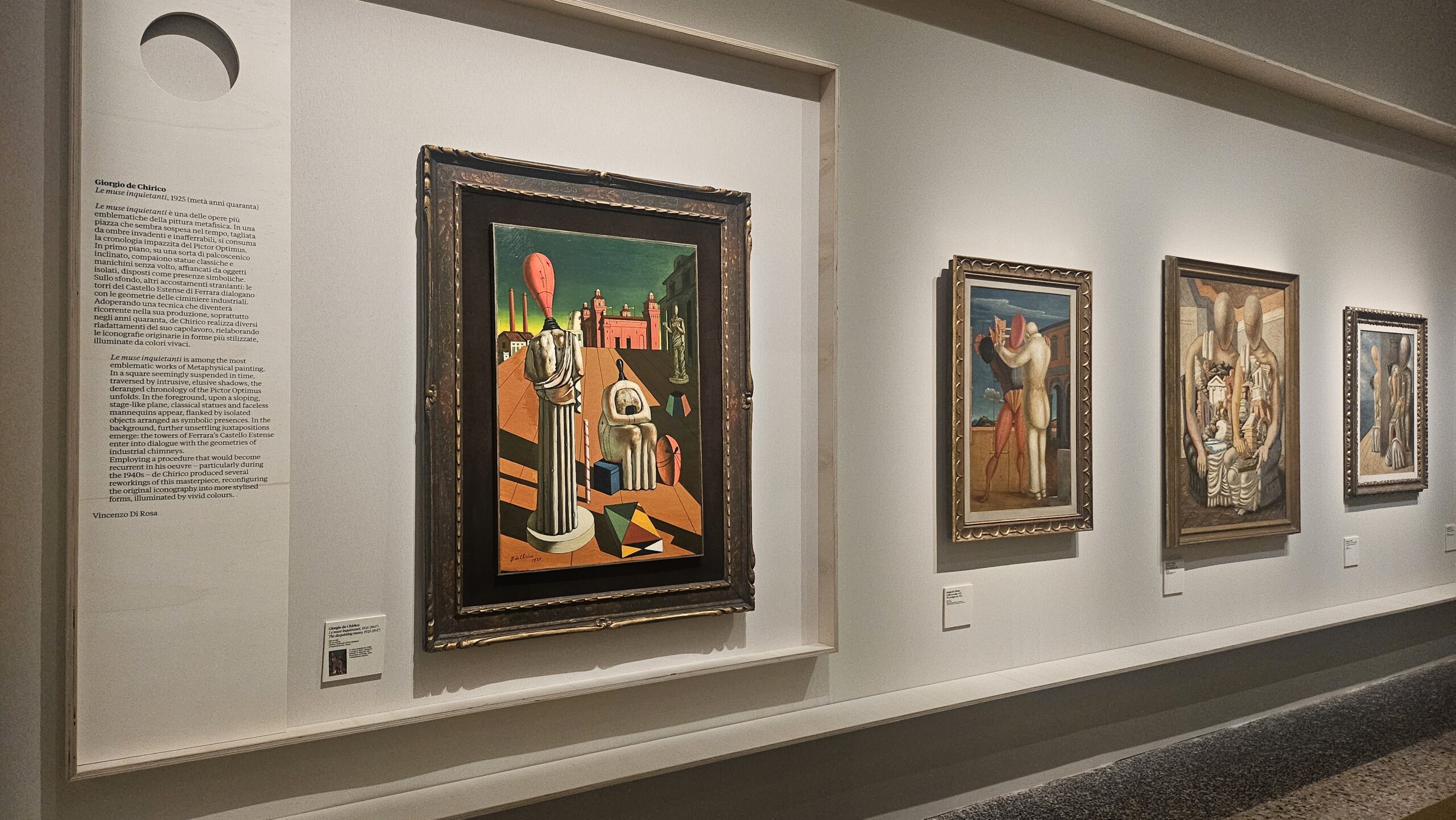
His paintings depict recognisable architectural settings — Italian squares, arcades, towers, railway stations — but emptied of ordinary life. These spaces are often bathed in sharp, theatrical light, crossed by shadows, and populated by strange, eerie presences: classical statues, tailor’s mannequins, geometric instruments, or isolated everyday objects. Through these unsettling juxtapositions, de Chirico produced images that appear simultaneously rational and dreamlike, creating what critics later described as a visionary world of the mind beyond physical reality.
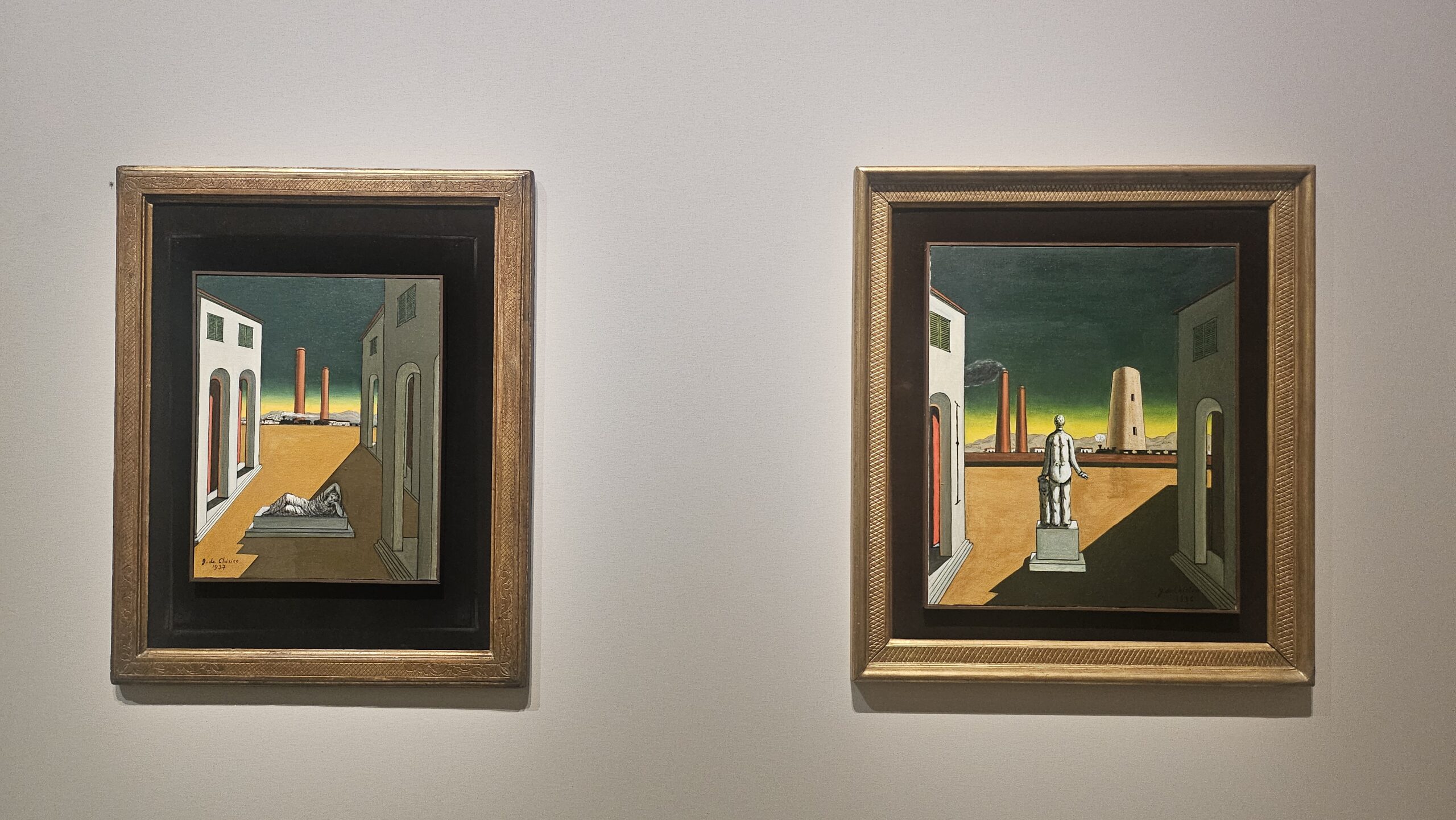
The origins of this imagery can be traced to a moment of revelation that the artist experienced around 1910 in Florence, when he claimed to have suddenly perceived the world as filled with enigmatic meaning. That intuition — later reinforced by his reading of philosophers such as Friedrich Nietzsche and Arthur Schopenhauer — became the conceptual foundation of his work: Nietzsche’s reflections on hidden truths behind appearances and his descriptions of arcaded Italian squares had a particularly deep impact on de Chirico’s imagination.
During the following years, while living in Paris, de Chirico produced some of the key works that defined this new language. Paintings such as The Nostalgia of the Infinite (1912–13), The Song of Love (1914), and Gare Montparnasse, or The Melancholy of Departure (1914) present familiar objects arranged in unexpected relationships — classical busts, rubber gloves, trains on distant horizons — generating a sense of suspended time and metaphysical disquiet.
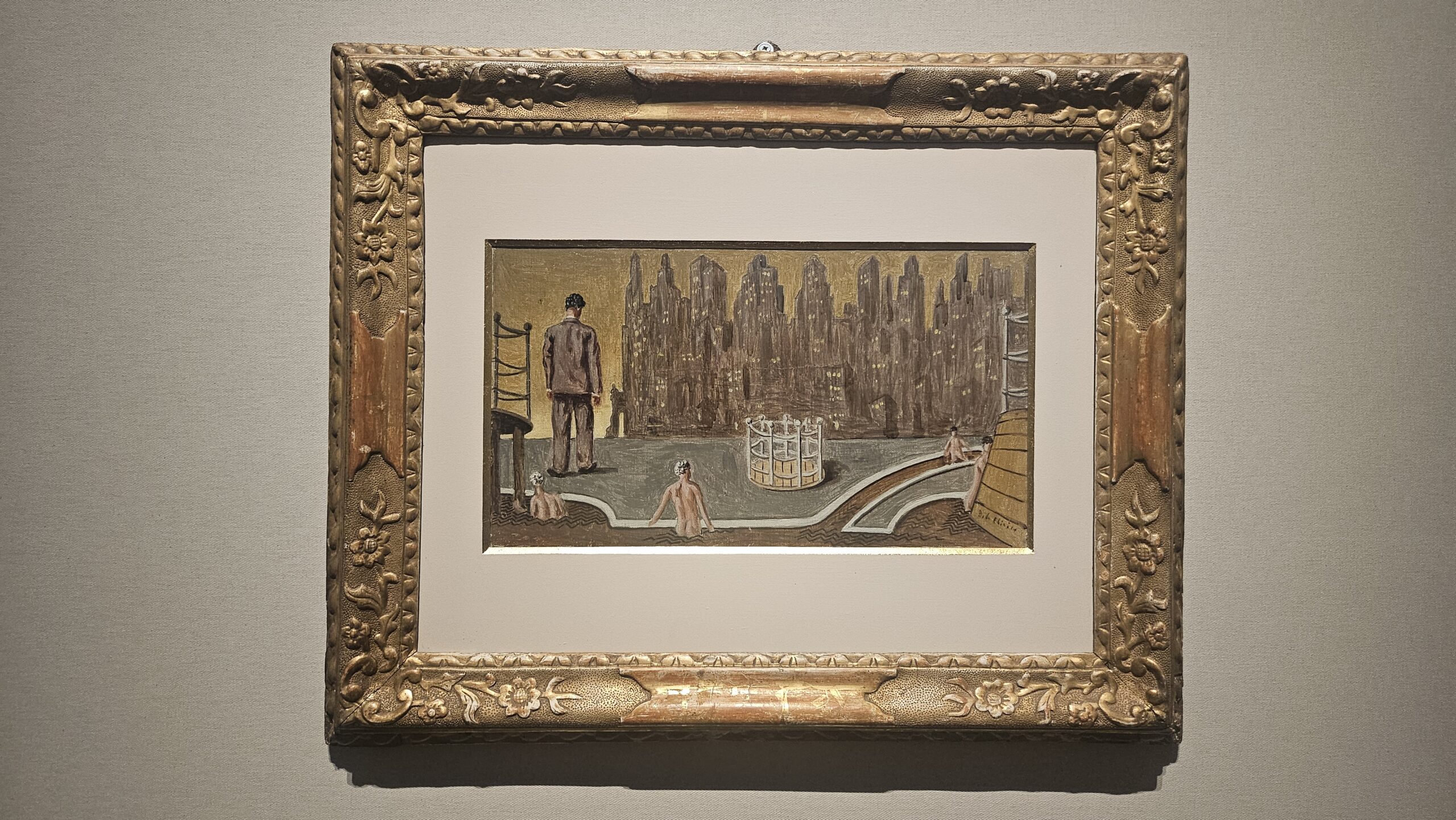
A decisive chapter unfolded between 1915 and 1918, when the outbreak of the First World War forced the artist to return to Italy. Assigned to military service in Ferrara, de Chirico entered a period of extraordinary experimentation inspired by the city’s austere architecture, silent streets, and peculiar atmosphere. Here he developed the imagery of mannequin-like figures, enigmatic interiors, and still-life arrangements of everyday objects, motifs that became central to the metaphysical vocabulary.
Ferrara was also the place where de Chirico encountered the painter Carlo Carrà, with whom he briefly formalised the principles of the scuola metafisica in 1917. Although their collaboration was short-lived, this moment crystallised the movement and established its defining themes: deserted architecture, mysterious objects, distorted perspectives, and a pervasive sense of existential silence.
1.2. Carlo Carrà
Among the artists who contributed to the development of Metaphysical painting, Carlo Carrà (1881–1966) occupies a particularly intriguing position. Unlike Giorgio de Chirico, who invented the language of Metaphysics, Carrà arrived at it after a dramatic transformation of his artistic path. In the years before the First World War, he had been one of the leading figures of Italian Futurism, a movement that celebrated speed, technology, and the dynamism of modern life. His paintings from that period — full of fractured forms and explosive movement — sought to capture the energy of the modern city.
The encounter with de Chirico during the war years radically altered Carrà’s direction: in 1917, while recovering from illness in a military hospital in Ferrara, Carrà met de Chirico and became fascinated by the enigmatic atmosphere of his paintings. The meeting marked the beginning of a brief but decisive collaboration, and together they articulated the principles of what would soon be called Metaphysical painting, characterised by stillness, enigmatic objects, and spaces imbued with a sense of suspended time.
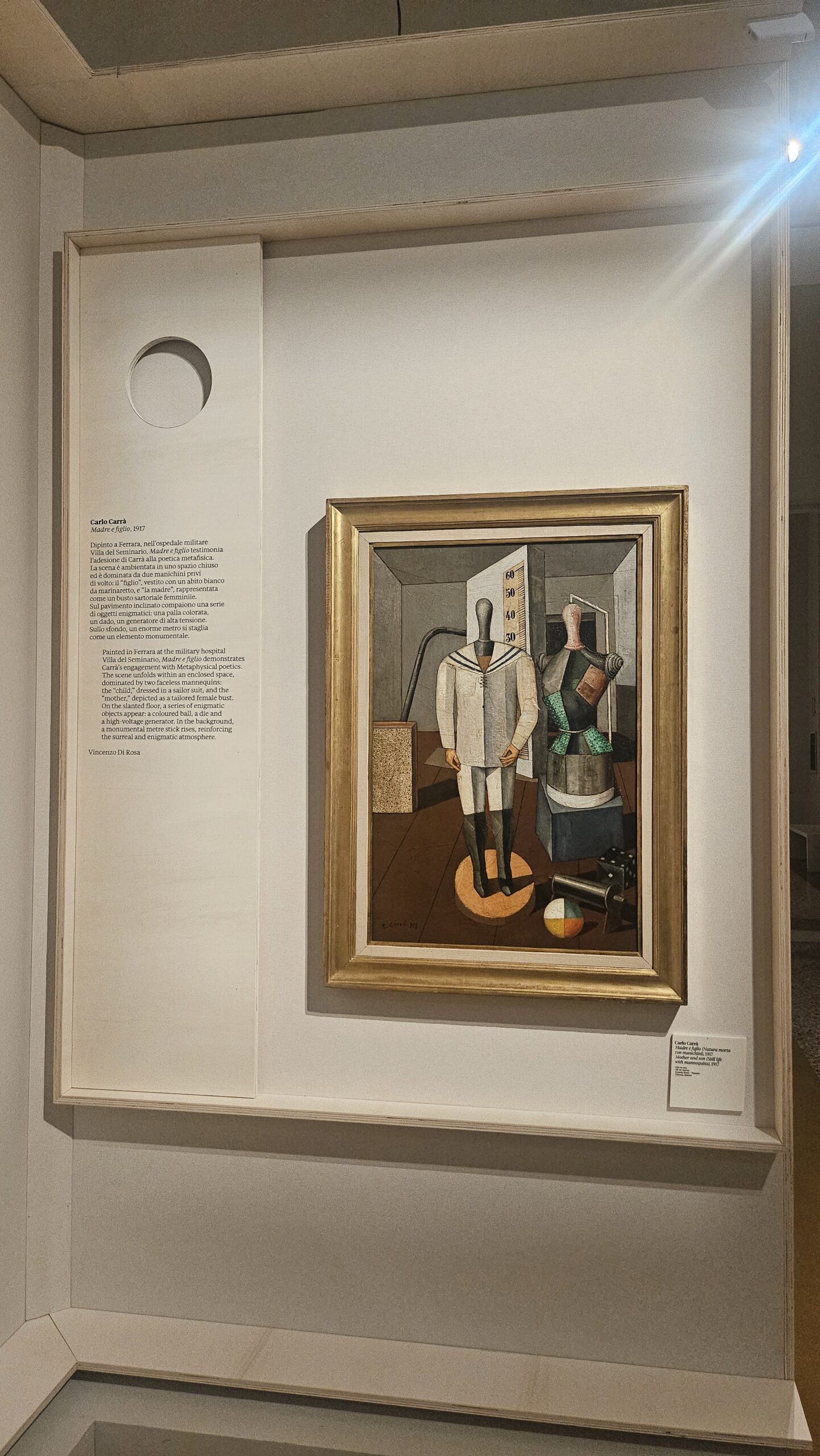
Carrà’s metaphysical works differ in subtle but important ways from those of de Chirico. While de Chirico often constructed vast, deserted piazzas and theatrical architectural settings, Carrà tended to focus on more intimate interiors and carefully arranged objects. His compositions frequently resemble still lifes expanded into architectural space: mannequins, geometric solids, measuring instruments, maps, and fragments of classical sculpture arranged together.
One of the most striking elements in Carrà’s metaphysical paintings is the presence of faceless, mannequin-like, anonymous figures assembled from simplified geometric forms. These figures evoke both classical statuary and the wooden models used in artists’ studios. Stripped of individuality, they appear less as human beings than as symbolic presences inhabiting a mysterious, contemplative world. and they’re creepy as fuck.
For Carrà, Metaphysics was not simply an aesthetic experiment but a philosophical search for order and permanence in a world shaken by war and instability. The silence of these paintings contrasts sharply with the violent dynamism of Futurism, suggesting a new desire for contemplation and equilibrium. In this sense, Carrà’s metaphysical phase represents a turning point in his career: a moment when the artist abandoned the celebration of modern speed in favour of a deeper investigation into the structure and meaning of reality.
1.3. Alberto Savinio
If Giorgio de Chirico provided the founding vision of Metaphysical painting, his younger brother Alberto Savinio (1891–1952) expanded that vision in unexpected directions, and he’s one of the hinges upon which the multidisciplinary approach of this exhibition revolves. Painter, writer, musician, playwright, and intellectual, Savinio was one of the most versatile figures of twentieth-century Italian culture, and his contribution to Metaphysical art was shaped by a profoundly interdisciplinary sensibility: for him, painting was only one among many languages through which to explore the mystery and absurdity of existence.
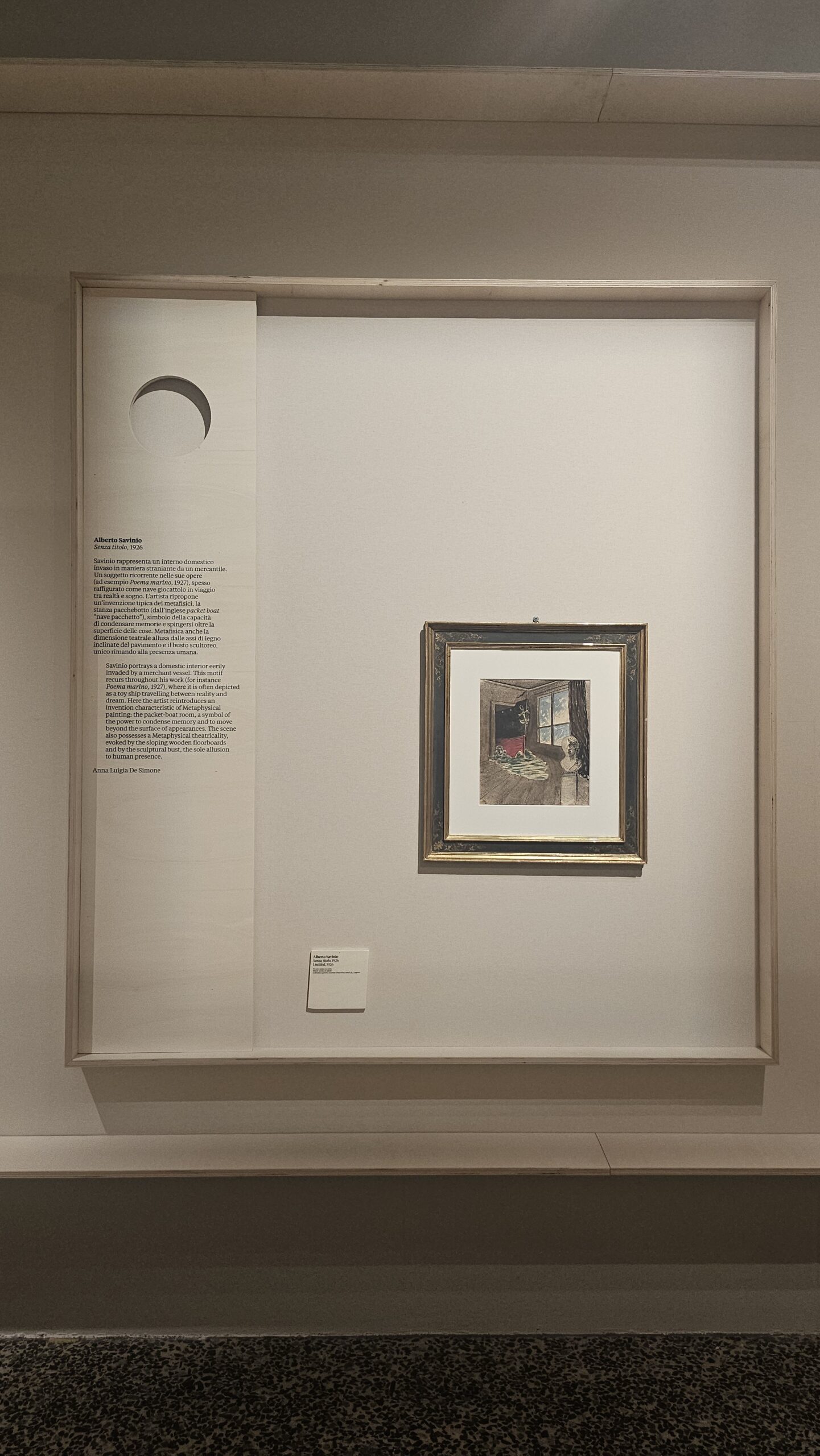
Born Andrea Francesco Alberto de Chirico in Athens, Savinio grew up immersed in the classical landscapes and myths of the Mediterranean world. This early exposure left a lasting mark on his imagination. Unlike many artists of his generation, Savinio did not approach antiquity as a distant historical heritage but as a living reservoir of symbols and narratives that could be reinterpreted through modern sensibility.
Before turning fully to painting, Savinio was deeply involved in music and literature. In the early 1910s he moved between Munich and Paris, where he developed connections with avant-garde circles and began writing essays and experimental texts that blended philosophy, mythology, and surreal humour. These literary explorations anticipated many of the themes that would later appear in his visual work, but it was the First World War that marked a decisive moment. Like his brother, Savinio found himself in Ferrara, where the two artists shared ideas and reflections that helped shape the metaphysical climate of the period. While de Chirico was developing the iconic deserted piazzas and mannequins that would define Metaphysical painting, Savinio approached the same atmosphere from a less solemn and more ironic perspective, deeply narrative.
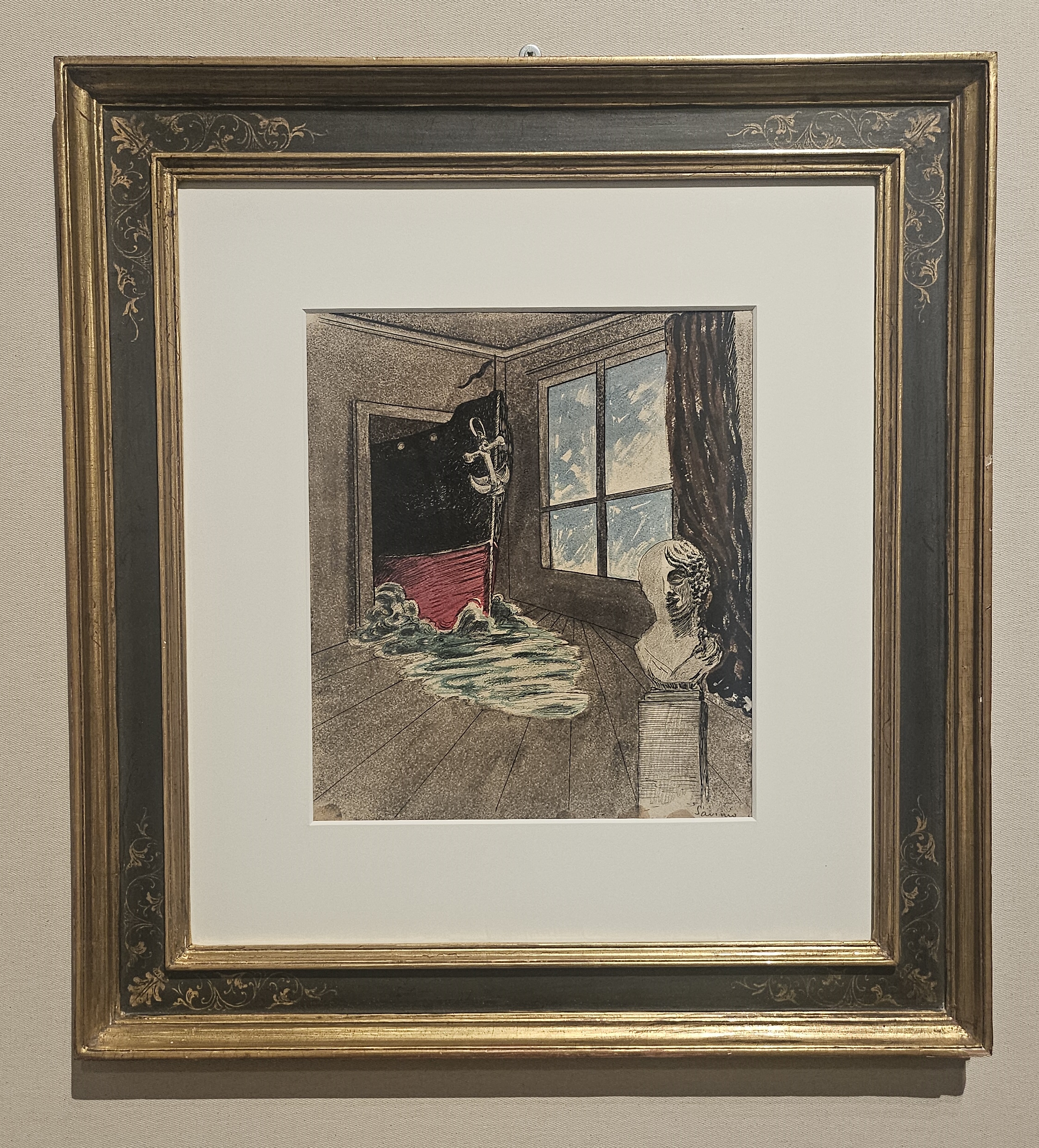
In Savinio’s paintings and drawings, mythological figures, hybrid creatures, and domestic interiors coexist in dreamlike compositions where familiar objects — tables, chairs, musical instruments, windows — often appear alongside fantastical presences that seem to have emerged from ancient myths or childhood imagination. These scenes possess the quiet stillness typical of Metaphysical art, yet they are animated by a subtle sense of theatricality and humour.
1.4. Giorgio Morandi
Among the artists associated with Metaphysical painting, Giorgio Morandi (1890–1964) represents perhaps the most subtle and introspective interpretation of its principles. Unlike Giorgio de Chirico or Carlo Carrà, whose works often present enigmatic architecture and theatrical spaces, Morandi developed a quieter form of metaphysical vision, rooted in the contemplation of ordinary objects.
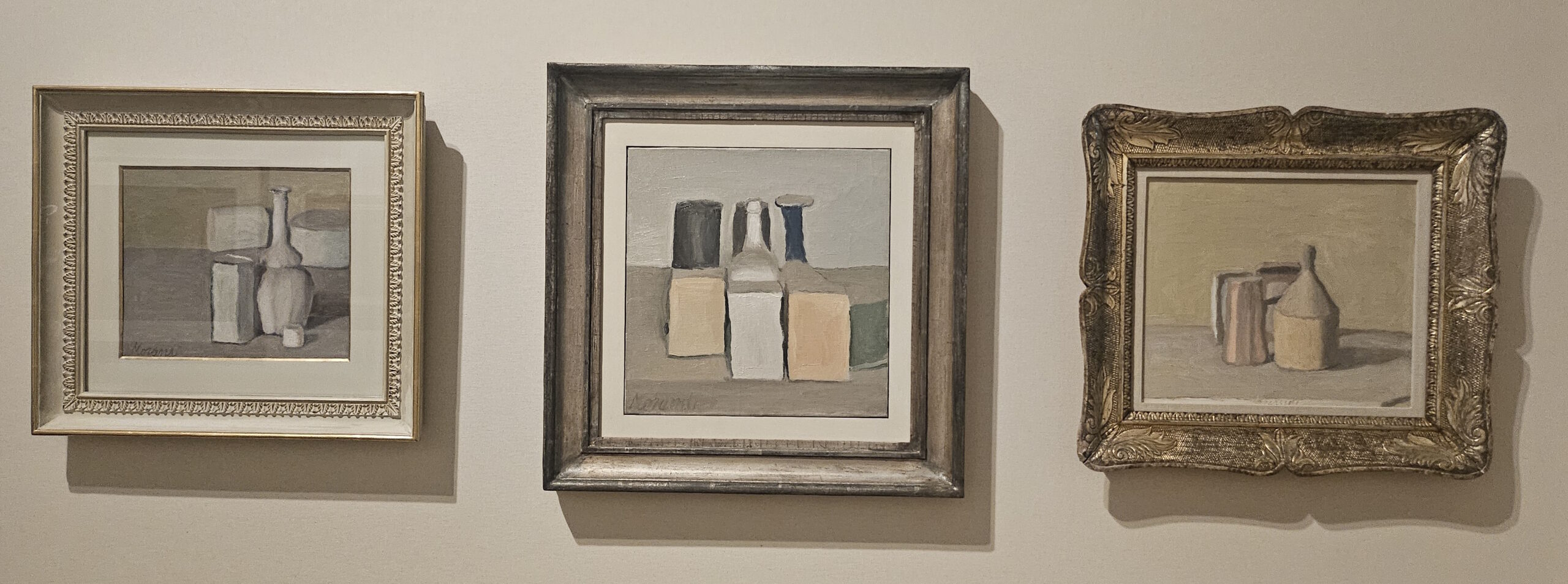
Morandi encountered Metaphysical painting during the years of the First World War, when the works of de Chirico and Carrà began circulating among Italian artists and, although he never fully joined the gang, the encounter had a profound influence on his early work. Around 1920, Morandi produced a series of paintings and drawings that clearly reflect the metaphysical atmosphere: still lifes composed of mysterious objects, geometric forms, and simplified interiors arranged with precision.
In these works, the familiar objects of everyday life — bottles, boxes, jars, cones, and small architectural forms — are placed in carefully structured compositions where their relationships appear both rational and enigmatic. Shadows are crisp, perspectives are slightly ambiguous, and the objects seem suspended in a calm, timeless space. The result is an atmosphere that echoes the metaphysical search for hidden meaning within the visible world. As such, Morandi’s approach differs significantly from that of his contemporaries: where de Chirico sought dramatic contrasts and symbolic imagery, Morandi pursued silence and concentration, and invited a slower, more attentive gaze. The mystery in Morandi’s work does not arise from strange juxtapositions but from the quiet intensity with which ordinary objects are observed.
2. Second-generation painters
2.1. Felice Casorati
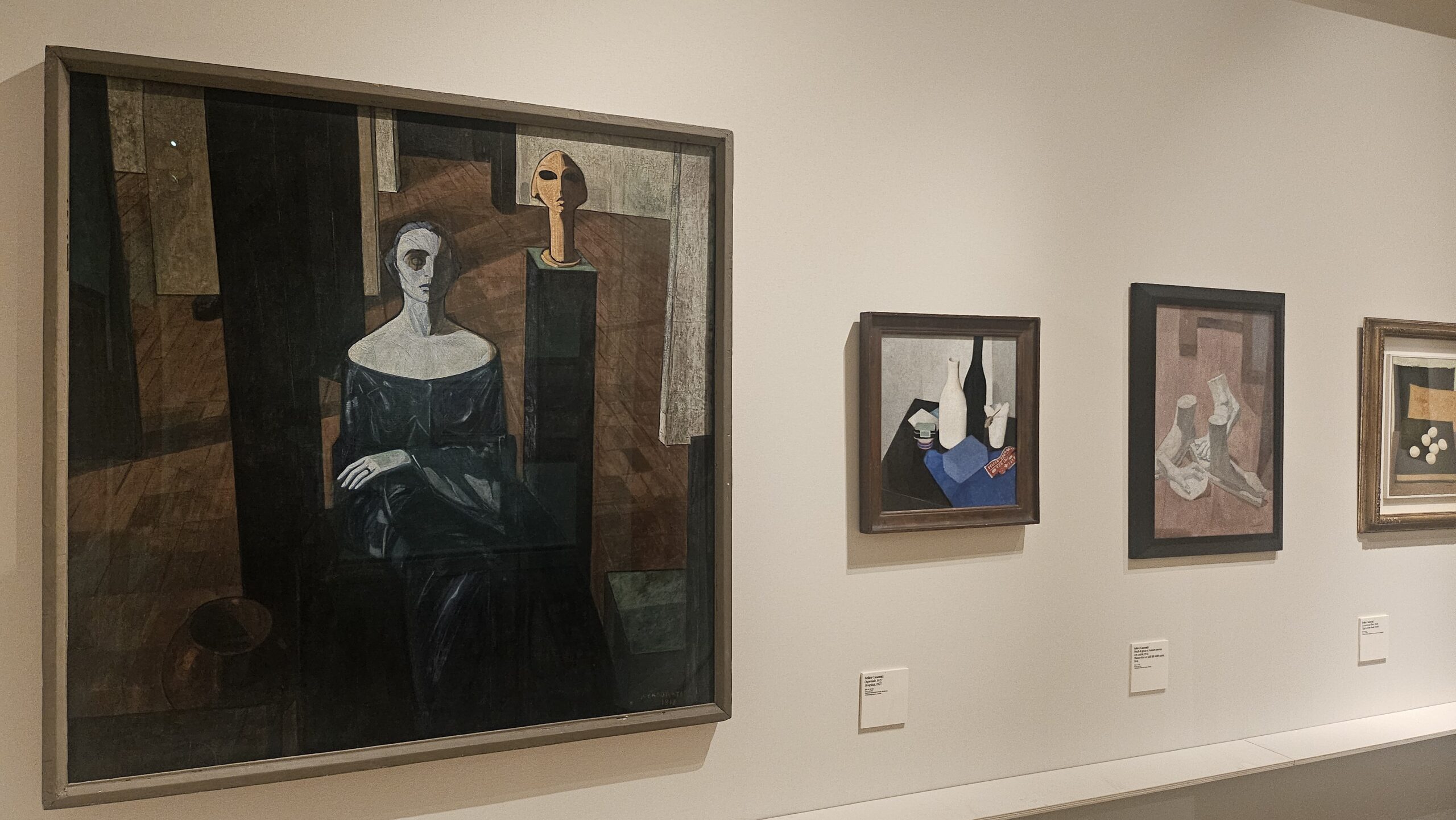
Although Felice Casorati (1883–1963) is not usually counted among the founding figures of Metaphysical painting, his work reveals a profound affinity with its atmosphere of silence, suspension, and psychological intensity: active slightly later than de Chirico and Carrà, Casorati developed a pictorial language that shares with Metaphysics a fascination for stillness, geometry, and the enigmatic presence of objects and figures.
Casorati’s path into painting was unconventional. Originally trained in law, he gradually devoted himself entirely to art in the early years of the twentieth century. His early works show the influence of Symbolism and the Viennese Secession, particularly the work of Gustav Klimt, whose refined decorative surfaces and carefully constructed compositions left a lasting impression. Yet by the end of the First World War, Casorati had developed a style that was strikingly personal: austere, geometric, introspective.
His works are influenced by Metaphysical painting in the sense that, in his paintings, figures and objects appear frozen in a state of intense stillness. Interiors are often sparse and carefully ordered, structured by precise geometric relationships between walls, floors, furniture, and bodies. Perspective is clear but subtly stylised, Morandesque, creating spaces that feel both rational and strangely abstract. This disciplined construction gives Casorati’s work an atmosphere that resonates strongly with the metaphysical search for hidden meaning within ordinary settings.
The works displayed in this section of the exhibition illustrate these qualities particularly well: uncanny moods and still-lifes with deliberately off-kilter perspectives, echoing motifs familiar from Metaphysical painting while maintaining Casorati’s distinctive visual language.
2.2. Salvador Dalí
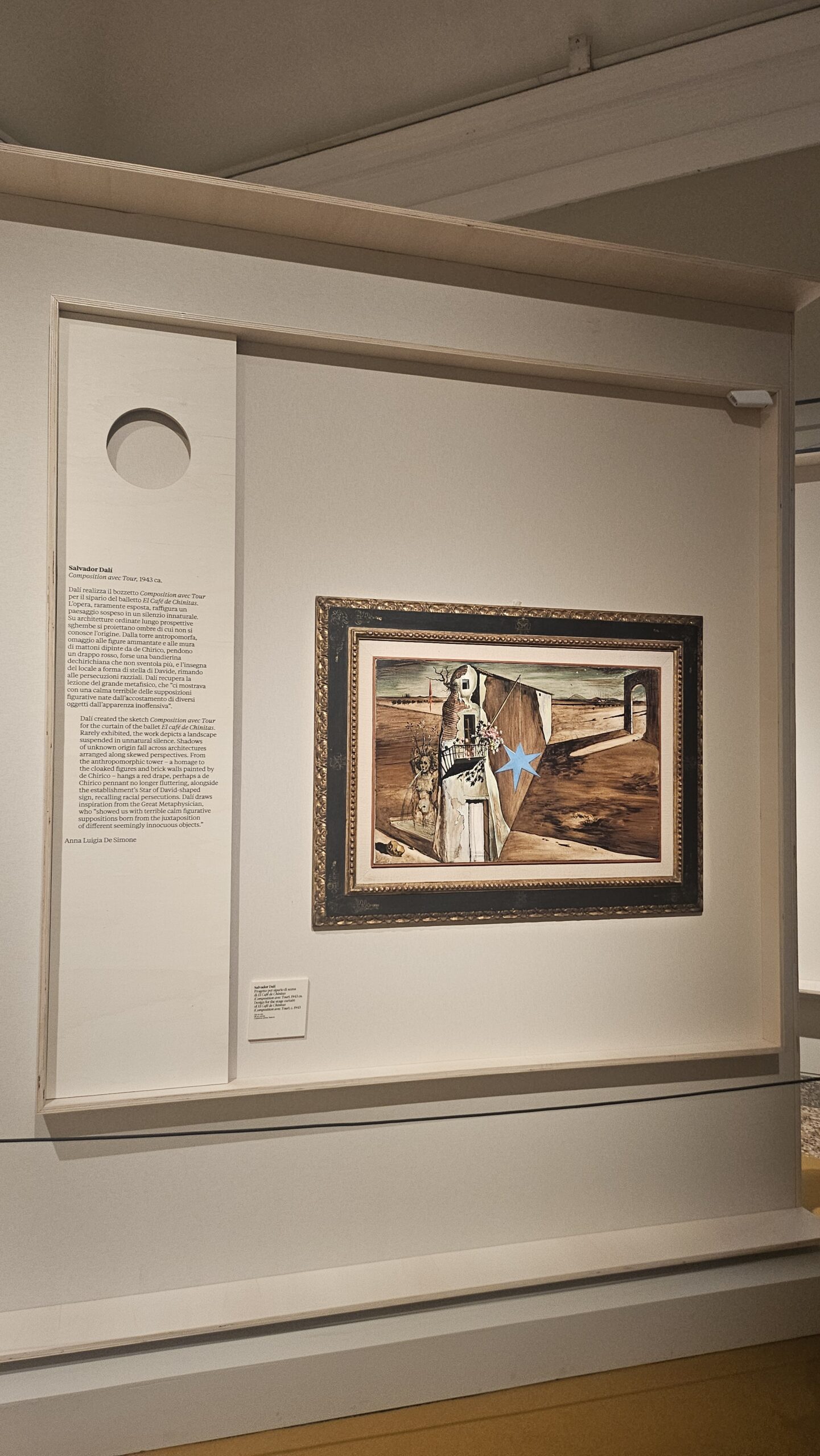
Although Salvador Dalí (1904–1989) is primarily associated with Surrealism and, well, being Dalì, his work reveals a deep and explicit debt to the metaphysical vision, hence his unexpected inclusion in the exhibition. For Dalí and many other Surrealist artists of the 1920s and 1930s, de Chirico’s silent piazzas, enigmatic statues, and dreamlike perspectives represented an extraordinary revelation: a way of painting the mysterious logic of the unconscious through classical imagery.
Dalí himself openly acknowledged that deserted landscapes, elongated shadows, and strange architectural structures appearing in many of his works echo the metaphysical settings of de Chirico. Yet Dalí transformed these elements through his own highly personal language, of course, blending metaphysical stillness with the psychological intensity and symbolic richness of Surrealism.
2.3. Yves Tanguy
Among the Surrealist artists who absorbed and transformed the legacy of Metaphysical painting, Yves Tanguy (1900–1955) occupies a unique and fascinating position. Although he never formally belonged to the original metaphysical movement, his paintings reveal a clear continuity with the spatial logic and enigmatic atmosphere: like de Chirico’s deserted piazzas, Tanguy’s compositions unfold in vast, silent landscapes where time seems suspended and objects appear charged with mysterious meaning.
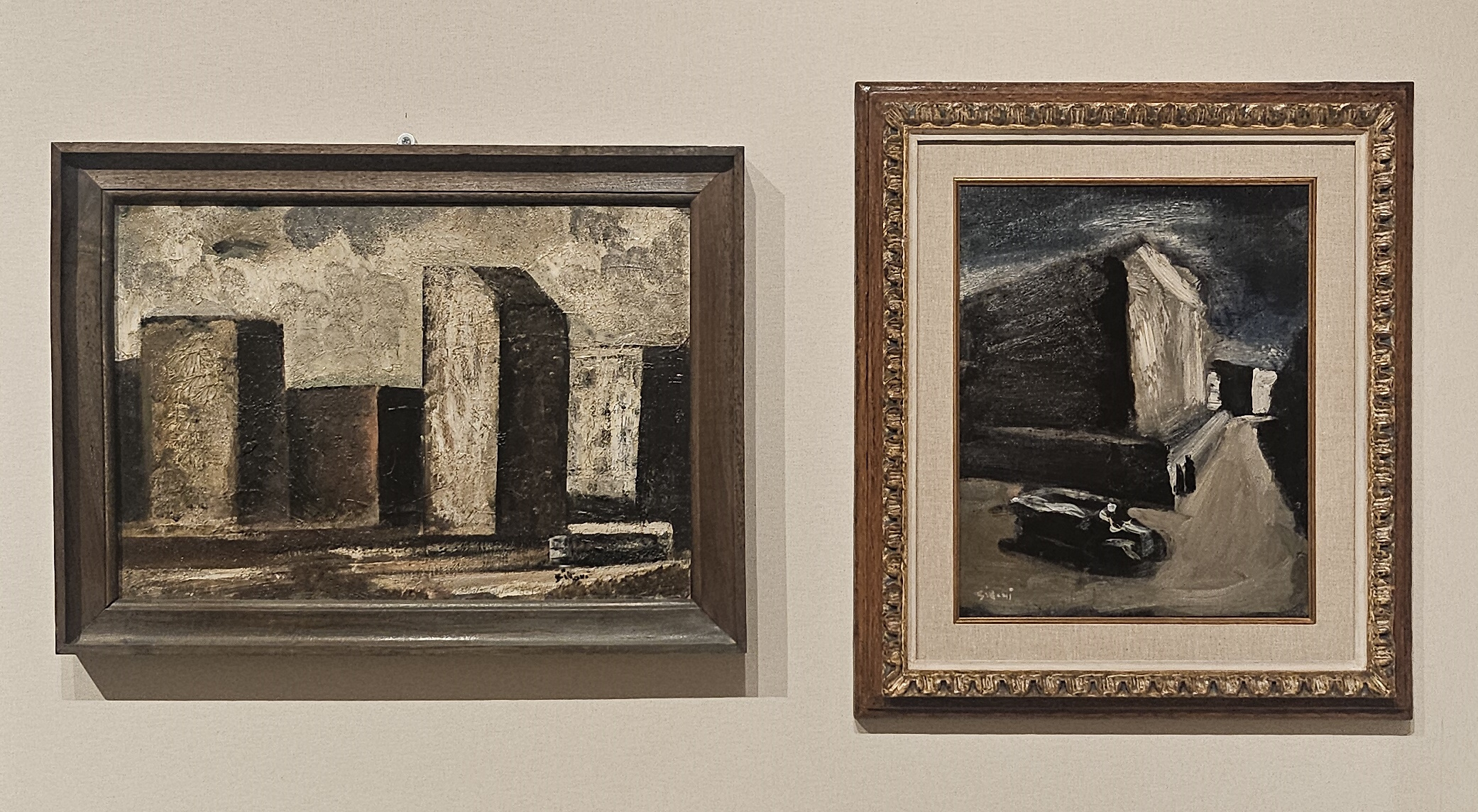
Tanguy came to painting relatively late. After a brief period in the French navy and various jobs in Paris, he encountered Surrealism in the mid-1920s and soon joined the circle around André Breton. The experience proved decisive: Tanguy quickly developed a highly distinctive visual language that set him apart even within the Surrealist movement. Unlike Dalí, who often populated his paintings with recognisable figures and symbolic imagery, Tanguy created enigmatic environments populated by strange, biomorphic forms. These shapes resemble fragments of bones, stones, mechanical parts, or living organisms, yet they resist precise identification. Arranged across immense, empty plains that stretch toward distant horizons, they appear suspended in a calm yet unsettling stillness.
This sense of spatial infinity reveals a strong connection with metaphysical imagery: just as de Chirico used deserted squares and long shadows to evoke an atmosphere of philosophical mystery, Tanguy constructs boundless terrains where perspective draws the viewer’s gaze toward an unreachable horizon. The result is a feeling of disquiet, and the viewer seems to enter a world governed by unfamiliar laws of form and meaning.
3. Beyond Painting
The connection between Metaphysical painting and theatre is especially significant, as many of the elements that characterise the movement’s imagery—empty plazas, deep perspectives, isolated figures, and strong contrasts of light and shadow—resemble theatrical scenography. This affinity was not accidental. Both de Chirico and his brother Alberto Savinio were deeply interested in the performing arts, and their ideas contributed to the development of stage designs that transformed the theatre into a space of symbolic architecture and dreamlike illusion.
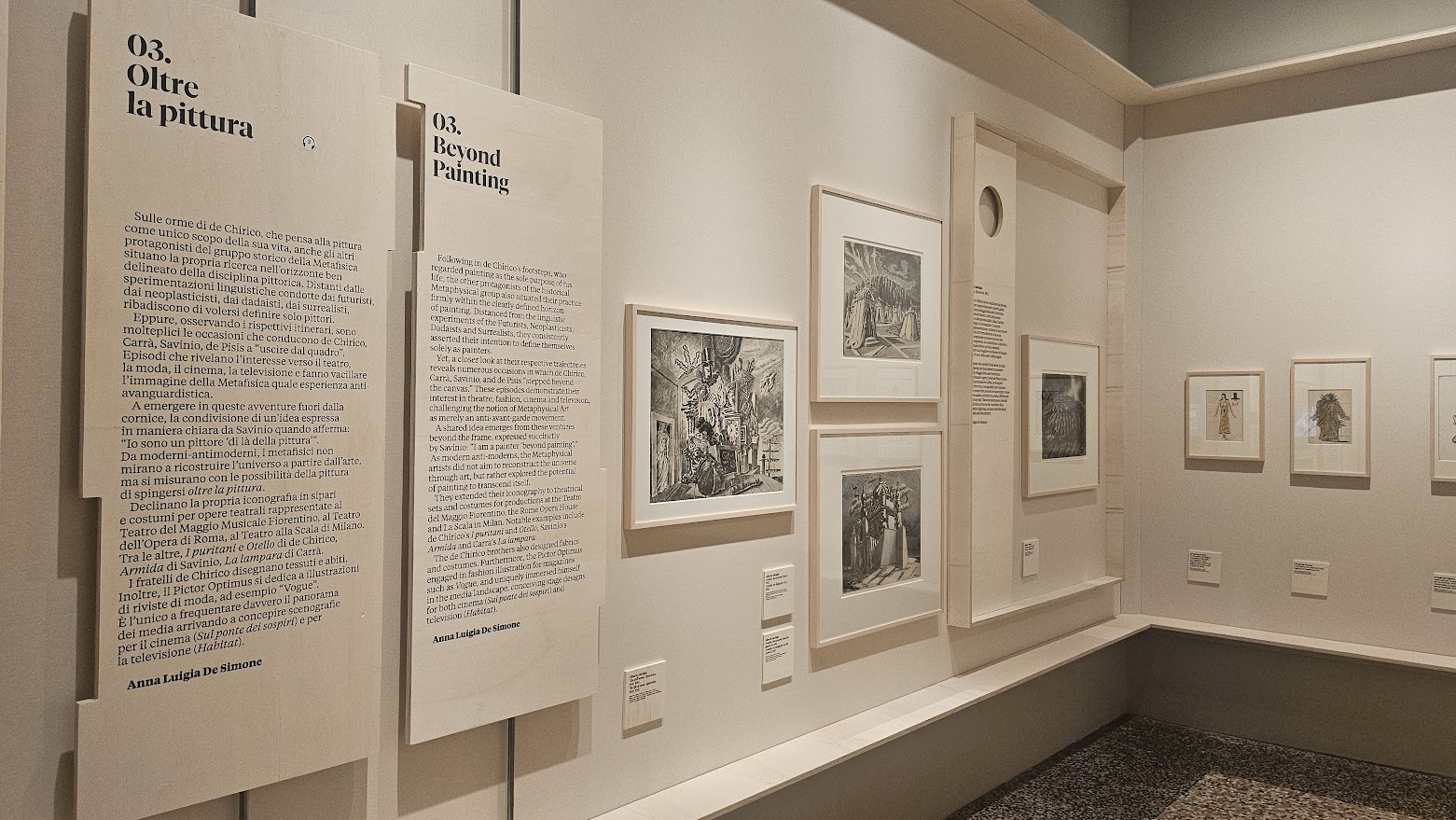
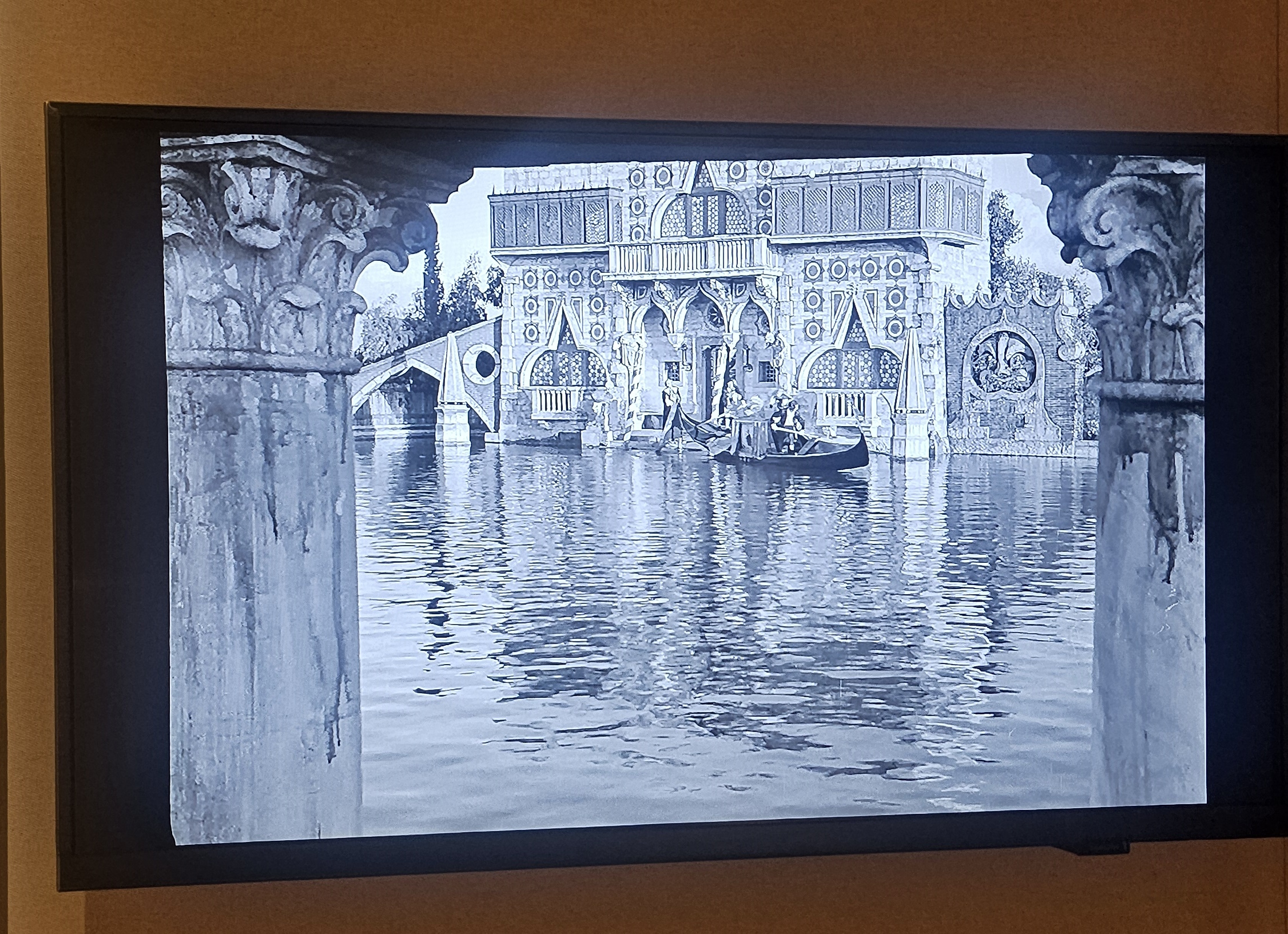
On display in the exhibition, De Chirico’s studies for an Othello by Rossini, giving him the chance to play around with a Venetian setting. The movement’s connection with Venice was one of profound fascination: the Three-Eyed House (Casa dei Tre Oci) designed by Mario de Maria, a painter from the Emilia-Romagna region, as a residence in 1912, was also residence of Giorgio Morandi, and Enrico Salerno used it as a location for a few scenes of his film Anonimo veneziano.
4. Pop Influences
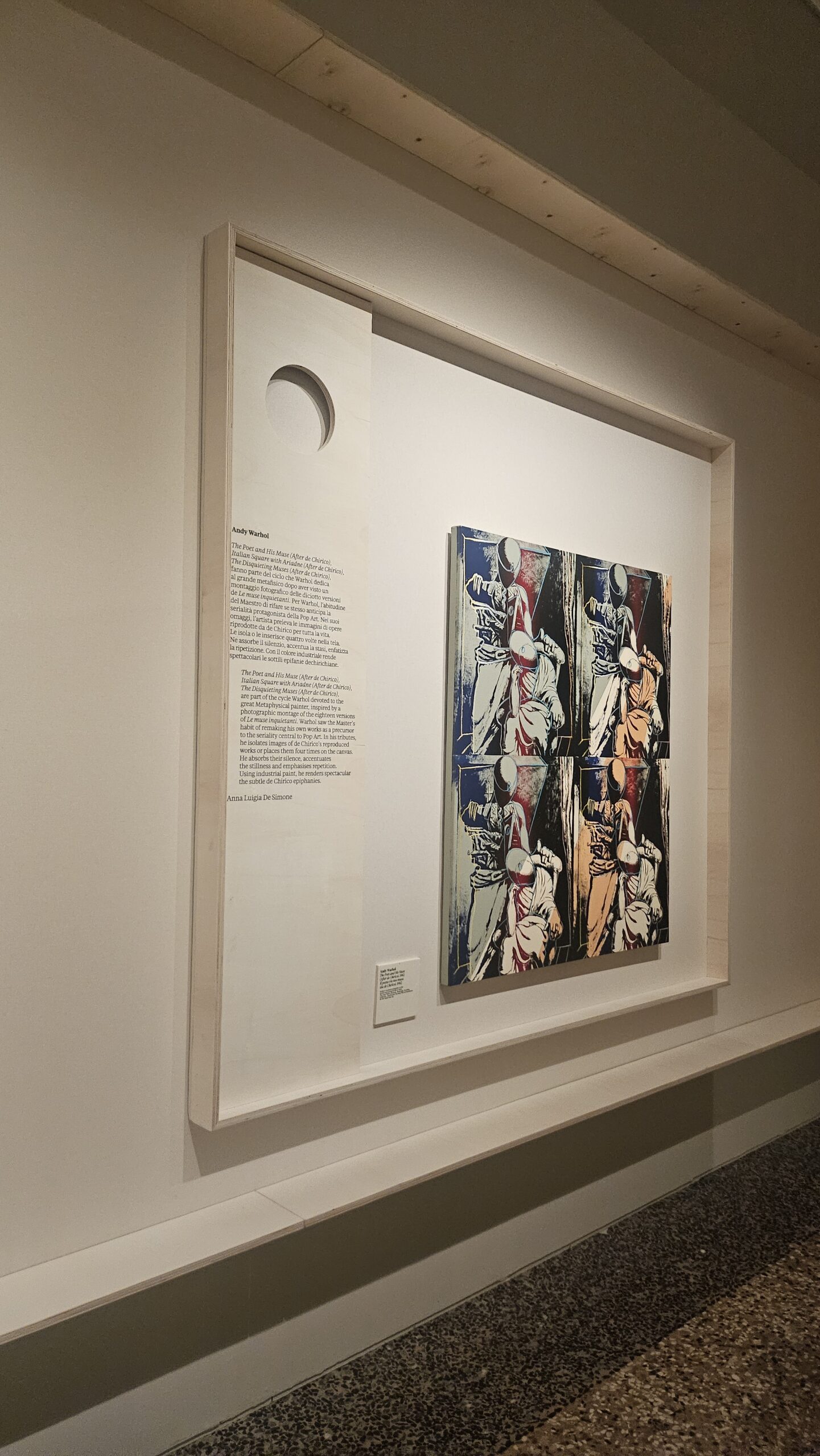
By the second half of the twentieth century, the imagery of Metaphysical painting had entered a new phase of its cultural life: what had originally emerged in the silent piazzas of Giorgio de Chirico in the 1910s was now circulating through photography, graphic reproduction, cinema, and advertising, whether he liked it or not (and he probably didn’t). In this context, Pop Art — with its fascination for images already embedded in collective culture — became an unexpected arena where metaphysical motifs could reappear in a radically transformed form.
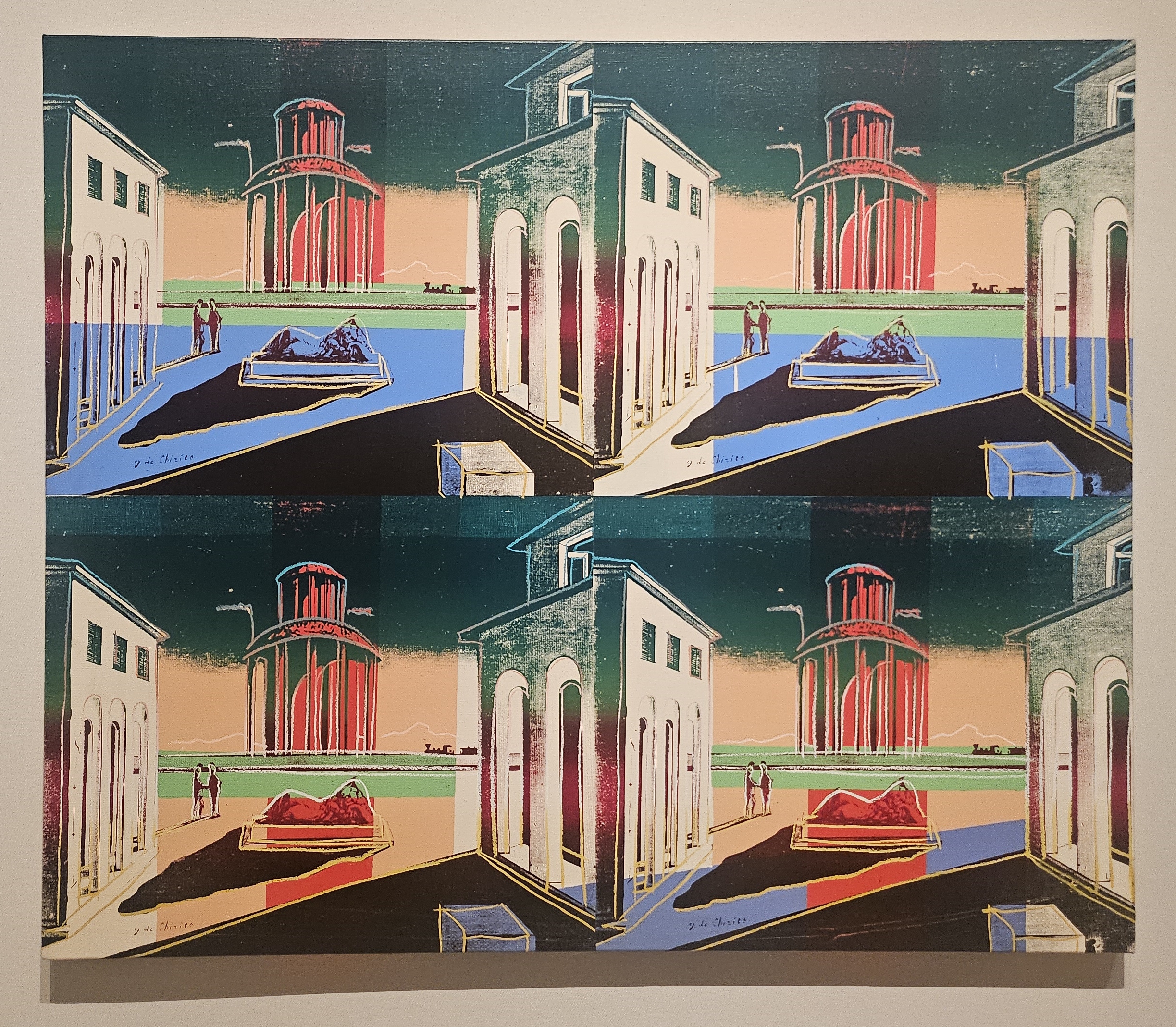
A particularly striking example is provided by Andy Warhol (1928–1987). Warhol’s work often revolved around the reproduction and transformation of pre-existing images: celebrities, consumer goods, press photographs, and icons of modern visual culture. In this process of repetition and seriality, the original image was not erased but reinterpreted, acquiring new meanings through colour and scale. This strategy of repetition and colour variation is characteristic of Warhol’s Pop language. However, in the context of the exhibition, it also resonates with the metaphysical tradition in an intriguing way. The statue — already a key element in de Chirico’s paintings — returns here as a central motif. In metaphysical compositions, classical statues often appeared as silent witnesses inhabiting deserted architectural spaces. Their presence suggested a mysterious dialogue between antiquity and modernity, between permanence and the passing of time.
5. Arts and Crafts
5.1. Mario Ceroli
Mario Cerioli’s Mobili nella Valle (Furniture in the Valley) is a 1964 work in wood and directly references a painting by Giorgio de Chirico from 1927 with the same title. In that painting, pieces of furniture appear in an open landscape, detached from their usual domestic context and arranged like mysterious presences inhabiting an empty metaphysical stage. Ceroli takes this surreal situation and translates it into sculpture: the furniture becomes large wooden structures, simplified and monumental, placed together as if they were actors in a silent scene.
The installation is constructed from raw, untreated wood, a material that was central to Ceroli’s artistic practice in the 1960s. Instead of polished finishes or elaborate decoration, the artist uses simple carpentry techniques and visible wooden planks. This deliberate simplicity gives the objects a direct physical presence while emphasising their essential shapes. The door, the chair, and the fence-like structure appear almost like archetypes of furniture, reduced to their structural outlines.
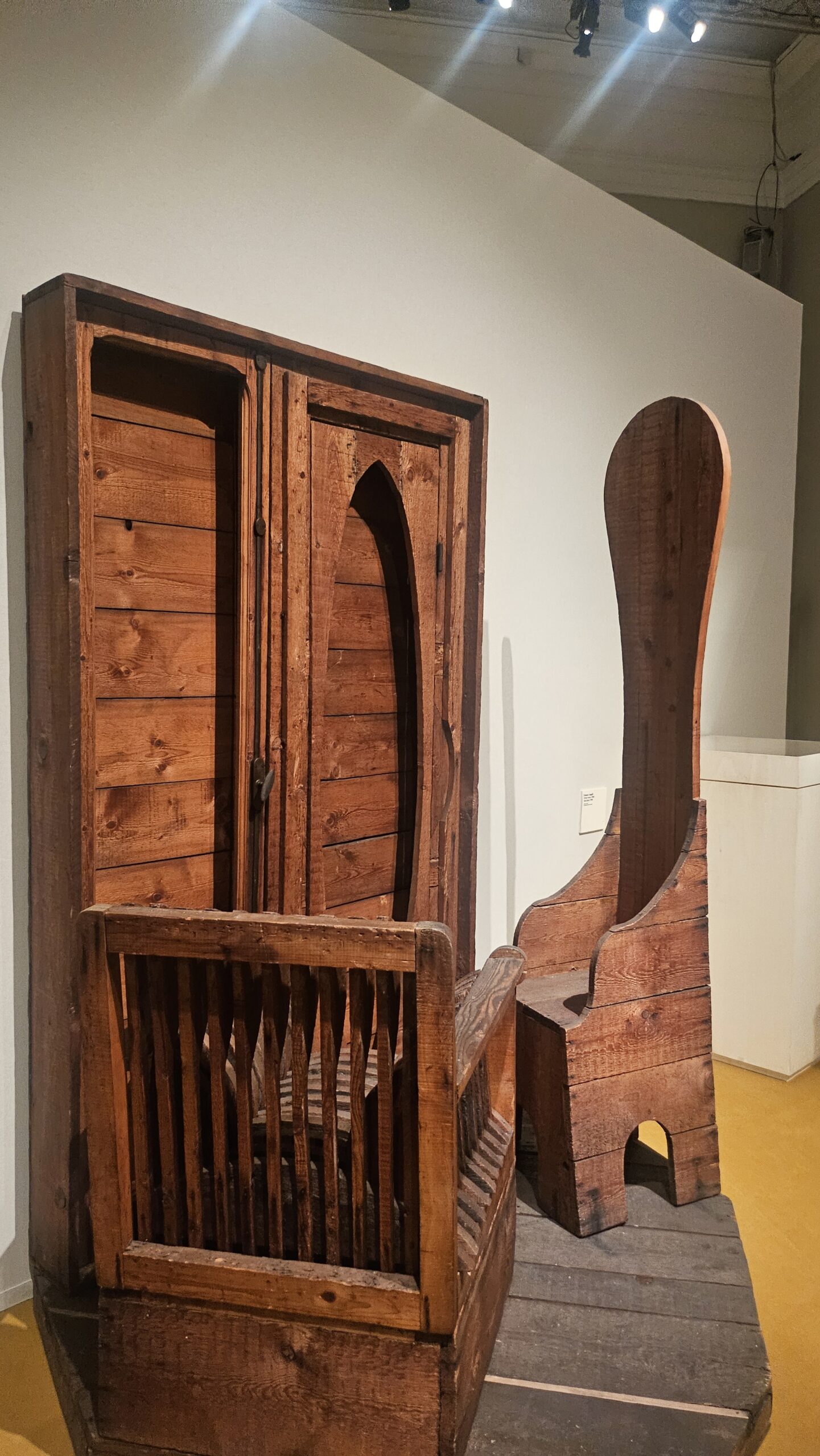
Ceroli’s approach also reflects the broader artistic climate of the 1960s. Many artists of this generation sought to move beyond the traditional limits of painting and sculpture by creating environments that engaged the viewer directly. By using humble materials and transforming everyday objects into symbolic forms, Ceroli anticipated the sensibility that would soon emerge in Arte Povera, where ordinary matter became a vehicle for conceptual exploration.
5.2. Ugo Nespolo
At first glance, Suggestioni Ferraresi might appear to be a painting that revisits the imagery of Metaphysical art. In reality, however, the work is constructed using lacquered wood inlays, a technique that immediately shifts the viewer’s perception. Created in 1982 by Ugo Nespolo, the piece transforms metaphysical iconography into a carefully crafted surface of precisely cut and assembled wooden elements, where colour and form emerge from material rather than brushstroke.
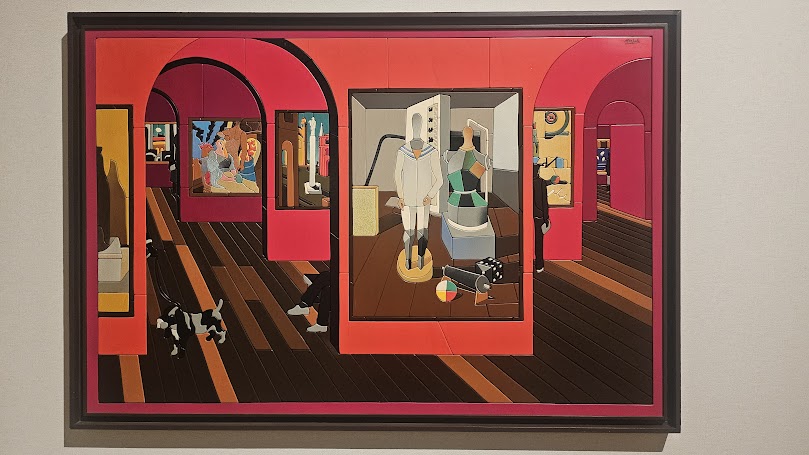
The title explicitly evokes Ferrara, the city where Giorgio de Chirico and Carlo Carrà developed some of the most iconic works of Metaphysical painting during the First World War. Nespolo’s work engages directly with this legacy. At the centre of the composition, we find reproductions of known paintings with familiar metaphysical motifs: mannequin figures, geometric solids, and enigmatic objects arranged within a rigidly constructed interior space. These elements unmistakably echo the visual language developed by de Chirico and Carrà a few decades earlier.
Yet Nespolo does not merely reproduce metaphysical imagery. The composition is structured as a sequence of architectural frames and arches, creating multiple visual layers across the surface. The central metaphysical scene appears like an image suspended within a larger spatial structure, surrounded by corridors and openings that lead the viewer’s gaze deeper into the composition. This architecture of frames resembles both the perspectival spaces of de Chirico’s paintings and the display logic of a gallery, as if metaphysical images themselves were being exhibited within the work.
The use of lacquered wood inlays plays a crucial role in this reinterpretation. Instead of paint modulated through brushwork, colour here appears as flat, sharply defined planes of material. Reds, browns, creams, and blacks are created through the juxtaposition of different wooden elements, each cut with precision and assembled like a complex puzzle. This technique gives the work a striking clarity and graphic intensity, reinforcing the geometric order of the composition. At the same time, the craftsmanship of the inlay introduces a tactile dimension absent from traditional painting. The work oscillates between image and object: it can be read as a pictorial scene, yet it also asserts itself as a constructed surface, where material structure becomes visible.
You have to see it to believe it.
5.3. Tano Festa
The dialogue between Metaphysical painting and contemporary art takes on a different form in the work of Tano Festa (1938–1988), one of the most original figures of the Italian Pop Art movement known as the Scuola di Piazza del Popolo. While artists such as Andy Warhol transformed the imagery of mass media into art, Festa turned his attention to a different visual archive: the monumental heritage of Italian architecture and art history.
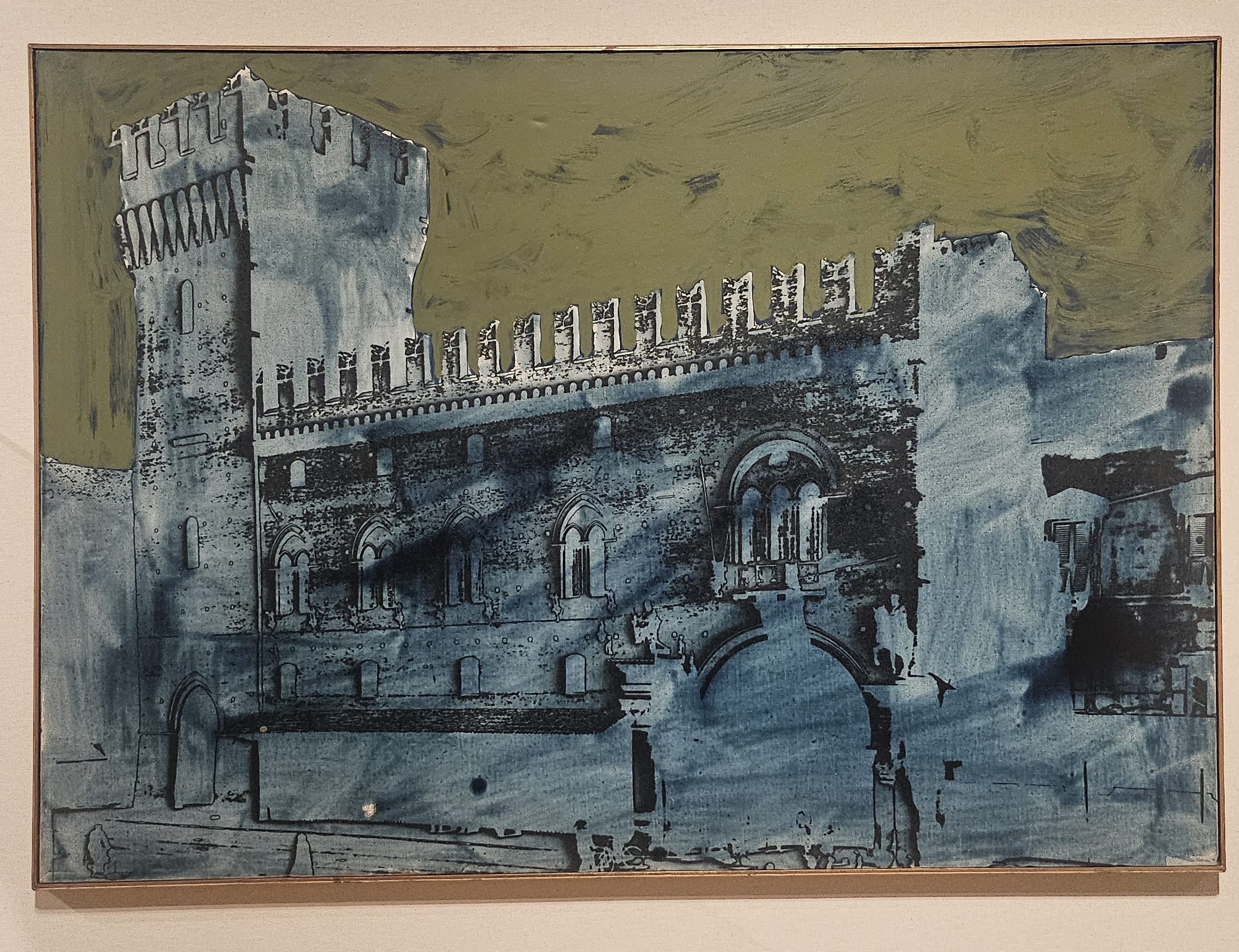
The painting shown here presents the image of a historic building — its crenellated walls, towers, and arched openings — rendered with a striking monochromatic treatment. The structure appears recognisable and yet strangely distant, as if emerging from memory rather than from direct observation, and we’ll see how Buzzati plays with these feelings as well.
In practical terms, Festa often worked from photographic reproductions of architectural landmarks, translating them into paintings where colour, texture, and material alter the original image. The architecture is then partially dissolved within broad fields of colour and painterly gestures, so that the building isn’t depicted as a precise architectural document but appears fragmented, layered, and partially erased, suspended between presence and disappearance. The contrast between the solid geometry of the fortress and the fluid, atmospheric background intensifies this ambiguity.
5.4. Dino Buzzati
The metaphysical imagination also found an unexpected interpreter in Dino Buzzati (1906–1972), a figure better known as a writer and journalist than as a visual artist (I wrote a thing on him and Aldo Rossi here). Famous for novels such as Il deserto dei Tartari (The Tartar Steppe) and clever short stories, Buzzati cultivated throughout his life a parallel activity as a painter and illustrator. In his visual work, as in his literature, reality often appears suspended between the ordinary and the fantastic, revealing a dimension of mystery that resonates deeply with the legacy of Metaphysical painting.

The painting shown here presents a striking reinterpretation of Milan’s Duomo, one of the most recognisable architectural monuments in Italy, except that Buzzati transforms it into an almost geological formation. The Gothic spires of the cathedral rise upward like a cluster of pale rock pinnacles, resembling a mountain or a natural crystalline structure emerging from the landscape. The square is paved in grass instead of stone, with people harvesting hay. A vast turquoise sky stretches above the structure, punctuated only by a few stylised clouds.
In this way, Buzzati performs an operation that resonates closely with the metaphysical tradition. Like the painters of the early twentieth century, he takes a familiar element of the urban landscape and removes it from its ordinary context, placing it in a silent and almost timeless environment. The result is not a realistic view of Milan but a kind of symbolic landscape where architecture becomes an idea.
6. Architecture and Design
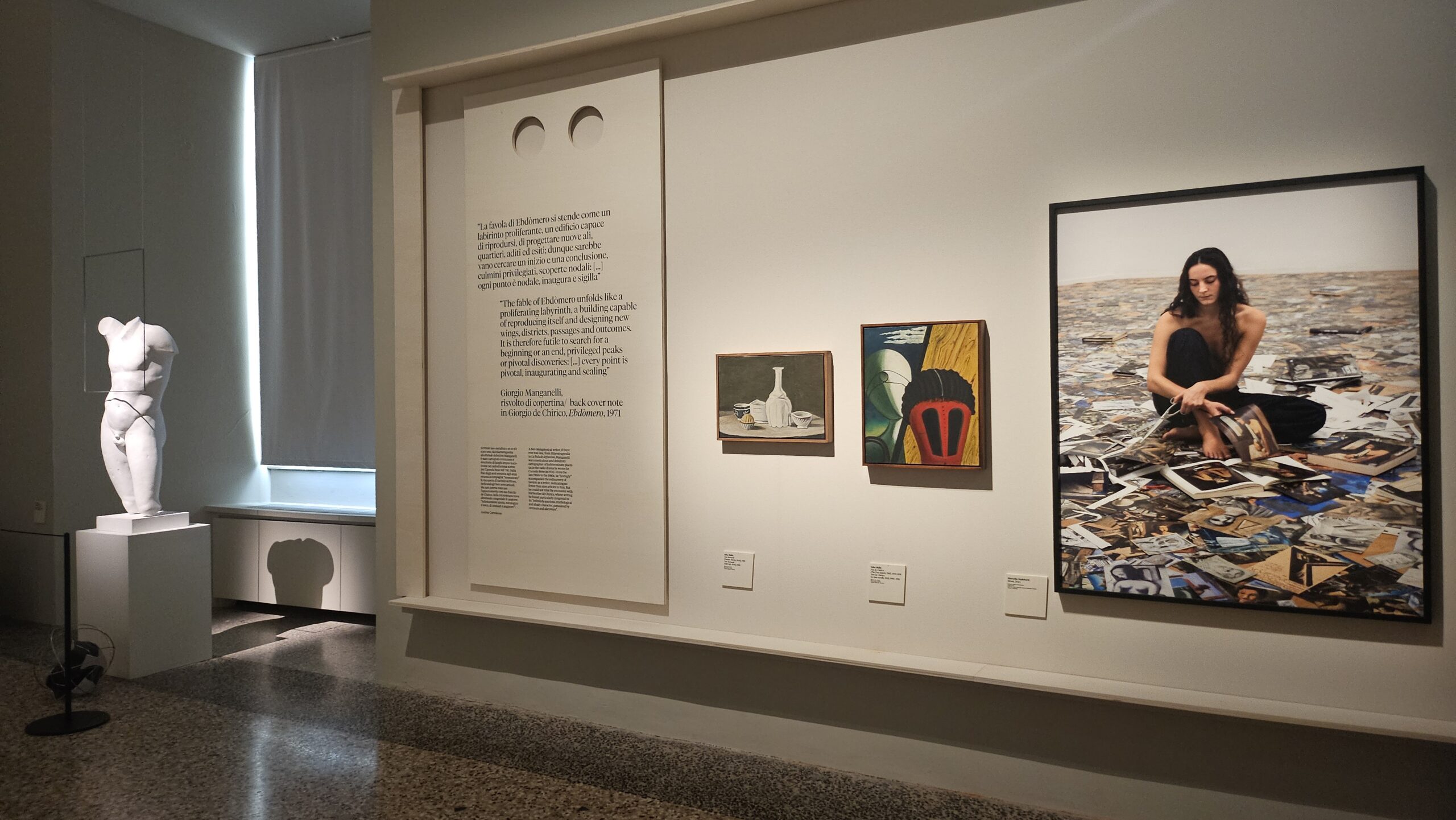
One of the most enduring legacies of Metaphysical painting lies in its profound relationship with architecture. From its very beginnings, the movement developed a visual language built upon architectural forms: arcades, towers, colonnades, plazas, and monumental facades. In the works of Giorgio de Chirico, architecture became the primary stage for the metaphysical drama, a silent protagonist capable of generating atmosphere, mystery, and philosophical reflection.
Take a look at his Gladiator in the Arena: a solitary mannequin-like figure stands in an open courtyard enclosed by a rhythmic sequence of repeating arches, forming a circular architectural space that evokes both classical amphitheatres and Renaissance courtyards. The geometry of the arcades structures the entire scene: perspective lines guide the viewer’s gaze around the enclosed space, creating a sense of order and balance while simultaneously suggesting a space that feels strangely empty and suspended in time.
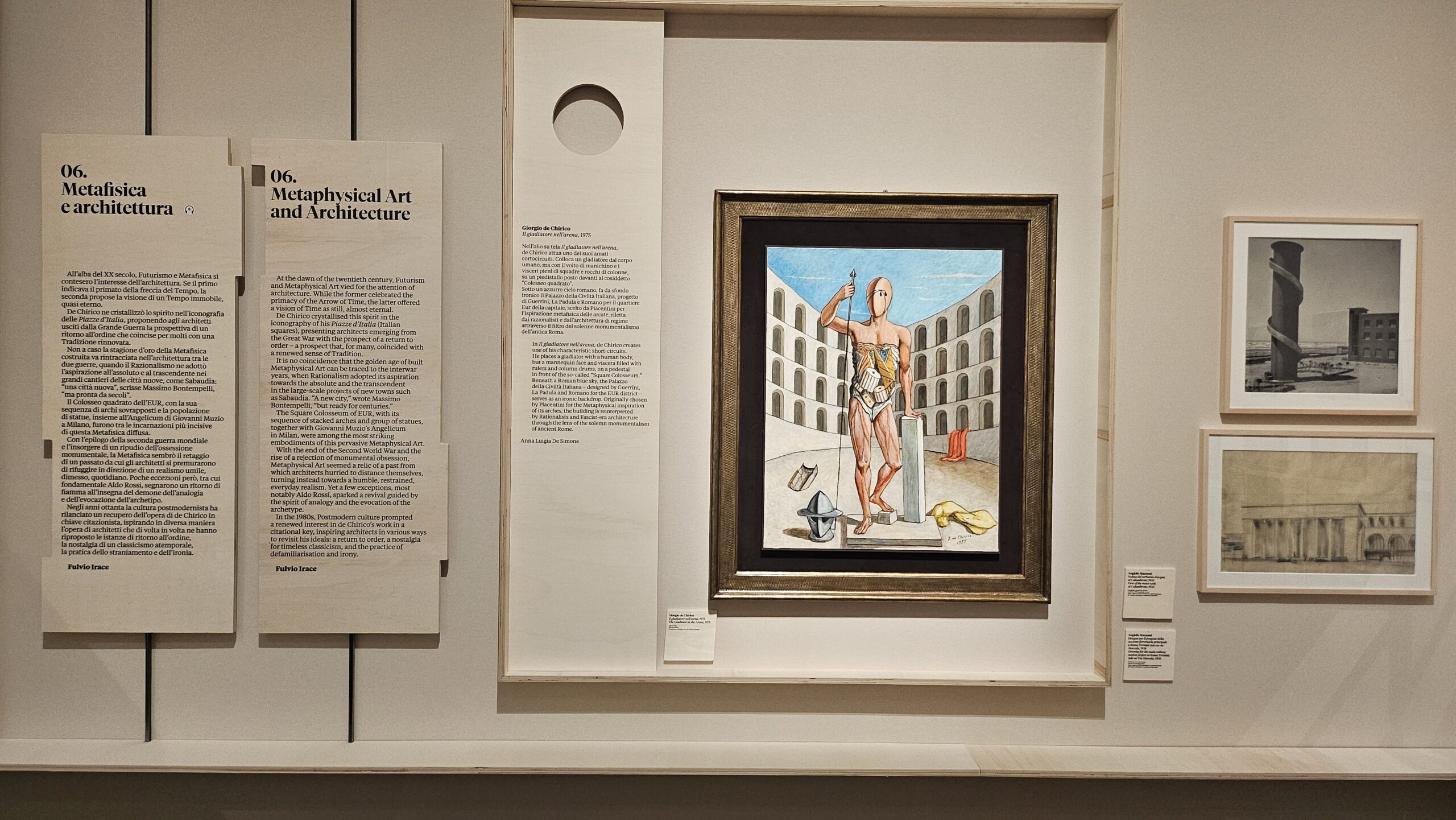
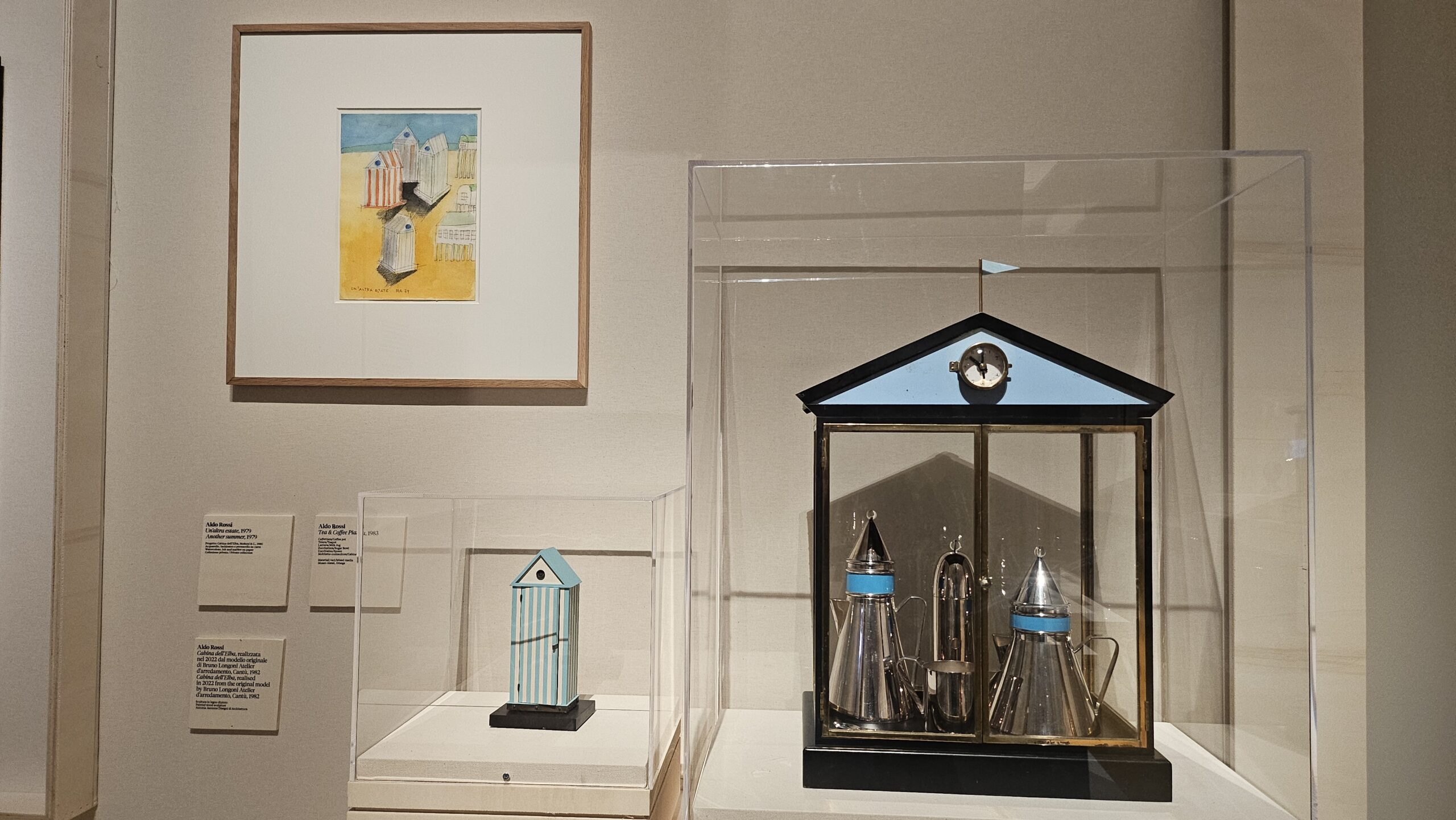
The name that most clearly emerges in this context is Aldo Rossi. Scholars have repeatedly noted the affinity between Rossi’s drawings and de Chirico’s spaces, and Rossi himself acknowledged his debt to Metaphysical painting. What he found in de Chirico was a way of conceiving architecture through archetypes: the tower, the portico, the theatre, the monument, the empty square. In Rossi’s work, as in de Chirico’s, the city becomes a construction of fragments drawn from history and memory.
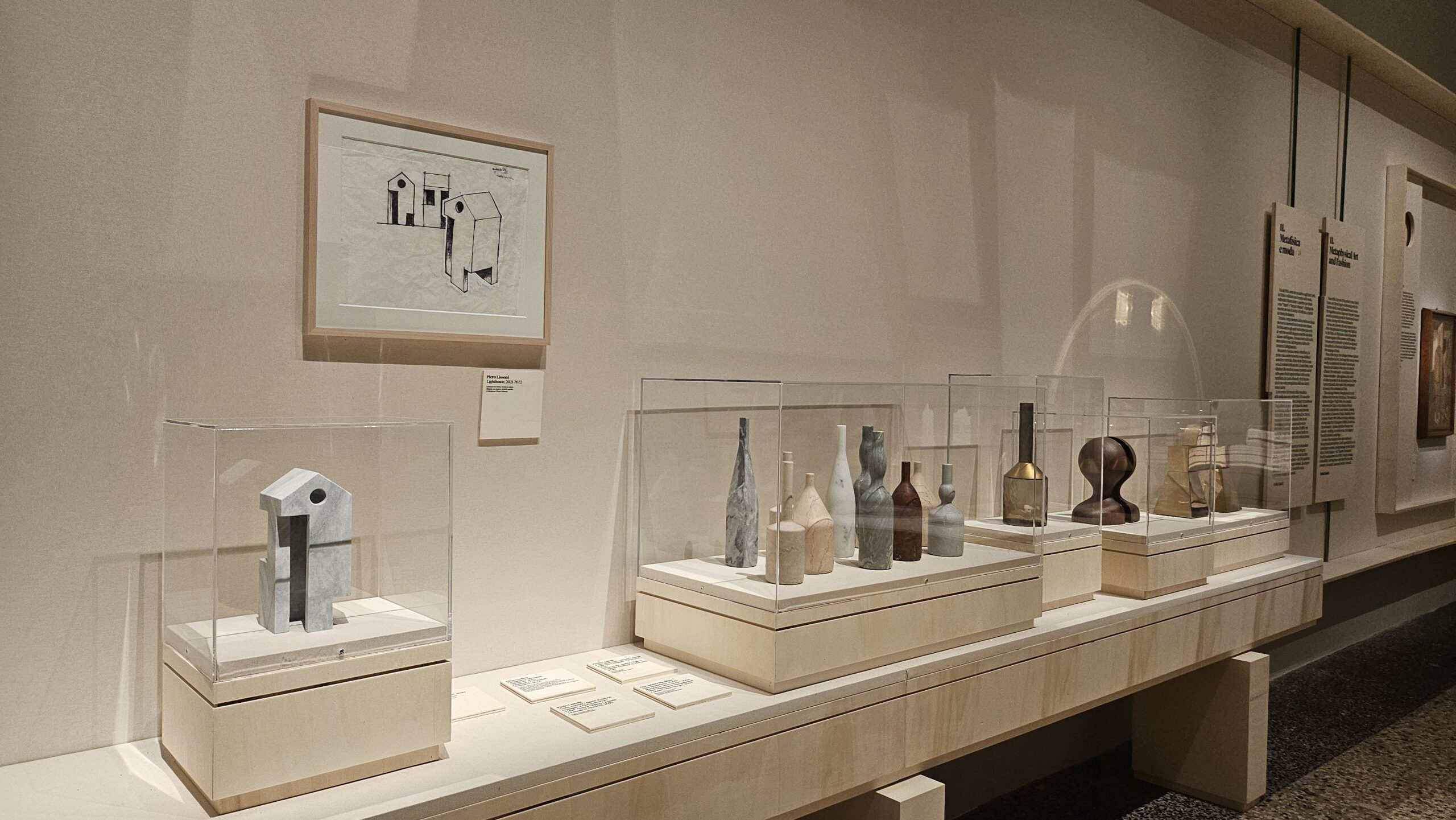
I was also very glad to find an old friend and mentor, alongside Aldo Rossi: Piero Lissoni. If what we’re trying to highlight here is a fondness for archetypal shapes that are almost playful, the lightness of spirit of a child at play and yet a deep, reflective wisdom.
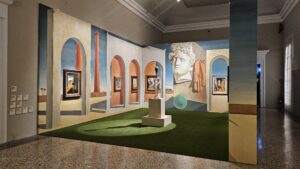
The exhibition closes with a section on graphic novels, comic books, vinyl covers and a whole room, recreated in “metaphysical style”. Highly recommended.

No Comments