
Ho già parlato di Mario Carpo in tempi non sospetti: il suo The Second Digital Turn (ottobre 2017 – MIT Ptess), per quanto abbia probabilmente ottenuto meno fortuna rispetto al suo predecessore, è un testo illuminante sulla direzione che potrebbe prendere il settore delle costruzioni in un futuro non troppo lontano. Staccandosi dai consueti luoghi comuni su stampa 3d e design generativo, Carpo esplora con occhi da storico il reale significato delle tecnologie che utilizziamo da secoli e di quelle che si sono fatte strada recentemente, proponendosi come loro evoluzione o come loro sostituzione.
In The Second Digital Turn confluiscono, raffinati ed ulteriormente sviluppati, temi già affrontati da Carpo in libercoli monografici ad esso precedenti, talvolta anche di molti anni: The Alphabet and the Algorithm è uno di questi.
Mario Carpo,
The Alphabet and the Algorithm
MIT Press, Febbraio 2011.
The rise and fall of identical copies: digital technologies and form-making from mass customization to mass collaboration.
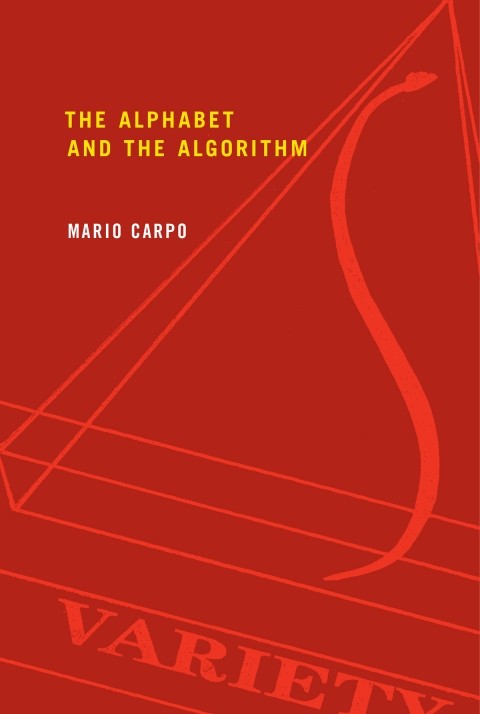
Il libro affronta due temi principali, paralleli e intrecciati tra loro: quello della riproducibilità di una rappresentazione e dell’architettura stessa e quello della rappresentazione algoritmica, della descrizione della forma, come supporto all’impossibilità di un’esatta replicazione. Si crea quindi una connessione storica strettissima tra il pensiero algoritmico, la capacità di descrivere le regole sottese a una forma, e la possibilità di descrivere direttamente il risultato di quella regola. Nel tempo, la riproducibilità diventa canone, la regola si perde, il risultato del processo diventa processo esso stesso. Vediamo i risultati ogni giorno, nella mancanza di pensiero parametrico.
Indice
- Variable, Identical, Differential
- Architecture and the Identical Copy: Timelines
- Allography and Notations
- Authorship
- The Early Modern Pursuit of Identical Reproduction
- Geometry, Algorism, and the Notational Bottleneck
- The Fall of the Identicals
- The Reversal of the Albertian Paradigm
- The Rise
- Alberti and Identical Copies
- Going Digital
- Windows
- ID Pictures and the Power of Facsimiles
- Alberti’s Imitation Game and Its Technological Failure
- The Invention of the Albertian Paradigm
- The Fall
- Form
- Standard
- Agency.
One of the most original results of Alberti’s research into image-making making technologies is the famous digital map he published in a brief Latin work, the Descriptio urbis Romae. At some point, presumably in the late 1430s or 1440s, Alberti had painstakingly surveyed, measured, and accurately drawn to scale a map of the city of Rome. But manual copies in this instance could hardly have preserved the measurements of the original map, and as this drawing could not be adequately translated into words, Alberti found a way to translate it into numbers.
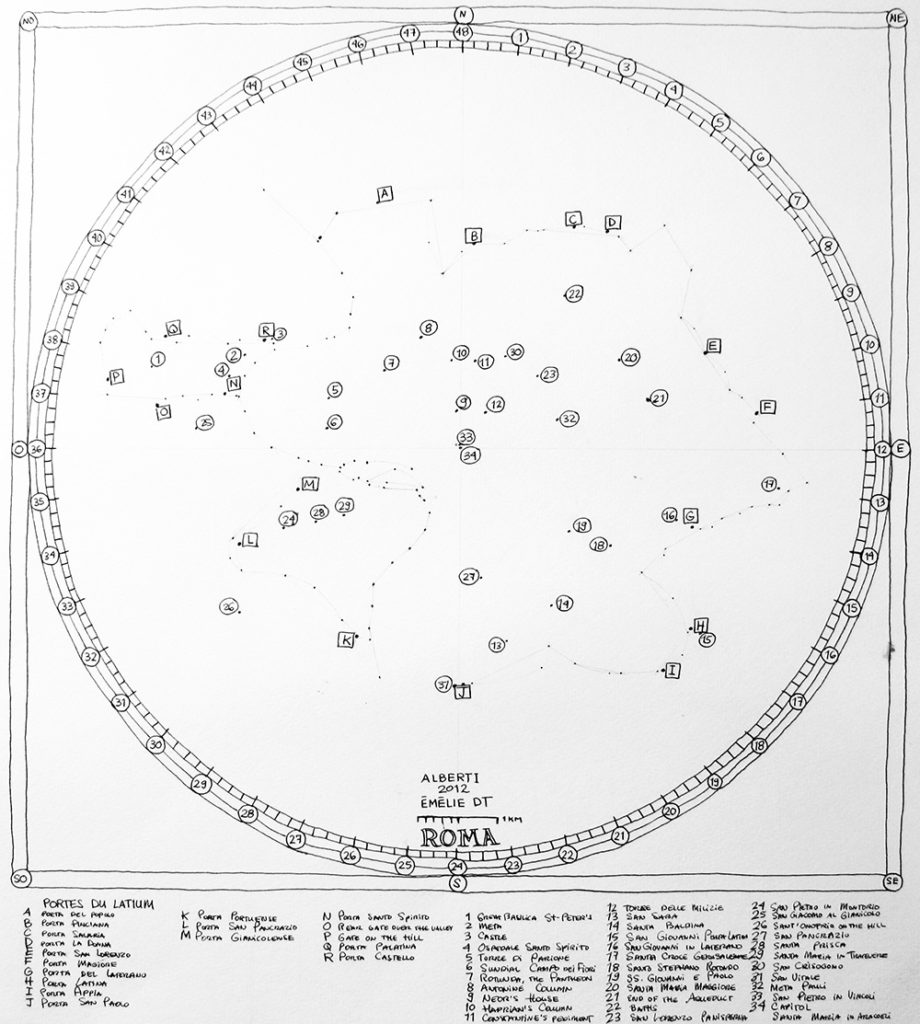
Se volete cimentarvi con quella che Carpo considera la prima opera digitale della storia, qui trovate un esercizio.




No Comments