"All this he saw, for one moment breathless and intense, vivid on the morning sky; and still, as he looked, he lived; and still, as he lived, he wondered."

Madeleine de Scudéry’s Femmes Illustres – Livia Drusilla

Livia was the influential and powerful second wife of the Roman emperor Augustus Caesar out of her second marriage. She was his adviser and eventually she was declared a goddess by her grandson emperor Claudius.

Before meeting Augustus, she was married to one Tiberius Claudius Nero, a politician and the actual father of future emperor Tiberius, but she hadn’t even given birth to her second son that Augustus had fallen in love with her, divorced his current wife Sbribonia who was also pregnant and, a few months later, married her with her husband’s possibly extorted consent.

Under the name of Julia Augusta and following Augustus’ explicit testamentary dispositions, she retained her power and influence even after her husband’s death in 14.
Rumours circulated that the emperor was poisoned by Livia, who delivered the venom by smearing her husband’s favourite figs while they were still on the tree, knowing that Augustus would come and pick on them. Which is a testament to creativity, at least. A variety of figs in imperial time was thus called Liviana.

Tiberius, upon ascending to the throne, made it illegal to speak ill of his mother and granted her a place among the Vestal Virgins, who had a seat of honour at public games and performances by Roman law.
However, the emperor grew to resent the general sentiment that he was Emperor just by her mother’s efforts.
When he retired to Capri, one of the reasons given by historians like Cassius and Tacitus is that he couldn’t stand his mother’s interferences any longer.
When Livia fell ill and died, in 29, her son stayed in Capri and sent a friend to deliver the eulogy.
He also vetoed that she would be given divine honours, honours that were eventually restored by her grandson Claudius in 42.
She was then renamed Diva Augusta. An elephant-drawn chariot carried her effigy to all public games and a statue to her was erected in the Temple of Augustus, next to her husband’s.

Mademoiselle De Scudery has her writing to Gāius Cilnius Maecēnās, a friend of Augustus and a patrol of both Virgil and Horace from whom the word “mecenate” comes from.


Summertime

The Road is Made by Walking

Antonio Machado was a major Spanish poet and playwright, associated with the Generation of ’98, a group of writers who reflected on Spain’s identity and crisis at the turn of the 20th century. He was born in Seville in 1875 and died in 1939 in

Read More »

Kathleen Jamie on Attention and Corridors

Kathleen Jamie is a Scottish poet and essayist, born in 1962, known for her prose and poetry about landscape, place, and everyday life. Findings is her essay collection of personal reflections, first published in 2005, and it moves through nature and cities, archaeology, hospitals, family

Read More »
comics and illustration

Leo Ortolani, Tapum

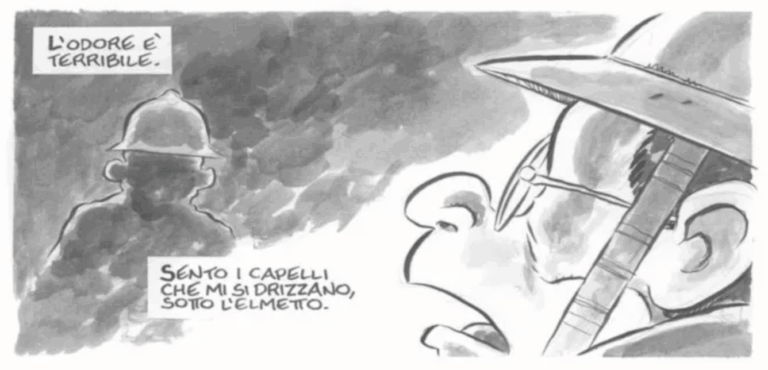
A un certo punto ci sarà una battuta, in questo fumetto, e riderete. Sappiate che è l’unica. Com’è giusto che sia. Se devo paragonare quest’opera a qualcosa, il confronto più azzeccato è probabilmente lo spettacolo che Marco Paolini trasse dal Sergente nella neve di Rigoni

Read More »
Share on LinkedIn
Throw on Reddit
Roll on Tumblr
Mail it
No Comments

Post A Comment

This site uses Akismet to reduce spam. Learn how your comment data is processed.

RELATED POSTS

The Road is Made by Walking

Antonio Machado was a major Spanish poet and playwright, associated with the Generation of ’98, a group of writers who reflected on Spain’s identity and crisis at the turn of the 20th century. He was born in Seville in 1875 and died in 1939 in

Read More

Kathleen Jamie on Attention and Corridors

Kathleen Jamie is a Scottish poet and essayist, born in 1962, known for her prose and poetry about landscape, place, and everyday life. Findings is her essay collection of personal reflections, first published in 2005, and it moves through nature and cities, archaeology, hospitals, family

Read More

Leo Ortolani, Tapum

A un certo punto ci sarà una battuta, in questo fumetto, e riderete. Sappiate che è l’unica. Com’è giusto che sia. Se devo paragonare quest’opera a qualcosa, il confronto più azzeccato è probabilmente lo spettacolo che Marco Paolini trasse dal Sergente nella neve di Rigoni

Read More