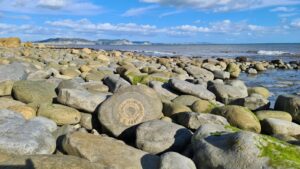
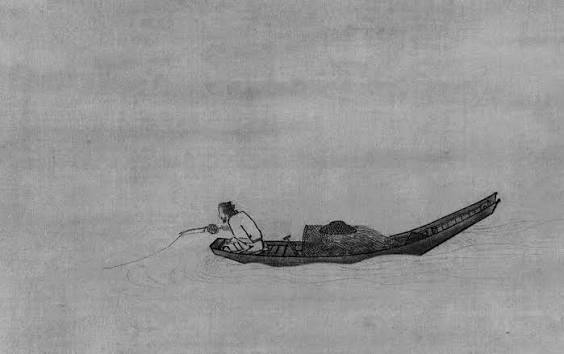
"All this he saw, for one moment breathless and intense, vivid on the morning sky; and still, as he looked, he lived; and still, as he lived, he wondered."

Madeleine de Scudéry’s Femmes Illustres – Amalaswintha

Amalasuintha was the daughter of Theoderic the Great, king of the Ostrogoths, and she reigned from 526 to 535 first as regent and then, if only for just one year, as queen regnant. She was a prominent intellectual figure and is known to have spoken fluently both Latin and Greek, on top of the Gothic language. She was a philosopher and was described as the embodiment of what were considered to be the three Roman virtues in a noblewoman: happiness (smile and be pretty), patience (you need a lot of that) and fertility (blessed be the fruit). In her wisdom as a ruler, she was compared to Solomon.

She is mostly known for her diplomatic relationship with the Byzantine emperor Justinian the Great and her negotiations were intended to form an alliance with the Roman empire. After her son’s death in 534, she tried to strengthen her position by elevating her cousin Theodahad, a Gothic general opposed to the Romans, and appointing him co-ruler. This attempt in diplomacy failed: Amalasuintha was captured by Theodahad’s allies, imprisoned in the island of Martana, lake of Bolsena, and she was murdered in her bath.

Following her assassination, Justinian invaded Italy, thus starting the so-called Gothic War.

Theodahad was then replaced by Witigis, Amalasuintha’s son-in-law, as the people were demanding that Theodahad was punished for the assassination of the beloved queen. The general was put to death, but this was not enough to stop the war with Byzantium, which stretched on till 554.

Amalasuintha was a character in the first play written by Carlo Goldoni, which was first presented in Milan in 1733.

De Scudery has her writing to Theodahad himself, the guy responsible for her death.

Summertime

Omeros in the Caribbeans

Derek Walcott was a Saint Lucian poet, playwright, and painter, and one of the major voices of Caribbean literature. He won the Nobel Prize in Literature in 1992, and his work often explores Caribbean history, identity, colonial inheritance, and the meeting of European and African

Read More »
books and literature

Ioanna Papadopoulou’s The Castaway and the Witch

I had a genuine “oh shit” moment when I read the author’s preface saying this was darker than “Winter Harvest” because – and I absolutely ADORED “Winter Harvest” – that was pitch-black dark. I thought “we’re all going to die”. This maybe has something to

Read More »
Summertime

The Path You Have to Sing

Alexis Wright‘s Carpentaria, an epic work set in a fictional town called Desperance, opens before there are any people in it at all: an ancestral serpent, “a creature larger than storm clouds,” descends from the stars and drags itself across the wet clay of the

Read More »
Share on LinkedIn
Throw on Reddit
Roll on Tumblr
Mail it
No Comments

Post A Comment

This site uses Akismet to reduce spam. Learn how your comment data is processed.

RELATED POSTS

Omeros in the Caribbeans

Derek Walcott was a Saint Lucian poet, playwright, and painter, and one of the major voices of Caribbean literature. He won the Nobel Prize in Literature in 1992, and his work often explores Caribbean history, identity, colonial inheritance, and the meeting of European and African

Read More

Ioanna Papadopoulou’s The Castaway and the Witch

I had a genuine “oh shit” moment when I read the author’s preface saying this was darker than “Winter Harvest” because – and I absolutely ADORED “Winter Harvest” – that was pitch-black dark. I thought “we’re all going to die”. This maybe has something to

Read More

The Path You Have to Sing

Alexis Wright‘s Carpentaria, an epic work set in a fictional town called Desperance, opens before there are any people in it at all: an ancestral serpent, “a creature larger than storm clouds,” descends from the stars and drags itself across the wet clay of the

Read More