"All this he saw, for one moment breathless and intense, vivid on the morning sky; and still, as he looked, he lived; and still, as he lived, he wondered."

Madeleine de Scudéry’s Femmes Illustres – Κλοιλία

Cloelia was a woman who was allegedly taken hostage, along with other Roman women, by the Etruscan king Lars Porsena during his war against Rome around 508 b.C. In some other versions, instead of being taken hostage, she was given by the Romans as a tribute.

Regardless of the version, it is said that she broke out of Porsena’s camp, leading out a group of other Roman virgins. According to Valerius Maximus, their escape was rather adventurous: Cloelia led them on horseback and then she swam across the Tiber, bringing the others to safety. If you’ve ever been to Rome, you know how adventurous that is.

Porsena, however, demanded his prisoners to be returned and the Romans, of course, graciously agreed.
The king however was impressed by her bravery and, when she returned, she allowed her to select half of the remaining hostages so that they too could be freed. Following strategy rather than her heart, she selected the youngest and most fit boys, so that they could return and keep fighting for Rome.

It’s unclear what happened to her afterwards, but the Romans honoured her with the very unusual tribute of an equestrian statue. According to Seneca, the only superior honour would have been to be considered a man. But we do still study that jerk in schools, for some reason.

There’s a nice painting of her by Frans Wouters, titled Cloelia and Her Companions Escaping from the Etruscans. Frans Wouters (Lier, 1612–1659) was a Flemish Baroque painter, apprentice of Rubens, who worked as a court painter for both Ferdinand II and the Prince of Wales.

Much more heroic
is Gerard Sanders’
The Flight of Cloelia across the Tiber (1754).

There’s also a work by Peter Paul Rubens and Jan Boeckhorst: The escape of Cloelia from the camp of Porsenna (1604 – 1640).
Being Rubens, there’s a lot of stuff going on.

A much more romantic view is given us by Cornelius van Poelenburgh in his The flight of Cloelia.
Cornelis van Poelenburgh, also known as Cornelis van Poelenburch (1594 – 12 August 1667) was a Dutch painter and the leading representative of Dutch landscape painting in Rome during the XVII Century.


Summertime

Rainer Maria Rilke’s Letters to a Young Architect

Same poet, different book. Rilke, the Bohemian poet and playwright, already made an appearance in the original list, so I’m well aware that bringing him back on day two of a sequel about not repeating myself is a strange way to start. But the Duino

Read More »
books and literature

The Thursday Murder Club

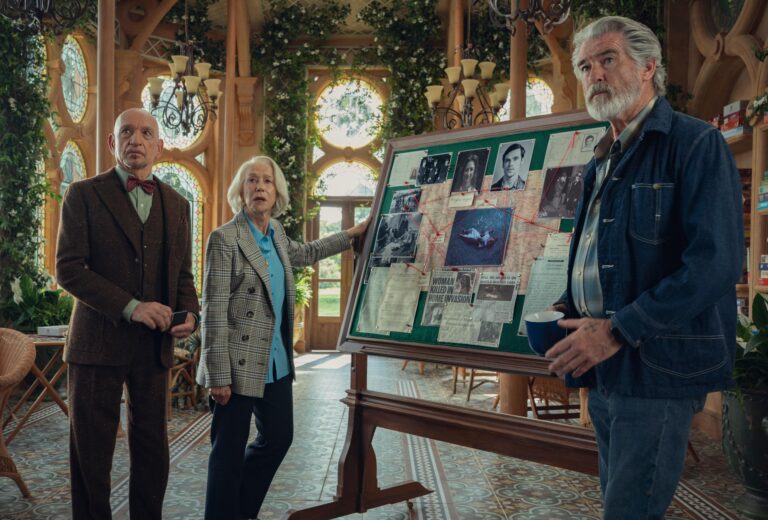
I wanted to read this series after seeing the delightful movie on Netflix, which would have been worth it if only for the stellar cast. After I started, I couldn’t possibly stop. I think I read the whole thing in a month. Here’s what I

Read More »
architecture, engineering and construction

Summertime (though the living ain’t easy)

There is a particular kind of August laziness that likes to dress itself up as a fashionable pose: you can’t undertake significant projects in August, you’re not supposed to, apparently, you aren’t even supposed to read anything that’s too complicated (though I wonder, if you

Read More »
Share on LinkedIn
Throw on Reddit
Roll on Tumblr
Mail it
No Comments

Post A Comment

This site uses Akismet to reduce spam. Learn how your comment data is processed.

RELATED POSTS

Rainer Maria Rilke’s Letters to a Young Architect

Same poet, different book. Rilke, the Bohemian poet and playwright, already made an appearance in the original list, so I’m well aware that bringing him back on day two of a sequel about not repeating myself is a strange way to start. But the Duino

Read More

The Thursday Murder Club

I wanted to read this series after seeing the delightful movie on Netflix, which would have been worth it if only for the stellar cast. After I started, I couldn’t possibly stop. I think I read the whole thing in a month. Here’s what I

Read More

Summertime (though the living ain’t easy)

There is a particular kind of August laziness that likes to dress itself up as a fashionable pose: you can’t undertake significant projects in August, you’re not supposed to, apparently, you aren’t even supposed to read anything that’s too complicated (though I wonder, if you

Read More