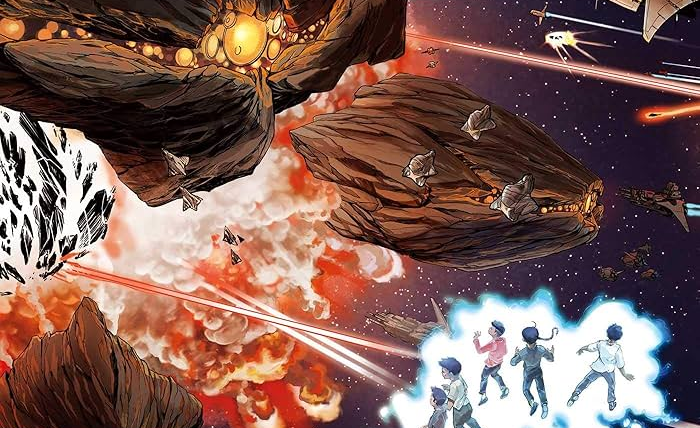
"All this he saw, for one moment breathless and intense, vivid on the morning sky; and still, as he looked, he lived; and still, as he lived, he wondered."

Leveraging Antifragility in Digital Innovation

Yesterday we introduced the concept of Antifragility. Today let’s see some principles of using it in innovation, particularly digital innovation which thrives on disruption.

  1. Embrace Uncertainty: companies that drive digital innovation often face volatility. By embracing uncertainty rather than fearing it, you allow space for creativity and evolution. For example, digital products like Instagram started as something entirely different and evolved based on user feedback and market demands.
  2. Iterative Development: following an antifragile approach means building systems that can evolve through iteration. Instead of launching a perfect product, launch a Minimum Viable Product (MVP) and gather real-world data. This feedback loop lets the product grow stronger with each iteration, adapting to market needs.
  3. Diversification: companies like Google thrive because they invest in moonshot projects like AI, quantum computing, and self-driving cars. By diversifying, companies can leverage failures in one area to strengthen another.
  4. Fail Fast, Fail Forward: digital innovators need to internalize that failures aren’t the enemy—they’re opportunities for growth. Each failure teaches something new, pushing you closer to a breakthrough.

Failing Forward: Turning Mistakes Into Stepping Stones for Success by John C. Maxwell (2007)

“Fail Fast, Fail Forward” is a mantra that has gained significant traction in the fields of technology, entrepreneurship, and innovation. At its core, it represents a mindset and strategy for tackling complex problems and fostering creativity by leveraging failure as a learning tool, and the approach is deeply interconnected with the principles of antifragility, where failure is not seen as a setback but as an essential part of growth and progress.

We’ll see more about it tomorrow.

architecture, engineering and construction

Who EIRs the EIR?

There’s a game I’d like to play (queue The Cranberries): take two EIRs from the last month, any project really, and delete project name and phase. Then place them in front of somebody else and ask them to guess. Which kind of project? Is it

Read More »
books and literature

Isaac Asimov’s Ring Around the Sun

This is, without any doubt, one of the best collections in the series, and notably one with aliens of many sorts: Martians and Venusians with a different approach to warfare and radically original new senses, and Ganimedians who just want what’s due for Christmas. What

Read More »
books and literature

The Village Teacher

As I was saying a few days ago, some of Cixin Liu’s short stories have been adapted into wonderful graphic novels. This one is a heartfelt story that touches many topics that are dear to the author’s heart, mainly the importance of knowledge and the

Read More »
Share on LinkedIn
Throw on Reddit
Roll on Tumblr
Mail it
No Comments

Post A Comment

This site uses Akismet to reduce spam. Learn how your comment data is processed.

RELATED POSTS

Who EIRs the EIR?

There’s a game I’d like to play (queue The Cranberries): take two EIRs from the last month, any project really, and delete project name and phase. Then place them in front of somebody else and ask them to guess. Which kind of project? Is it

Read More

Isaac Asimov’s Ring Around the Sun

This is, without any doubt, one of the best collections in the series, and notably one with aliens of many sorts: Martians and Venusians with a different approach to warfare and radically original new senses, and Ganimedians who just want what’s due for Christmas. What

Read More

The Village Teacher

As I was saying a few days ago, some of Cixin Liu’s short stories have been adapted into wonderful graphic novels. This one is a heartfelt story that touches many topics that are dear to the author’s heart, mainly the importance of knowledge and the

Read More