
After the pandemic, the recurrent slogan was either “back to normal” or advocating for a “new normal” that really meant “I’ve seen how much I can push people to make more money, and I plan on doing just that”. Two things piss me off when it comes to learning:
- online learning existed pre-pandemic, with some fundamental differences: the pandemic normalised the compromise of traditional learning that’s simply delivered remotely, and moved people away from recognising the value of a good, well-designed online learning experience;
- smart working never meant remote working: they’re two different and separated things, and yet they are conflated in a situation where people are at home, left to their own devices, and yet responsible for their own organisation and managing their deadlines, and still be expected to stay connected for the whole duration of the working day. This also applies when they’re required to learn new skills.
Now, I started writing this piece as a passionate advocacy for going back to face-to-face learning, and then I realised that would be just as wrong as pushing for the opposite. Truth is, both approaches are equally valid and imperfect, they both have their advantages and their flaws.
So, I used a little “Devil’s Advocate” coaching trick on myself while working on this new education project of mine and, before getting to what I want to develop as the solution, I sifted out all that’s good about the thing I want to avoid. Here’s what I found.

1. The Exclusion by Default
There’s a neuroscientific finding that circulates widely in education and business: when researchers compare brain activity during in-person interactions versus video-mediated interactions, they find that face-to-face interactions elicit nine significant cross-brain links between frontal and temporal areas of the neurotypical brain, whereas remote communications elicit only one. Let me be specific about what that means: this research describes what happens in neurotypical brains under these conditions. It doesn’t describe all brains. It doesn’t describe the norm. It describes one neurotype. Also, it originates from studies in mother-child interactions, which of course places it in an emotional context rather than an educational one.
Yet this finding is deployed as though it’s a universal truth, as though physical proximity is inherently better for connection and learning. And that universalising move is the problem.
The assumption that everyone reads faces and bodies the same way, or that everyone finds easy to perform that reading, is false. Many neurodivergent people — autistic people, people with social anxiety, people with processing differences — find the constant monitoring of facial expressions, body language, and subtle social cues exhausting or deeply difficult. Some don’t read those cues reliably at all. For these people, the idea that being in a room automatically facilitates connection is not their experience. In fact, the social and sensory demands of an in-person space can make connection harder, not easier.

Here’s what’s actually true: in-person gatherings are designed, culturally and often physically, around typical patterns of presence and engagement. They assume that:
- people can read faces and body language reliably, and that doing so is essential to understanding others;
- sustained eye contact signals engagement and honesty, not discomfort or threat;
- verbal participation in real time is the marker of active learning;
- the sensory and social intensity of being in a room with others is tolerable, even desirable;
- the unspoken social rules of a gathering are obvious and universal;
- managing your nervous system in a stimulating environment is something everyone can do equally well;
- managing your body (being seated in the same space for an extended amount of time, for instance) is easy and good for your concentration.
These aren’t neutral facts about how learning works: they are the specific affordances of a particular neurotype and, when we build learning environments around them, we build exclusion into the foundation.
Many neurodivergent people — autistic people, people with ADHD, people with social anxiety, people with sensory processing differences — find in-person gatherings exhausting or deeply difficult, not because they’re broken or need to “work harder,” but because the environment is designed in ways that demand constant translation, masking, and regulation. The person sitting silently might be processing information deeply, except we’re constantly pushing for what we label as participation. The person who doesn’t make eye contact might be listening with complete attention, except we mistake that for absence. The person who takes breaks might be managing sensory overload so they can continue learning, and yet we don’t incorporate that into the rhythm. The person who prefers to write rather than speak might have perfectly coherent thoughts that they can’t access in real time under social pressure. And yet the neurotypical framework reads all of this as disengagement, as lacking commitment. The burden is placed on the neurodivergent person to adapt, to mask, to perform neurotypically in order to be welcomed into a learning space. Which is bullshit.

The research on body language that claims certain postures indicate trust or engagement, for instance, is not neutral science describing universal human communication: it’s ideology dressed as fact. Communication varies by culture, by neurology, by individual personality and history.
The question neurodivergent learners reasonably ask is: why should I accept the cognitive, sensory, and emotional cost of being in a room full of people, performing neurotypical engagement, when I could learn the same material remotely, with the accommodation I need to actually function? Why is presence demanded of me in a format that exhausts me, when the learning could happen in a format where I could access it fully?
Being an advocate of the value of in-person learning, that’s not a question to dismiss these issues or work around them. Those are the right questions. Because the answer, currently, is simply: because we’ve decided that in-person with these rules is the default, that presence is the measure of commitment, and that if you can’t meet those expectations, you’re the problem.
In-person gatherings aren’t flexible or inclusive by design because they’re encoded for the neurotypical. That’s not an insult or an exaggeration. It’s a structural fact. And it’s worth naming it directly before we talk about what in-person might offer when people are intentional about undoing that encoding.

2. What In-Person might offer (if we try): when Intentionality replaces Defaults
Once we’ve named the problem — that in-person gatherings are encoded for neurotypicality — we can ask a different question: what could in-person spaces actually offer if they were designed differently? And what can they teach us about the way we design our digital spaces?
When the neurotypical brain shows all those cross-brain links, that means in-person creates particular kinds of opportunities, some of which matter for learning. The question is: what are those opportunities, and can they be accessed in ways that don’t require masking or performing neurotypicality?
Some people learn through hands-on, embodied practice. They need to feel the resistance of a tool, the spatial relationship of materials, the physical consequences of their performed actions. For these learners, virtual can feel incomplete. But — and this is important — some people learn this way. Not all. And even for those who do, in-person doesn’t have to mean “in a crowded room performing social engagement.”
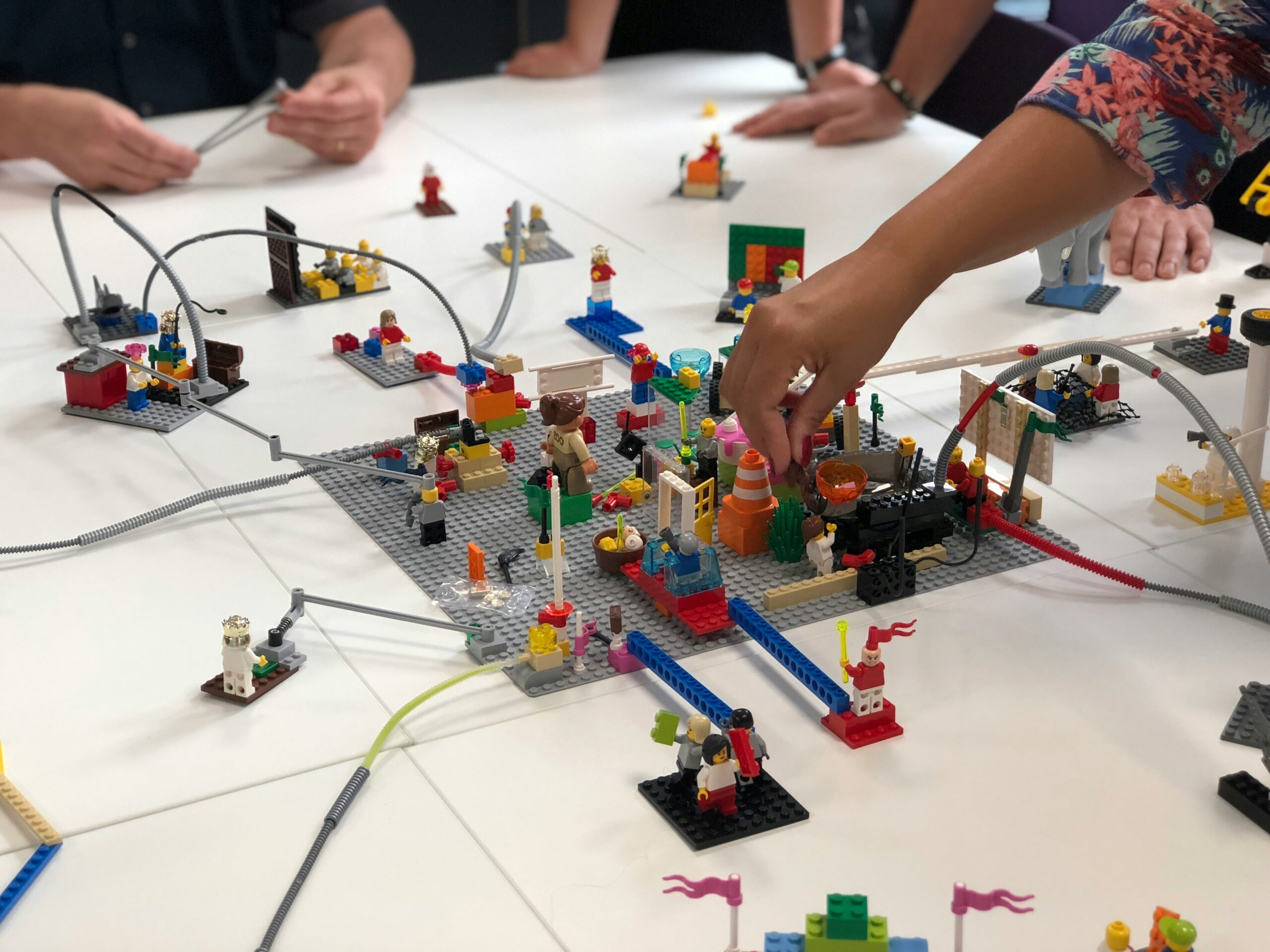
Some people build understanding through conversation. They think by talking, they learn by hearing themselves work through ideas with someone who pushes back. For these learners, synchronous interaction — whether in person or video — can be essential. But synchronous doesn’t require in-person. And it also doesn’t require the social intensity of a large gathering.

Some people develop commitment and persistence through community and belonging. They need to know that others are on the same journey, that their struggle is shared, that there’s a group counting on them. For these learners, isolation is genuinely harmful. But community doesn’t require in-person either. And it certainly doesn’t require the forced social demands of neurotypical gathering.

Here’s what matters: in-person spaces offer the possibility of multiple things happening at once — different kinds of learning, different modalities of connection, different ways of being present — but only if they’re designed to allow it. A gathering where everyone is required to sit still, make eye contact, participate verbally in real time, and read unspoken social cues is not offering multiple modalities. It’s enforcing one. A gathering where people can move, can step away, can engage in writing or small groups or silent work, can participate in their own way is when the potential of shared space opens up.
But this requires fundamental design changes. It requires:
- a rethinking on presence that’s not neurotypical: not accommodation as an afterthought, but inclusion as the default;
- sensory-friendly options: quiet spaces, controlled lighting, noise management, breaks built into the schedule;
- multiple ways to participate: working in small groups, engaging asynchronously, contributing in writing, listening without speaking;
- clear, explicit communication of the unspoken rules so no one has to guess;
- genuine flexibility about why and when people are present, not the pretence that everyone can and should attend everything.
When these conditions exist, in-person gatherings might offer something valuable: the person with ADHD who needs to move might find that they can learn better while walking or fidgeting, in a space designed for that; the autistic person might find that a small, predictable group with clear structure is manageable and even enjoyable; the person with social anxiety might discover that working on something concrete with others is less stressful than open-ended social time; the person with executive function challenges might benefit from the external structure and accountability of showing up together.
But here’s what must be true: none of this should feel like they’re overcoming a barrier or pushing through difficulty just to participate. If someone needs remote to fully access learning, that’s not a backup option but a legitimate pathway. If someone needs small groups instead of large gatherings, that’s not accommodation but good design. If someone needs asynchronous rather than synchronous, that’s not a compromise but respect for how their brain works.
No one ever thought that designing a learning experience or a workshop was supposed to be easy, did they?

3. Embodied Learning and Practical Skills: asking better questions
There was some research in 2024, on medical students learning practical clinical skills, and it showed a stark gap: face-to-face learners achieved 75% competency in practical skills, blended learners achieved 89%, and online learners achieved 17%. This experiment is worth taking seriously. But it demands that we ask better questions than “in-person is better,” and reach better conclusions that “on-line sucks”.

Better questions: who were these learners? What was their neurology? What accommodations were available? Were the online learners genuinely given access to the resources and instruction they needed, or were they simply sent materials and told to figure it out? Were the in-person learners given sensory breaks, quiet spaces, and alternatives to constant group work?
The data might show that for some people, practicing embodied skills requires physical presence. That’s plausible. The body learns through doing, through feeling, through proprioceptive feedback. You can’t learn to cut wood with only video instruction: at some point, you need to feel the wood, the saw, the angle, the resistance.
What we don’t know from the data is whether that’s true for everyone, or whether the in-person advantage reflects, partly or largely, that the in-person environment was more accessible to the learners who participated. Maybe some of the 17% online didn’t have the space, the quiet, the setup they needed. Maybe some were neurodivergent and the cognitive load of staring at a screen with an instructor was too high. Maybe some were parents managing childcare simultaneously. Maybe some had disability that meant synchronous video was inaccessible, but asynchronous practice would have worked.
This doesn’t mean embodied learning doesn’t require hands-on practice. It means we should ask: for whom does that matter most? And for those people, how can we provide that practice in a way that doesn’t force them to choose between learning the skill and protecting their mental health?
The answer might be: hybrid. Video instruction for the thinking part. In-person practice for the embodied part. But with genuine flexibility about how and when that in-person part happens. And with awareness that some people can’t access in-person, ever, and their learning pathway shouldn’t require it.

4. Networks and Mentorship: does Presence create Connection?
Here’s another thing. Professional networks and social capital are genuinely important for adult learning and career advancement: access to relationships, informal guidance, and professional connections shapes opportunity.
The problem is the assumption that in-person gatherings are the primary way this happens, while these gatherings often demand a particular kind of presence not even all neurotypical people can master: you circulate, you make small talk, you manage conversations with strangers, you read social cues about when someone wants to talk longer or move on. This is tricky for most people, like it’s a separate kind of skill. For someone with social anxiety, ADHD, or autism, this is exhausting and often inaccessible.
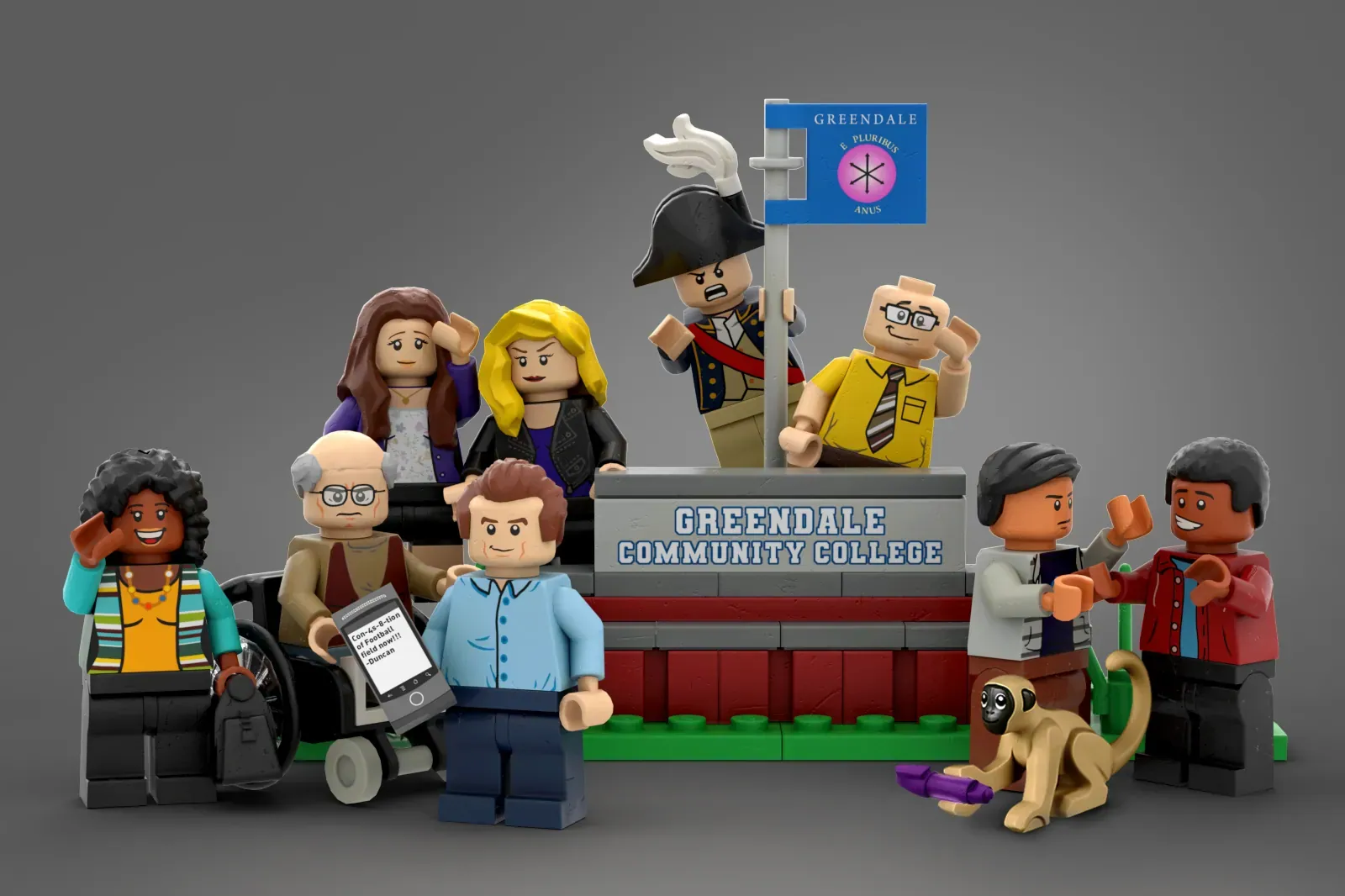
Don’t get me wrong, I love in-person gatherings, but along the way, we might have lost sight of the reason. What matters here is not whether professional relationships form, which you might think to achieve by throwing people in a room, but how learning environments create pathways for them to form. This might mean explicit mentorship programs, online communities, collaboration on concrete projects, opportunities for people to see each other’s work and competence before meeting in person, permission to build relationships asynchronously. If you think organising an in-person gathering is hard work, take a look at this picture and you realise this is an awful amount of work. So again, do we resort to in-person gatherings because they’re the best formula or just because they’re the easy way out?
The risk in assuming in-person is essential is that we create a system where professional advancement requires neurotypical social performance. Where the people who get mentored, who build networks, who get access to opportunity, are the ones comfortable with in-person events. Everyone else is left to figure out their career advancement alone.
5. Blended Learning that actually centres inclusion
Blended learning — combining in-person, synchronous, and asynchronous modalities — is often presented as the answer, except most blended learning designs still default to assuming in-person is the primary experience, with remote as a backup for people who “are unable” to attend.
Truly inclusive blended design should flip that. It assumes multiple valid pathways exist from the start. Some people engage primarily in-person. Some engage primarily remotely. Some move between modalities depending on what they need. All are core participants, not people who opted out.
This requires:
- in-person components designed to be genuinely optional, not coercive;
- asynchronous components that are substantial;
- synchronous virtual options that are built in;
- clear pathways to mastery through each modality;
- explicit acknowledgement that different people benefit from different designs.
This takes us back to a need for extreme flexibility. What any gathering should offer is access to multiple channels of communication simultaneously: the ability to see someone’s face, hear their tone of voice, notice their posture, feel the energy in the room, share physical space might be crucial but shouldn’t be the default, exactly like it shouldn’t be a default to be deprived of all those things. A classroom is a social pact. We need to create pacts in which there isn’t a single “right” way to show up.
When this is done well, in-person gatherings can be powerful because they’re one option within a system designed to honour different needs.
In light of this, what matters in a shared space, either physical or digital, should be the opportunity for different kinds of connection. You can have a conversation while working on something together, which helps people who think while doing. You can sit in comfortable silence, which helps people who find constant eye contact or turn-taking difficult. You can take breaks, step outside, and regulate your nervous system, which helps neurodivergent people manage the intensity of social interaction. You can work in small groups, in large groups, or independently, which honours different social capacities and preferences.
There’s a technological barrier to doing all these things in a digital space, a barrier no one really seems interested in tackling. There’s a cultural barrier to doing all these things in a physical space. Both aspects are worthy of our attention.



No Comments