"All this he saw, for one moment breathless and intense, vivid on the morning sky; and still, as he looked, he lived; and still, as he lived, he wondered."

Harry Siddons Mowbray, “The Marriage of Persephone” (1895)

The artist of this painting was born at Alexandria, Egypt, from English parents but he spent most of his childhood in American after his father died and his mother moved closer to her family. He was adopted by his aunt after his mother died too, in a freak domestic accident. He came back to Europe in 1879, specifically to Paris, where he entered the atelier of Leon Bonnat and gained notoriety with his painting Aladdin. I’m not sure whether the painting survived, because I couldn’t find it.

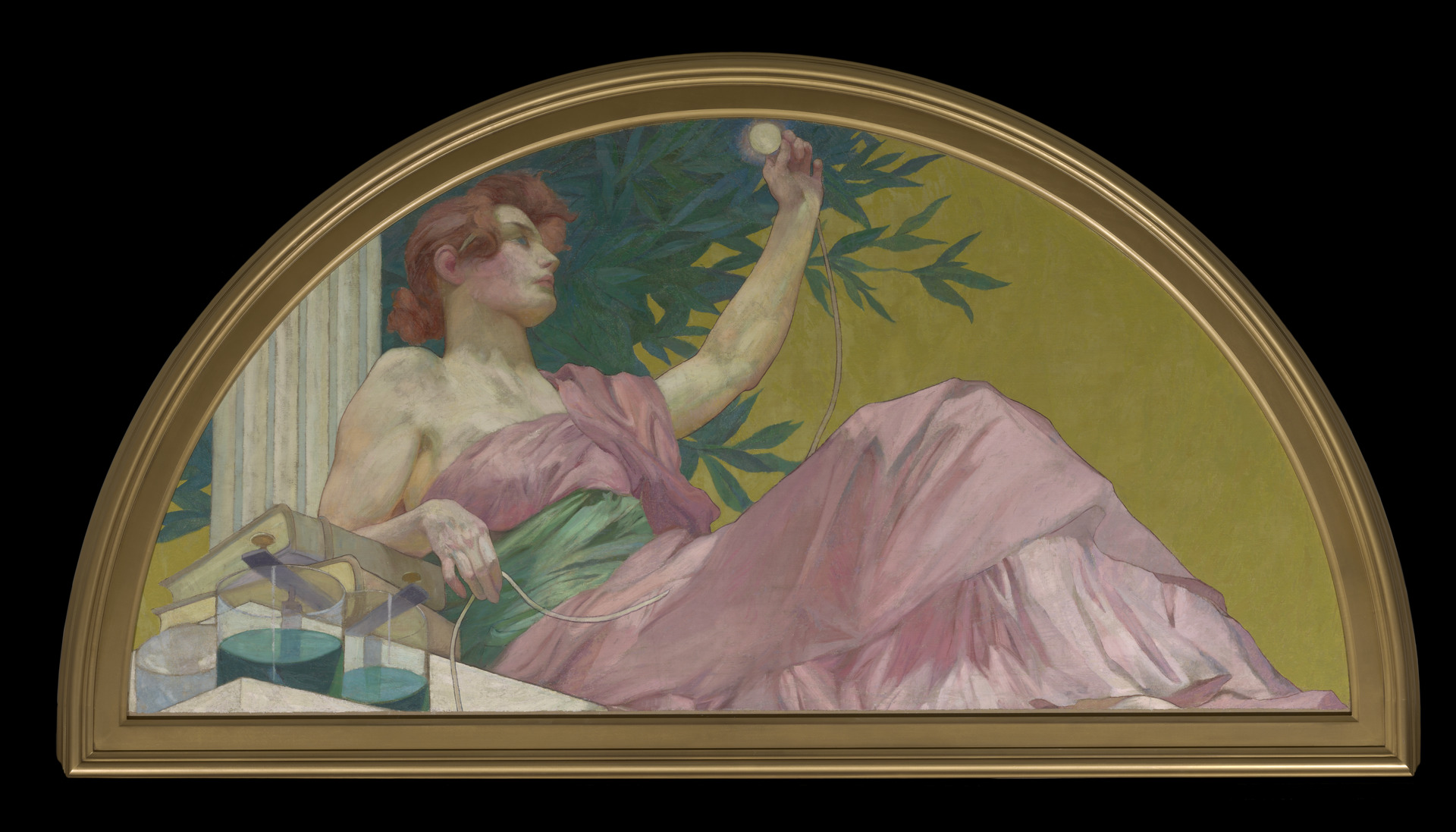
He’s considered one of the Orientalists, and his “extended” cycle of the muses in the Yale University Art Gallery is absolutely stunning.

Lo and behold, the Muse of Electricity.
The work for today’s #ChthonicThursday is “The Marriage of Persephone”, and it’s a highly underrated piece.

The Marriage of Persephone
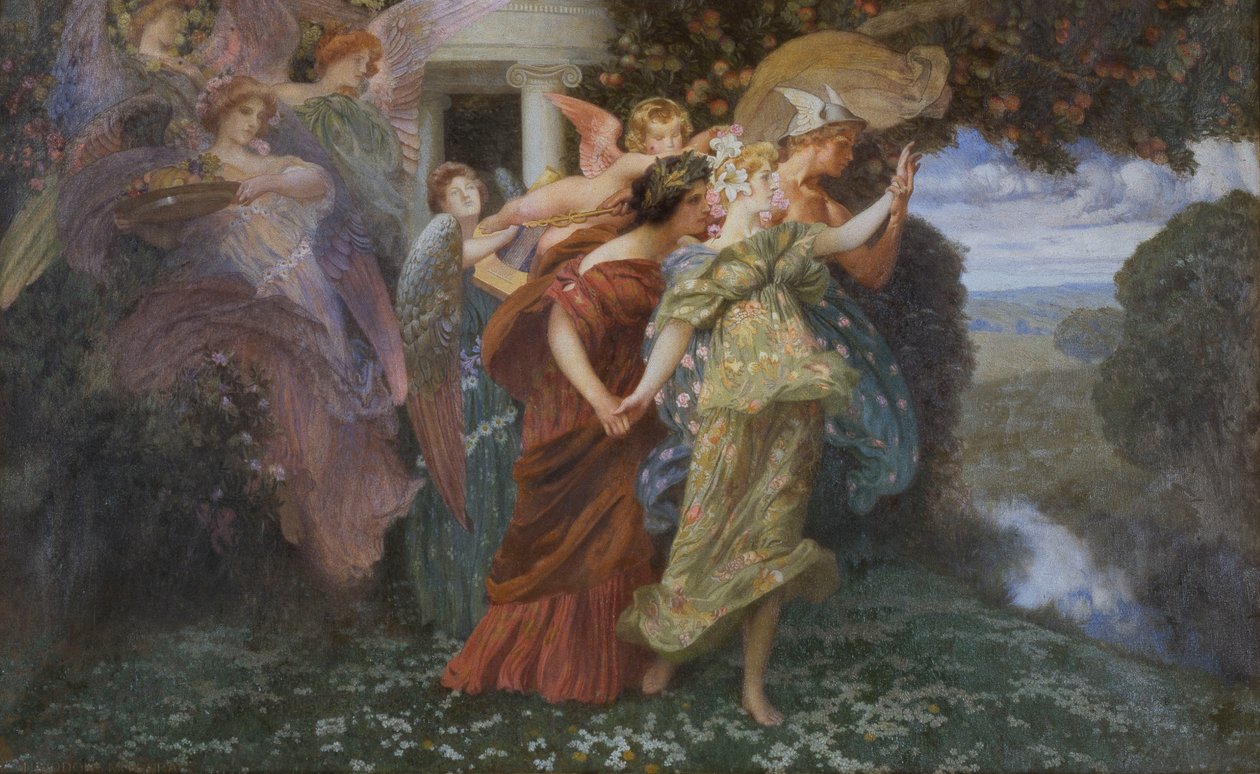
Persephone is still in her “Koré” attire, blonde and fair, and she’s accompanied by Hermes who’s looking at her hand as if he’s looking for a wedding ring. The other hand is held by a crimson-clothed Demeter, who’s holding her back and peeking above her shoulder, maybe looking for the groom (to murder him). The bride is unbothered by both.

With his other hand, Hermes pushes Eros back, and the winged cupid keeps pouring flowers on the bride.

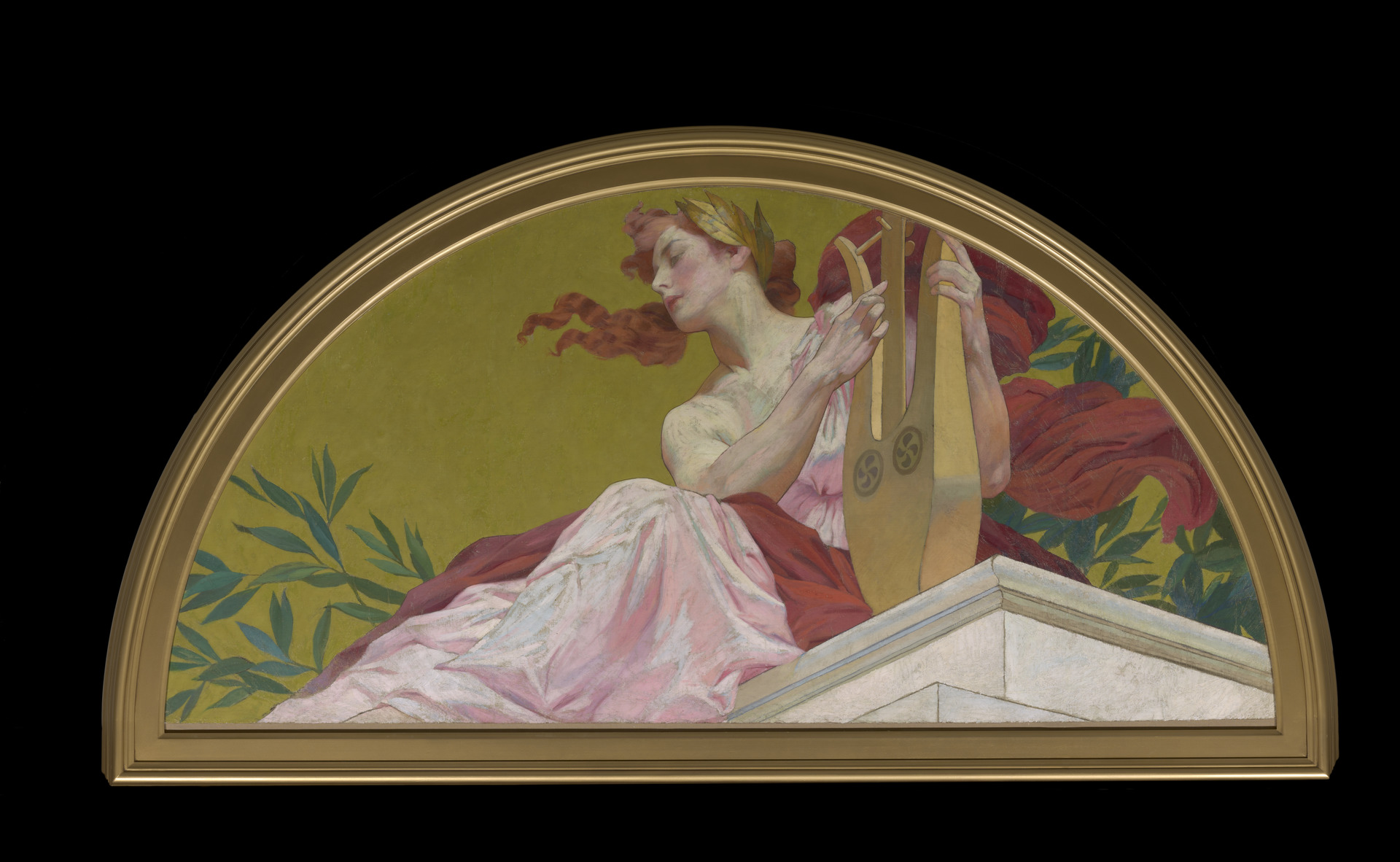
A muse plays the lyre at their back, and the only muse Mowbtay represented with a lyre is Érato, the muse of lyric and erotic poetry (below).
We can only assume the three winged figures at the back of the retinue are the three sirens Leucosia, Parthenope and Ligeia, whom were playing with Persephone at the time she was abducted (and, according to Ovid, her mother didn’t take it well).

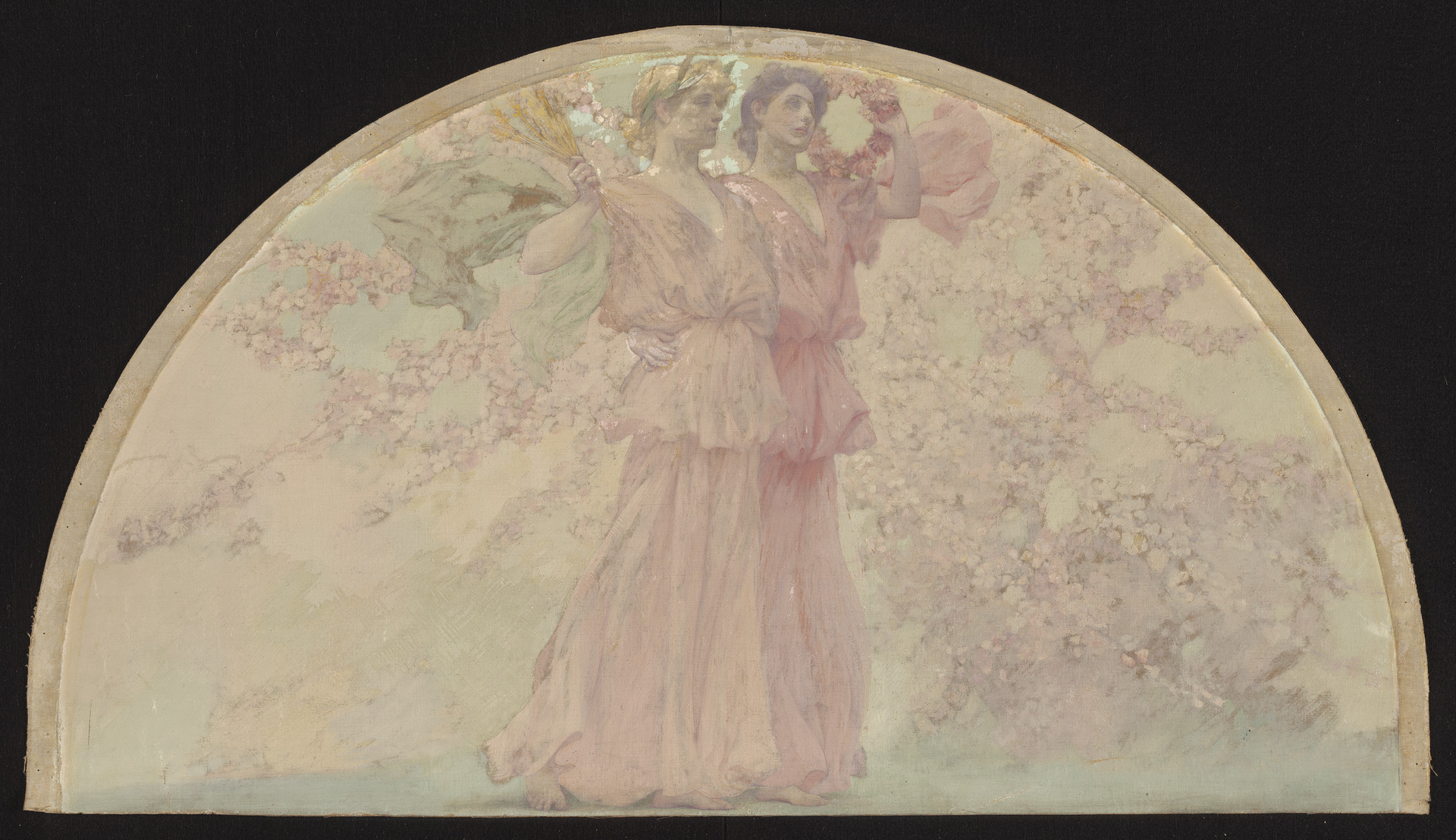
Mowbray had explored a different take on the subject two years earlier, in 1893, with his study Ceres and Proserpine Reunited.

books and literature

Fox Friday: The Fox by D.H. Lawrence

The two girls were usually known by their surnames, Banford and March. They had taken the farm together, intending to work it all by themselves: that is, they were going to rear chickens, make a living by poultry, and add to this by keeping a

Read More »
architecture, engineering and construction

Who EIRs the EIR?

There’s a game I’d like to play (queue The Cranberries): take two EIRs from the last month, any project really, and delete project name and phase. Then place them in front of somebody else and ask them to guess. Which kind of project? Is it

Read More »
books and literature

Isaac Asimov’s Ring Around the Sun

This is, without any doubt, one of the best collections in the series, and notably one with aliens of many sorts: Martians and Venusians with a different approach to warfare and radically original new senses, and Ganimedians who just want what’s due for Christmas. What

Read More »
Share on LinkedIn
Throw on Reddit
Roll on Tumblr
Mail it
No Comments

Post A Comment

This site uses Akismet to reduce spam. Learn how your comment data is processed.

RELATED POSTS

Fox Friday: The Fox by D.H. Lawrence

The two girls were usually known by their surnames, Banford and March. They had taken the farm together, intending to work it all by themselves: that is, they were going to rear chickens, make a living by poultry, and add to this by keeping a

Read More

Who EIRs the EIR?

There’s a game I’d like to play (queue The Cranberries): take two EIRs from the last month, any project really, and delete project name and phase. Then place them in front of somebody else and ask them to guess. Which kind of project? Is it

Read More

Isaac Asimov’s Ring Around the Sun

This is, without any doubt, one of the best collections in the series, and notably one with aliens of many sorts: Martians and Venusians with a different approach to warfare and radically original new senses, and Ganimedians who just want what’s due for Christmas. What

Read More