"All this he saw, for one moment breathless and intense, vivid on the morning sky; and still, as he looked, he lived; and still, as he lived, he wondered."

Bepi from the Ice

During this summer break, I started reading a charming little book I bought in Venice at the remarkable venue Libreria Acqua Alta (High Waters Bookshop): it’s a small volume whose title roughly translates to Mysteries of the Lagoon and Tales of Witches, by one Alberto Toso Fei.
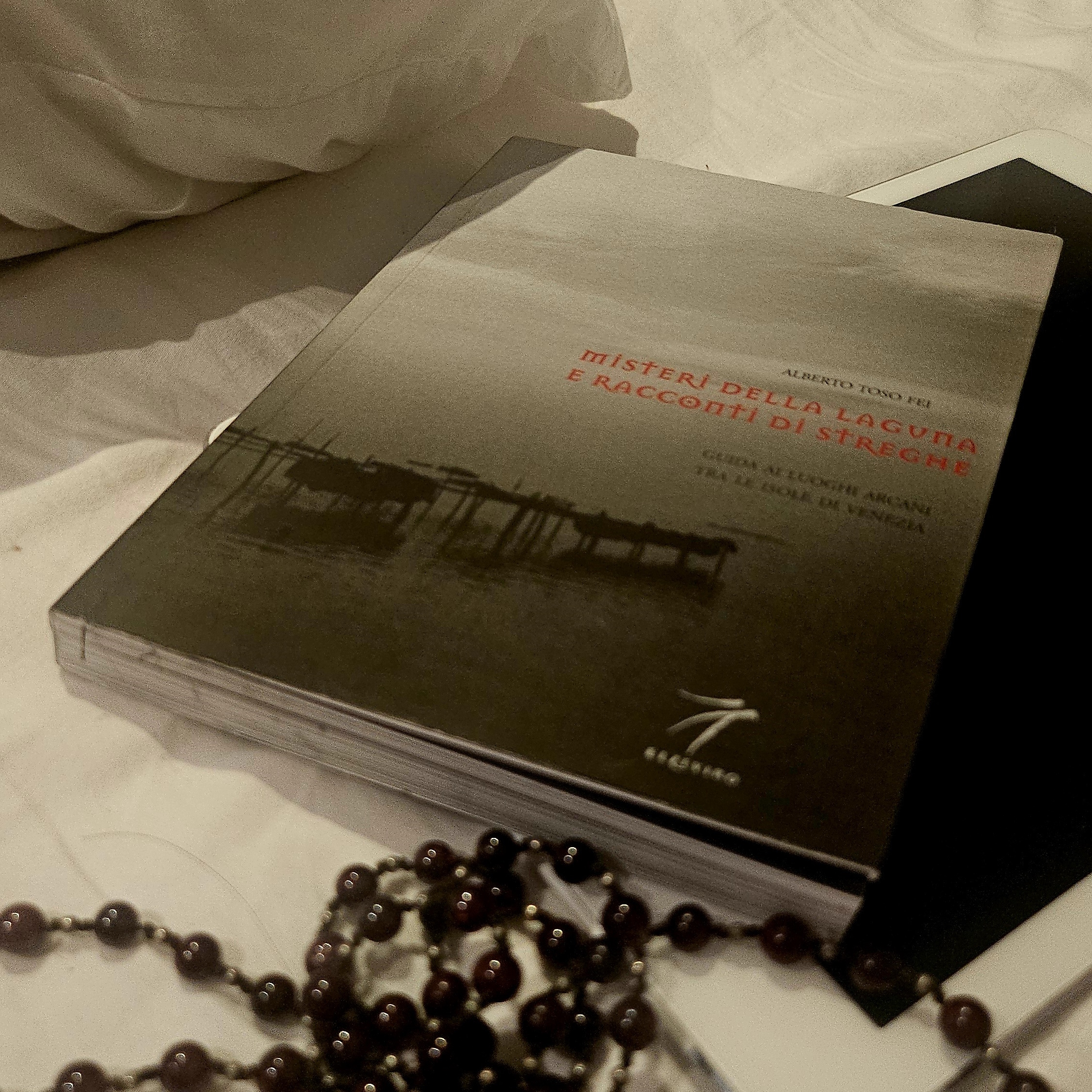
It’s a collection of tales, grounded in landmarks and venues, some of them are tales from folklore, and some others are more recent anecdotes, such as the ones connecting Rodolfo Valentino to the Hotel Excelsior or Lord Byron to the Armenian church.

The Armenian church is also connected to the history of a young Bolshevik dude from Georgia, who arrived in 1907 and was welcomed as a buddy by the local community of anarchists, who gave him the nickname of Bepi del Giass (Bepi from the Ice in the local vernacular).
Bepi tried his hand at ringing the bells for the local Armenian church, but wouldn’t listen when the patriarch asked him to ring the bells according to the Latin rite, and persisted in ringing them in the Orthodox way. Eventually, they presented him with an ultimatum, and Bepi went back to Russia, just in time to participate in the revolution.

Cool.

Except there’s a twist.

“A few years later he became… General Secretary of the Communist Party and leader of the Soviet Union with the nickname “Little Father” and the universally known pseudonym “Stalin”, Iosif Stalin.“

That was… unexpected.

Spooktober

Spooktober 2026 – That’s a wrap!

…and that’s a wrap! Eighteen classic stories, if my math is correct, 29 posts, and the candle’s waning. It’s almost time. Are you all set up? Who are you celebrating with, and what are you dressed up as? Whether it’s true crime or contemporary politicians

Read More »
books and literature

Bulgakov’s The Fatal Eggs

Mikhail Bulgakov (Kyiv, 1891–1940) was a novelist, playwright, and former physician, whom I’m sure you know for The Master and Margarita, published posthumously. His work blends sharp satire, fantasy, grotesque comedy, and moral seriousness, often targeting Soviet bureaucracy and ideological hypocrisy, but I had no

Read More »
Spooktober

Spooktober 30 – The Black Monk (5)

Conclusion Kovrin received a professorship at the University. The inaugural address was fixed for the second of December, and a notice to that effect was hung up in the corridor at the University. But on the day appointed he informed the students’ inspector, by telegram,

Read More »
Share on LinkedIn
Throw on Reddit
Roll on Tumblr
Mail it
No Comments

Post A Comment

This site uses Akismet to reduce spam. Learn how your comment data is processed.

RELATED POSTS

Spooktober 2026 – That’s a wrap!

…and that’s a wrap! Eighteen classic stories, if my math is correct, 29 posts, and the candle’s waning. It’s almost time. Are you all set up? Who are you celebrating with, and what are you dressed up as? Whether it’s true crime or contemporary politicians

Read More

Bulgakov’s The Fatal Eggs

Mikhail Bulgakov (Kyiv, 1891–1940) was a novelist, playwright, and former physician, whom I’m sure you know for The Master and Margarita, published posthumously. His work blends sharp satire, fantasy, grotesque comedy, and moral seriousness, often targeting Soviet bureaucracy and ideological hypocrisy, but I had no

Read More

Spooktober 30 – The Black Monk (5)

Conclusion Kovrin received a professorship at the University. The inaugural address was fixed for the second of December, and a notice to that effect was hung up in the corridor at the University. But on the day appointed he informed the students’ inspector, by telegram,

Read More