
This late summer we were in the Côte d’Azur region with some colleagues and some convergence brought me to visit the town of Grasse, which was a bit far removed from where we were. The weather was very hot, and we escaped the sun by visiting one of the many museums in town, and one I wouldn’t have visited if:
a) it wasn’t so hot outside;
b) they didn’t tempt me with a temporary exhibition called Parfums d’Asie (Asian Perfumes).
The museum was the International Museum of Perfumes (MIP for short), and you might think it’s all Dior and Chanel but they do have some nice floors dedicated to perfume’s history, and a portion for temporary exhibitions such as the one I’m talking about.
But first, a little bit of context.
Grasse and Perfumes
Many of you might remember an old movie with Dustin Hoffman, Alan Rickman, Rachel Hurd-Wood and a very young Ben Whishaw, where the latter plays a boy born with no body smell of his own, who grows to become a master perfumier and, eventually, a serial killer. It’s drawn from an 1985 novel by Patrick Süskind, I had the misfortune to read it when I was in high school and I don’t think it’s a novel you should read in high school.
Anyway, the last part of the novel takes place in Grasse, where the main character ends up in his quest for techniques to extract the perfect scent from the bodies of beloved red-haired girls.
But Grasse wasn’t always the town of perfumes, and the story is one connected with Grenouille (the novel’s main character): just as he starts working in a smelly tannery, the town’s main industry from the Middle Ages and into the 16th century was leatherworking. Around the 1530s–1550s, local tanners such as the Galimard family began perfuming leather gloves with orange blossom and other essenes, to mask the foul smell. Perfumed gloves became a court fashion, as you can imagine, when a pair of scented gloves was offered to Catherine de’ Medici, queen of France from 1547 to 1559, and she loved them. The trend quickly spread through the French court and the European aristocracy, and the whole town became interested in adopting the technique. Tanners gradually transformed into “glovers‑perfumers” (gantiers‑parfumeurs), a corporation officially recognised in 1614. By the 18th century, however, perfumery had largely separated from tanning and became an independent industry.
Grasse was perfect to become the centre of this industry for many reasons: the soil and climate are perfect for growing aromatic flowers, and plants such as Jasmine and May rose are found to be particularly fragrant. The highly specialised craft tradition in extracting and composing fragrances is so special that the “know‑how related to perfume in the Pays de Grasse” was inscribed on UNESCO’s List of the Intangible Cultural Heritage of Humanity in 2018.
The Museum
The International Museum of Perfumery (Musée International de la Parfumerie – MIP) is Grasse’s principal public museum devoted entirely to the history and culture of fragrance, and it stands out from the town’s other perfume museums by its scale. In context, it complements smaller, house‑based museums such as the Fragonard Perfume Museum and the collections linked to Galimard and Molinard, which are more focused on their own brands. It is the first public collection in the world devoted specifically to the perfume industry across time and continents, and it carries the official “Museum of France” label.
The MIP presents an anthropological and global history of scent, holding more than 50,000 objects and spanning roughly four to five millennia of fragrance‑related material culture, from ancient Egypt to modern maisons.
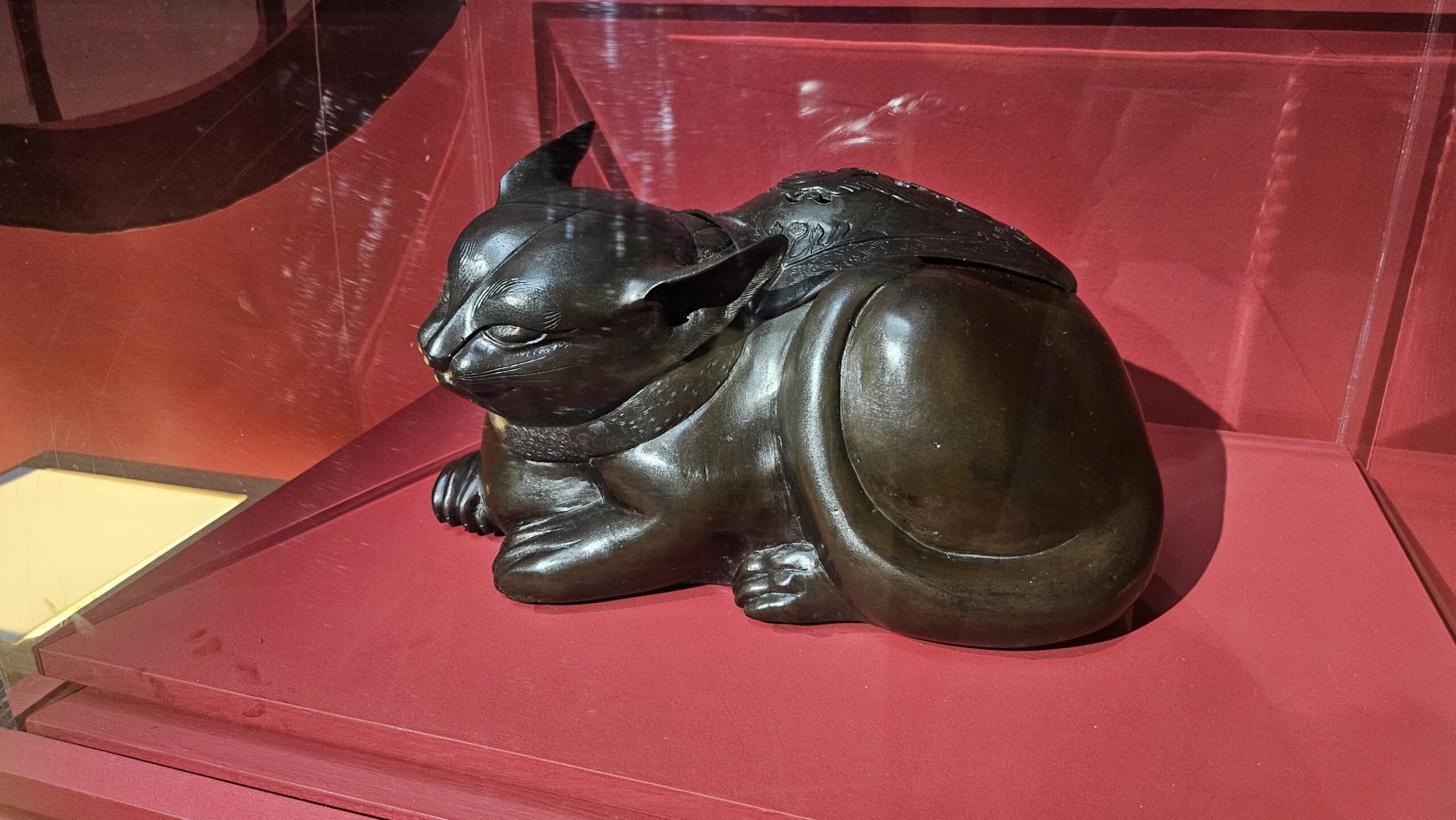
Sadly, the oriental portions of the permanent collection are quite laughable, with Mayas being thrown together with India and China for no imaginable reason other than Eurocentrism. Seeing how crucial Oriental techniques have been in contemporary perfume-making, it’s good to see this lack being made up by the temporary exhibition, though I hope that some of the approach and content will manage to leak through the permanent one.
The Exhibition
Parfums d’Asie – Cultures olfactives traditionnelles de la Chine à l’Inde runs from 26 June 2026 to 3 January 2027, and it shifts the museum’s Western‑centred narrative toward the traditional scent cultures of Asia, exploring how fragrance has been woven into ritual, medicine, cosmetics, food, and daily life from antiquity to the present. The focus remains Eurocentric, as it basically starts with exchanges and influences between Europe and the Orient in the 18th century.
The exhibition focuses on three broad cultural spheres: China, Japan and the Indian subcontinent, often simplified as “India” or “the Indian world”. Its central idea is that these civilisations have a deeper approach to scent, not seen as a luxury but as an integral part of cosmologies, healing practices, and social rituals. The curators trace how fragrant materials — both common and precious, vegetal and animal in origin — have circulated along trade routes and been transformed into incense, perfumed oils, cosmetics, culinary aromatics, and medicinal preparations.
Exhibitions include incense burners, caskets, cosmetic vessels, and ritual implements from major institutions such as the Musée national des Arts asiatiques, the Musée Cernuschi, and the Musée des Arts asiatiques de Nice, alongside loans from other French and international collections.
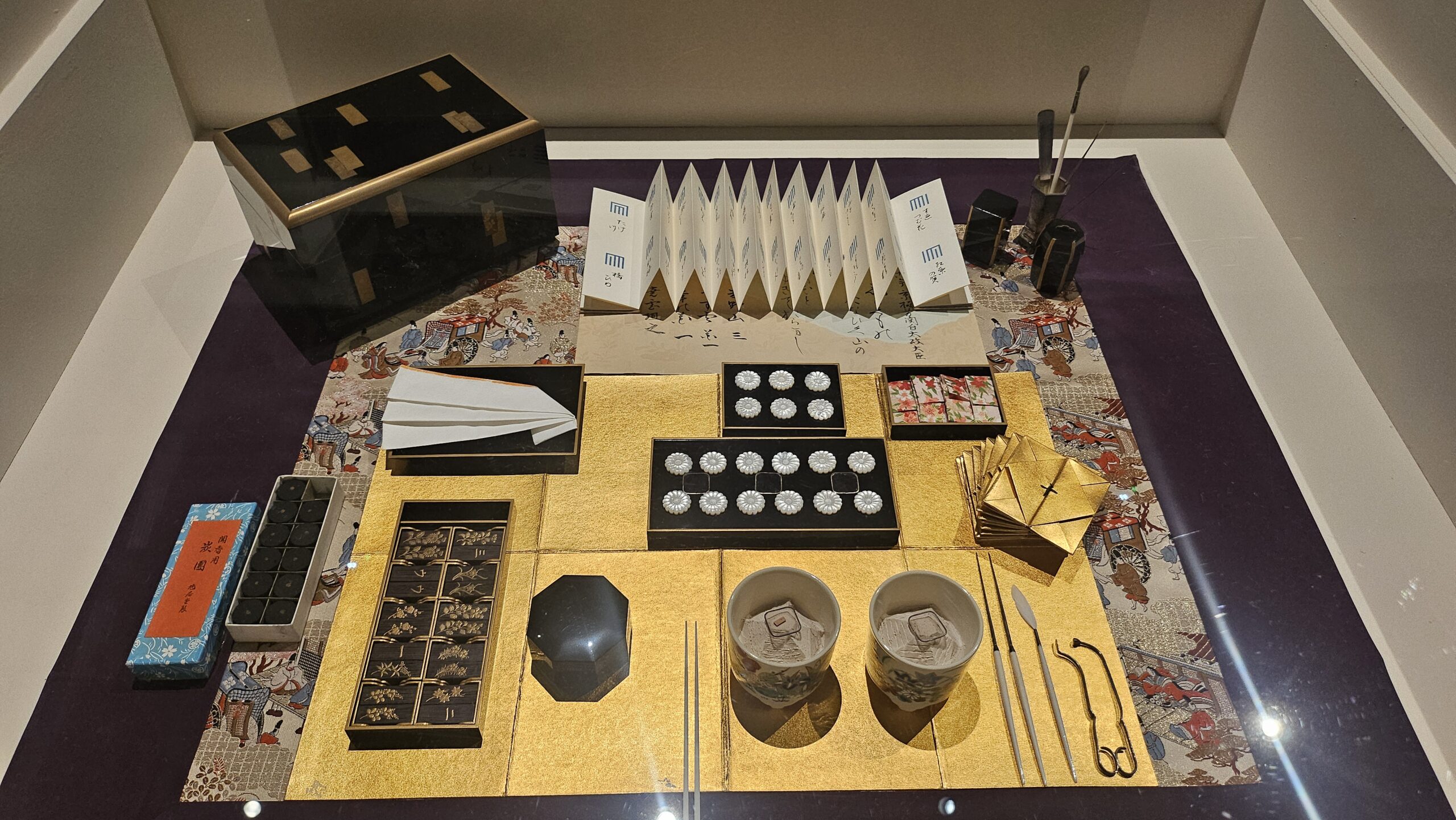
Some lovely exhibits include the “game of Genji”: it’s a box of perfumed incense, and you have to smell them, and match them with chapters from The Tale of Genji. Can there be anything lovelier than this?


No Comments