
Andrea Solario (ca. 1465–1524) was an Italian Renaissance painter from Milan, and his work reflects the confluence of what’s called “Lombard realism”, the naturalistic tradition of Leonardo da Vinci and the refined elegance of the High Renaissance with the rich colourism of Venetian art.
The Poldi Pezzoli Museum, a hidden gem among Europe’s most enchanting house-museums, dedicates to him a jewel of an exhibition titled “The Seduction of Colour: Andrea Solario and the Renaissance between Italy and France.” Running from March 26 to June 30, 2025, it commemorates the 500th anniversary of Andrea Solario’s death, offering an unprecedented exploration of his artistic journey and—as it has been traditional for the Poldi Pezzoli museum—using scientific explorations to gain new insight into lost works. Collaborations with institutions like the CNR (National Research Council), in fact, have facilitated in-depth studies using X-rays, infrared imaging, and reflectography, unveiling new insights into Solario’s techniques and materials and finding another Madonna (do you remember the same operation done for Piero della Francesca.

Andrea Solario (circa 1465–1524) is a distinguished figure of the Lombard Renaissance, profoundly influenced by masters like Giovanni Bellini and Leonardo da Vinci. This exhibition brings together approximately 30 of his masterpieces from esteemed collections across Italy, France, and the United Kingdom. Notably, the Musée du Louvre has loaned six significant works, some of which have never before left French territory.
Andrea Solario was born around 1470 in the bustling city of Milan, into a family of stone carvers and architects that hailed from Carona. Andrea’s brother, Cristoforo—nicknamed “Il Gobbo” for his hunchback—was already famous as a sculptor and architect, and Andrea was probably apprentice to him in a workshop near the San Babila church. Around 1494, he took a trip to Venice, where he soaked up the radiant colours and luscious light that defined Venetian art.
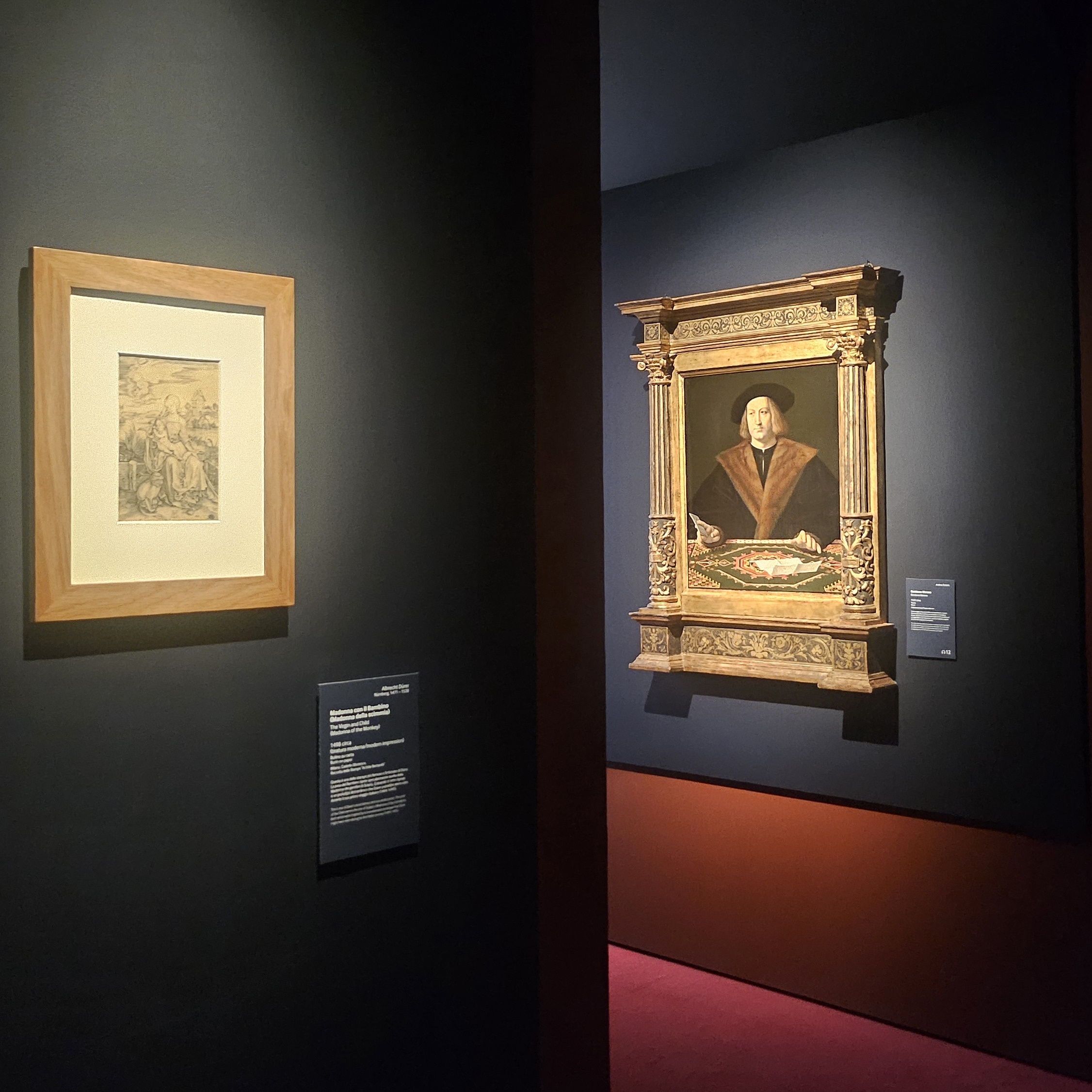
At the tail end of the 15th century, Venice was a centre of wealth and power of unprecedented magnitude, a city at the peak of its glam. Once there, Andrea dove into the vibrant local scene and rubbed elbows with the Venetian greats—especially Giovanni Bellini, the grand maestro of glowing colour and lyrical serenity. But Venice wasn’t just about locals; a teenage Albrecht Dürer may have been sketching nearby, while the ghost of Antonello da Messina—who had shown up two decades earlier—still haunted the city’s palette. In this bubbling cauldron of genius, Solario painted his Andreas Mediolanensis in 1495, showing off a chameleon-like skill at blending Bellini’s softness with Leonardo’s dramatic touch. Venice, at that moment, wasn’t just a city—it was a Renaissance supernova.
When he returned to Milan, he brought those hues with him and mixed them into a style influenced by an indirect contact with Leonardo da Vinci, creating a blend of naturalism and poetic softness that was uniquely his own.
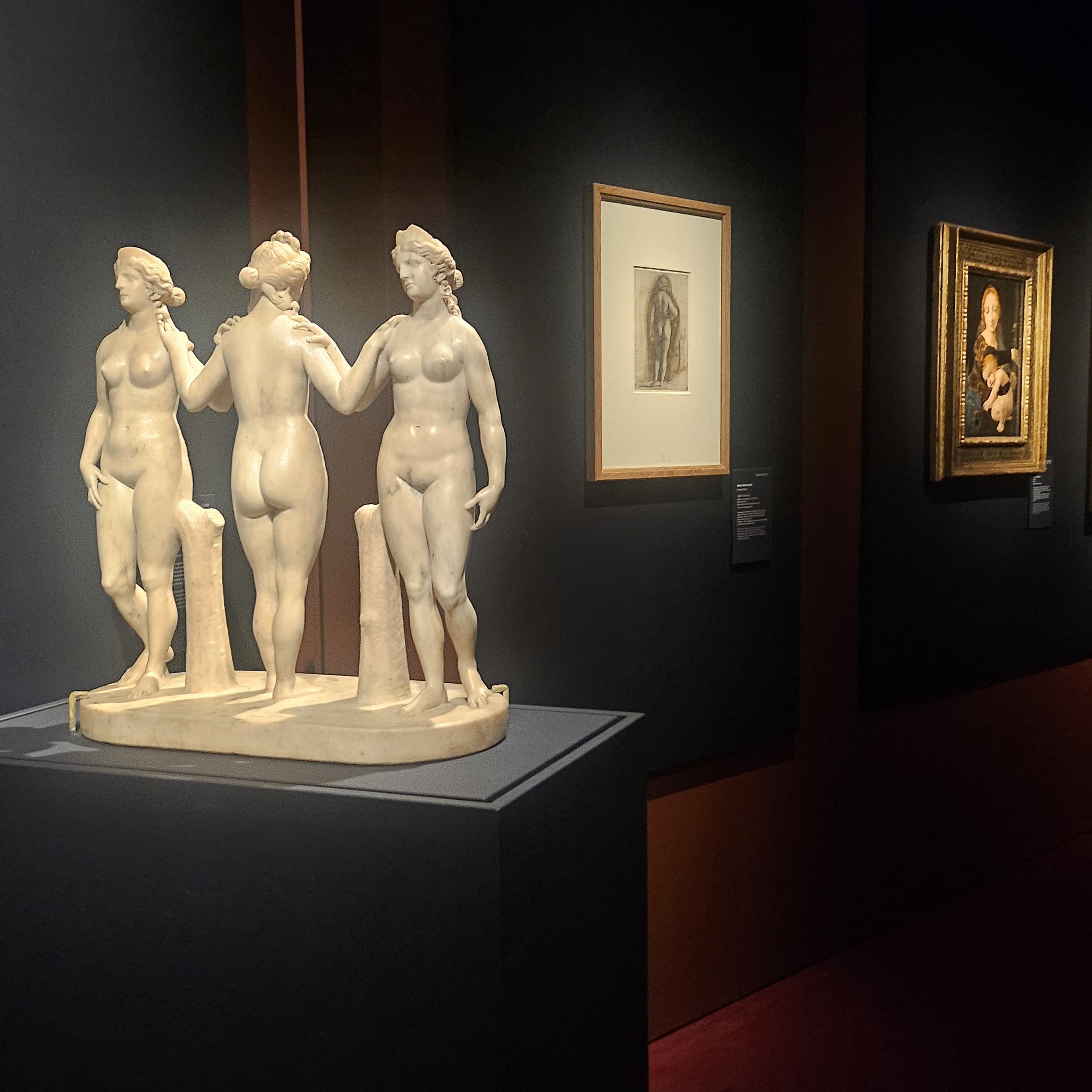
By the late 1490s, Milan was under French rule, and Leonardo da Vinci skipped town. Enter Andrea Solario, who was ready for his own big break. Around 1507, he caught the attention of Georges d’Amboise, a powerful cardinal with a love for art (and excellent taste, clearly). The cardinal invited Andrea to France to paint a few religious works and portraits for the châteaux set. Solario even painted a version of the famed Last Supper, giving it his own Lombard twist.
While in France, Andrea found himself surrounded by Renaissance stars, including Ambroise Paré and Charles d’Amboise, Georges’ nephew, who all wanted a piece of his painting. One of his masterpieces from this period ended up in the Grande Galerie at the Louvre.
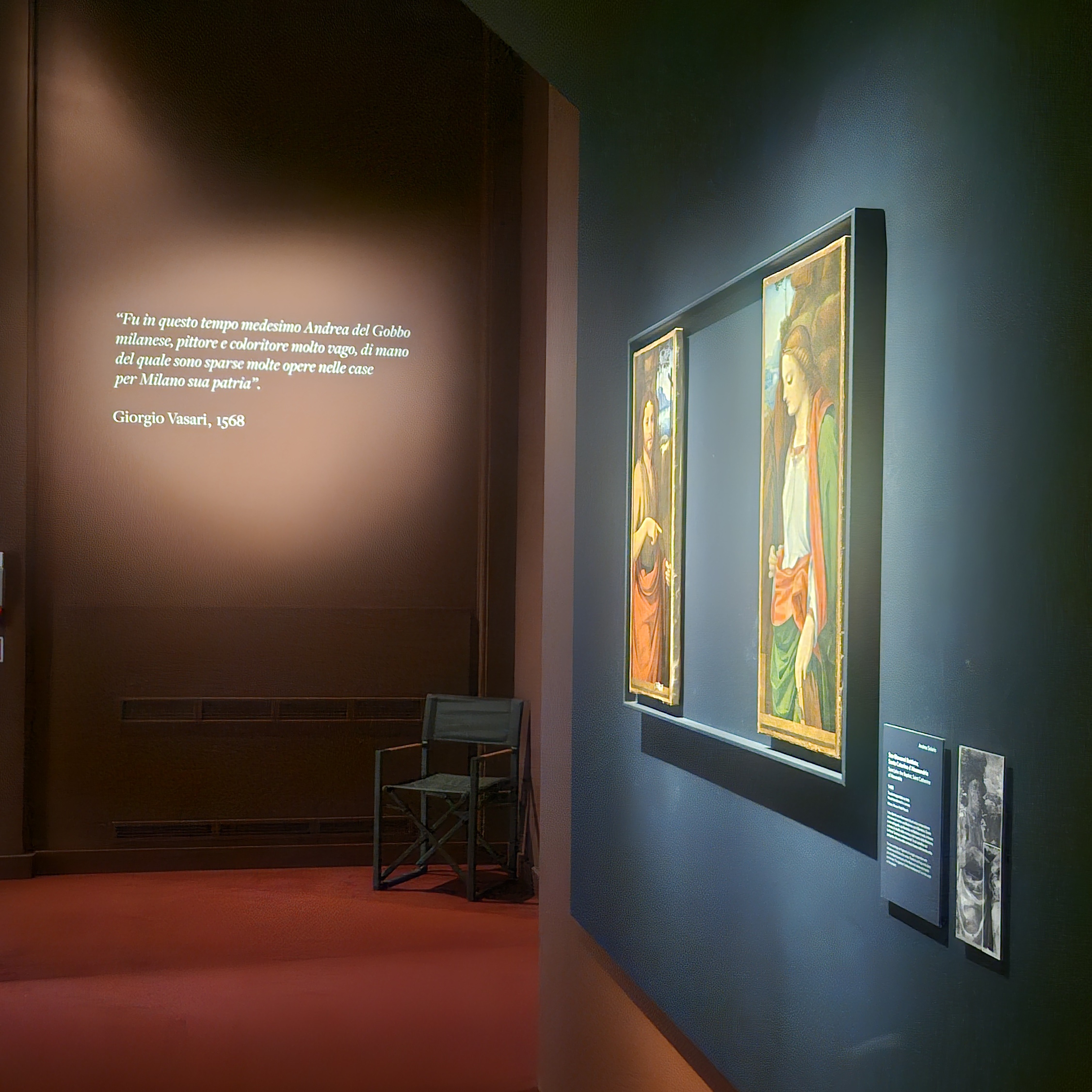
Eventually, Andrea returned to Milan around 1510. Rumour has it he even ran into Leonardo again—imagine the creative sparks!—and went on painting religious works with renewed flair. Between 1514 and 1515, he may have even popped down to Rome to check out what Raphael and Michelangelo were up to. Family loyalty called him back north, though—possibly to help his brother Cristoforo finish a commission or two.
Fast forward to 1522: the Duke of Milan, Francesco II Sforza, decided the Carthusian monks at the Charterhouse of Pavia needed something splendid to meditate on, so he hired Solario to paint a grand altarpiece. It was an ambitious gig, likely one of Andrea’s last, and unfortunately, he didn’t live to see it through. In the summer of 1524, both Solario brothers—Andrea and Cristoforo—passed away, possibly victims of the plague.

Bonus feature
Enhancing the exhibition’s allure, contemporary artist Bob Wilson presents a mesmerising installation in collaboration with Lady Gaga, creating a dialogue between Renaissance and modern art through a superposition of suffering faces.




1 Comment
Pingback:Shelidon | Arnaldo Pomodoro in Milan: a Legacy of Form and Place
Posted at 11:40h, 25 June[…] encounter with art. It also houses of temporary exhibitions that are always excellent, such as Andrea Solario‘s this season, Piero della Francesca‘s last season, and Richard […]