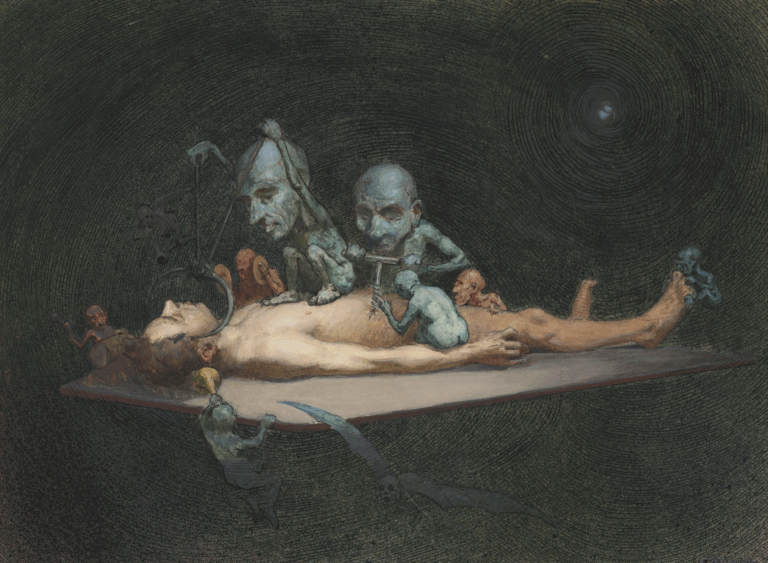
"All this he saw, for one moment breathless and intense, vivid on the morning sky; and still, as he looked, he lived; and still, as he lived, he wondered."

Pride Month 2025: Story of the Day

Queer Voice and Urban Wit in the Poetry of Abu Nuwas

In the glittering intellectual courts of Abbasid Baghdad, one poet spoke of queer desire with wit, joy, and unapologetic sensuality. Abu Nuwas (c. 756–814 CE) — satirist, court jester, and literary rebel — composed verses that openly celebrated his love for wine, boys, and the pleasures of defiance. He was no marginal figure either: he was canonised in classical Arabic literature, even featured in some versions of The Thousand and One Nights as a comic hero and decadent sage.

While some of his contemporaries wrapped homoeroticism in layers of metaphor, Abu Nuwas wrote plainly. His poems describe trysts in gardens, longing gazes across courtyards, and the intoxicating beauty of young men whose grace eclipses that of women. He did not veil his desire behind Neoplatonic sublimation or courtly euphemism: he made it a public art form.

One of his poems begins:

“Beardless boys are lovelier than girls.
Say what you will, but that is my truth.”

Another concludes:

“Let me taste what is forbidden.
I shall answer only to my heart.”

Abu Nuwas was also attuned to gender’s theatricality. Some of his verse praises women who cross-dress, or boys whose beauty is heightened by femininity. He understood that gender was not fixed, but a space of performance and pleasure, especially in the urban world of Baghdad where clothing, voice, and posture were tools of seduction and resistance alike. Though periodically censored by some rulers, his verses endured, copied in manuscripts and taught in literary circles for centuries. His voice is irreverent, witty, lyrical. And utterly queer.
books and literature

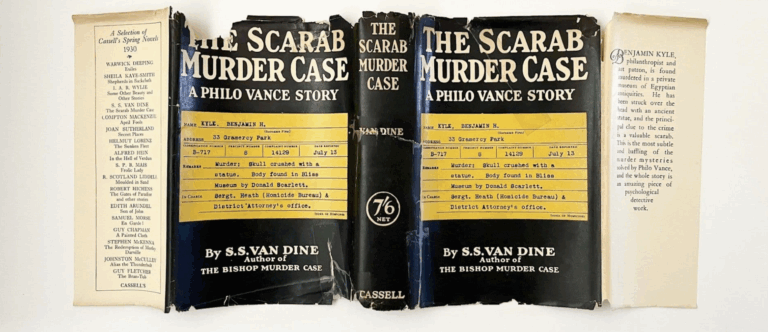
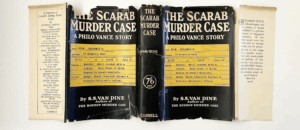
S.S. Van Dine’s The Scarab Murder

S.S. Van Dine was the pen name of Willard Huntington Wright (1888–1939), an art critic, editor, and novelist from the US who created Philo Vance, apparently one of the defining amateur detectives of the Golden Age of detective fiction. The Vance series ran to twelve

Read More »
books and literature

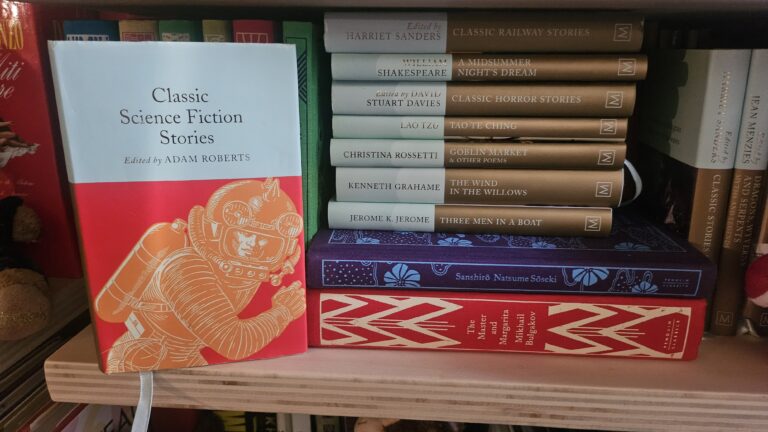
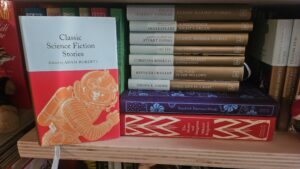
Classic Science Fiction Stories

This is the third collection I read from these charming little light-blue books with the golden pages, and they’re uneven at best. Once again, as such, I have mixed feelings about this collection and I’ll have to proceed scientifically to give a rating, so here

Read More »
architecture, engineering and construction

Artificial Integrity in the Age of Anxiety

In 1947, British-American poet W.H. Auden published The Age of Anxiety, a long poem subtitled “A Baroque Eclogue”. In a nutshell, four strangers meet in a bar on Third Avenue in Manhattan, on All Souls’ Night, so it’s even seasonal, in the middle of a

Read More »
Share on LinkedIn
Throw on Reddit
Roll on Tumblr
Mail it
No Comments

Post A Comment

This site uses Akismet to reduce spam. Learn how your comment data is processed.

RELATED POSTS

S.S. Van Dine’s The Scarab Murder

S.S. Van Dine was the pen name of Willard Huntington Wright (1888–1939), an art critic, editor, and novelist from the US who created Philo Vance, apparently one of the defining amateur detectives of the Golden Age of detective fiction. The Vance series ran to twelve

Read More

Classic Science Fiction Stories

This is the third collection I read from these charming little light-blue books with the golden pages, and they’re uneven at best. Once again, as such, I have mixed feelings about this collection and I’ll have to proceed scientifically to give a rating, so here

Read More

Artificial Integrity in the Age of Anxiety

In 1947, British-American poet W.H. Auden published The Age of Anxiety, a long poem subtitled “A Baroque Eclogue”. In a nutshell, four strangers meet in a bar on Third Avenue in Manhattan, on All Souls’ Night, so it’s even seasonal, in the middle of a

Read More