"All this he saw, for one moment breathless and intense, vivid on the morning sky; and still, as he looked, he lived; and still, as he lived, he wondered."

#AdventCalendar Day 14: Pork Meatballs with Currants

This recipe is based on an XV-century English Manuscript called Harleian #279, and was expanded upon by Maggie Black‘s Medieval Cookery: Recipes and History.

Ingredients:

  • 1 kg of cubed pork;
  • 1 liter of beef stock;
  • 300 ml of almond milk (you know how to do this from the Capons in Dorre recipe);
  • 6 tablespoons of currants;
  • 1 teaspoon of ground nutmeg and another teaspoon for garnishing;
  • half a tablespoon of ground cloves;
  • half a tablespoon of ground black pepper;
  • a pinch of salt;
  • 2 eggs;
  • a chunk of butter for frying;
  • flower petals and edible violets for garnishing;
  • 2 tablespoons of sugar (yeah, it’ll make sense in a minute).

Recipe:

Cube the pork and cook in the beef stock until it turns whitish on the outside: it’ll still be pinkish on the inside, but that’s what we want. Then strain and keep the stock: you’ll need it.
Transfer half of the stock into the saucepan, add the almond milk, and mince the pork in smaller cubes, mixing it with currants and all the spices, adding a couple of eggs to keep it together.
Shape the mixture into balls and fry them in butter.

Now for the weird part.

Place the meatball onto a serving platter, sprinkle with sugar and the nutmeg, decorate with violets and petals, and serve to your puzzled guests.
I swear they’re good.

They are the forefathers of the Swedish meatballs, with currants worked into the mixture. Picture taken from here.

Currants?

Currants, also called Black Corinth raisins, are dried berries that come from seedless grapes. Not to be confused with its red variety called Ribes, which was first produced in Belgium and northern France in the XVII century, Zante currants is one of the oldest known raisins. The first written record of the grape was made in by Pliny the Elder in 75 AD, and he described a tiny, juicy grape which surprisingly enough doesn’t seem to be an aphrodisiac. During the XIV Century, Venetian merchants started selling them to the English market under the label Reysyns de Corauntz, and the name raisins of Corinth was recorded in the XV century. Gradually, the name was altered to simply currants, creating a lot of confusion.

Osias Beert the Elder, Dishes with Oysters, Fruit, and Wine

Summertime

The Road is Made by Walking

Antonio Machado was a major Spanish poet and playwright, associated with the Generation of ’98, a group of writers who reflected on Spain’s identity and crisis at the turn of the 20th century. He was born in Seville in 1875 and died in 1939 in

Read More »

Kathleen Jamie on Attention and Corridors

Kathleen Jamie is a Scottish poet and essayist, born in 1962, known for her prose and poetry about landscape, place, and everyday life. Findings is her essay collection of personal reflections, first published in 2005, and it moves through nature and cities, archaeology, hospitals, family

Read More »
comics and illustration

Leo Ortolani, Tapum

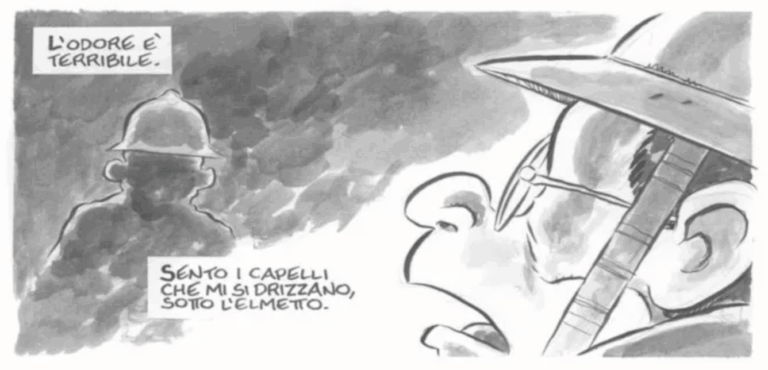
A un certo punto ci sarà una battuta, in questo fumetto, e riderete. Sappiate che è l’unica. Com’è giusto che sia. Se devo paragonare quest’opera a qualcosa, il confronto più azzeccato è probabilmente lo spettacolo che Marco Paolini trasse dal Sergente nella neve di Rigoni

Read More »
Share on LinkedIn
Throw on Reddit
Roll on Tumblr
Mail it
No Comments

Post A Comment

This site uses Akismet to reduce spam. Learn how your comment data is processed.

RELATED POSTS

The Road is Made by Walking

Antonio Machado was a major Spanish poet and playwright, associated with the Generation of ’98, a group of writers who reflected on Spain’s identity and crisis at the turn of the 20th century. He was born in Seville in 1875 and died in 1939 in

Read More

Kathleen Jamie on Attention and Corridors

Kathleen Jamie is a Scottish poet and essayist, born in 1962, known for her prose and poetry about landscape, place, and everyday life. Findings is her essay collection of personal reflections, first published in 2005, and it moves through nature and cities, archaeology, hospitals, family

Read More

Leo Ortolani, Tapum

A un certo punto ci sarà una battuta, in questo fumetto, e riderete. Sappiate che è l’unica. Com’è giusto che sia. Se devo paragonare quest’opera a qualcosa, il confronto più azzeccato è probabilmente lo spettacolo che Marco Paolini trasse dal Sergente nella neve di Rigoni

Read More