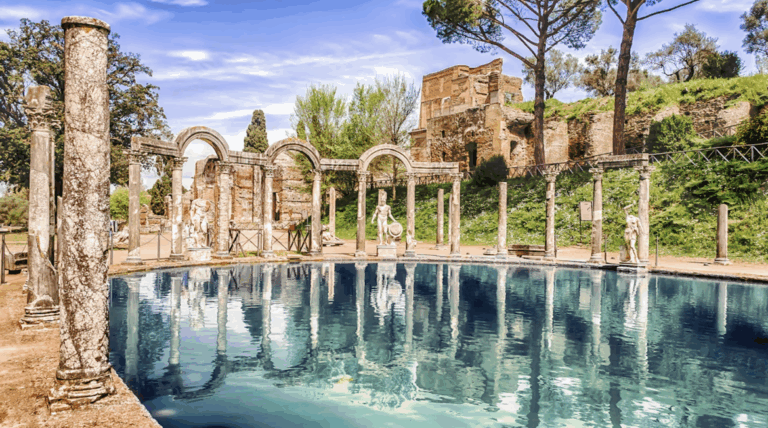
"All this he saw, for one moment breathless and intense, vivid on the morning sky; and still, as he looked, he lived; and still, as he lived, he wondered."

The She-Bear

On day 2 of Giambattista Basile‘s 1634 Tale of Tales, also known as The Pentameron, the sixth tale features a story that’s close to “Allerleirauh” by the Grimm Brothers and features some typical tropes in folklore, including shapeshifting through a magical object.
Henriette-Julie de Murat, a XVII Century aristocratic French writer, uses this same device for a circumstance that’s strikingly close to the one in the tale.
Ruth Manning-Sanders included a version of the tale in her 1969 A Book of Princes and Princesses.

The fairy tale is called She-Bear and features a Princess who transforms to escape her father.
You can read about it on my Patreon.


Summertime

A Pattern Language

Christopher Alexander was born in Vienna in 1936, to a Catholic father and a Jewish mother, and left with his family for England after the Anschluss in March 1938 (which is a fancy name for when Hitler annexed unwilling Austria to Germany). He read mathematics

Read More »
Summertime

The Seduction of Place

We’re closing out the month a little differently than we opened it, and we’re circling back to the city since many of you will be doing just that. What’s left of August won’t be organised into weekly themes with a Wednesday essay tying them together:

Read More »
architecture, engineering and construction

Ruins and Memory

Every text this week has been trying to answer some version of the same question: what, exactly, does a ruined building (or district, or city) owe the people still standing near it, and what do we owe to the ruin itself out of respect for

Read More »
Share on LinkedIn
Throw on Reddit
Roll on Tumblr
Mail it
No Comments

Post A Comment

This site uses Akismet to reduce spam. Learn how your comment data is processed.

RELATED POSTS

A Pattern Language

Christopher Alexander was born in Vienna in 1936, to a Catholic father and a Jewish mother, and left with his family for England after the Anschluss in March 1938 (which is a fancy name for when Hitler annexed unwilling Austria to Germany). He read mathematics

Read More

The Seduction of Place

We’re closing out the month a little differently than we opened it, and we’re circling back to the city since many of you will be doing just that. What’s left of August won’t be organised into weekly themes with a Wednesday essay tying them together:

Read More

Ruins and Memory

Every text this week has been trying to answer some version of the same question: what, exactly, does a ruined building (or district, or city) owe the people still standing near it, and what do we owe to the ruin itself out of respect for

Read More