
On Sunday, we wanted to go to the theatre to see The Book of Mormon, but the show was cancelled, so we decided to go and see an art exhibition instead. I tre grandi di Spagna: l’Arte di Dalí, Miró e Picasso promises to look beyond the myth of genius and into the formative environments that shaped three of the most influential figures of twentieth-century art: Pablo Picasso, Salvador Dalì, and Joan Mirò. Now, if you’ve been following me, you know how I feel about Picasso, but I love Dalì, and I don’t mind Mirò.
The exhibition was in the same venue where we saw the Tim Burton Labyrinth (which was nice but too Instagram-oriented) and the gorgeous exhibition of illustrations by Yoshitaka Amano. Despite this good track record, I knew they didn’t have the infrastructure or security to host big names such as the three mentioned, and I expected to see some reproductions. I was not prepared for this.
What’s on Display
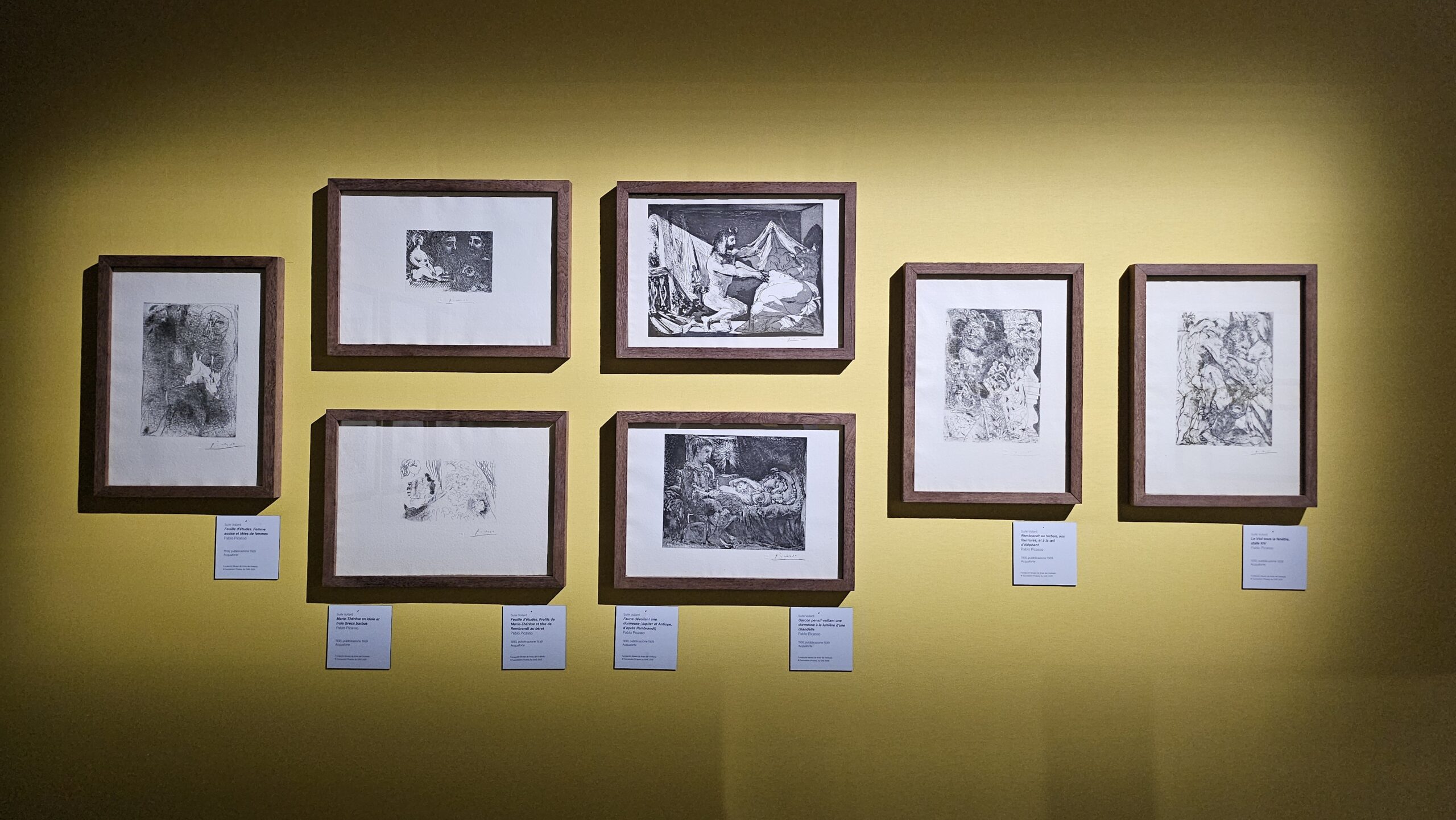
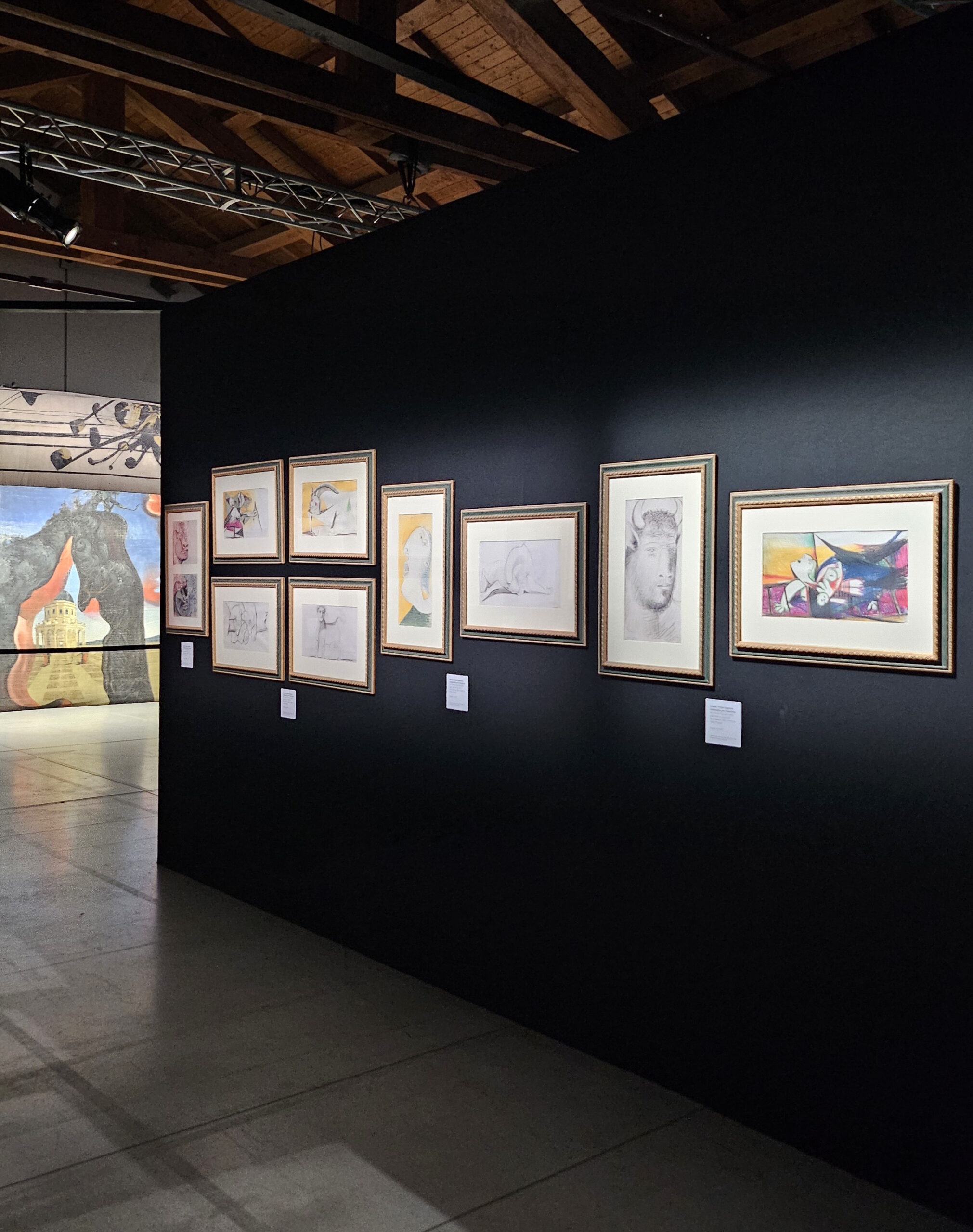
Mostly prints. When you’re lucky, you have the occasional lithography or the print is “historic” in itself, but the works are mostly reproductions, and this is fine; I was prepared for this. What I wasn’t prepared for is that the show is 80% fucking Picasso, 12% Mirò, and the impression is that we have one single thing by Dalì (but it’s big, hence the percentage).
The Main Topics
It’s hard to say. The first section of the exhibition (100% Picasso), focuses on Barcelona as the place where it all started: Picasso, whose academic training began at the School of Fine Arts in La Coruña, continued in Barcelona, and culminated at the Royal Academy of San Fernando in Madrid. But what about the other two? We don’t know.
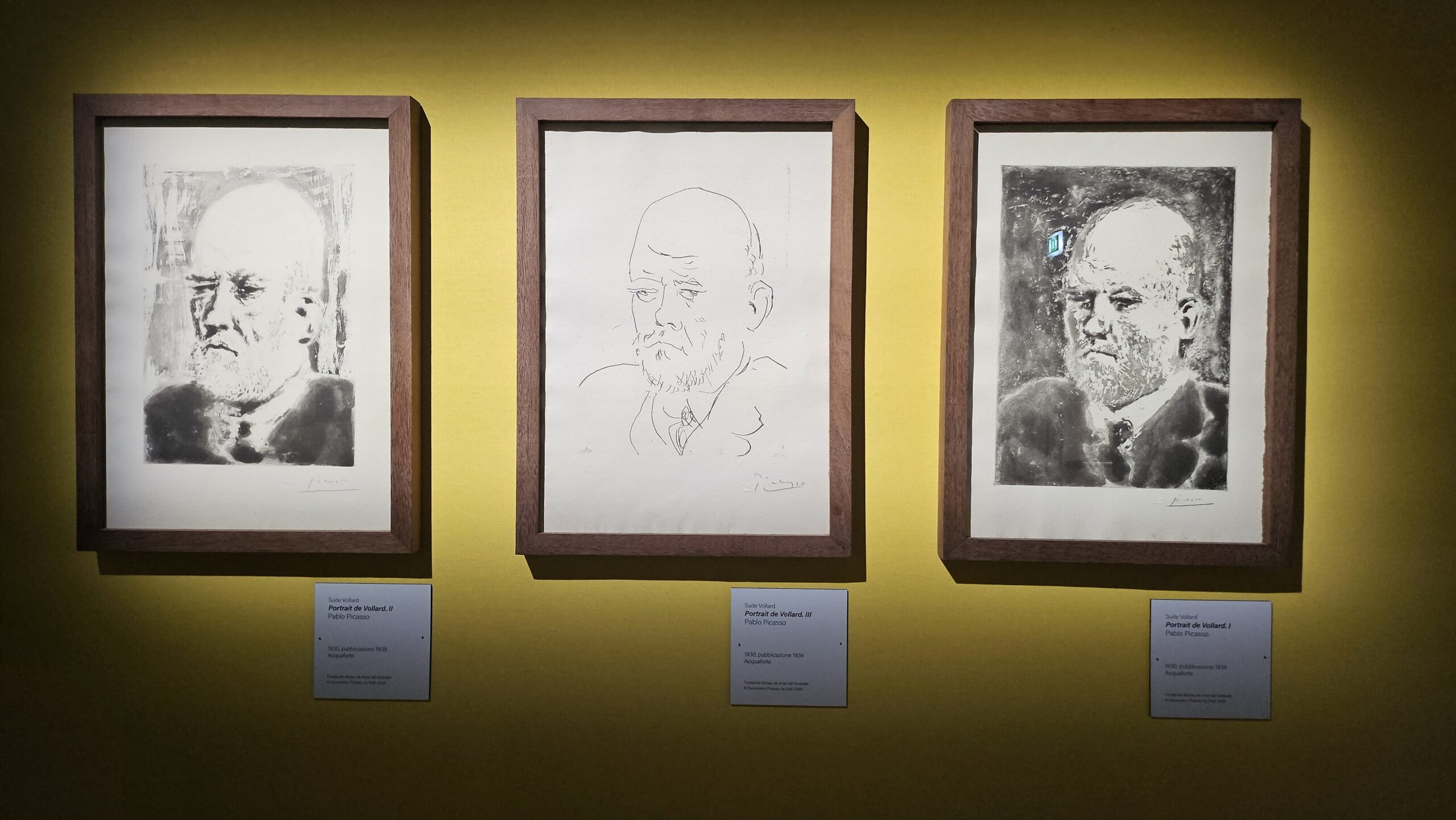
The whole fucking Suite Vollard is reproduced instead, with a single panel trying to explain what you’re about to see, and that’s it. I like the Suite Vollard, don’t get me wrong: I like all the minotaurs and satyrs and people and stuff, I vaguely remember something about the minotaur being Picasso’s alter ego, but a little more about what the fuck is going on would have been nice.
The section that makes more sense, and I would have centred the exhibition just around these years is the one about Paris: Picasso moves permanently to Paris in 1904, Mirò arrives in 1920, and the two meet in the Dadaist circles of Tristan Tzara, at least until Mirò is drawn to André Breton’s Surrealism. Paris is also the city where Dalí claimed to have met Picasso for the first time, in 1926, according to his autobiography The Secret Life of Salvador Dalí. Except he was a marvellous bullshiter, so we can’t know whether this actually happened or not. What we know is that Dalí moved to Paris in 1929, and that Picasso never answered to Dalí’s many letters, postcards, and messages. So basically Dalì was fangirling.
The exhibition sadly doesn’t explore these years, we see nothing of these letters, and moves on to fucking Picasso again, with Guernica, Dora Maar’s photographs, and so on.
The Only Original Dalì
The only decent section on Dalì revolves around his first ballet, the Bacchanale from 1939, in which he employed what the exhibition calls the “paranoiac-critical method” without explaining what it is.
The basic idea of the technique is that Dalì would over-worry himself to death, self-inducing what he called a paranoid state that allowed him to see hidden patterns and meanings and connections and stuff without using drugs. In this hallucinatory state, Dalì saw multiple objects blending into one and reality melted into what he called “systematic irrationality”.
In this state, he took music from the Tannhäuser by Wagner and turned it into a work called Bacchanale: he wrote the libretto and designed set and costumes to create a total work of art, a piece produced with the help of Coco Chanel, to translate Dalì’s ideas for the costumes into something remotely feasible, and with Prince Alexandre Schervachidze’s aid for the set. Dalì was blocked in Europe by the outbreak of the Second World War, and Chanel refused to send her costumes, which were redone in a rush by Barbara Karinska. The premiere was a success: the ballet was staged continuously between 1939 and 1941, and then revived in 1945 and 1967.
The plot of what was supposed to be the first work of a trilogy recounts the arrival of Ludwig II of Baviera, the Fairytale King, at a mountain sacred to Venus: he encounters the goddess, fights her in the form of a dragon (so to say), and eventually sees mannequins, Leda, eggs, swans and, being Dalì, the umbrella of death. The whole thing has references from Raphael, Michelangelo, and Böcklin in equal measure, and the exhibition features a video recording in a loop and the original backdrop of the ballet.
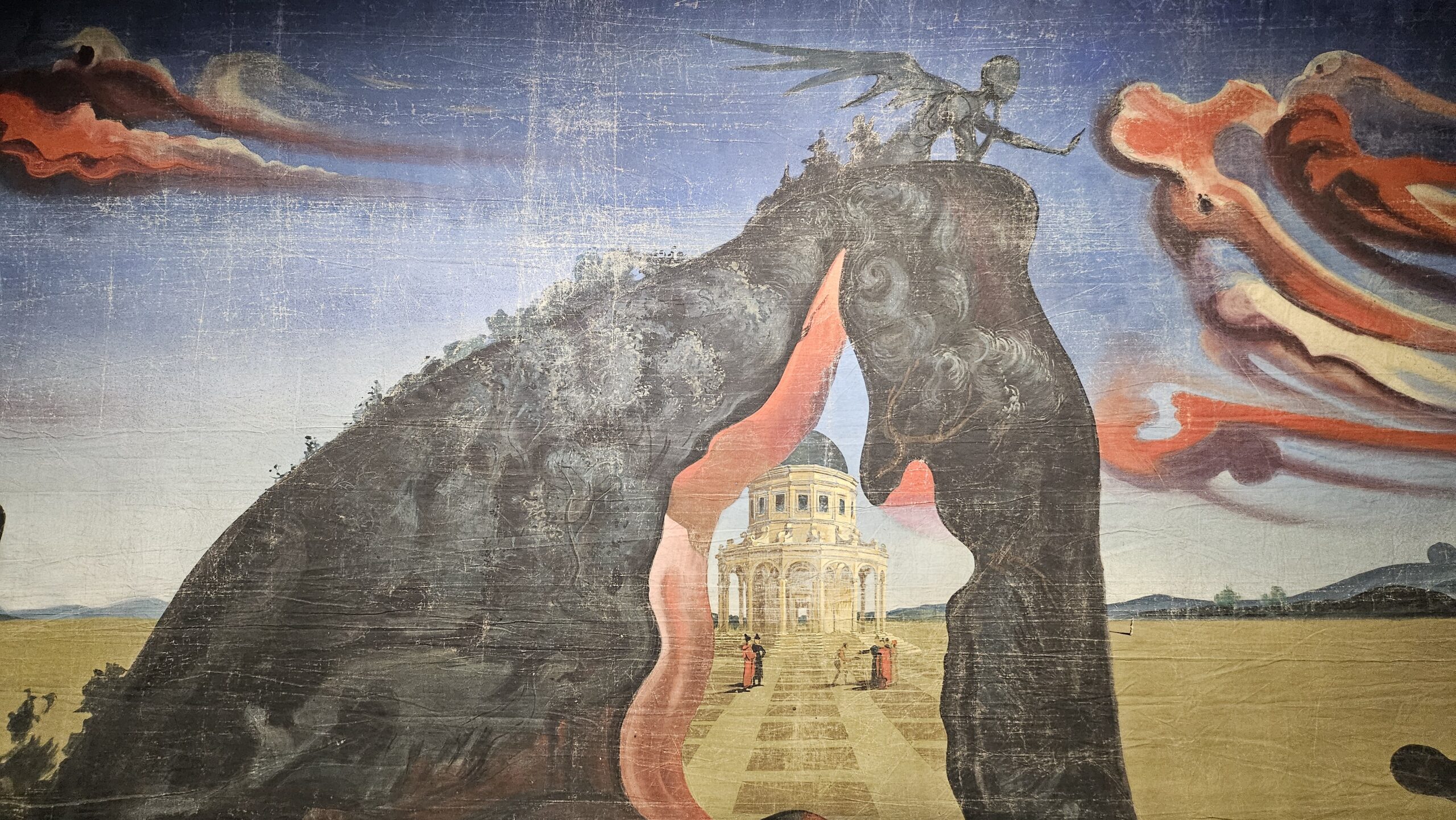
After the closure of the Ballets Russes de Monte Carlo in 1968, the scenography passed to the Ballet Foundation and later, through an initiative by George Verdak, to Butler University. It now belongs to an important private collection and is exhibited in Italy for the first time. The show should revolve around this. We have Picasso instead.
Salvador Dalí, after the international success achieved through Surrealism, gradually distanced himself from the movement, increasingly focusing on himself. In the 1940s and 1950s, he moved to the United States for an extended period, where he attained true celebrity, he drew closer to the Catholic religion and developed what he himself called “nuclear mysticism,” blending religion, science, and mythology into his visionary works. He remained active in design, theatrical scenography, and advertising, anticipating the modern figure of the artist as brand. In his later years, he returned to his beloved Figueres, where he created the Dalí Theatre-Museum, one of his most ambitious total works.
Gala, his wife, companion, and muse, controlled much of his personal life and created a barrier between him and the outside world. After her in 1982, his Teatro Museo Figueres became a symbolic place for an ongoing rehearsal of pain, grief and sweetness.
What about Mirò?
Even less. There’s a last section, with an arrayed display of prints in the latest section. Unlike Picasso and Dalí, he maintained a more reserved profile, but that’s no excuse to neglect him such.
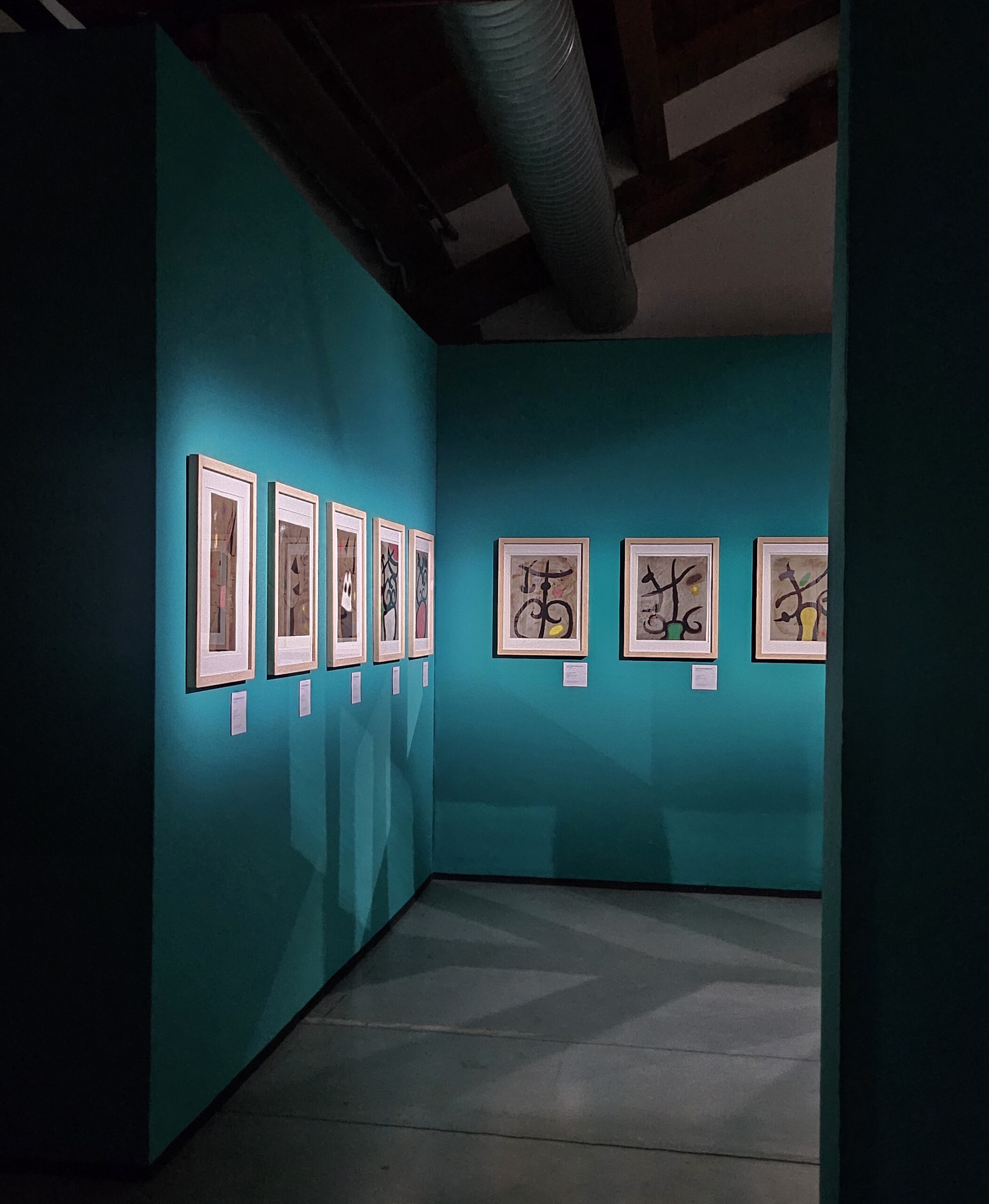
Miró sought to heal wounds and create new forms of “total art” through ceramics, mosaics, textiles, and public spaces. He employed humble materials such as enamels, collage on rough canvas, found objects, which reflected his ethical choice to represent a fragile and yet tenacious beauty. And yet, we see none of this: there’s the reproduction of a big poster for the Soccer World Cup of 1982 done by Mirò (we won that one, as a friend of mine reminded us through the visit) and — guess what? — ceramics by Picasso.
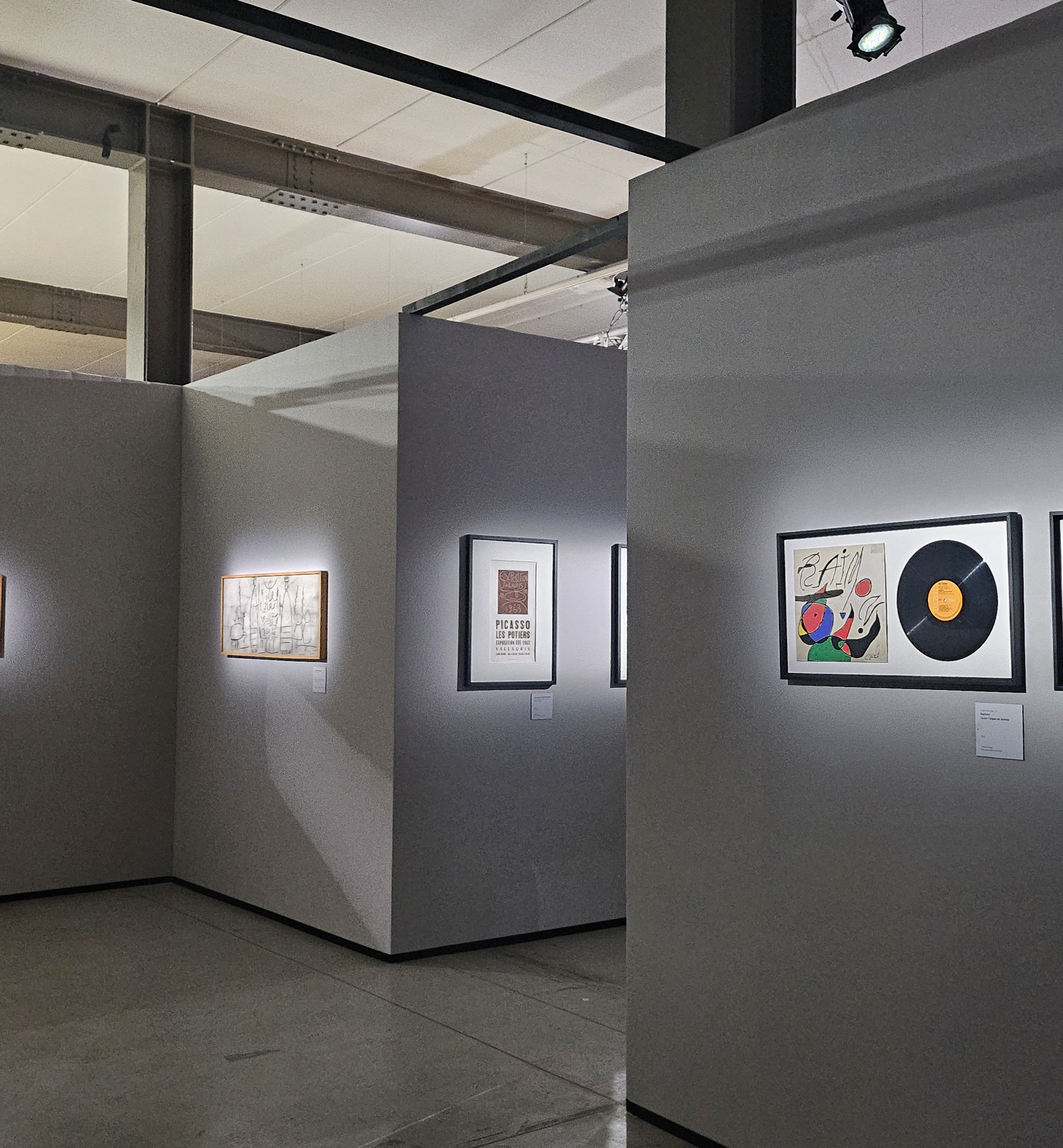
In synthesis, this is a decent show if you love Picasso and have an hour to kill. It’s also good if you cut through the whole thing and spend the afternoon in front of Dalì’s ballet. Do not expect a balanced show about the interplay between the three “greats of Spain,” because that’s not what it is.
No Comments