
There are cities that seduce by excess, by grand vertical gestures, by spectacle, by the dazzling promise of visibility. And there are others, quieter ones, that prefer to act by undercurrent, by persistence, by relation. Milan belongs to the second kind, in my opinion. And Andrea Branzi — architect and designer born here in 1938 and recently deceased — understood this before most: that the city’s strength was never in its skyline, but in the invisible weave of its daily intelligence.
Andrea Branzi: who was this guy?
Andrea Branzi (1938–2023) was one of those figures I particularly like because he managed to inhabit the intersections between architecture and philosophy, design and anthropology, imagination and critique. Trained as an architect in Florence, he returned to Milan in the late 1960s, drawn by the city’s unique mixture of industrial pragmatism and intellectual experimentation.
Here he co-founded Archizoom Associati, one of the radical groups that dismantled the modernist dream of total design with ironic lucidity and poetic rebellion. But while others turned their provocation into spectacle, Branzi turned it into reflection. Milan gave him the perfect ground for this shift: a city of production rather than monumentality, of laboratories rather than landmarks. In its diffuse geography of studios, schools, and factories, he found the living model of the weak metropolis he would theorise for decades: a city held together not by form or authority, but by relationships, curiosity, and quiet intelligence. From his teaching at Politecnico di Milano to his writings and installations at the Triennale, Branzi became both interpreter and architect of Milan’s invisible culture: the culture of design as a way of understanding life itself.

For Branzi, Milan was both a physical habitat and a mental ecosystem: a place where ideas could circulate with the same discretion as people in its courtyards, workshops, and studios. In the years when the post-war metropolis still believed in industry, in clarity, in progress measured by construction cranes, he was already sketching a different map of empathy, porosity, and coexistence.
What’s a “weak metropolis”?
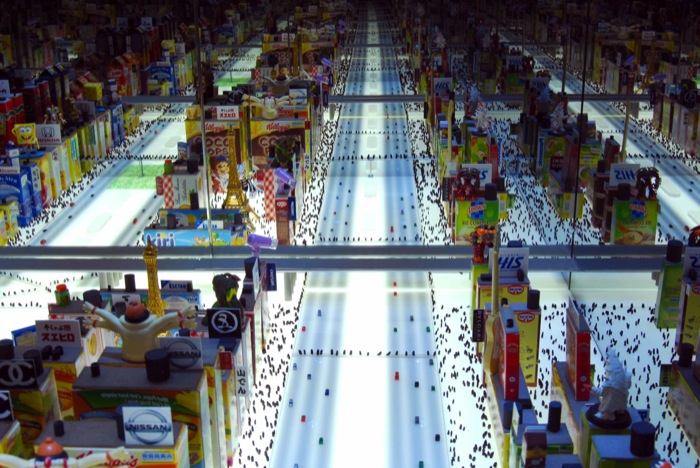
The expression “weak metropolis” (metropoli debole) emerged with clarity in Andrea Branzi’s writings of the 1990s as part of his broader attempt to rethink urbanity after the collapse of modern certainties. In works such as La casa calda (1984), Introduzione al design italiano (1999), and later essays collected in Nouvelles de la métropole–monde, Branzi used the term to describe a city no longer governed by a single centre, ideology nor aesthetic. The weak metropolis was his response to the fragmentation brought by post-industrial society, where production, communication, and habitation were scattered across diffuse territories. Rather than lamenting this dispersion, Branzi saw in it a new ethical and aesthetic horizon: a city rich in connections and possibilities. In this sense, “weakness” did not mean fragility or decline, but openness — a deliberate renunciation of control in favour of coexistence, improvisation, and empathy. It was a vision profoundly Milanese in spirit: born in a city that thrives not through spectacle, but through the invisible intelligence of relations.
How does it tie to Milan?
That intuition of a “weak metropolis” was Branzi’s way of describing a new kind of urban intelligence that accepted fragmentation as the natural state of things and sought harmony not through control but through relation. Where modernism wanted to dominate complexity, Branzi proposed to inhabit it. In the cracks of Milan’s industrial past, he saw potential to turn dispersal into connection, and obsolescence into invention.
Other thinkers, from Richard Sennett to Bruno Latour, would later echo this sensibility. Sennett’s “open city,” with its incomplete forms and tolerance for ambiguity, and Latour’s “parliament of things,” where humans and non-humans share the stage of agency, both resonate with Branzi’s conviction that cities should be “ecosystems of differences” rather than total designs. But while Sennett and Latour theorised from the academy, Branzi lived his philosophy in Milan’s everyday urban texture: in its workshops of Via Tortona, its hybrid schools between Bovisa and Lambrate, its quiet ability to reinvent itself without shouting.
While we walk through Milan with Branzi’s eyes, we can notice the subtle net of relationships that sustain the city: the coexistence of craftsmanship and technology, anonymity and intimacy, slowness and frenzy. Beauty does not lie in the perfection of form, but in the generosity of connection. In this endurance lies a quiet optimism I fully embrace: the belief that cities can evolve without erasing their texture, that design can mean care rather than control. In Branzi’s thought, the “weak metropolis” is not a city that has lost power, but one that has learned to distribute it across networks, disciplines, and lives.
In an age of noise and spectacle, perhaps gentleness is the most radical form of strength. And perhaps Milan is at its best when it refuses to shout.

1. Beyond the Machine: from the Strong City to the Gentle City
The modern city was once imagined as an efficient, rational and disciplined machine. Its architecture mirrored its faith in control: grids, zoning, clear functions for clear citizens who obediently went to work and then came back to sleep and, if they had been nice little children, could go to the mall and enjoy themselves on the weekend. Le Corbusier’s radiant city (which is anything but radiant) embodied the conviction that form could produce order, and that the architect could orchestrate society through geometry. Fuck him.
By the late 1960s, that conviction began to crack. Industrial optimism had hardened into bureaucracy, and the rhetoric of modernism revealed its blind spots: uniformity, alienation, the suppression of difference. The metropolis no longer appeared as the triumphant engine of progress but as an overdetermined system struggling to contain the complexity of life.

It was within this crisis that Andrea Branzi and his companions in Archizoom and Superstudio began their radical critique. Their projects — the No-Stop City, the Continuous Monument — were less utopias than counter-utopias, ironic mirrors held up to modernist excess. “If the city has become a machine,” they seemed to say, “let us push the metaphor to its absurd conclusion.” Branzi’s No-Stop City (1969) erased architecture altogether, envisioning an infinite urban field where functions and forms dissolved into a neutral, continuous surface. But behind its apparent nihilism lay a profound ethical gesture: the refusal of domination, the rejection of architecture as a tool of power. As Branzi later explained, the problem was not to destroy the city, but to make it free and let it breathe.
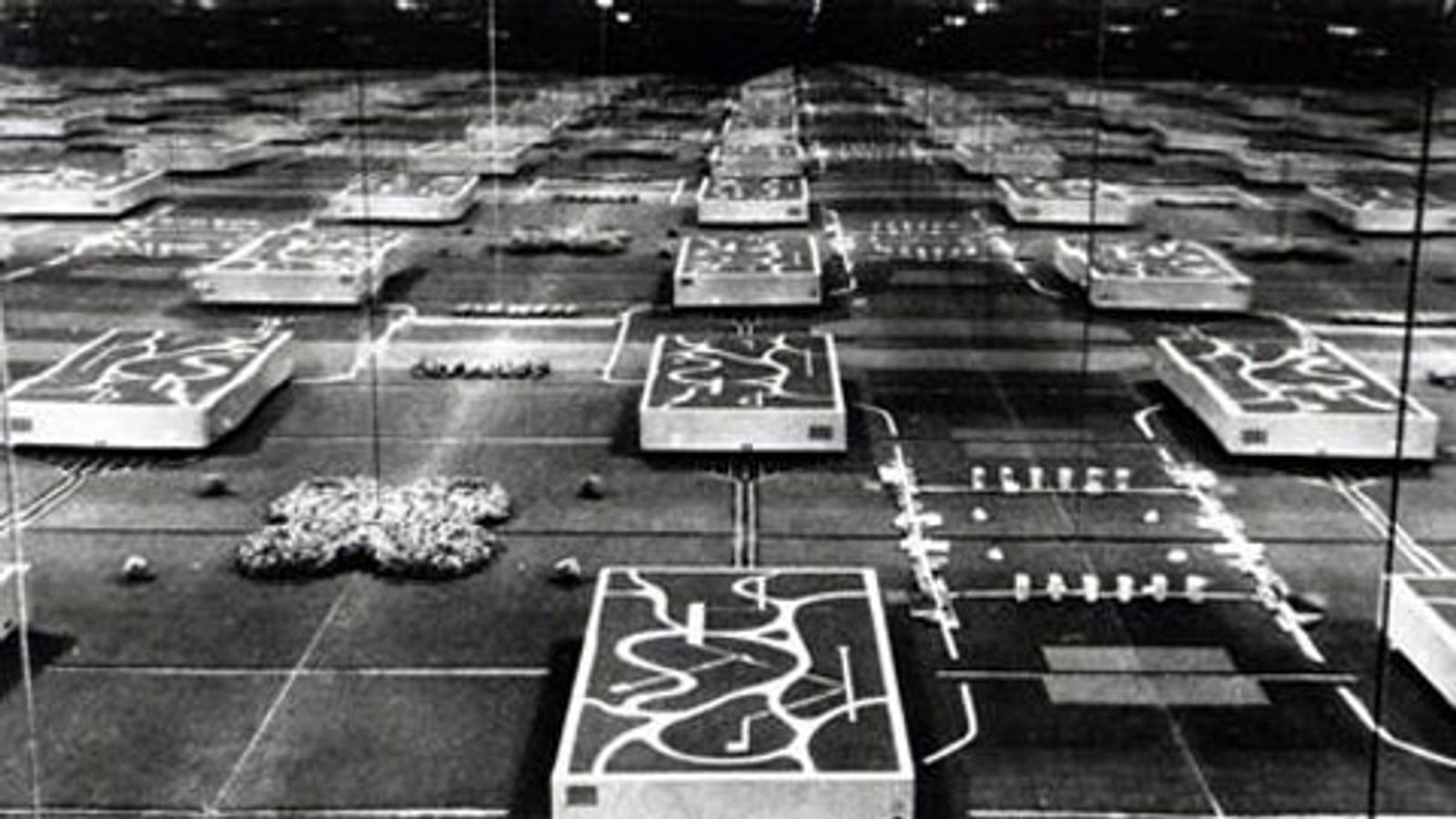
This passage from the “strong” city to the “gentle” city marked a crucial turn in Branzi’s thought. Strength, in his view, belonged to an industrial age obsessed with productivity and control; gentleness belonged to an ecological age aware of interdependence. To design today, in his view, wasn’t to impose order any longer, but to create conditions. In the weak metropolis, authority gives way to relation, and planning becomes an act of listening to the environment, to users, to time. The city is no longer a closed system but an open conversation.
In this sense, Branzi’s critique was not a retreat from modernity but its renewal through empathy. By abandoning the illusion of total design, he opened architecture to life in all its indeterminacy and his Milan — pragmatic yet humane, industrious yet understated — became the living prototype of this transformation. It showed that weakness, far from being a loss, could be a form of wisdom: the ability to coexist with uncertainty, to find structure in fluidity, and to recognise that the gentlest cities may also be the most enduring.

2. The Invisible Weave: Relations as Urban Material
Andrea Branzi’s vision of the city begins where architecture traditionally ends: with what happens after the buildings are finished, when they’re inhabited and people use them as stages to build relationships. For him, the urban condition was not defined by form, function, or style, but by the dense, continuous network of exchanges that link people, objects, spaces, and information. This relational urbanism dismantles the hierarchy between the built and the lived, proposing instead an ecology in which the non-human — technologies, infrastructures, artefacts — participates fully in the production of meaning. The weak metropolis is therefore a field of dynamic interactions: fragile, provisional.
In this framework, design becomes an act of mediation and another way of shaping relationships rather than imposing forms. Branzi often said that design is not about objects, but about the quality of their relationships with people. His projects, from furniture to urban studies, pursued this idea with poetic precision. In Animali Domestici (1985), he placed fragments of wood and metal inside transparent cages as an ironic commentary on the domestication of nature within the modern home, but also a meditation on coexistence.

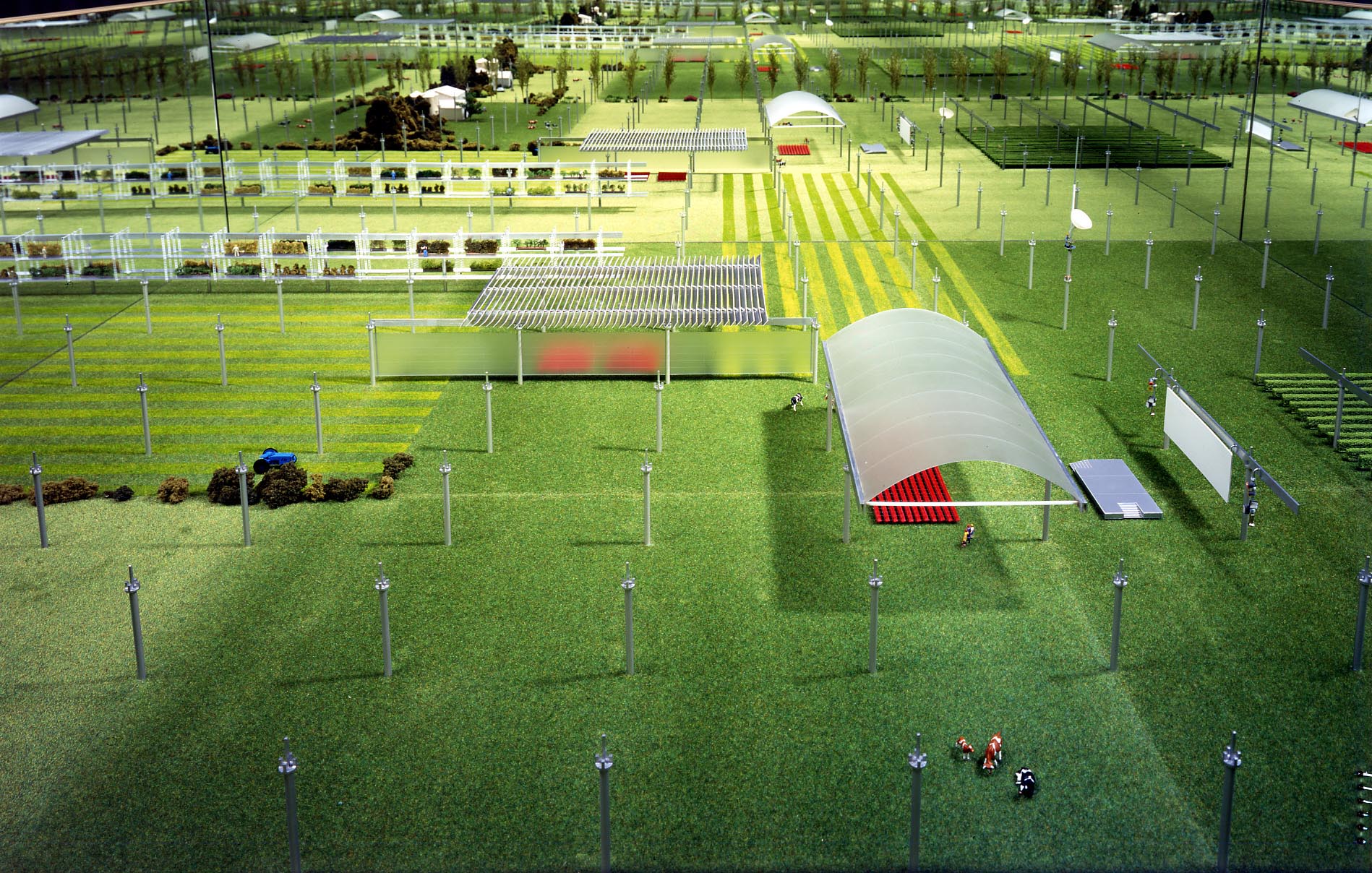
In Agronica (1994), he envisioned an agricultural metropolis where production, habitation, and ecology merged into a continuous, open landscape neither city nor countryside, but a living metabolism. Even his Atlante Metropolitano installations for the Triennale di Milano blurred the line between exhibition and environment, turning space into a narrative of interdependence.
Milan was both the inspiration and the testing ground for this philosophy. Branzi was well aware that, despite being described as an impersonal city, nothing could be farther from the truth: Milan thrives through connection. The informal ties between artisans and designers, the quiet intelligence of its polytechnic schools, the dispersed geography of its creative districts. It is a city that works through conversation between a craftsman in Lambrate and a startup in Bovisa, between Triennale’s curatorial experiments and the subtle interiors of a Porta Venezia apartment. This diffuse, networked, and collaborative culture is precisely what Branzi saw as the model of the invisible weave: an economy and ecology of relations where the urban fabric extends beyond architecture, into the spheres of affection, exchange, and imagination.
His own teaching at the Politecnico di Milano embodied this spirit. Branzi’s studio was a place where theory, craft, and technology met in open dialogue and a discussion about the future could begin with a chair, a photograph, or a conversation about anthropology. The city, in his teachings, was a text to be interpreted, a living system to be cared for.
3. A few examples
In Bovisa, once an industrial wasteland of gasometers and warehouses, Branzi saw the possibility of a new urban metabolism: a post-industrial landscape where education, experimentation, and production could merge. His long teaching career at the Politecnico di Milano shaped generations of designers who learned to view the city as a process rather than a plan. The area’s gradual transformation — from oil depots to design schools, Fab Lab spaces, and hybrid housing — materialises one way to interpret the weak metropolis: no clear boundaries, no grand gestures, but a continuous negotiation between past and present.
Lambrate tells a similar story. Where factories once forged metal and furniture, studios now forge ideas. The annual Ventura Lambrate exhibitions, born in the cracks of deindustrialisation, turned vacant warehouses into temporary ecologies of creativity, an urban condition Branzi had long described.

At the opposite end stands the paradox of Porta Nuova — Milan’s most visible act of urban renewal and a cautionary tale. Its glass towers, from the Bosco Verticale to the Unicredit complex, wish to symbolise a return to strength: verticality, control, corporate order. Yet even here, Branzi’s vision lingers in the interstices and it’s not by chance that he designed gardens here. The elevated piazzas and landscaped decks of Porta Nuova have become sites of informal use — skateboarders, office workers at lunch, families strolling — quietly subverting the logic of spectacle with everyday softness. The weak metropolis reclaims even the most polished spaces through the resilience of lived behaviour.
Milan’s design districts further enact Branzi’s idea of relational urbanism. Tortona, Brera, and Isola are not planned centres but spontaneous constellations of activity, activated each year by the Fuorisalone’s swarm of temporary exhibitions and encounters. This rhythm of assembly and dispersal transforms the city into a relational network — an urban organism that breathes through ephemerality. Branzi, who was among the first to theorise design as a cultural infrastructure rather than a profession, would see in these events the materialisation of his principle that design doesn’t produce things but connections.
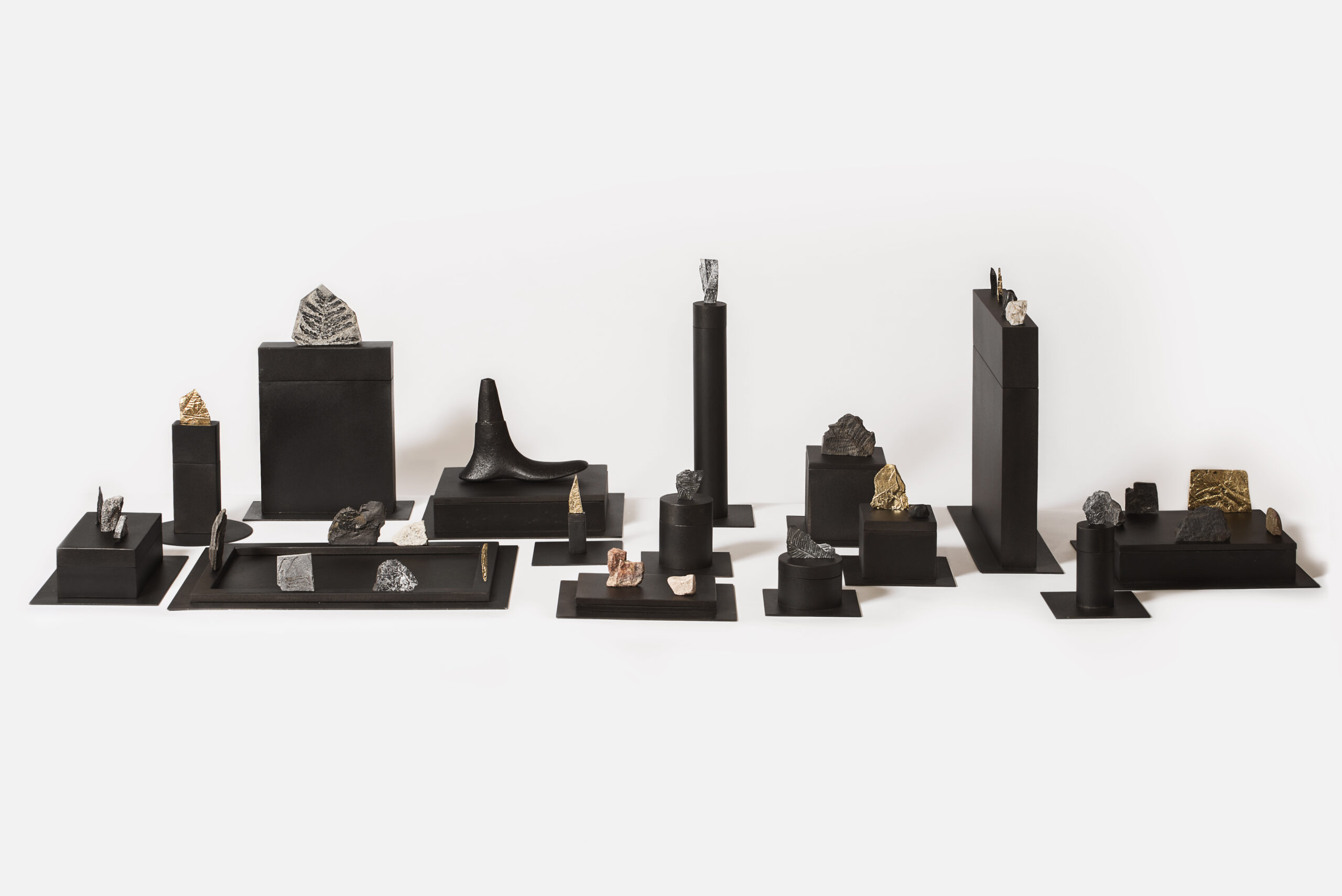
Even his own works seem to anticipate this Milanese attitude of lightness and reinvention. The Domestic Animals series (1985) used the language of furniture to question the boundaries between nature and object, wildness and home — a metaphor for coexistence within urban life. The Germinal Seats (1995) for Zanotta, where fragile shoots rise from polished steel, are portraits of resilience: life emerging from the artificial. His Trees (2008–2014) installations, with small potted plants growing atop shelves or within vitrines, embody the same idea at architectural scale — the coexistence of the natural and the designed, the temporary and the permanent. All of them read like microcosms of Milan itself: gentle, industrious, and endlessly adaptive.
Conclusion – The City as a Work of Affection
Andrea Branzi taught us that cities are not to be possessed, but to be cared for. I believe Milan at its best — patient, industrious, quietly visionary — stands as the living proof that urban intelligence resides not in grandeur, but in gentleness. I think a lot of good could come out of reclaiming Branzi’s idea to resist the temptation of total design: the illusion that order or technology alone can solve the complexity of collective life. The weak metropolis offers instead an ethic of affection, a way of designing that begins with attention, with empathy, with the willingness to live among what already exists. Let the contemporary city be no longer a project, but a relationship and an act of love that must be renewed every day.
Milan carries traces of this affection everywhere, if one knows where to look.




No Comments