"All this he saw, for one moment breathless and intense, vivid on the morning sky; and still, as he looked, he lived; and still, as he lived, he wondered."

Pride Month 2025: Art of the Day

7th-century icon of Saints Sergius and Bacchus, Monastery of St. Catherine, Sinai (Egypt)

Saints and Soldiers: the Embrace of Saints Sergius and Bacchus

One of the oldest surviving icons from the early Byzantine world, this image depicts two Roman soldiers and Christian martyrs standing side by side—clad in military garb, halos touching through the depiction of Christ.

Sergius and Bacchus were Roman officers, executed around 303 CE for refusing to partake in pagan rites under Emperor Galerius or Maximian. But for centuries, especially in Eastern Christianity, they were also celebrated as intimate companions, referred to in early manuscripts as erastai—a Greek term connoting deep, same-sex romantic affection. This icon portrays their bond not only as saintly, but as sanctified—their closeness is both spiritual and physically expressed through proximity, symmetry, and shared sanctity. Some modern scholars and theologians interpret their veneration as an example of adelphopoiesis, or “brother-making”—the liturgical rite for a same-sex union ceremony.

This artwork reminds us that queer love has not only survived within religious contexts—it has been venerated, ritualized, and immortalized in sacred art. Even in traditions that later enforced heterosexual norms, there were spaces where love between men was publicly honoured. Sergius and Bacchus were removed from the Roman Catholic liturgical calendar in 1969, officially due to questions about historical evidence that never bothered the Catholic church before (nor, at any rate, afterwards).

music and theatre

Suzanne Vega in Milan

Yesterday, we went to see Suzanne Vega, one of the greatest artists and musicians of all times whom occupies a special place in my heart next to Tori Amos. It was a packed house at Conservatorio Giuseppe Verdi here in Milan, with people belonging to

Read More »
books and literature

Isaac Asimov’s Gold (and other stories)

It’s unfortunate that I’m coming to this after the very unsatisfactory collection of “fantasy” stories (Asimov never wrote fantasy: he wrote satire), because this was another disappointment. The book is half short stories and half non-fiction, for random reasons, and the non-fiction half is random writings

Read More »
books and literature

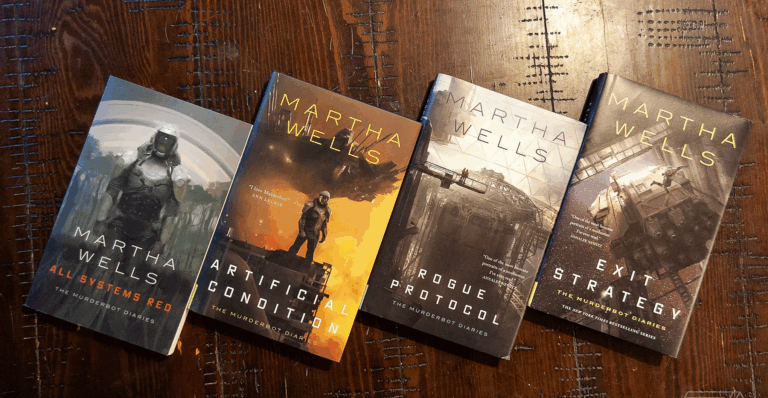
The Murderbot Diaries: Rogue Protocol + Exit Strategy

I’m not crying: a piece of some murdering bot must have gotten in my eye. Rogue Protocol is the third novella in the Murderbot Diaries, and deals with the titular character going deep undercover to figure out what happened in the “mining incident” that was

Read More »
Share on LinkedIn
Throw on Reddit
Roll on Tumblr
Mail it
No Comments

Post A Comment

This site uses Akismet to reduce spam. Learn how your comment data is processed.

RELATED POSTS

Suzanne Vega in Milan

Yesterday, we went to see Suzanne Vega, one of the greatest artists and musicians of all times whom occupies a special place in my heart next to Tori Amos. It was a packed house at Conservatorio Giuseppe Verdi here in Milan, with people belonging to

Read More

Isaac Asimov’s Gold (and other stories)

It’s unfortunate that I’m coming to this after the very unsatisfactory collection of “fantasy” stories (Asimov never wrote fantasy: he wrote satire), because this was another disappointment. The book is half short stories and half non-fiction, for random reasons, and the non-fiction half is random writings

Read More

The Murderbot Diaries: Rogue Protocol + Exit Strategy

I’m not crying: a piece of some murdering bot must have gotten in my eye. Rogue Protocol is the third novella in the Murderbot Diaries, and deals with the titular character going deep undercover to figure out what happened in the “mining incident” that was

Read More