
I was able to catch this exhibition during its last few days, and I’m glad I did. Pellizza da Volpedo: i capolavori, hosted at the Galleria d’Arte Moderna (GAM) in Villa Reale, is a major retrospective dedicated to one of Italy’s most compelling painters between the 19th and 20th centuries, and it marks the first comprehensive monographic presentation of Giuseppe Pellizza da Volpedo in Milan in over a century, since a landmark 1920 show at Galleria Pesaro. It brings together around forty paintings and drawings — including Il Quarto Stato, the artist’s enduring masterpiece — offering a rich survey of his artistic evolution from realism through divisionism and lesser-known symbolist explorations that, of course, fascinated me the most.
Beyond its institutional significance, the exhibition resonates in the broader political and cultural context of today. Il Quarto Stato, a powerful visual lexicon of collective agency and the dignity of labour, should continue to speak to contemporary debates around social justice, workers’ rights, and civic participation. In the face of renewed discussions on inequality and social cohesion in Europe and beyond, Pellizza’s work — rooted in late-19th-century movements for social reform — invites reflection on the enduring relevance of art that confronts collective experience and political aspiration. This dialogue between historical representation and present-day concern positions the show not only as an artistic celebration but also as a moment of cultural engagement with issues that remain urgent for contemporary audiences.
Pellizza da Volpedo: who was this guy?
Giuseppe Pellizza da Volpedo’s artistic trajectory unfolds along a coherent and restless path, shaped by rigorous technical research and a growing ethical tension toward the social reality of his time. His evolution from late-nineteenth-century realism to divisionism, and finally toward a symbolic synthesis of form, light, and collective meaning, reflects not only stylistic shifts but a profound rethinking of the role of painting itself.
Pellizza’s early formation took place within the framework of that specific kind of regional and cultural tradition that developed in Lombardy in the second half of the 19th century, particularly in Milan, and put a strong emphasis on direct observation of reality, an attention to everyday life, and a generally non-idealised, descriptive approach to figures and environments. Trained in Milan, Rome, Florence, and Genoa, he absorbed a naturalistic approach grounded in close observation, solid drawing, and compositional balance. Works from the 1880s reveal an artist attentive to everyday life, rural labour, and portraiture, rendered with a sober palette and a descriptive intent typical of post-Scapigliatura realism. At this stage, the social dimension is present but implicit: figures are observed rather than interpreted, and the painter maintains a certain distance from his subjects.
The turning point comes in the early 1890s with Pellizza’s encounter with divisionism. Influenced by the theories of colour and light circulating in European painting — and by the work of artists such as Giovanni Segantini, Angelo Morbelli, and Gaetano Previati — Pellizza adopts the divisionist technique. The fragmentation of colour into small, luminous strokes allows him to construct images that are at once more vibrant and more structured, where light becomes a force within itself.
Unlike other divisionists like Previati, who pushed toward mysticism or abstraction, Pellizza remains anchored to figuration: his divisionism is analytical, disciplined, almost architectural. Light does not dissolve forms but frames them, reinforcing the physical presence of his subjects. This is particularly evident in works depicting peasants, workers, and rural communities: the technique elevates everyday labour to a monumental, almost timeless dimension. Gradually, this technical evolution opens the way to a sort of non-magical symbolism. Pellizza’s figures increasingly transcend individual identity to embody collective conditions and aspirations; compositions become frontal, rhythmic, and carefully calibrated; gestures are simplified, gazes steady, movement measured. The human body is invested with a shared significance.
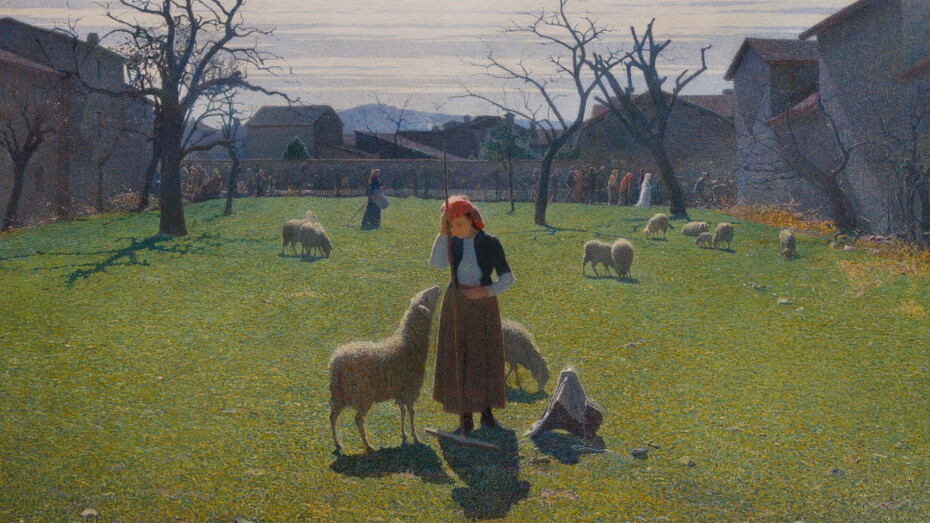
This process culminates in Il Quarto Stato, where realism, divisionism, and symbolism converge. The painting’s power lies precisely in this convergence: the physical solidity of the figures, the luminous discipline of the technique, and the symbolic weight of collective advancement coexist without contradiction. The crowd advances, but calmly; it occupies space, but does not erupt. Pellizza’s symbolism is grounded, rational, and deeply political, rooted in the belief that social progress is built through awareness, dignity, and continuity rather than rupture.
Seen in this light, Pellizza da Volpedo’s artistic evolution is a sustained inquiry into how painting can articulate social reality without reducing it to anecdote or propaganda. His work stands at the intersection of scientific modernity and ethical responsibility, offering a visual language capable of transforming the observation of the real into a shared horizon.
The Exhibition
Let me get this clear from the start: the exhibition is three rooms at the ground level of the Gallery, where we saw Suzanne Jackson last year, and if that setting provided a stunning, relaxed atmosphere, this time you’re in for a claustrophobic experience. The rooms are small and crowded with paintings, people are stuffed in 4×5 m rooms and security’s doing their best to avoid extra-stuffing but there are no turns.
Also, the exhibition is spread out: the three rooms on the ground floor are the first thing you visit, and then it’s up the staircase to see The Fourth State, the grand and most famous painting by Pellizza, that’s in the ballroom on the upper floor, after two rooms of the permanent collection. So basically you see the start of the exhibition, to upstairs, traverse two rooms with unrelated paintings, and then see the end. Which, of course, isn’t particularly good.
1. Beginnings
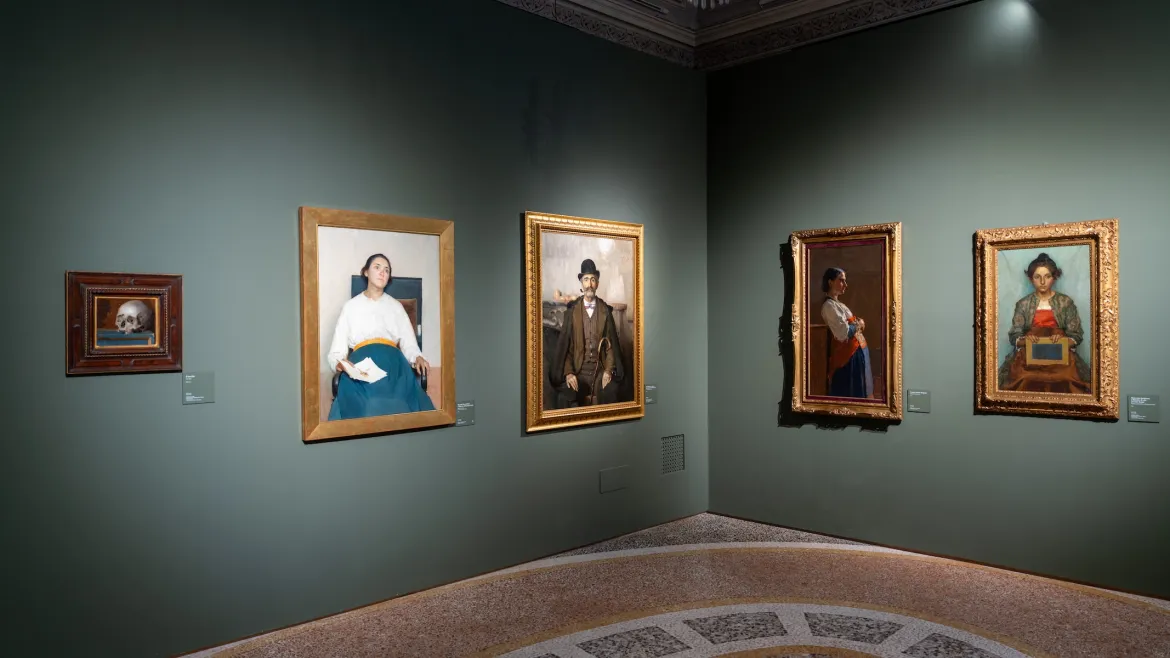
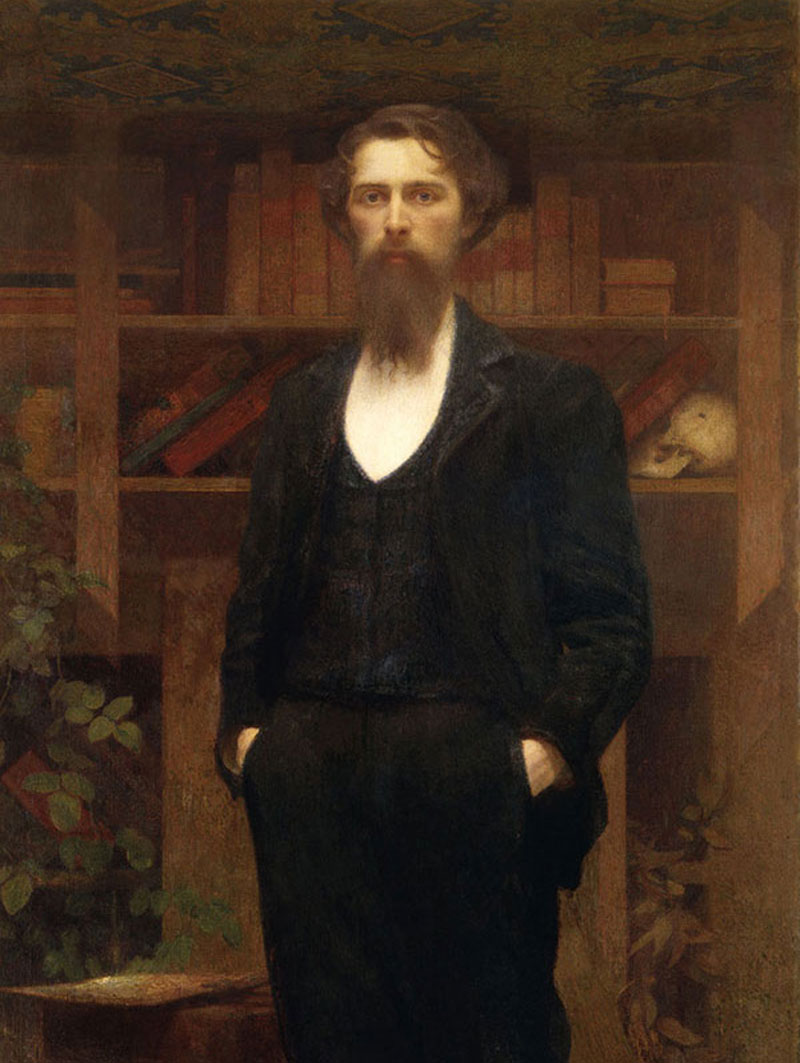
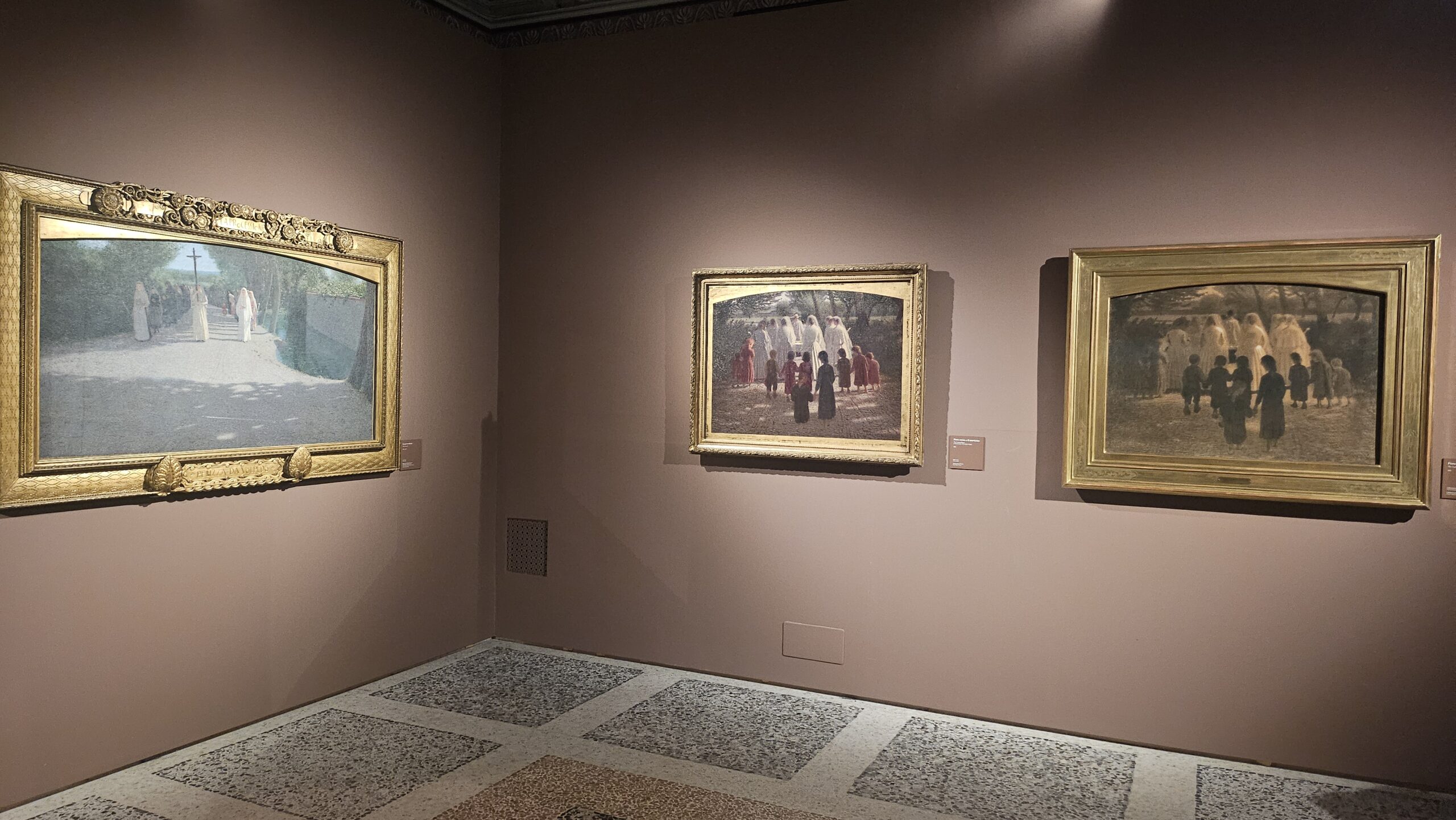
The first section is dedicated to the artist’s beginning, with the famous self-portrait and some interesting stuff, particularly a very small skull that speaks to the contemporary sensibilities of the Scapigliati. It’s a rarity, since Pellizza will move away from that very soon.
2. Symbolism
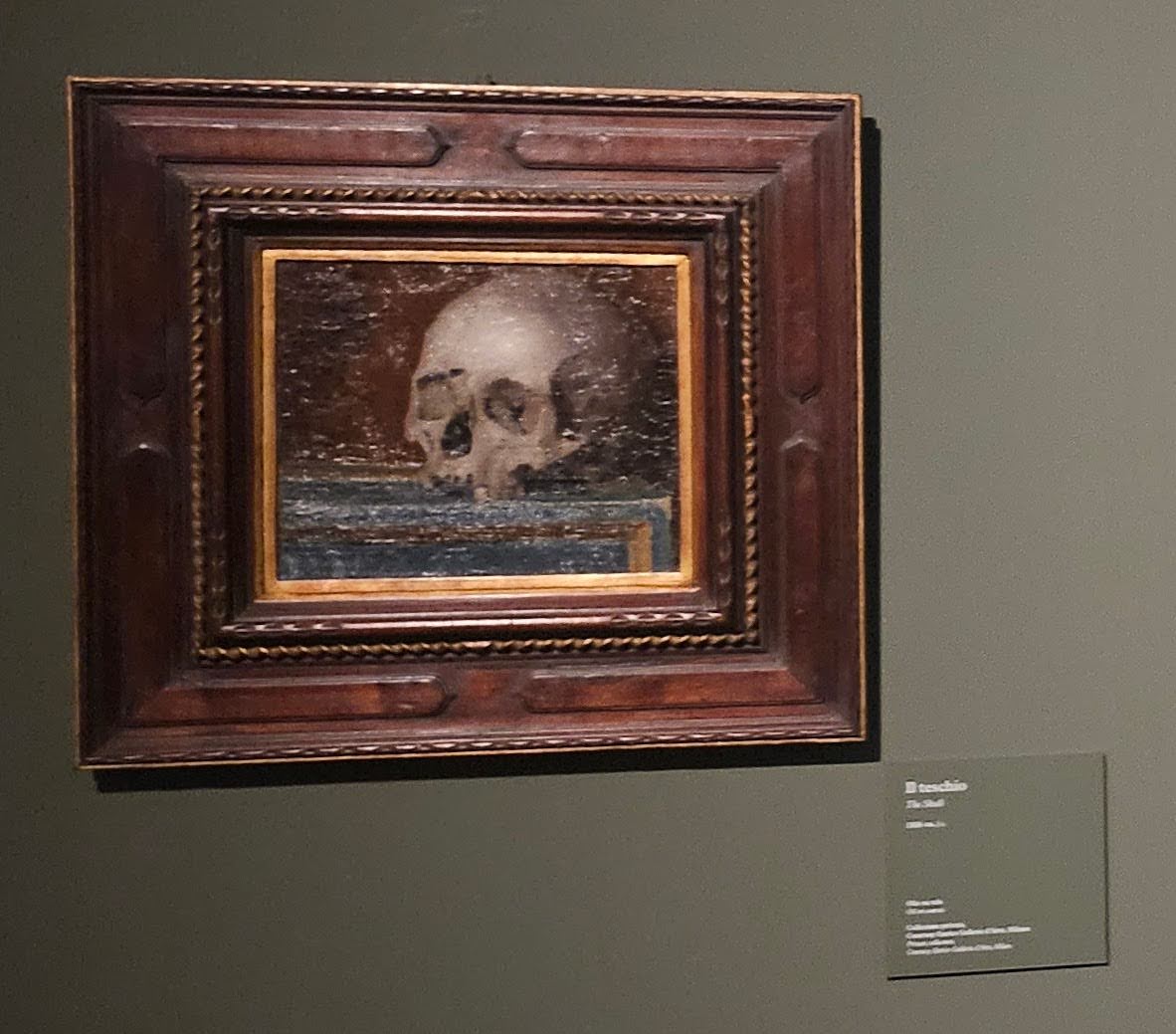
The second room is certainly more interesting, as it deals with Pellizza’s complex relationship with symbolism. Some of his paintings have nothing to envy Previati’s, in this regard, and Pellizza’s very good friend, the poetess Neera, had a point in hoping he would become the next Burne-Jones. Alas, things won’t go this way, but still there’s much to enjoy in this production.
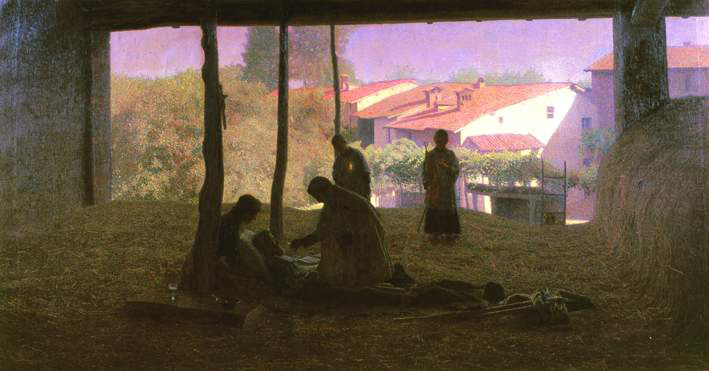
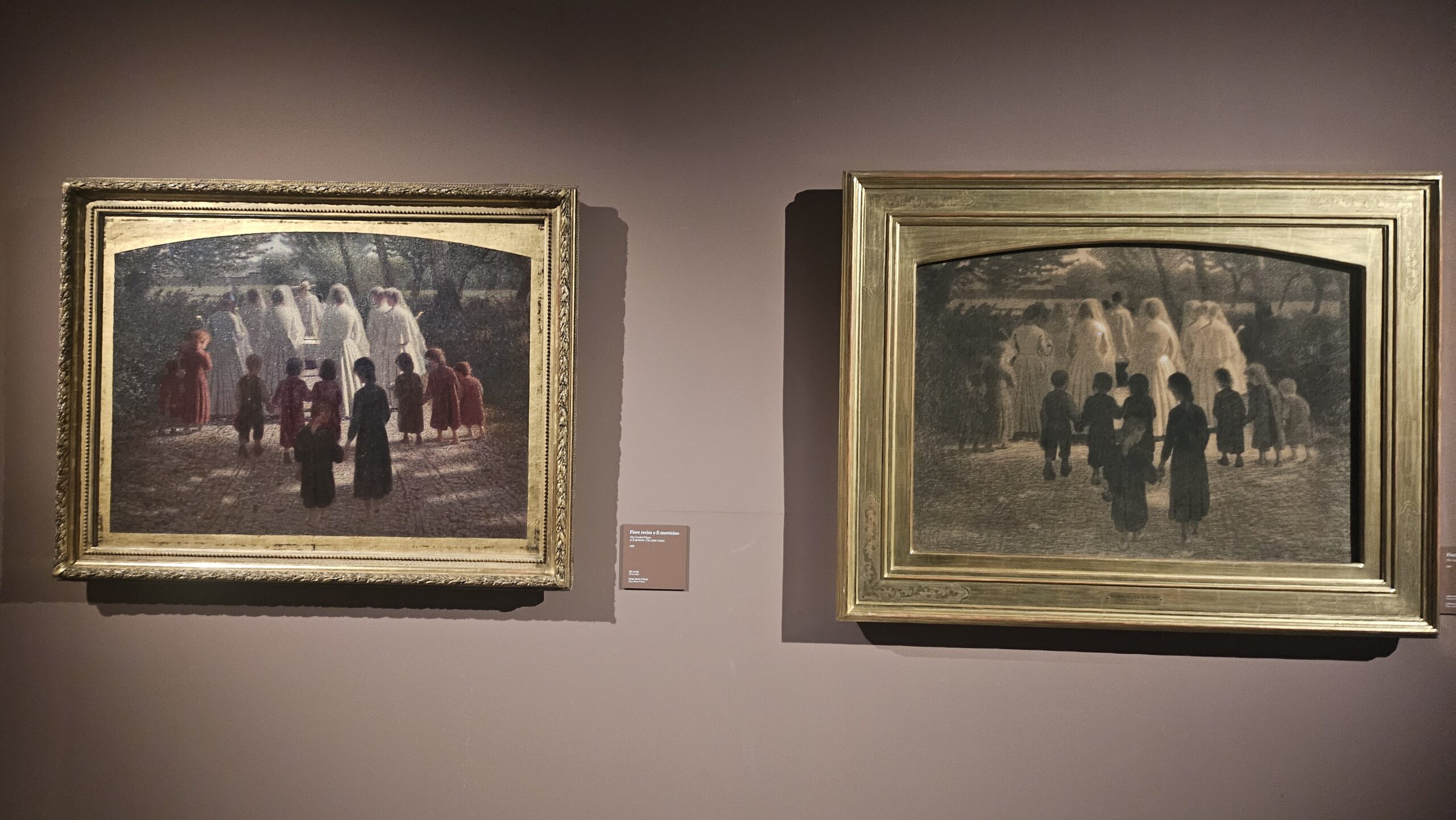
Take a look at this stunning painting for the funeral of a small child, and its preparatory sketch nearby.
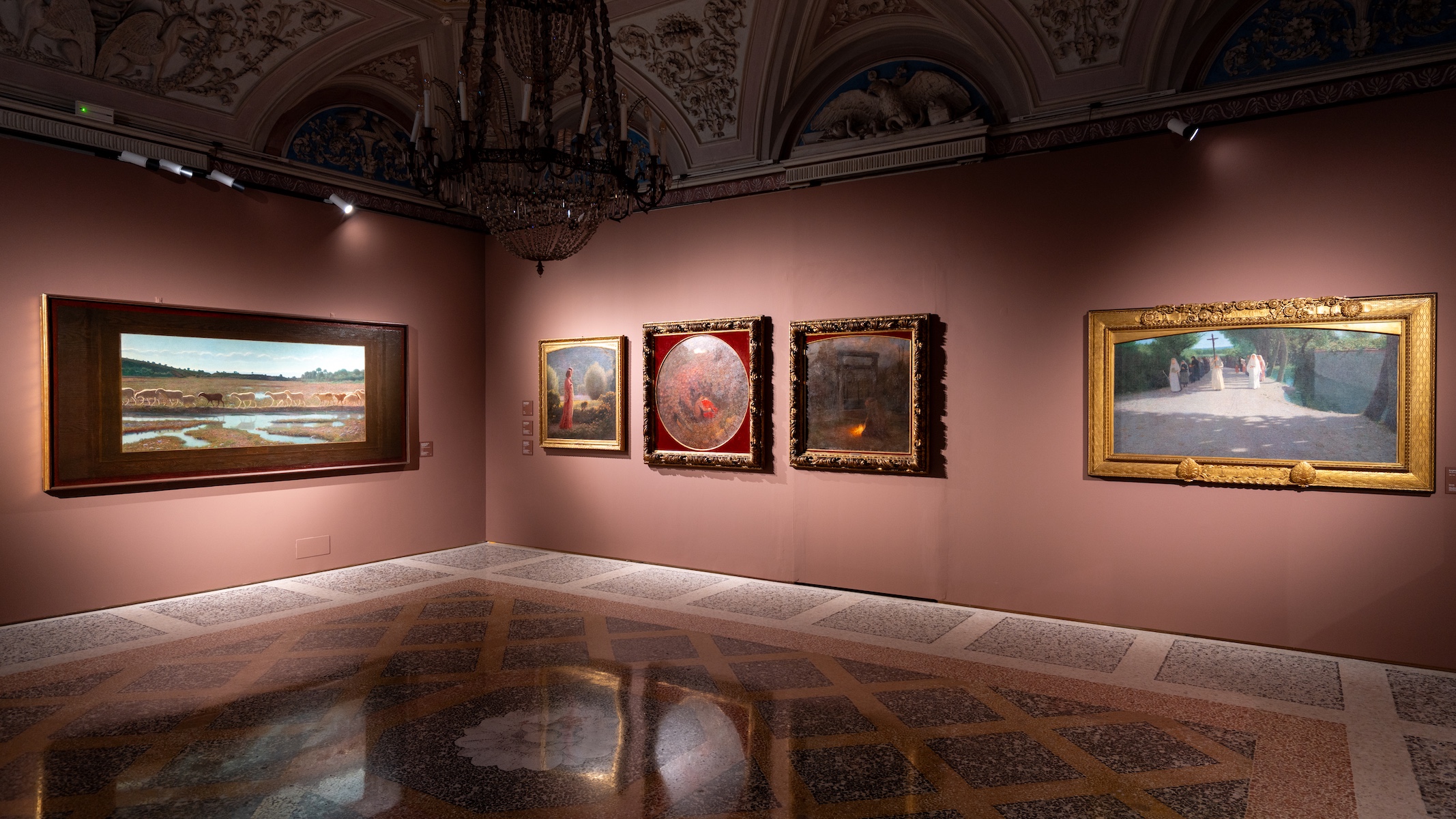
Another splendid group is titled Love in life (L’Amore nella Vita), a tryptych of paintings reunited for the exhibition that I couldn’t photograph it its entirety and that you can see in the official picture below.
The artist’s original idea was to paint five pictures, but he never finished the project: what’s left is two lovers taking a stroll in nature, probably the first stages of courting, and then embraced in a grove (the central panel, with a round frame). The third painting on the left depicts a kneeling figure, possibly despair for a lost love or grief for a deceased partner.
3. Realism
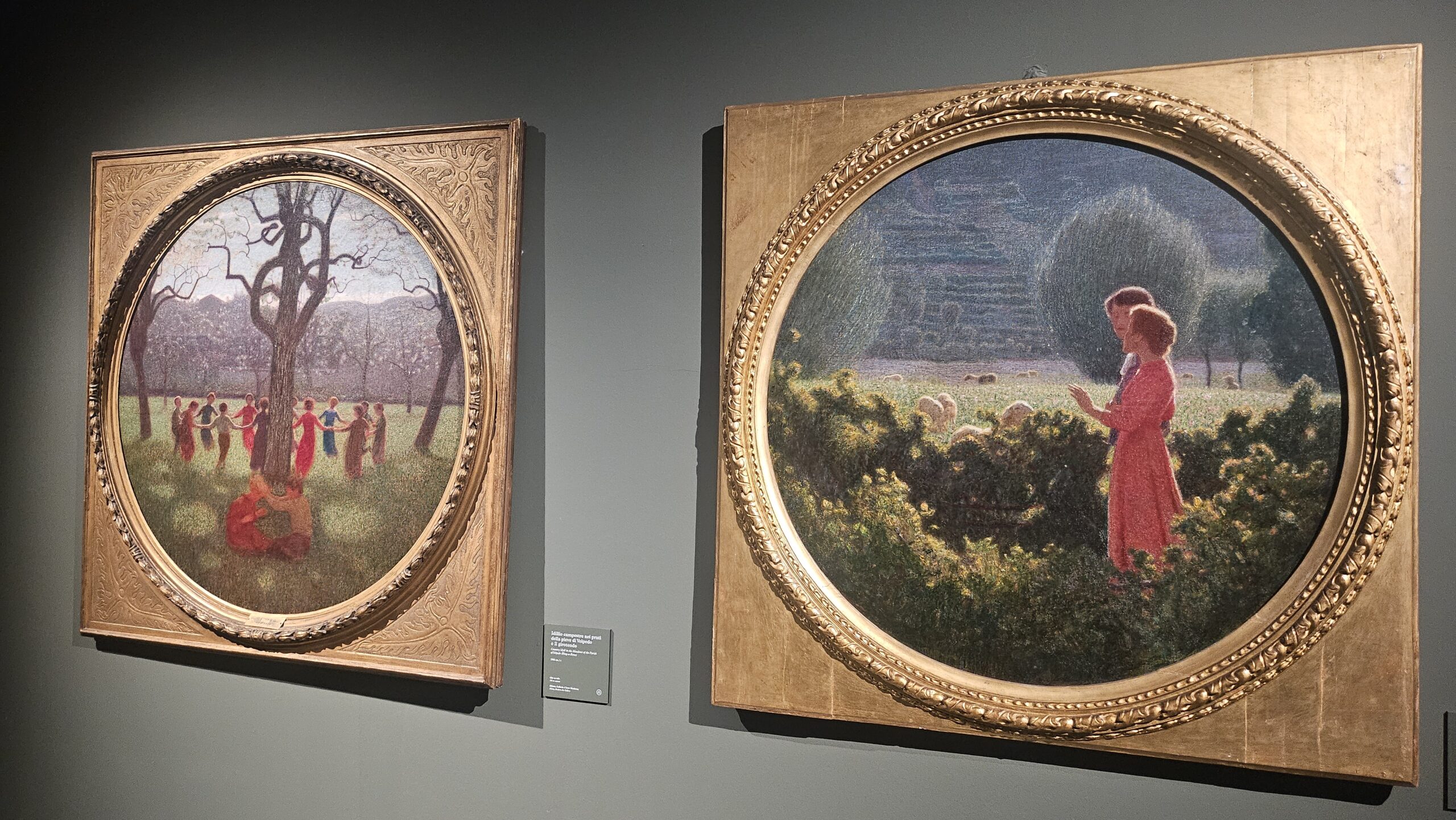
Equally stunning paintings of a symbolist flavour occupy the third room, with another take at the subject of people strolling through nature and a merry-go-round that speaks to the sensitivity of his age. The colours are stunning and, though I’m in no manner a fan of divisionism, the final result is really a pleasant experiment on how to render a light in a day of fall.
4. Landscapes
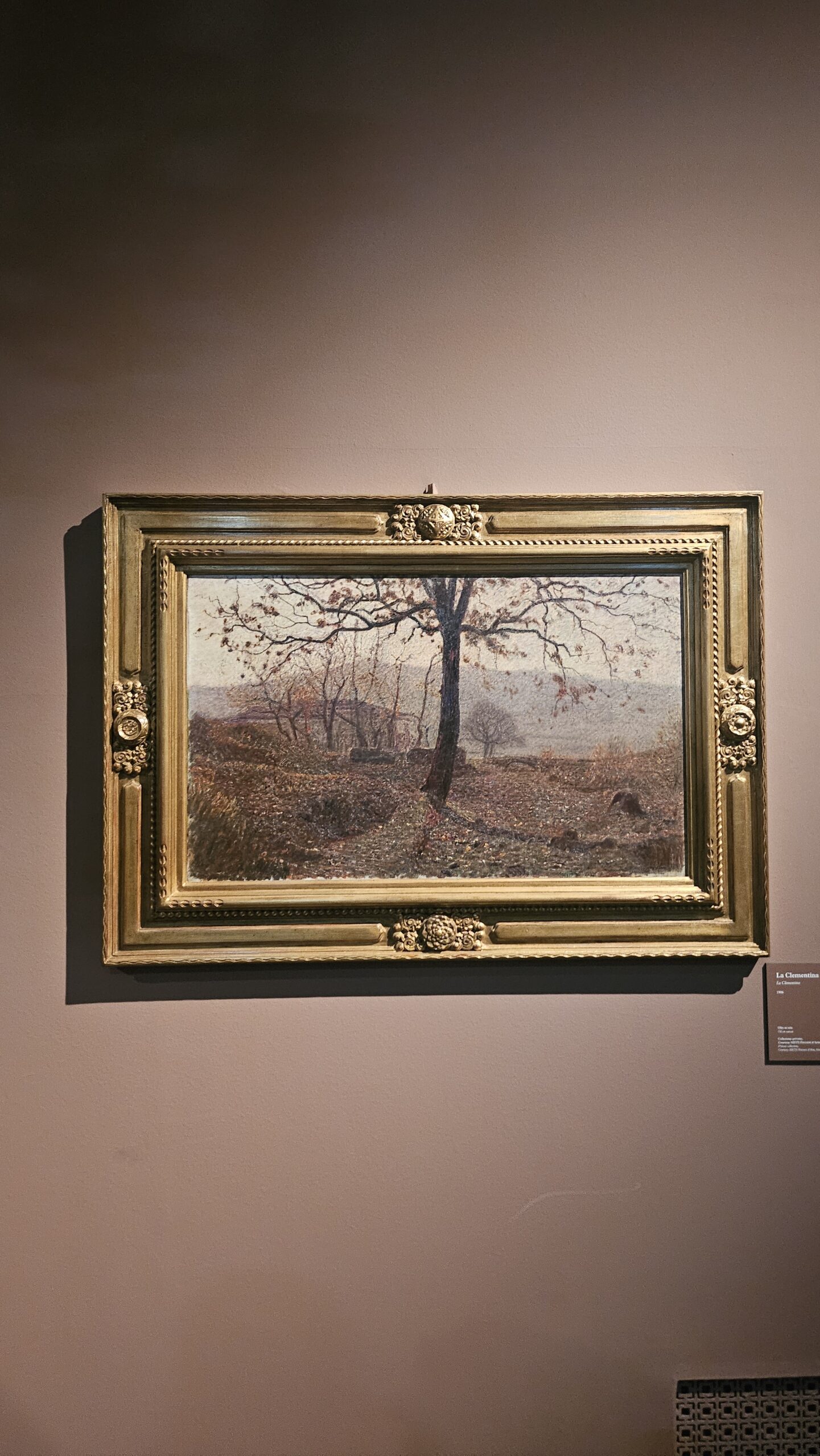
The last room is dedicated to landscape scenes, some very small and some other extra-large, all sporting a divisionist approach. My personal favourite is this clementine tree: you can almost smell the leaves and feel the crisp air of a fall afternoon in our northern Italy countryside.
5. The Fourth State
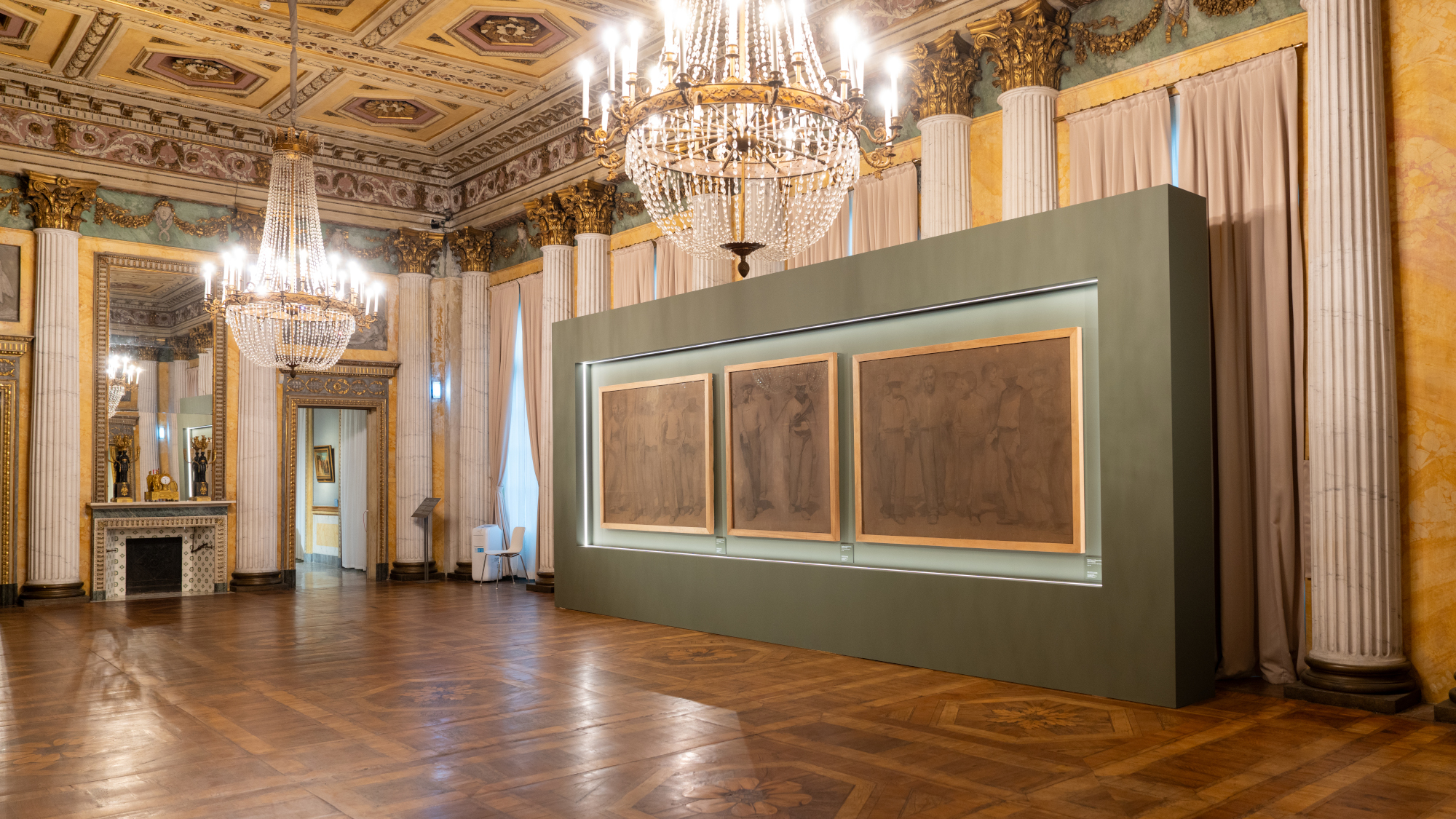
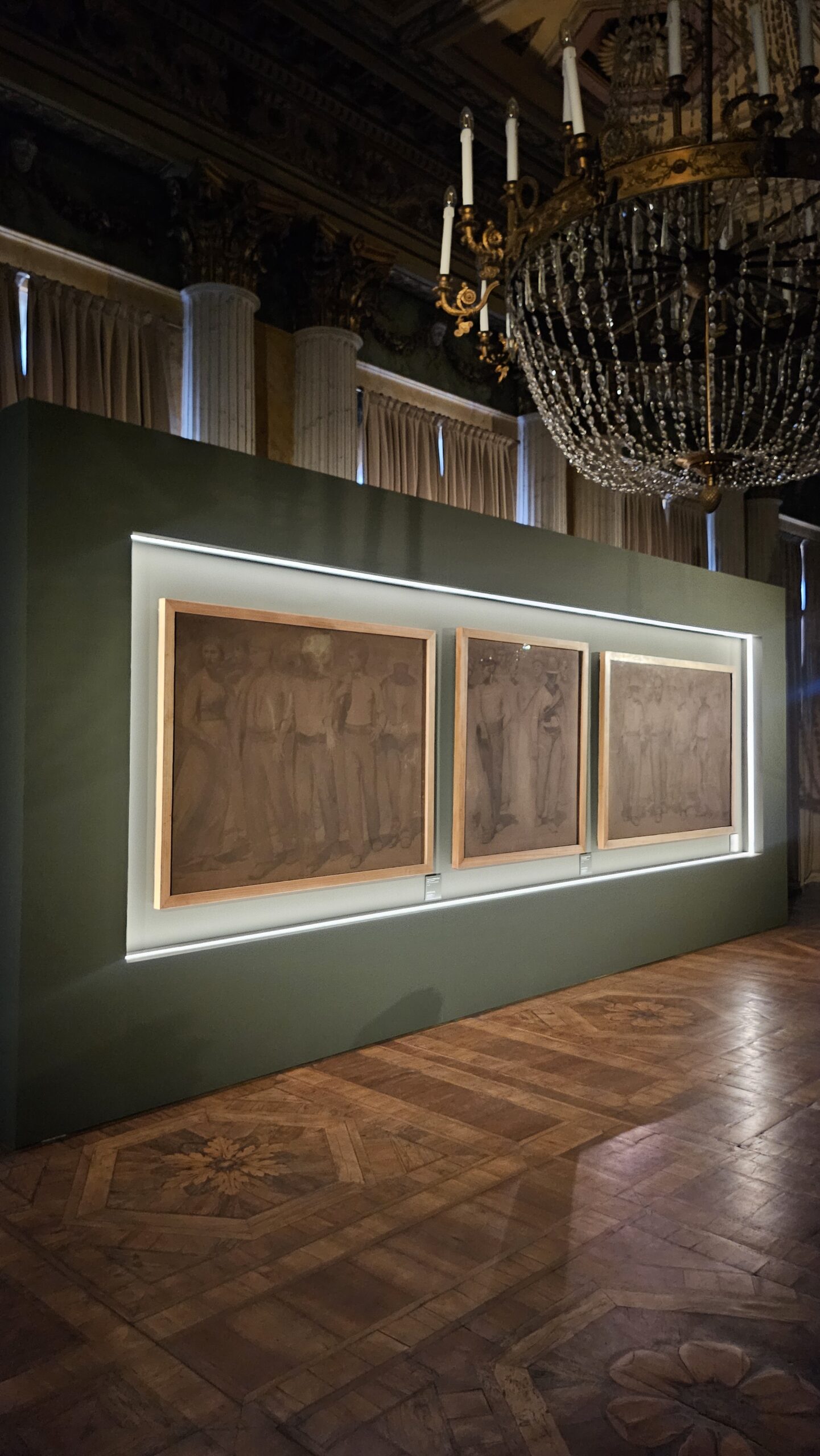
The Fourth State, the famous painting of people marching for their rights, is upstairs in its hall of residence. On the opposite wall, some of the original preparatory charcoal sketches are on display, and it makes for a very nice complement to the position of Pelizza’s masterpiece. The room is very dark, possibly for conservation reasons, and I didn’t like how you have to traverse two unrelated rooms of the permanent collection, even if some kind of storytelling could have been possible. For an exhibition of this importance and this resonance, it’s really a shame.




No Comments