
Does it count as a re-read if you didn’t originally read it in English? And does it count if your memory was so overwritten by the movie adaptations and, by extension, by people commenting on them in comparison to the original material? I don’t think it does. I went back to Dune with memories of some elements, convinced they were accurate. Instead, re-reading the original work in its native tongue forced me to reconsider both what I thought I remembered and the general stance of people claiming Lynch’s movie is a far more accurate depiction of the characters than Villeneuve’s recent two-part adaptation.
What’s my verdict? The same as with Asimov: people’s memories are, at best, as fuzzy as mine.

Let’s start at the basics: the translation I read the first time is the first and only Italian translation of Dune, penned by Giampaolo Cossato in 1973, and it’s fucking pompous. If you’re not a native English speaker, a translation such as that might scare you away from approaching the original work, so let me reassure you: the original runs as smoothly as water (pun intended). Even if the narrator is always a super partes third person, Herbert’s prose conveys nuances so delicate that you’ll immediately know whether you’re about to watch the Fremen, the Harkonnen, the Atreides, or a Bene Gesserit.
That specificity is exactly why adaptations — and the discourse around them — can become a kind of cultural noise: not because they’re inherently flattening, but because they inevitably make choices about emphasis. Sometimes those choices sharpen what’s already there. Villeneuve’s Harkonnen world, for instance, is perfectly in line with Herbert’s texture and the filters used on Giedi Prime do what the prose does in other registers. And still, even the best translation into another medium has a side effect: it becomes the default memory. After a while, you stop expecting the book to surprise you, because you think you already know its temperature, until you go back and realise the text is colder here, more perfumed there, quieter in places where the films have to shout.
The sensory focus is magnificent, with its emphasis on sounds when it comes to politics, and on scents when it comes to the spice-imbued planet of Arrakis. It’s that precision — more than any plot point — that makes you realise how quickly “common knowledge” about Dune starts sliding away from the actual book, and why rereading it now feels less like revisiting a monument and more like clearing a lens.

1. Context and Creation
1.1 Frank Herbert’s background and influences
Frank Herbert didn’t come to Dune as a professional writer: he was born in the newsroom, and had the kind of mid-century American life where you learn by doing and by watching systems chew people up. Before he was the guy who wrote Dune, he was a working journalist and photographer in Oregon and California, orbiting politics, tech, labour, and the outdoor West.
That matters because Dune is written by someone who has spent real time studying how power behaves in the wild. Herbert had done political speechwriting and hung around state-level Republican politics; he’d seen the mechanics of persuasion up close, not as theory but as a craft with consequences. You can feel that in the Bene Gesserit, in the Emperor’s court, in even the way the Atreides perform morality as a political act to inspire loyalty.
But the deepest influence isn’t a politician or a philosopher so much as a landscape project. In 1957–59, Herbert was researching the U.S. Department of Agriculture’s attempt to stabilise the Oregon dunes with invasive grasses. He never finished the article that the assignment was supposed to become, because the subject metastasised into a planetary obsession. Arrakis starts there: in a real coastline where humans tried to fix a moving desert and discovered that ecology is never a simple machine. Or is it?
On top of that, Herbert was a magpie for intellectual tools. Psychology (Freud/Jung), systems thinking, anthropology, comparative religion: you name it. He dragged all of it into the same sandbox to build a world where belief, biology, and politics go hand in hand. That’s why Dune doesn’t feel like a story with ecological themes so much as a theme engine based on ecology that happens to generate a compelling story.
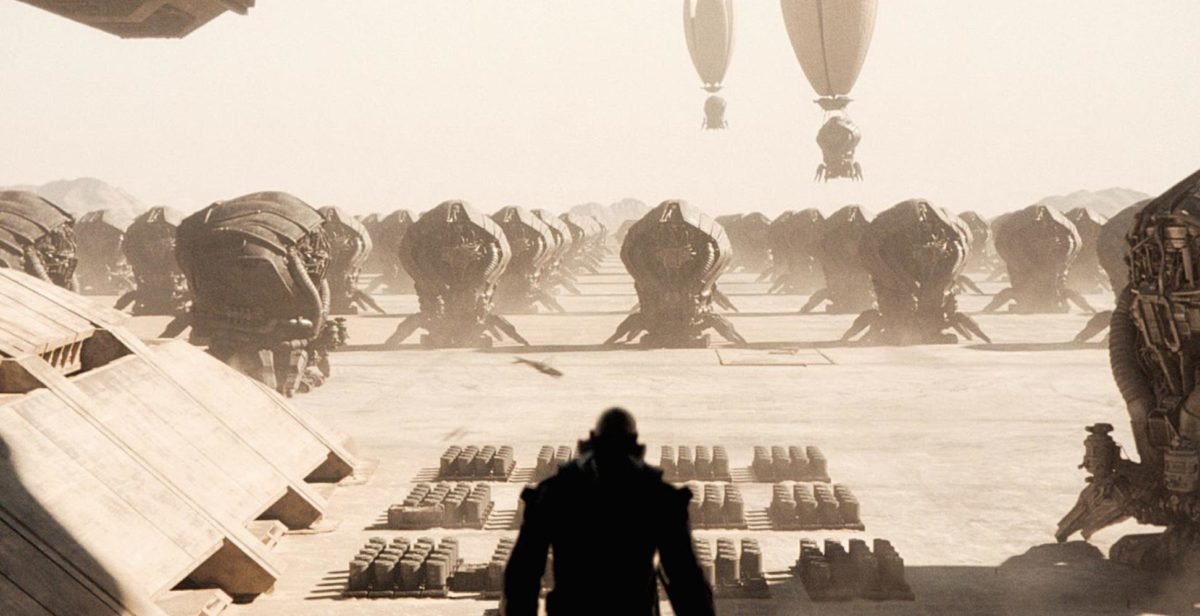
1.2 The 1960s moment: ecology, politics, religion, Cold War anxieties
It’s impossible to miss the timing. Herbert is writing through the early 1960s and publishes in 1965: right after Silent Spring detonates environmental awareness, right while the Cold War is teaching everyone to think in terms of long games, proxy wars, and resource paranoia. The same resource paranoia that will motivate Asimov into stepping away from the robots and diving into the Foundation cycle, one might say.
So ecology isn’t set dressing, but it’s the book’s operating system. The planet is a closed loop; power is a flow of energy. Herbert is basically saying: you don’t get to be in charge of a world you don’t understand as a system. The Fremen don’t survive because they’re “noble savages”: they survive because they do hardcore applied ecology with religious devotion.
Politically, the 60s are also the era when you start seeing decolonisation take concrete form. The Imperium is old-world feudalism cosplaying as a futuristic order; the spice economy is late-imperial capitalism wearing a crown that a commercial Guild actually holds. Reading it in that historical light makes the anti-colonial current feel like Herbert taking the temperature of his century.
And then there’s religion. Mid-century America is simultaneously secularising and getting spooked by new religions, new cults, new mass movements. Herbert doesn’t treat faith as either a lie or a comfort, but he treats it the way a grim engineer would: as a technology of meaning that can stabilise a society or weaponise its fears. Or both. Nothing in Dune is explicitly magic: the spice opens up the space-time continuum, and it’s being used in rituals just as much as in interstellar travel; Paul is the saviour only because centuries of lies and vague prophecies prepared the terrain for anyone who was trained to grab the fruit of this preparation. And what about the Bene Gesserit’s Voice? Pure manipulation. Nothing mystical other than studying your opponent and stressing words so that they have a psychological effect. That duality is pure Cold War brain: every tool can become a lethal bomb, if you scale it wrong.

Also, a word of warning. Dune didn’t arrive as a neat brick. First came two serials: “Dune World” (1963–64) and “Prophet of Dune” (1965). Only afterwards were they fused into the novel some of us know. Also, Messiah and Children were finished before Dune. Right now, I’m finished with Dune, but I haven’t tackled Messiah yet. Still, I have a vague memory of what happens next, so here’s my take-away in context of the whole work, and a key thing I think people blur: Dune isn’t book one of an epic trilogy, but it’s a self-contained tragedy disguised as a triumph, already setting the trap that the sequels will spring. Herbert knew from the start he was writing about what happens when human beings outsource judgment to charisma. And you can see it, in the way old characters look at what Paul Atreides has become by the end of the novel.
So the novel has at least three jobs, as far as I see it:
- build a world so coherent you believe it could outlive the plot: that’s why the ecology, the economy, the training systems, and the religions are designed like interlocking gears;
- stage a revolution you can cheer for: the Atreides are absolutely sympathetic, the Harkonnens are monstrous, the Fremen are the oppressed with a plan, and no warning will bite if you don’t feel the pull;
- smuggle in dread under the victory: Paul rises back from the ashes of his family, yes, but the book keeps flickering with the shadow of what that rise will cost. Prescience corners him. The myth doesn’t save the Fremen; it makes them a weapon that perfectly mirrors the Emperor’s ferocious military force known as Sardaukar.
In other words, Dune is the origin story of a messiah and the autopsy report of messianism, written simultaneously. That double move is why the novel still feels dangerous: it refuses to let you read it comfortably, even when it’s giving you every reason to want comfort.

2. (Second) First Impressions and Reading Experience
2.1 The opening: how the novel hooks the reader
Dune opens with a threat. The very first pages are a pressure chamber: while Paul is tested, watched, classified, his family is pushed into a corner, and the reader is forced into the same posture. You don’t get a tour of the universe first. You get a ritual, a nerve-piercing, a rule you don’t fully understand yet.

That’s the hook. Herbert makes you feel, immediately, that this world is older than you and doesn’t care if you’re lost: there’s a hierarchy of secrets already in motion, and you’re allowed in only because something dangerous is about to happen. The opening is about the cost of being in this world. A world that’s a trap, very much like Arrakkis will turn out to be.
There’s also an almost conspiratorial intimacy to the way Herbert gives information: characters speak like people who already know the rules, and the reader has to keep up. The result is that the first chapter feels like entering a room where a chess match has been going on for hours, there’s too many colours, and you’re not told whose pieces are whose.

2.2 Density, terminology, and the learning curve
You learn Dune the way Paul learns Arrakis: through partial understanding, context clues, missteps, correction. Herbert’s worldbuilding is dense because it needs to be structural, to support the narrative without faltering in its key points. As such, the book refuses to translate itself into beginner language, and when it drops bombs such as “Kwisatz Haderach” or “CHOAM,” or “mentat,” it doesn’t pause to define them in a friendly aside; it lets the meaning accumulate through use. That can be exhilarating or exhausting, depending on your tolerance for feeling temporarily stupid, but it’s consistent with the novel’s ethos: nobody survives in this universe by being spoon-fed.
Importantly, the learning curve is also emotional: while you’re decoding words, you’re decoding the cultures behind those words. A Fremen phrase doesn’t feel like a Bene Gesserit phrase even when you don’t yet know what either means. Herbert gives you semantic texture before he gives you full semantics, which is why I loved this book in English.
2.3 Pace and structure: where it feels brisk vs slow
Dune has a weird rhythm and alternates between political compression and ecological sprawl. Brisk is anything that involves plans, betrayals, tactical dialogue. The Atreides arrival, the court maneuvering, the Harkonnen trap are chapters that move fast because they’re built like thriller sequences. Herbert’s sentences become sharper, here. Slow stretches involve survival, Fremen integration, and appear within the deep Arrakis chapters. Here, the book widens because Herbert is shifting from what happens next to what this world does to a person over time.
The central portion of the novel, especially, can feel like you’re stepping out of a palace corridor into open desert: less plot per page, more atmosphere per page. Some readers label that as sagging. I don’t. I think it’s Herbert refusing the false pacing of constant escalation, and Arrakis is the real main character: the book has to slow down enough for you to live there.
Also: Herbert is perfectly happy to spoil his own suspense through foreknowledge and epigraphs because “what happens next” isn’t the point. You often know that something will happen before you see it happen. The tension isn’t “will this occur?” but “how will the system produce it?” That shifts pacing from surprise to inevitability, which can feel slow if you expect plot twists, and brutally fast if you’re watching a fate-machine click into place. And you’re terrified of that, alongside the main characters who have knowledge of this machine.
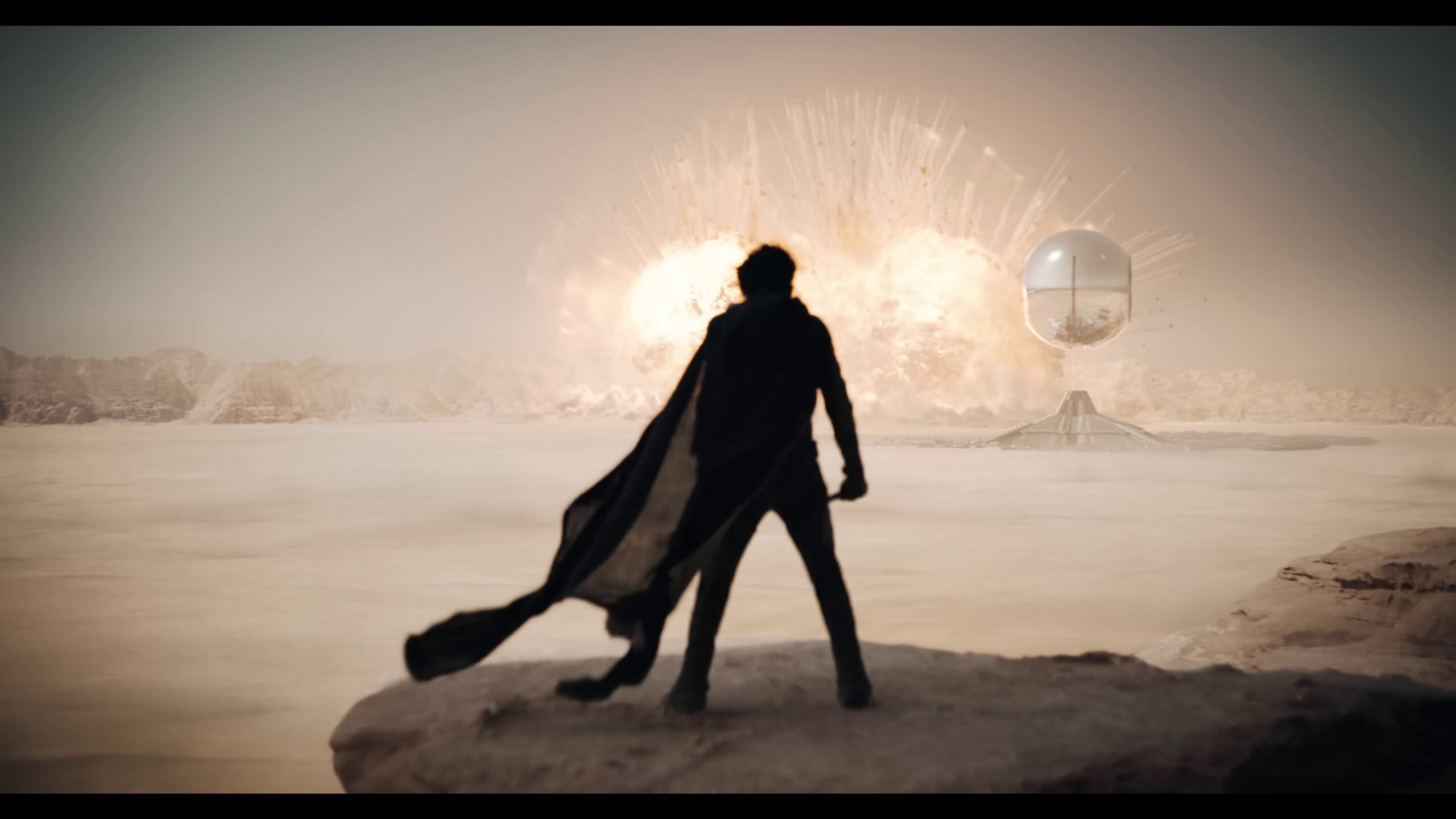
2.4 The feeling of scale: why the book feels “bigger than itself”
The novel feels bigger than its plot because it’s designed on multiple time horizons at once. You’re reading a family drama, a colonial war, the religious climax of an ancient prophecy, an ecological treatise, and a warning about history, all layered. Herbert constantly implies that what you’re seeing is just the visible slice of a much larger iceberg through the epigraphs alone: they place you in a future where the events you’re reading have already become myth, doctrine, propaganda, history. So even a small scene carries the weight of its eventual interpretation. And Paul knows this, and he’s constantly ruminating on how people will interpret what he’s living, with little power to change it.
Scale also comes from how many systems the story makes you track simultaneously: economics (spice as absolute leverage), biology (worms, water, human adaptation), politics (feudal optics, imperial balances), psychology (training regimes, conditioned instincts), and religion (belief engineered into mass movement). The plot is basically the crossing point where all those systems collide. That’s why Dune doesn’t read like an epic story so much as a world that happens to be caught mid-eruption. Even after you close the book, Arrakis keeps running in your head because Herbert gave it the autonomy of a functioning planet, not the dependency of a backdrop. Which is peak worldbuilding, in my opinion. So let’s dive a bit more into that.
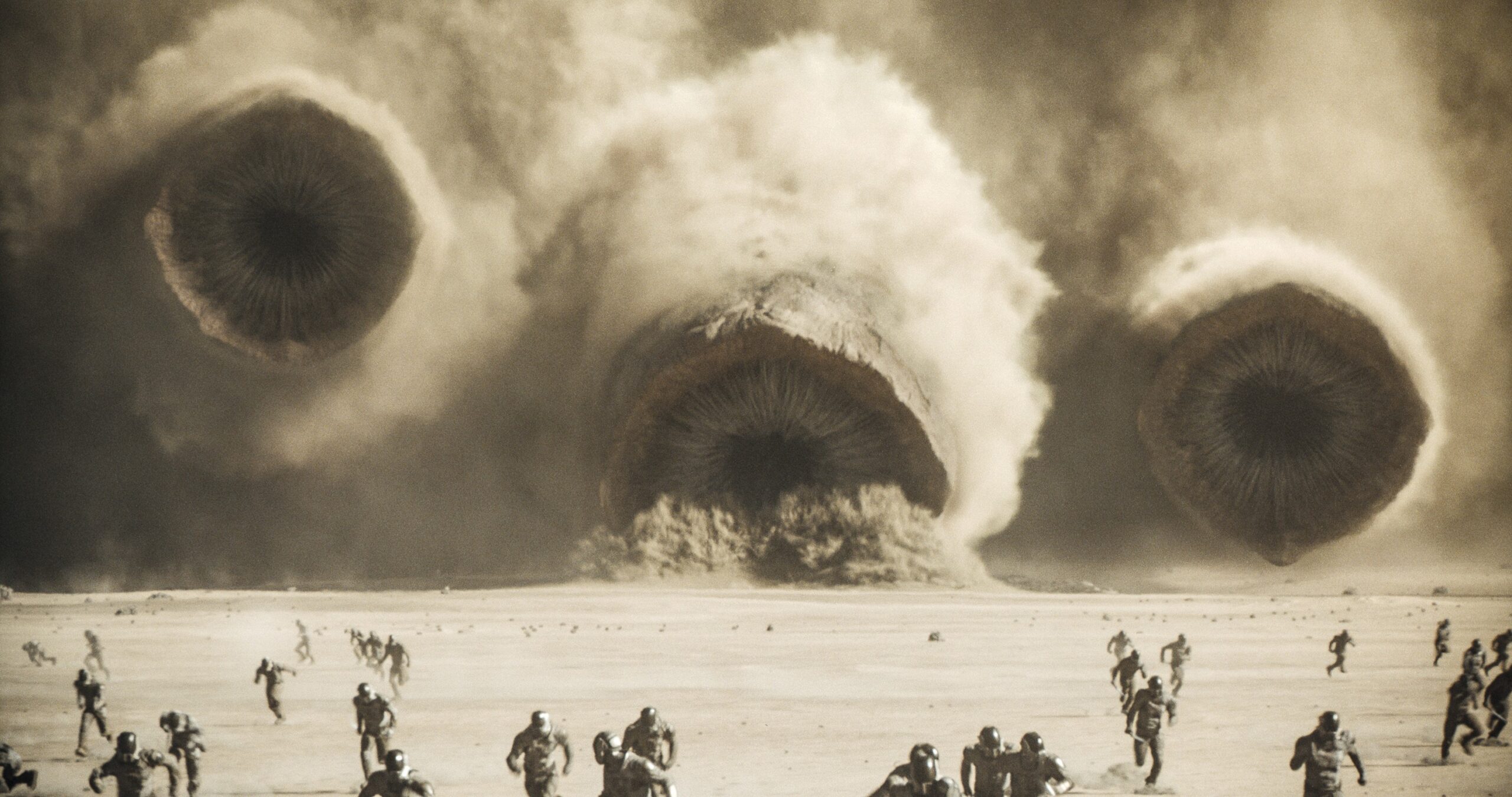
3. Arrakis as a Living System
3.1 Desert as setting vs desert as protagonist
Most sci-fi deserts are scenery for hardship; Herbert’s desert is an actor that shapes every other actor. The plot doesn’t just occur on Arrakis: most likely, it’s shaped by Arrakis in the same way a tide shapes the birth of certain boats and eliminates others. You feel this in the way the planet dictates posture, movement, and even thought. The desert isn’t neutral. It selects for specific behaviours such as discipline, patience, sensory attentiveness, mistrust of excess, and it punishes everything else. That’s why Fremen culture doesn’t read like an aesthetic choice, and it’s depicted as an ecological inevitability. The desert makes them, and Paul finds himself in such a position where he has to maintain a desert that can keep making them.
So yes, the sand is a setting. But it’s also the protagonist who never speaks and never needs to. Its arc is the slow revelation that all human politics are, in the end, tributaries flowing into the same planetary river.
3.2. Water economy and scarcity psychology
I’ll talk about scarcity in an upcoming post about information management, so let’s take a different angle here: Herbert’s most brutal trick is making water both currency and religion without ever romanticising either. Water on Arrakis is not valuable in the abstract way gold is valuable, but feels valuable in the way oxygen is: the condition of being alive. Scarcity turns every social gesture into an economic act. Spitting is a transfer of wealth, crying is the ultimate homage, and dying is a form of giving.
That does two things psychologically: it annihilates the fantasy of the isolated individual (you literally can’t be a solitary hero when your body is a communal resource), and it produces a culture where respect is measured in restraint. Waste is violence. Indulgence is obscenity.
This is why the Atreides’ arrival is such a shock to the system: Leto knows that off-world power comes with off-world assumptions about abundance, Herbert forces the reader to feel the distance between those two mentalities, and you internalise it through thirst.

4.3 Sandworms, spice, and planetary symbiosis
The sandworm/spice relationship is one of the cleanest pieces of ecological worldbuilding in the genre because it’s an interlocked cycle: the worms are the keystone species that make the entire Arrakis economy possible and impossible to tame, and spice as a biological product, a planetary secretion, behaves accordingly. It is not just a resource to be mined. It is a metabolism you are trying to exploit, and exploitation destabilises the very thing you depend on. The worms protect spice not by intent but by nature: their life cycle is the spice cycle, and any attempt to industrialise extraction is automatically an act of ecological warfare.
The spice economy can’t but feel fatalistic: the Empire is structured around a substance that can only exist in an environment the Empire cannot control. Power is literally hostage to ecology. Herbert makes that point without speeches, at first, baking it into the food chain, and when Paul weaponises this knowledge… well, it only feels natural. He who can destroy a resource is the only one who has the power over that resource. But spice isn’t the only byproduct of the desert, as we were saying: the Fremen are the other, just as much as (spoiler alert) the Sardaukar are the product of the Emperor’s secret prison planet. If you destroy spice, maybe you don’t destroy the desert, but there’s someone who’s planning to do such a thing. The Fremen themselves.

4.4 Liet-Kynes and the long ecological vision
Liet-Kynes, the Imperial planetologist, is the hinge between science, belief, and time: he, alongside Herbert in a way, thinks that a planet can be read like a text if you have the patience, and similarly rewritten if you have a lifespan longer than one regime.
Kynes’s thinks in terms of centuries and feedback loops and has a terraforming project that’s about turning Arrakis into a garden, changing the political physics of the planet by changing its ecology. Control the water cycle, and you control what kinds of societies can exist.
What’s chilling is that Herbert never presents Kynes’s dream as purely good: his long ecological vision is still a form of power, it still decides what the future should be and who gets to live there. Kynes is noble, yes, but he also embodies the danger of playing god with systems you can’t fully predict, and there’s something poetic in the way Herbert dispenses with the character.
That considered, it sounds obvious now to call Dune ecological sci-fi, but that’s because Herbert helped invent the category. In 1965, a mainstream genre novel treating ecology as destiny was not standard practice. Herbert’s real achievement isn’t that he wrote about an extreme environment. Plenty of writers do that. It’s that he wrote about environment as a political and spiritual force, with consequences that scale. You don’t get to discuss rebellion without discussing water. You don’t get to discuss religion without discussing manipulation. You don’t get to discuss empire without discussing extraction.
That integrated approach is why Dune still feels contemporary in the age of climate collapse. It doesn’t preach “save the planet,” but shows you a planet saving itself, punishing you for misunderstanding it, and rewriting your civilisation in the process. The warning is implicit: if you ignore ecology, ecology will not ignore you. It will simply become the author of your history. And it’s not going to be fun.
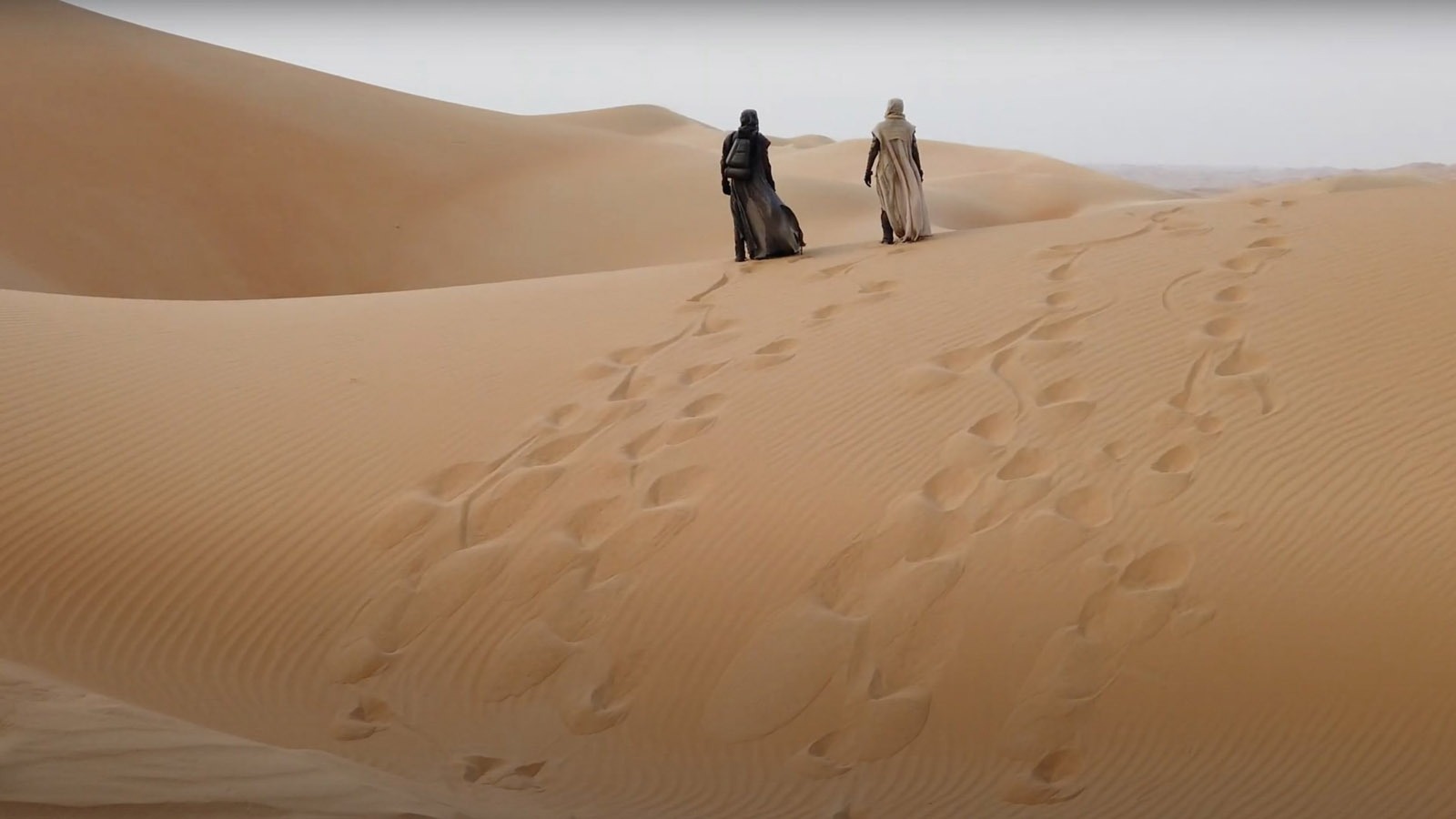
5. The Bene Gesserit
5.1 Political biotech
In the midst of the different factions, the Bene Gesserit deserve a separate consideration.
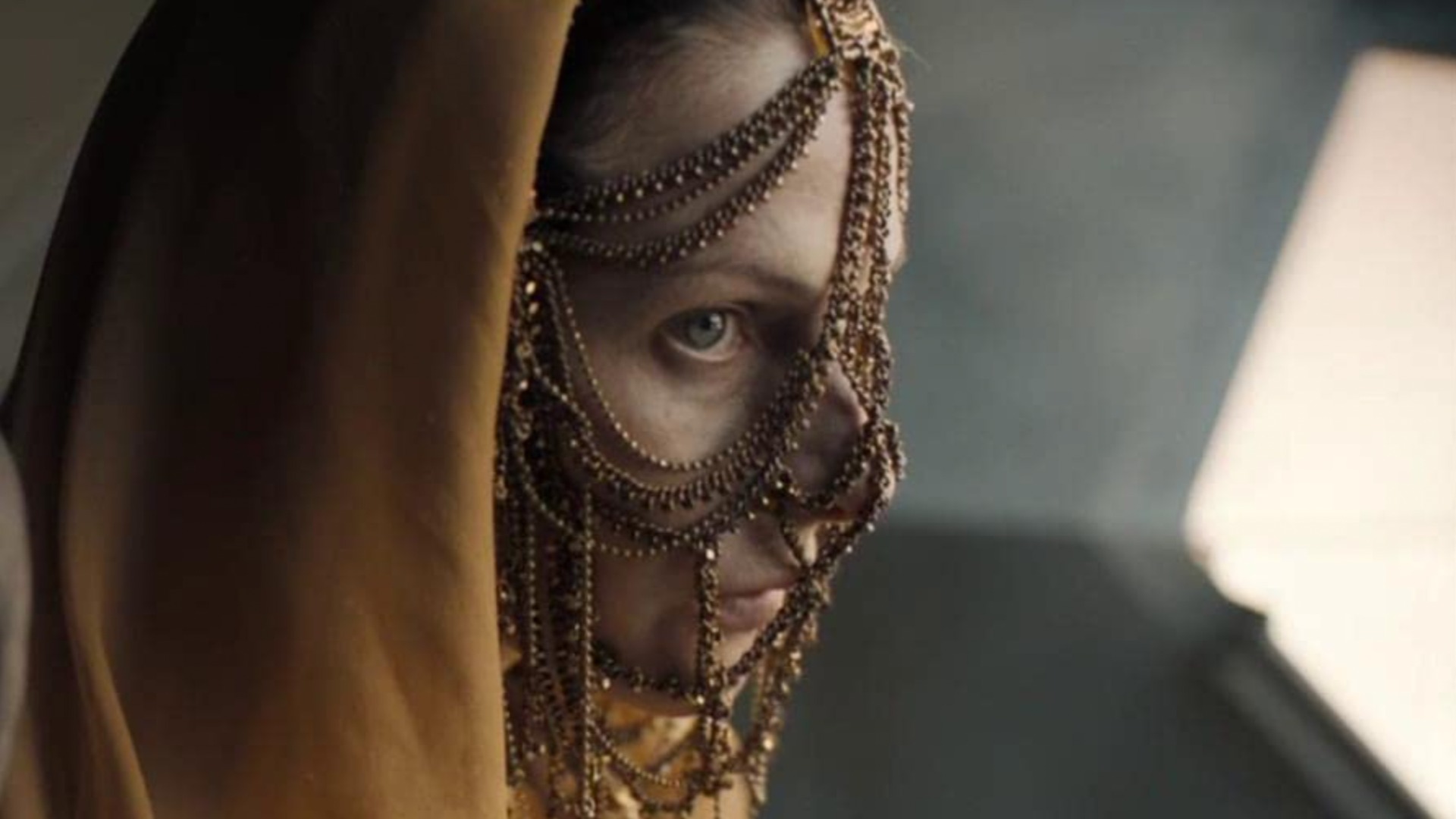
If the Imperium is feudalism with spaceships and the Guild rules through its usage of spice, the Bene Gesserit are feudalism’s most advanced laboratory: more than your run-of-the-mill sisterhood of spies or witches in a sci-fi costume, they’re a respected institution that treats the human body as programmable matter and belief as an engineered environment. In Dune, that makes them the most modern force in the setting: a biotech cartel operating inside a medieval power structure, playing a game whose board is made of flesh.
They also seem to be a woman of rank’s only option for achieving power, and here I think we can see much of Herbert’s sexism and deep-seated gynophobia (if that’s even a term): the Bene Gesserit don’t need machines to hack biology; they are the machine. Their training turns physiology into a conscious interface: control of breathing, heart rate, metabolism, hormones, pain response, micro-muscle regulation. The control they have over their bodies can scare a man to death. Like, literally.
Think about what that implies. Scheming women trying to snatch an heir from a noble house, but organised. Women who can persuade you with their powers of seduction, except that power turns into something that exceeds the body. And Herbert is careful: this control is never framed as a superpower. It’s discipline. The Sisterhood requires the renunciation of spontaneity before it grants mastery. You don’t become Bene Gesserit by adding something to yourself; you become Bene Gesserit by subtracting everything that makes you human.
Their breeding program is where political biotech becomes literal policy: the Sisterhood runs a millennia-long eugenic project aimed at producing the Kwisatz Haderach, someone who can bridge the cognitive and prescient limits they cannot cross themselves. Of course, the messiah of a sisterhood has to be a man. And yet, Herbert’s point is colder: the sisterhood wants the Messiah not to lead them, but to use him as another tool. The program is less religious prophecy than institutional research with human beings as both data and substrate. It’s biotech in the most stripped-down sense: manipulating heredity to shape history. You might call it about genealogical politics. Every marriage they arranged, every child, every ruined bloodline is a lever on the future. When Jessica disobeys and bears a son, she’s altering the experiment’s timeline, and the Sisterhood’s anger feels like the anger a lab technician might display when a colleague contaminates a trial. Herbert is very clear about the ethical horror of this.
5.2. Propaganda
If the Sisterhood has been manoeuvring the royal houses through engineered breeding, the Missionaria Protectiva is the Bene Gesserit’s masterpiece in social engineering: seed myths into vulnerable cultures so that, later, a random Sister to come can exploit those myths for protection or influence. Faith isn’t consolation to anybody: it’s a pre-positioned supply cache ready to screw over those same people who’ve been keeping it alive, and I can’t not applaude that idea.
Here, the Sisterhood weaponise cultural substrates and, instead of manipulating DNA, they edit narratives. They create a meme ecology that can be activated on demand. When Paul and Jessica enter Fremen society, they’re walking into a religious landscape that has already been cultivated to be compatible with their arrival and to welcome them as their saviours, provided one knows which cards to play. Herbert’s cynicism is that religion is fertile: a medium you can plant, hybridise, and harvest. The Bene Gesserit understand that belief evolves like a living organism, so they act like geneticists of the sacred.
5.3 The Voice and soft coercion
The Voice is their last tool, and it’s often read as magic. It isn’t. Not by a long shot. It’s the refinement of something painfully real: how tone, rhythm, and timing can bypass rational defences, up to a point. The Sisterhood weaponises linguistics and psychology too, and does so at the level of the nervous system. That’s why it’s a terrifying power.
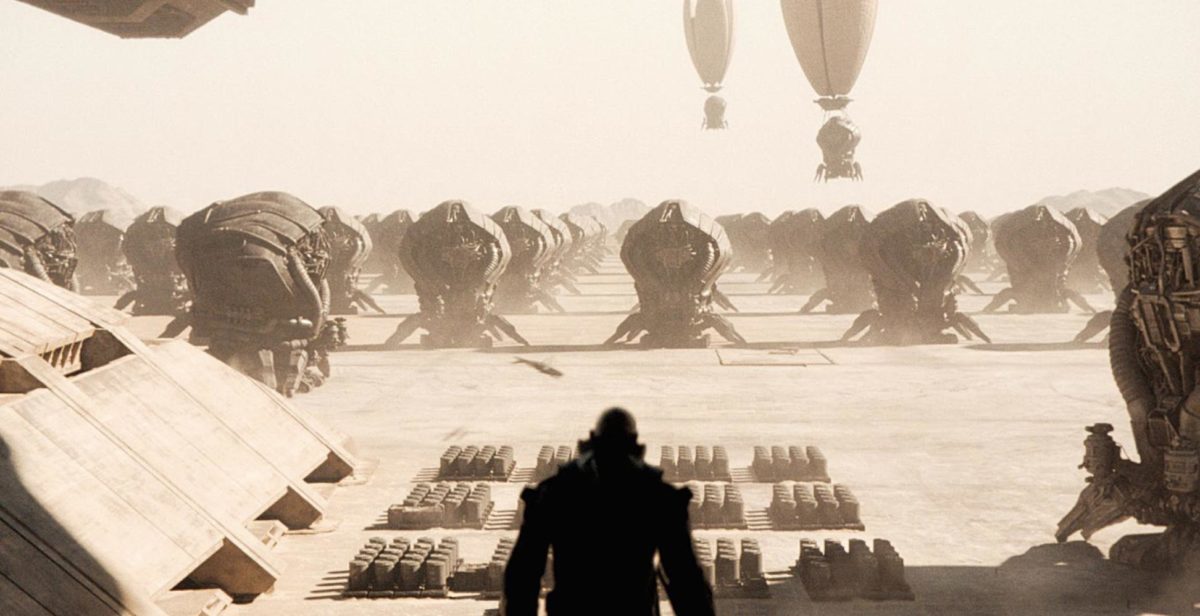
The Voice is power without spectacle. It doesn’t need armies or decrees. It makes your body obey before your mind gets to vote. In a court culture obsessed with formal authority, the Bene Gesserit specialise in that female authority that couldn’t announce itself, the one of the secret advisor and the concubine, the one of a queen without real power, who had to engineer power so that she could wield it. It would be feminist, and many people mistake it as such, if it didn’t take the form of a manipulation that’s traditionally associated with the greedy female. Yet, Herbert is doing something sharp with gender in a genre that (in 1965) often treated women as furniture (see Asimov for reference): his Bene Gesserit are the only major institution in the novel with a real multi-generational strategy, but that doesn’t come without a price; the Sisterhood’s power is bought by consenting to a structure that instrumentalizes them.
Jessica is the embodiment of that tension: both master and liability, she is trained to be a tool and insists on being a person. The whole novel asks: if the price of power is self-erasure, what kind of victory is that?
5.4. The Sisterhood’s blind spot: success that escapes the lab
The Bene Gesserit are brilliant but they’re also wrong in a very specific way: they believe that because you can design a system, you can control its outputs. Paul is their proof that you can’t breed a messiah and expect him to serve your management plan. Their biotech, in other words, succeeds biologically and fails politically: they lose control of the music as they managed to create the instrument. Once the Kwisatz Haderach arrives early and outside their containment protocols, all their careful forecasting turns into crisis management. The lab has produced something that has agency, charisma, and a survival environment ready to turn him into wildfire.
That’s one of Herbert’s biggest thematic gifts: institutions that think in centuries may still be surprised by the human beings they manufacture. The Bene Gesserit are the purest example of that, because their medium is humanity itself. In this, I think Herbert is grander than Asimov with his Mule thing. There, I said it.
6. The Mentats
If the Bene Gesserit are political biotech, the Mentats are political arithmetics: the Imperium’s way of outsourcing computation to flesh after the war on thinking machines that’s only mentioned. In a universe that has sworn off AI, the Mentat is a structural necessity. Humanity replaced computers with people trained to be computers.
6.1. Prohibition as worldbuilding engine
The Mentat order only makes sense in the shadow of the Butlerian Jihad, the centuries-old revolt that resulted in a total taboo (and legal ban) on creating machine minds. That prohibition is one of Herbert’s smartest levers: it forces the future to evolve along human, not mechanical, lines. We would have a very different (or totally unbelievable) world without it.
Mentats emerge as a cultural workaround. If you can’t have a computer, you train a person to perform the same functions: data retention, probability modelling, strategic forecasting, logistics. Great Houses depend on Mentats the way modern states depend on algorithmic analysis, except here the algorithm wears a robe and has a pulse.
Herbert here is staging a very particular question: what happens when a civilisation bans a technology not because it’s inefficient, but because it’s politically dangerous? Answer: the technology returns inside the human body, and the body becomes a contested site of statecraft. During the Cold War, this had a power we can only imagine nowadays.

6.2. There’s no magic here (just trained cognition)
Mentats are sometimes talked about as if they were born geniuses, but Herbert’s framing is harsher and more interesting: Mentats are manufactured through schools, conditioning, and ruthless mental discipline. They’re made superhuman through institutional violence applied to the mind.
This puts them on the same axis as the Bene Gesserit: both orders are about human potential weaponised by training, but where the Sisterhood uses the body as a control interface (they’re women, after all), Mentats use the mind as a computation engine.
The real twist is that Mentats aren’t neutral calculators but sit at the heart of governance: Thufir Hawat is a pillar of Atreides rule, a living decision-support system whose outputs shape policy. Piter de Vries is the same technology bent into Harkonnen cruelty. This is where Herbert is quietly brilliant: by making the computer a person, he makes objectivity impossible. Every computation has a temperament. Every forecast comes with bias, loyalty, fear, ambition. The trope of the human computer lets Herbert show that rationality is political because the human doing it is political. Which also applies to thinking machines in the modern era, but that’s a consideration for another time.

6.3 The Trope
Classic sci-fi often uses human computers in two ways:
- as limitation (pre-AI futures where humans do what machines can’t yet do);
- as warning (humans reduced to components, like in bureaucratic dystopias).
Herbert fuses both, then flips them. Mentats are a reminder of lost tech and a proof of expanded human capacity, they embody his recurring idea that humans adapt around constraints by intensifying themselves. But he refuses the comforting version of that trope: mentats are impressive, yes, but they also show what’s sacrificed when cognition becomes a profession. You don’t get Mentats without a social order willing to turn people into tools.
Herbert also undercuts any gullible faith in pure logic through the idea of the twisted or drug-modified Mentat (Piter is the key example): even the highest rational training can be bent by chemistry, ideology, and patronage.
The ban on thinking machines is supposed to prevent enslavement by algorithms. Yet the Imperium becomes dependent on a different kind of algorithm: elite human specialists whose training makes them opaque to ordinary people. If Dune is a book about the danger of handing your future to charismatic leaders, Mentats might be seen as the parallel danger on the rational side: handing your future to objective systems you don’t fully understand, or control, isn’t bound to end well.
Herbert’s suspicion isn’t technology vs humanity: it’s dependency vs autonomy, no matter what form the dependency takes.
So the Mentat trope, in Herbert’s hands, becomes a paradox:
- humanity rejects machine minds to save itself,
- then rebuilds machine-like minds inside humans,
- and ends up at risk of a subtler kind of domination—by expertise, by prediction, by “logic” that’s always embedded in power.
That’s why Mentats feel so contemporary now: they’re Herbert saying to beware any society that treats thinking as a service only a priesthood can perform.
But that also is a point for another time.
Onward to Messiah, now.


1 Comment
C.R. Shelidon
Posted at 09:57h, 05 DecemberAlso, I had a memory of characters that was mostly influenced by Lynch, and I took at face value the criticism some people moved to Villeneuve’s casting, assuming they had a better memory of the book than mine. Trust, as it turns out, was misplaced. So, let’s talk about characters.
The Baron Harkonnen is the one who takes up the most effort in translating on the screen, I think, as Herbert’s concept didn’t age particularly well. Lynch inflicted upon his actor, Kenneth McMillan, a grotesque make-up to signify the spice addiction and maintained one of the traits Herbert uses to show his deviance: he’s gay, bordering on pedophilia. Not cool that the only gay character in the book is the villain? Well, yeah, I agree. That might be why Villeneuve decided to dispense with all of that. It’s also good to remember that Herbert was an asshole who disowned his own son because he was gay, so yeah.
Another significant trait of the character is physical: the Baron is described as heavily obese, and Herbert insists on the topic a lot, stressing he has to use anti-gravity suspensors to deambulate. After the blatant homophobia, fat shaming doesn’t seem out of place, does it?