
Last month, I caught the opportunity of a few meetings I had in Venice and stayed around to catch this exhibition at the splendid Peggy Guggenheim Foundation, and it was stunning. You have time until March 2nd, and I strongly recommend you make time, if you’re in the area.
Exhibition Overview
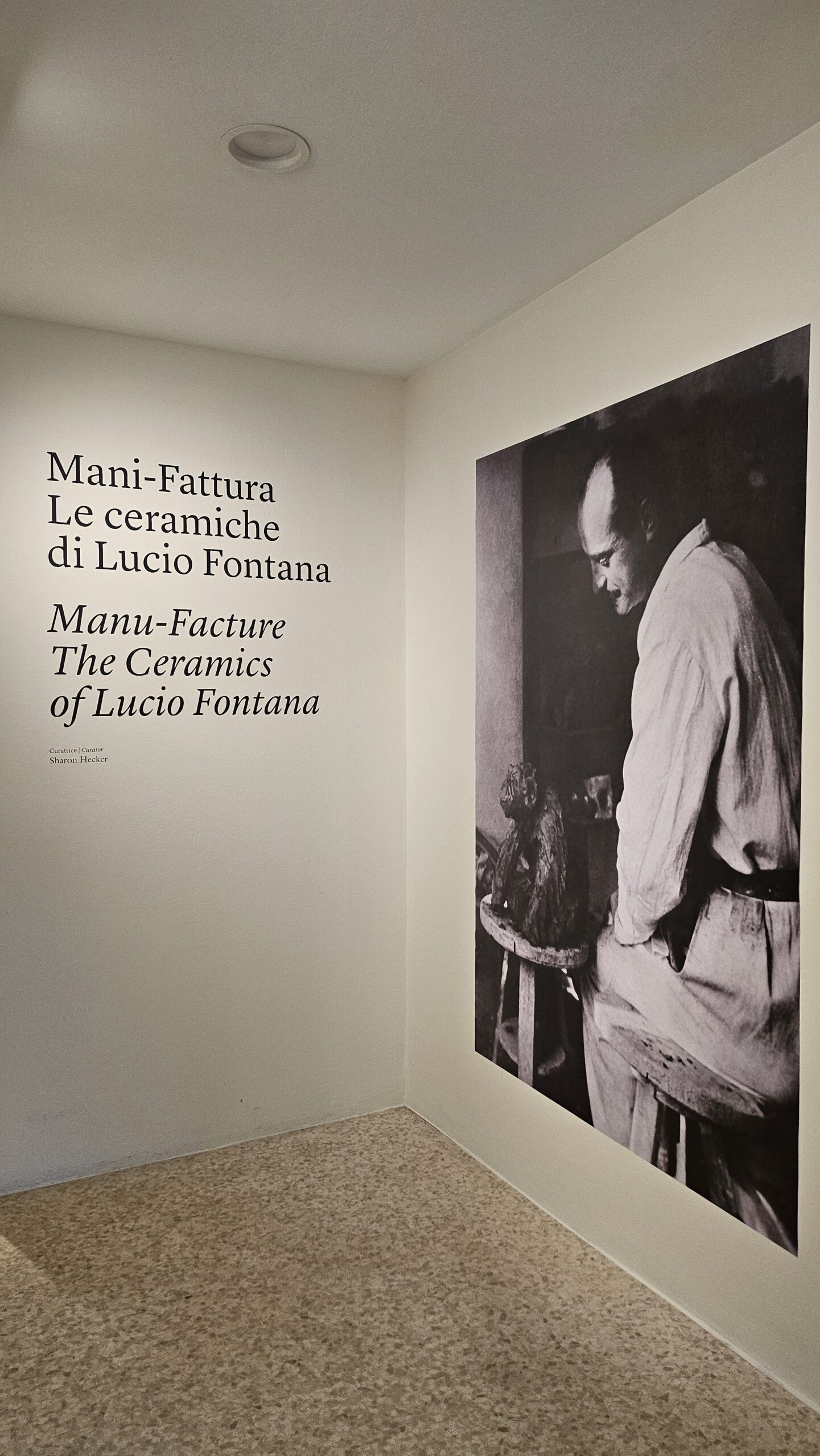
The exhibition Mani-Fattura: le ceramiche di Lucio Fontana offers an unprecedented focus on one of the least explored yet deeply significant facets of Lucio Fontana’s artistic practice: his work in ceramics. Curated by Sharon Hecker, an independent art historian, the exhibition represents the first major museum presentation devoted exclusively to Fontana’s ceramic production, positioning it as integral to understanding his overall artistic trajectory. The curatorial approach re-frames Fontana not merely as the creator of the iconic slashed canvases (he was the one cutting stuff, if you don’t remember him) but as an artist profoundly engaged with materiality and the creative possibilities of clay.
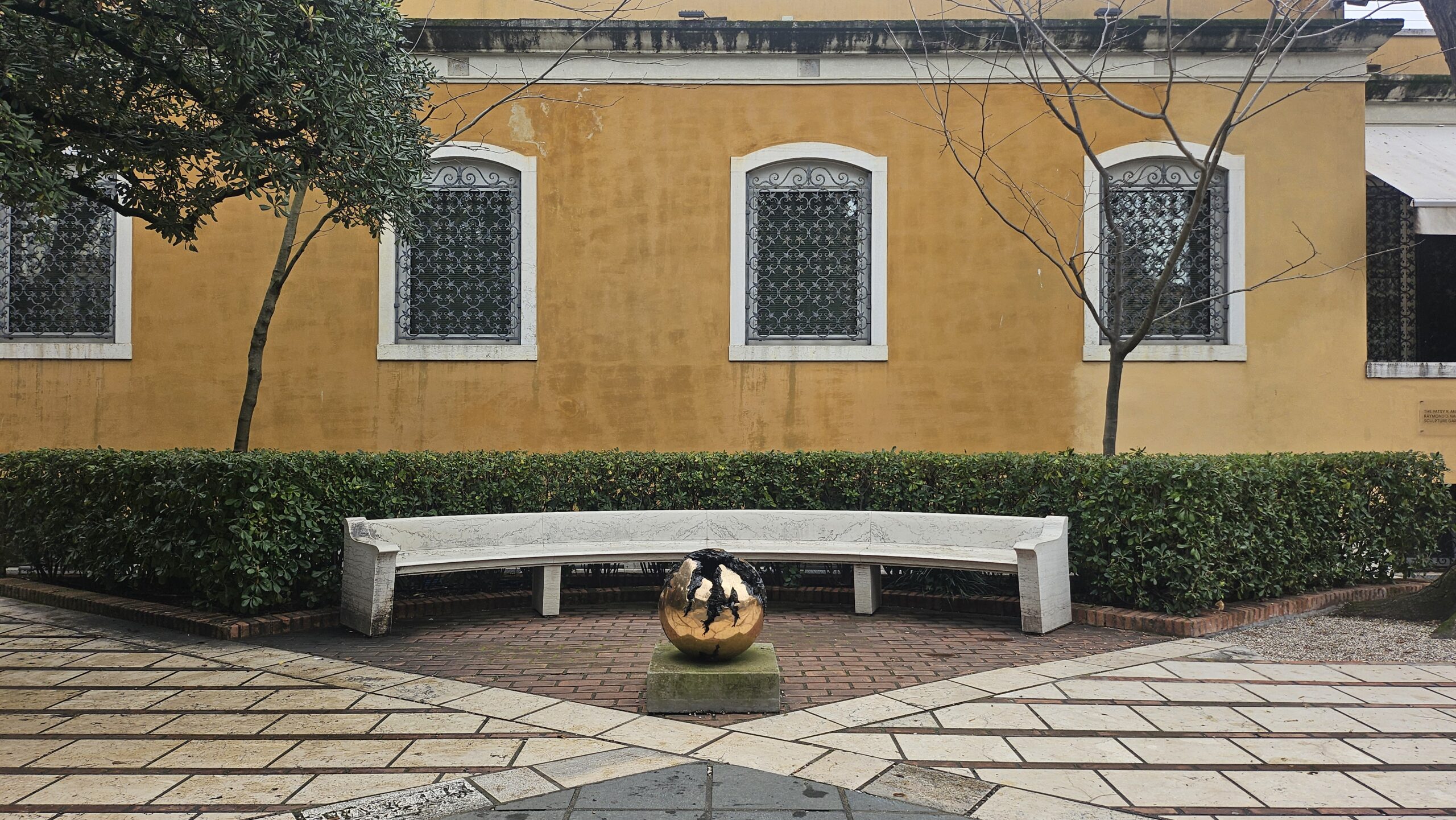
The show has been running since October 11 and, as I was saying, you have time till March 2. Just avoid the carnival if you wish to live. The Peggy Guggenheim Collection in Venice is housed in Palazzo Venier dei Leoni along the Grand Canal, on the other side of San Marco.
Lucio Fontana
Lucio Fontana (1899–1968) was an Argentine-Italian artist born in Rosario, Argentina, to Italian parents. He spent his formative years between South America and Italy, where he was immersed in both traditional artistic training and the avant-garde currents of the early twentieth century: he studied at the Brera Academy in Milan and gradually developed a practice that synthesised sculpture, painting, and theory.
Fontana is best known as the founder of Spatialism, a movement that sought to transcend the conventional boundaries of painting and sculpture by embracing space and the physical void as essential components of artistic expression. His revolutionary Concetto spaziale works, featuring cuts and perforations on canvas, tried to invite viewers to consider the invisible dimensions beyond the artwork’s material boundaries. I never liked them. I see nothing of the sort when I look at them.
Over his career, Fontana’s work was exhibited internationally, from the Venice Biennale to major retrospectives in Europe and the United States, and it spanned a wide range of media, including neon, metal, and ceramics.
Fontana’s Ceramic Practice
While Fontana’s slashed canvases have become emblematic of mid-century modernism, his ceramic work constitutes a fundamental and continuous strand of his artistic output that spans more than four decades. Beginning in the 1920s in Argentina and continuing throughout his life, Fontana explored clay as a sculptural material with expressive and formal potential equal to painting and metalwork.
His ceramics range from intimate, hand-formed pieces to objects produced in collaboration with craftsmen. The works reflect a wide diversity of forms — from figurative figures and animals to abstract volumes — and demonstrate his interest in surface, texture, and the tactile qualities of clay. In many instances, Fontana’s ceramics also intersected with architectural projects and collaborations with designers and architects in Milan, integrating art into functional and decorative contexts.
The exhibition highlights this protean aspect of Fontana’s practice, showcasing a varied array of different styles.
The Ceramics on Display
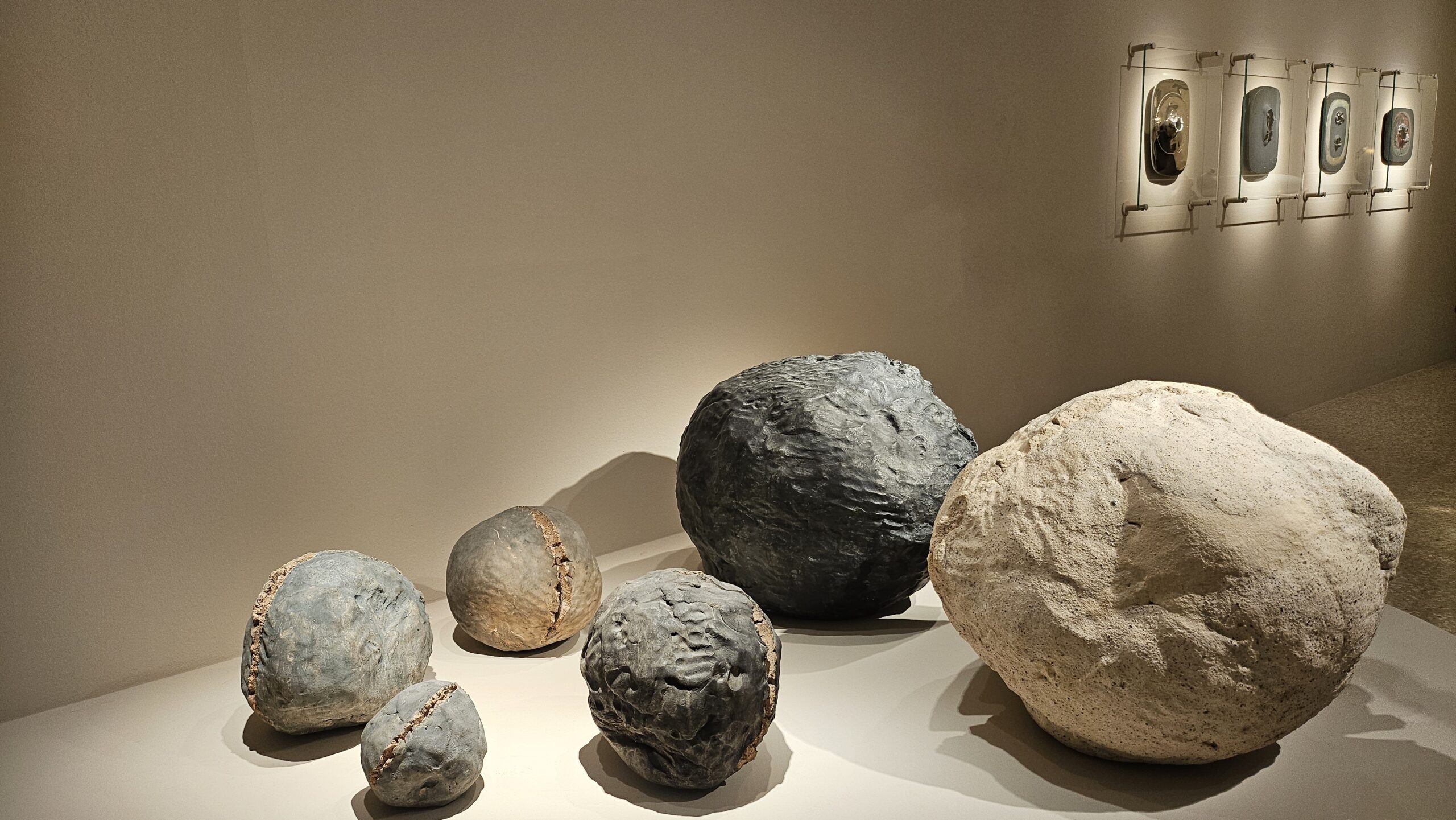
The exhibition Mani-Fattura: le ceramiche di Lucio Fontana presents a comprehensive survey of Fontana’s ceramic production, spanning several decades and a variety of forms, techniques, and contexts. With around seventy works drawn from public and private collections, the display includes unique, hand-made pieces and objects produced in multiples, as we were saying, demonstrating the artist’s rich engagement with clay throughout his life.
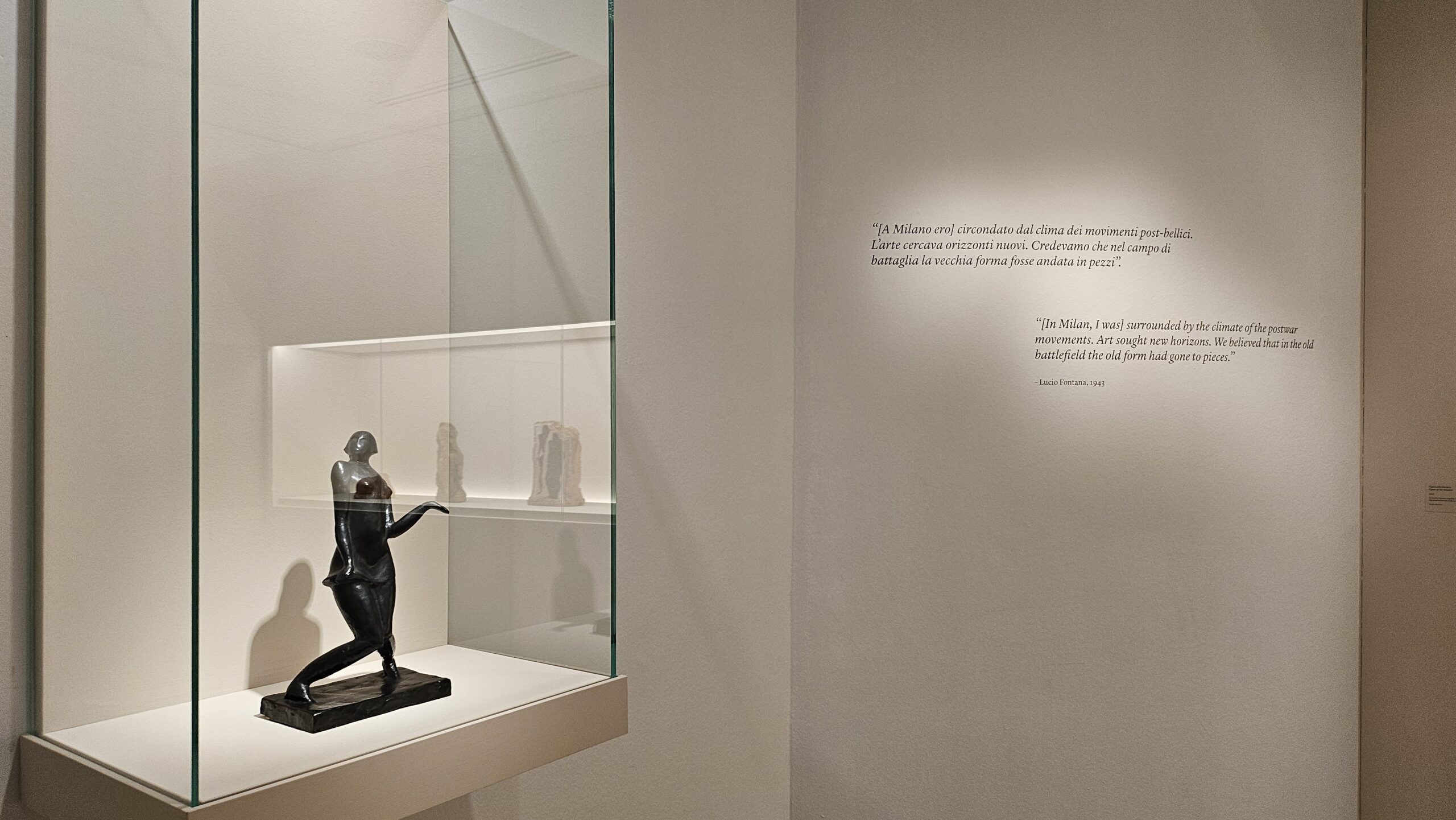
The works on view trace Fontana’s ceramic practice from his beginnings in Argentina in the 1920s to the later phases of his career. Early works such as Ballerina di Charleston (below) reveal his initial exploration of expressive, figurative forms, while later pieces — from intimate terracottas to more abstract and sculptural compositions — illustrate his evolving approach to material and surface. Many works reflect themes of texture, form, and spatial investigation, showing continuity with his broader artistic concerns, even as they emerge in clay, and of course, they’re the ones I liked less.
Historical and Artistic Context
To fully appreciate Mani-Fattura, it helps to situate Fontana’s ceramic production within the broader arc of his life and art-historical development.
Lucio Fontana moved fluidly between figurative traditions and avant-garde experimentation. Fontana began making ceramics in the 1920s in Argentina and continued the practice after his return to Italy. During the 1930s he produced terracotta figures and decorative forms, at times working with glazes and surface treatments that show an interest in both expression and materiality.
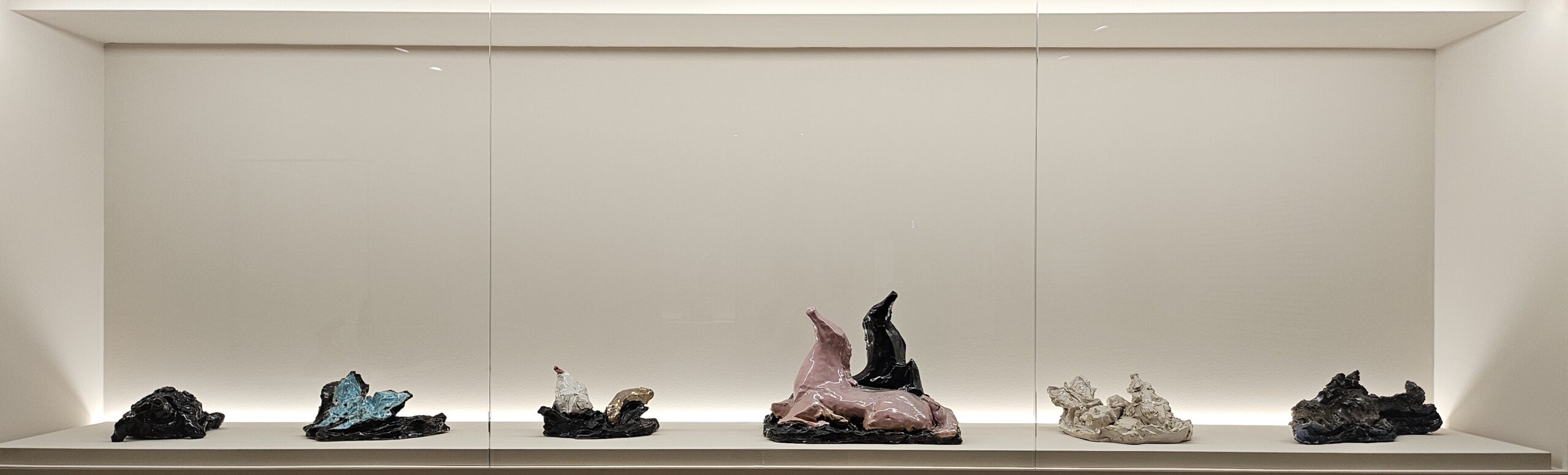
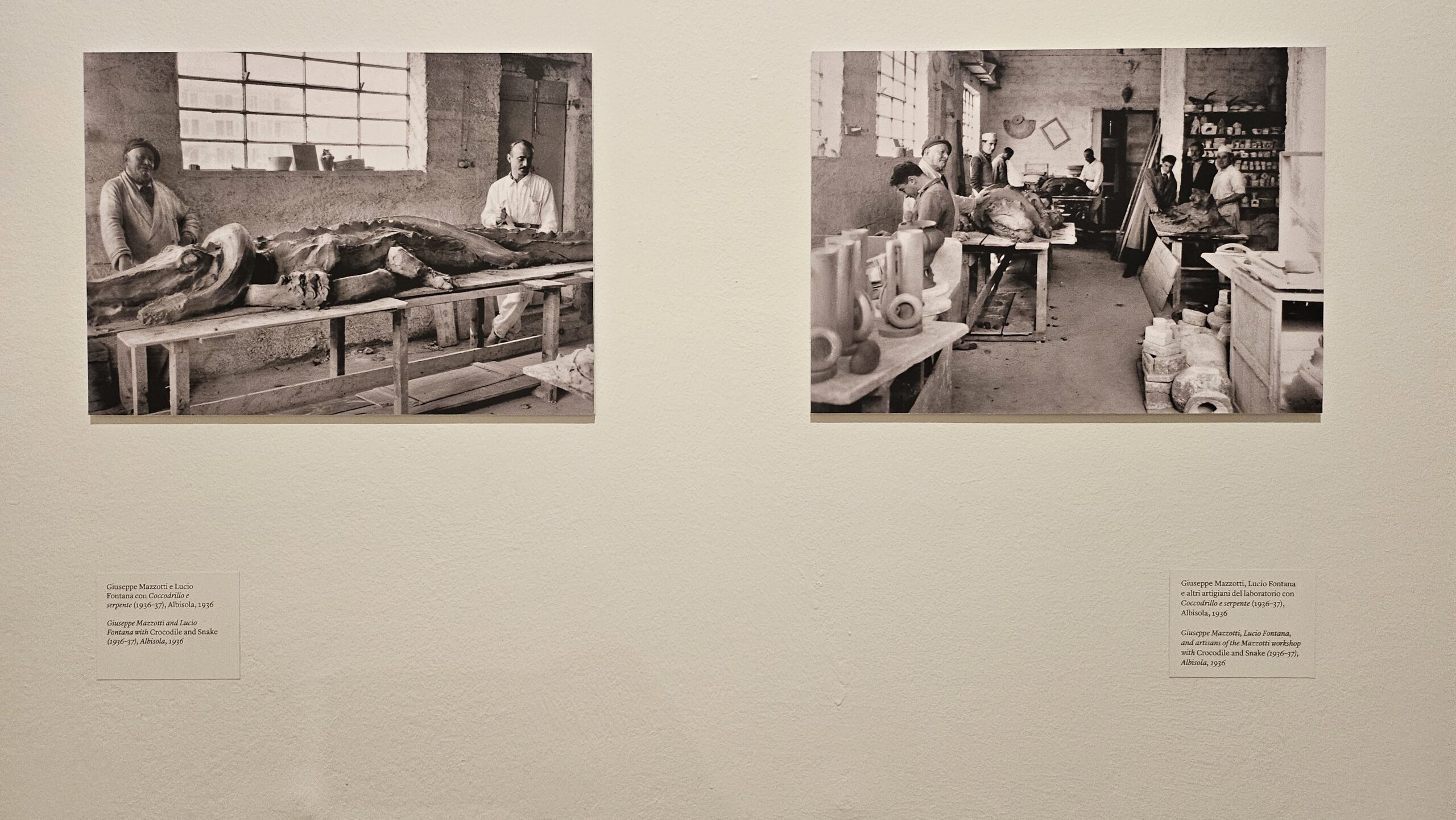
Collaboration with ceramists and workshops in places such as Albisola further deepened his technical and formal exploration, producing works that range from representational to radically abstract, often reflecting his interest in surface, volume, and space.
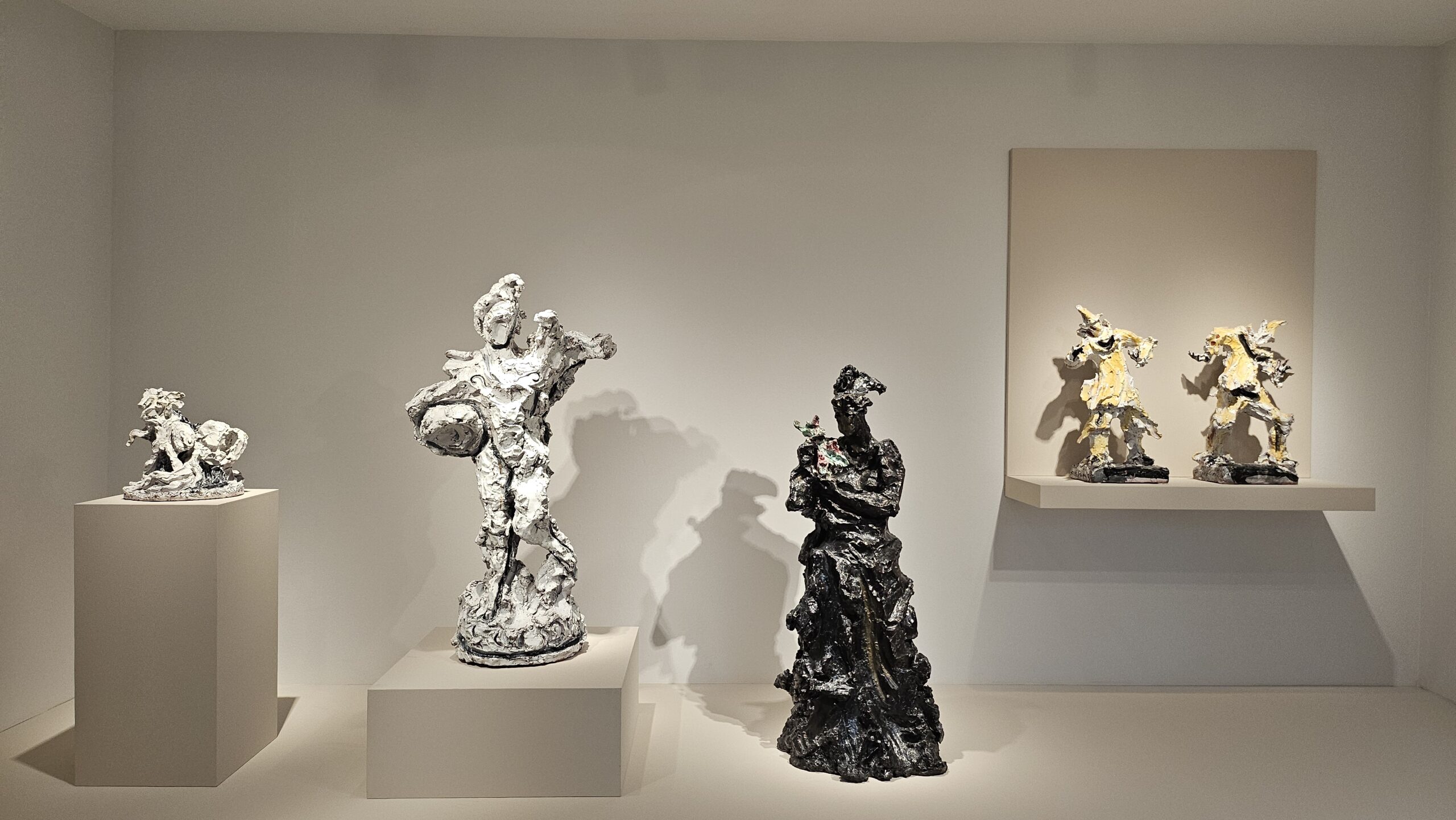
From this period, my favourite piece certainly is the Medusa (1938–39), a stunning three-dimensional piece that’s unfortunately tainted by the curator’s idea to connect her black skin with the imaginarium of the Fascist Regime, to which Fontana was disgracefully connected. Regardless of these speculations, the piece is one of spectacular power: Fontana turns to ceramics to reinterpret one of mythology’s most disturbing female figures, and he doesn’t represent just the head by chance, given how Medusa ends up. And yet she isn’t a victim, and her head is vibrant and alive; it emerges as a compact, forceful sculptural presence, dark, glossy, and tactile, with a surface that seems to trap light as much as it reflects it, with psychological intensity and symbolic charge.
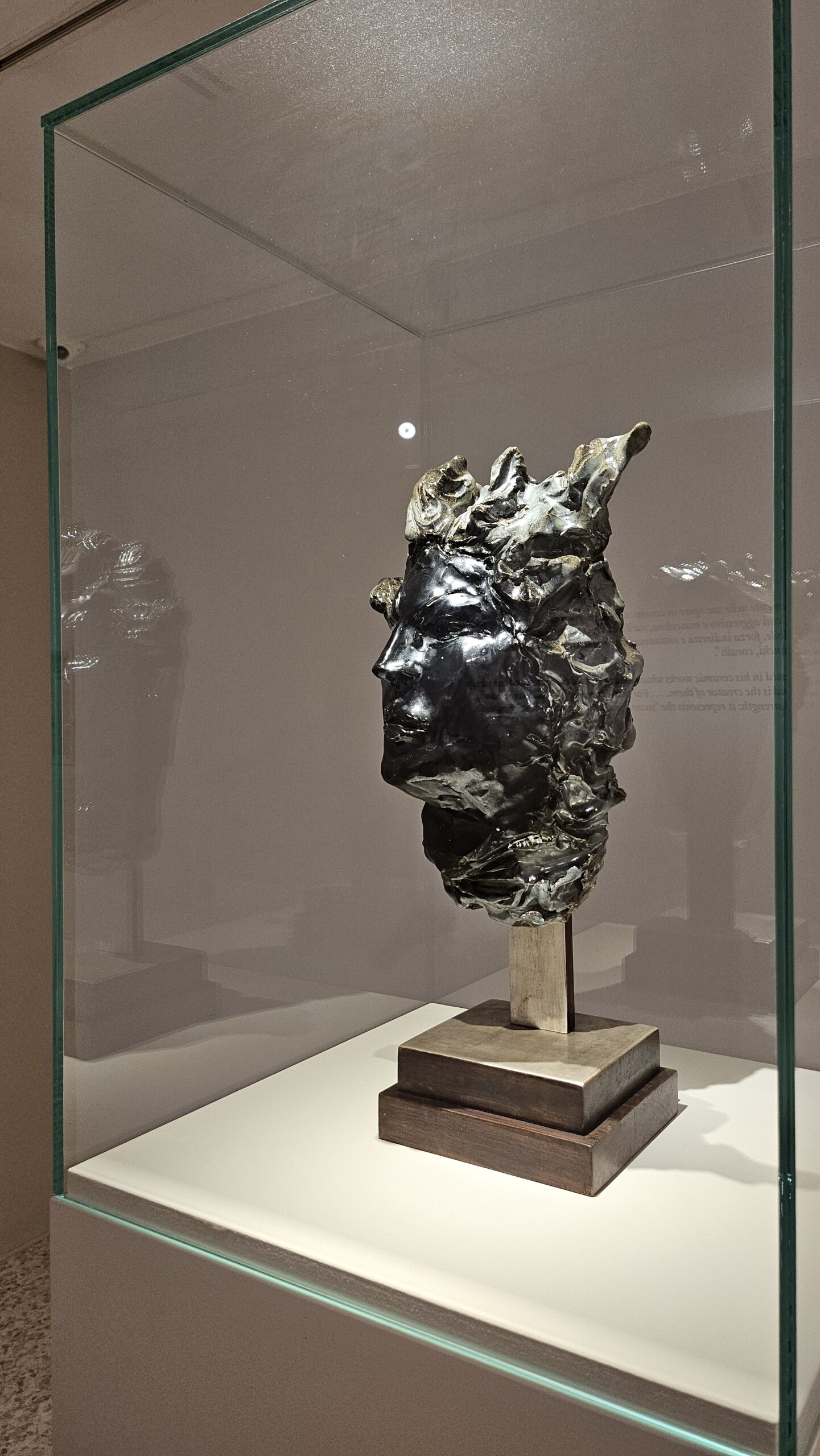
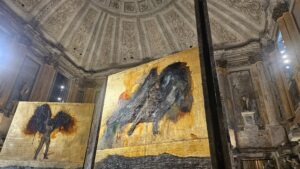
Moving on, Fontana’s work shifts from sculpture to surface, and we have a stunning set of plates illustrating the concept of a battle. More than fight, they look like a titanomachy, with horses down below and the fury of elements raging around them: swirls of waves and clouds, with fire and iron. My pictures don’t do ti credit enough. The series of the crucifixiona and depositions is stunning too, with the same level of expressionist drama we see conveyed here.
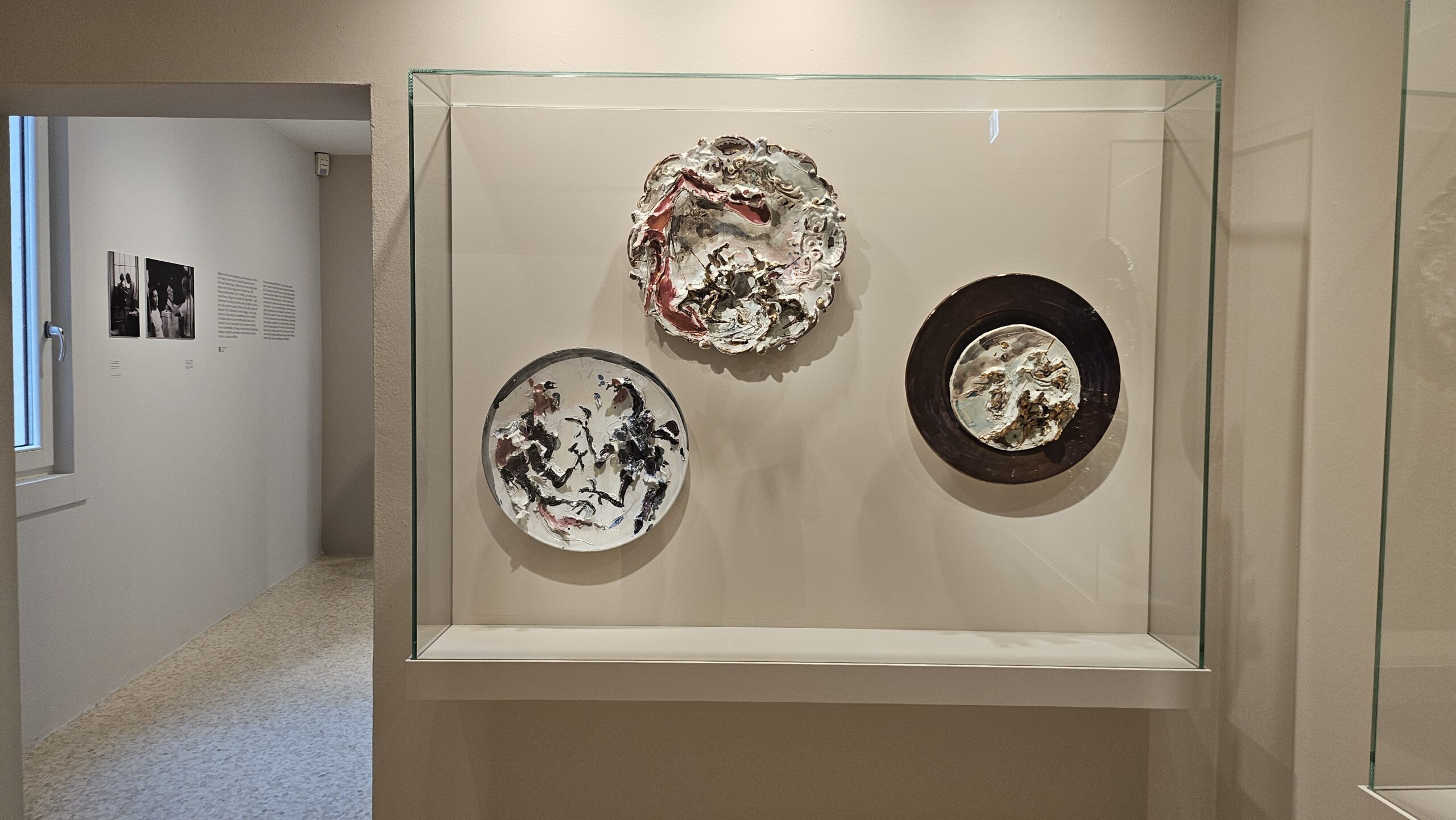
The last part of the exhibition focuses on Fontana’s maturity: he started cutting canvases in series, so why not cut ceramics too? His works become blocks with signs, and I can’t see how anybody can find these things more interesting than the earlier works, but hey, I don’t have an intellectual’s reputation to uphold, so I can say it.


No Comments