
The City Beneath the City
There are cities that dazzle with their surfaces, and others that live in the mind. Milan belongs to the latter kind, to me. Beneath its layers of glass, asphalt, and the relentless functionality everybody likes to boast, there lies another city: silent, half-remembered, and persistently haunting. So what does it have to do with an architect and a novelist? Nothing aside the fact that they both spent their lives trying to describe some of that same feeling, each through a different language: one of forms and typologies, the other of fables and apparitions.
For Aldo Rossi (1931 – 1997), the city was a collective autobiography. In L’architettura della città (1966), he wrote that urban form endures beyond the lives of its inhabitants, becoming a kind of unconscious: “the city remembers even when we forget.” His “analogous city,” populated by archetypal fragments — cemeteries, courtyards, theatres — was less a plan than a mental landscape, where each building condensed layers of personal and civic recollection.
Dino Buzzati (1906 – 1972) on the other hand, writing from the newsroom of the Corriere della Sera, traced similar lines of memory through narrative rather than design. His Milan is an everyday labyrinth of offices, trams, and corridors, where the ordinary suddenly slides into the metaphysical like a De Chirico painting. In Il deserto dei Tartari (1940), the waiting fortress mirrors the routines of the modern city: a structure of expectation, repetition, and loss. Later, in Poema a fumetti (1969), Buzzati turned to the myth of Orpheus to portray a Milan underworld both literal and symbolic, a descent into the invisible city beneath the visible one.
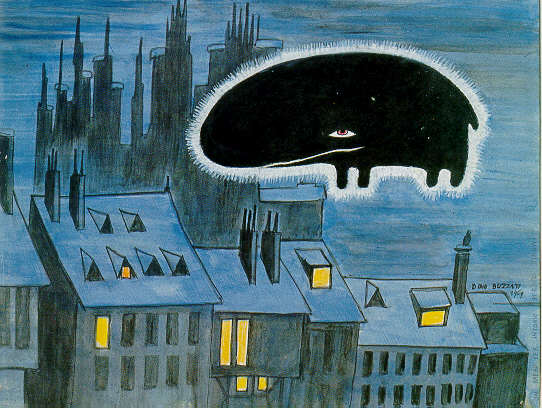
Both men inhabited postwar Milan at moments of intense transformation: reconstruction, industrialisation, the rise of the modern metropolis. But where many saw progress, they sensed disappearance: they insisted upon attention, an insistence that memory has a form, and that form can still be built or told. In Rossi’s words, “every act of building is an act of remembering.” In Buzzati’s, every act of writing is an act of haunting.
What unites them is not only their attachment to Milan but their understanding that the city is a state of mind, an ongoing dialogue between what is seen and what is lost, between architecture and imagination. The invisible Milan they reveal is not elsewhere: it lies beneath the everyday, waiting to be recalled. So let’s walk the city with them, this month, and see what we discover.
1. The Poetics of Absence
If you’ve known the city for a while, especially since before its latest Renaissance around 2015, you know that walking through Milan often means feeling the presence of what is no longer there. The city has turned erasure into its own rhythm: courtyards hidden behind new facades, factories turned into galleries, tramlines vanishing beneath asphalt. Both Aldo Rossi and Dino Buzzati understood that the essence of Milan is not its skyline but its absences, the spaces between memory and reconstruction, between what was and what might have been.
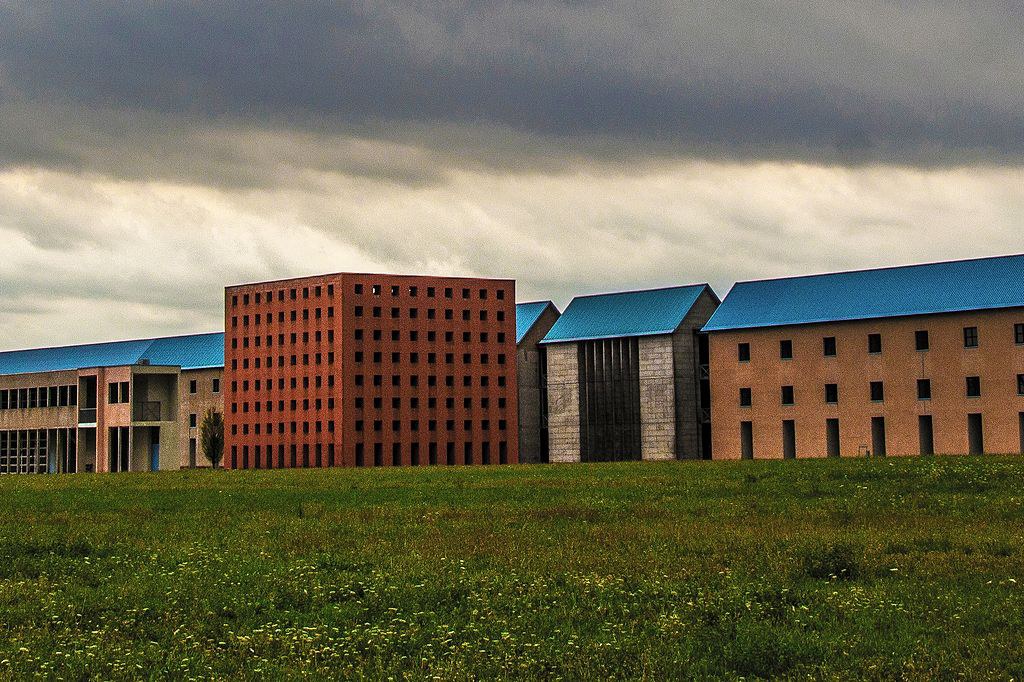
In Aldo Rossi’s work, absence becomes a principle of form, as his drawings and buildings are haunted by silence in an architecture of subtraction. The eerie Cimitero di San Cataldo in Modena, perhaps his most poetic work, stands as a city of the dead that mirrors the living one: an empty cube, a grid of windows without glass, an ossuary that is both void and vessel. Its stillness is not mourning but meditation. Like Milan’s fog, it softens boundaries and makes the invisible perceptible. Rossi’s geometries serve as emotional frameworks, never purely rational, shaped by loss. Each typology — the theatre, the monument, the house — is an act of remembering what time and progress have buried.
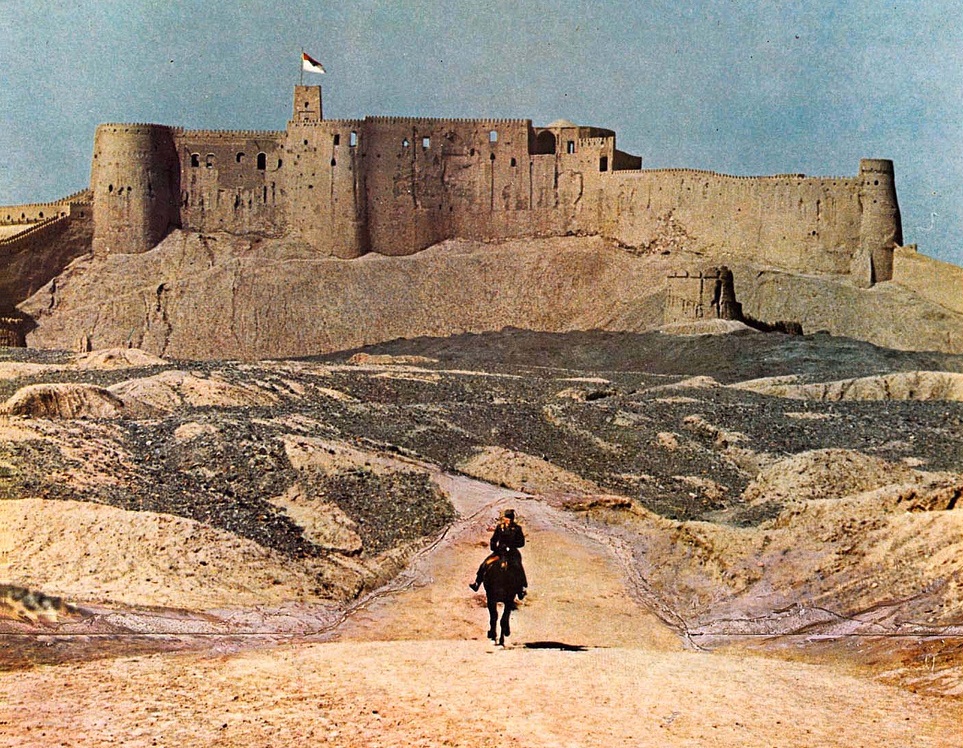
For Buzzati, on the other hand, absence takes the shape of waiting. His protagonists live suspended between anticipation and resignation, as if time itself had thickened around them. Il deserto dei Tartari is perhaps the literary equivalent of Rossi’s cemetery: the fortress of Bastiani, perpetually expecting an enemy that never comes, talks closely to all human longing in the face of an indifferent world, and by God, if that isn’t relevant nowadays. The novel has a wonderful architecture, with its repetition, its rhythm of corridors and battlements. Buzzati’s spaces are meticulous, almost architectural, yet they lead nowhere. They are the spaces of bureaucracy, of the modern office, of existential delay, and we’ve talked about that before, I believe.
Both share a metaphysical realism, in a way: the belief that form, even when empty, holds something. The unadorned façade, the deserted square, the corridor ending in a closed door, aren’t signs of nothingness but invitations to see differently. Rossi’s voids ask to be inhabited by memory; Buzzati’s silences ask to be filled by…. well, sometimes just by alcohol, but maybe that’s because Il Deserto dei Tartari resonated violently with the kind of life I did not want to live, when I read it as a youngster.
Anyway, the invisible Milan they reveal is not a dreamscape detached from reality but the underside of its order. In the hum of the tramlines or the geometry of a courtyard, both sensed a quiet metaphysics: the persistence of human longing within a rational grid. Where functionalism celebrated transparency, they insisted on opacity; where modernity proclaimed speed, they restored the dignity of pause. Their city is not utopian but elegiac and, in that elegy, profoundly alive.
2. The City as Autobiography
Aldo Rossi and Dino Buzzati didn’t fail to see some of Milan’s most fundamental truths: the city at its core is a place where the boundaries between public landscape and private recollection dissolve. Their works, so different in medium, converge on the same intuition: that to describe the city is to describe oneself.
For Rossi, this intuition became explicit in his Autobiografia scientifica (1981), a book as much about Milan as about memory itself. The architect retraces the city as a constellation of impressions: Porta Ticinese, the urban trains on viale Bligny in the district where I live, the famous gardens near Porta Venezia, where childhood gave way to abstraction. These are the coordinates of a personal mythology. “Everything I design,” he wrote, “has already been lived.” The Milan of his youth — the measured rhythm of its courtyards, the pale facades under winter light — became the grammar of his architecture. Even his later geometries, so apparently detached, retain the melancholy cadence of the Milanese street: the repetition of windows, the quiet insistence of order amid loss.
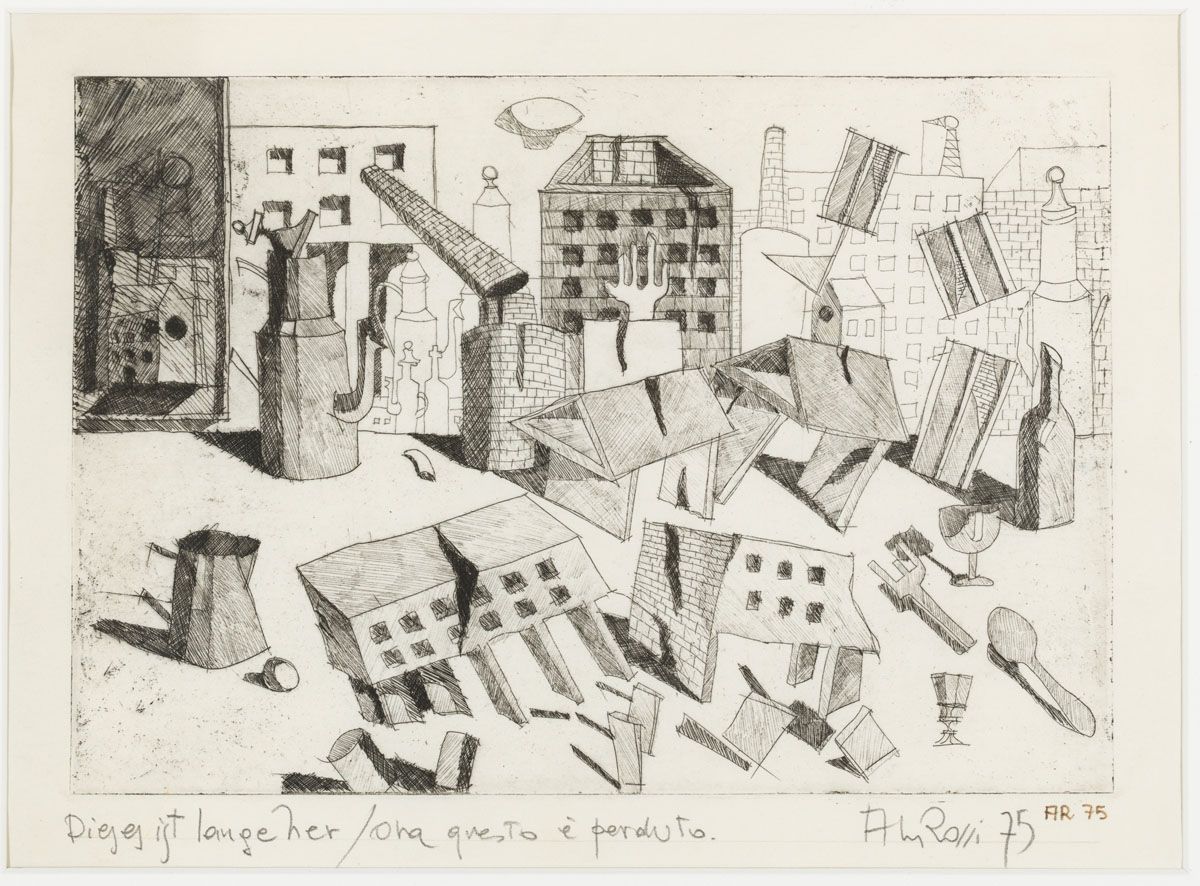
Rossi’s attachment to Milan’s ordinary structures — schools, housing blocks, cemeteries — was never sentimental. It was, rather, autobiographical in method: a way of transforming memory into typology. In his sketches, fragments of the city reappear as analogies, recombined like dreams. The dome of San Carlo al Lazzaretto echoes in a project for Berlin; a Lombard roofline resurfaces in a cemetery wall. Milan becomes the subconscious of modern architecture: provincial and infinite, modest and metaphysical.
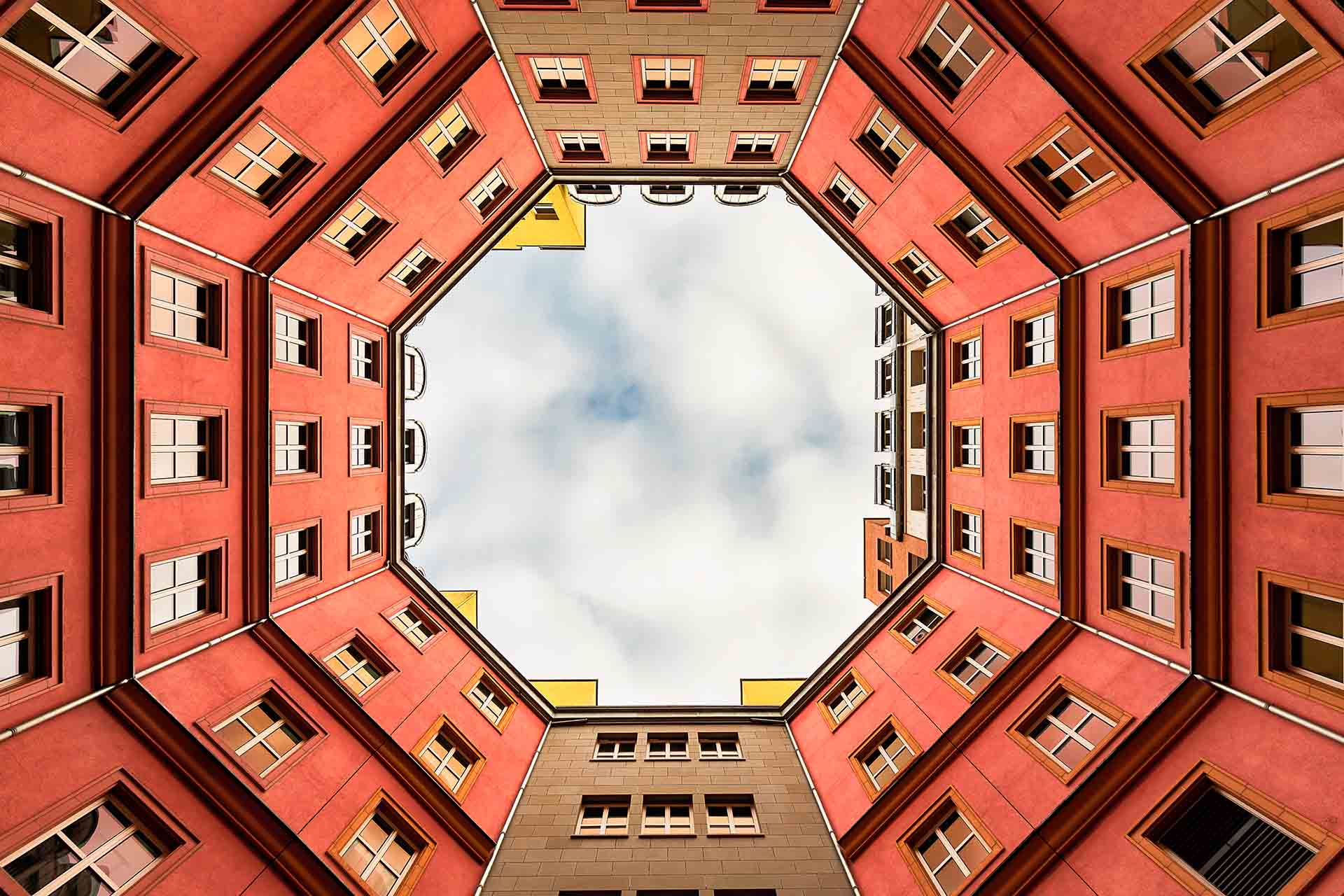
Buzzati’s Milan, by contrast, is lived from the inside. For over forty years, he worked at the Corriere della Sera‘s grand building on via Solferino and the real place becomes, in his fiction, an oneiric machine. His short stories often unfold in anonymous offices that resemble his own newsroom: spaces of routine pierced by the extraordinary. From his desk, Buzzati watched the city change: the cranes of the postwar years, the neon lights of piazza San Babila, the growing anonymity of the metropolis. Yet his gaze turned inward: the modern city, with its elevators and corridors, became a way to describe spiritual confinement. In Sessanta racconti, Milan is rarely named, but always felt: a city of fog, waiting, and unresolved transitions.
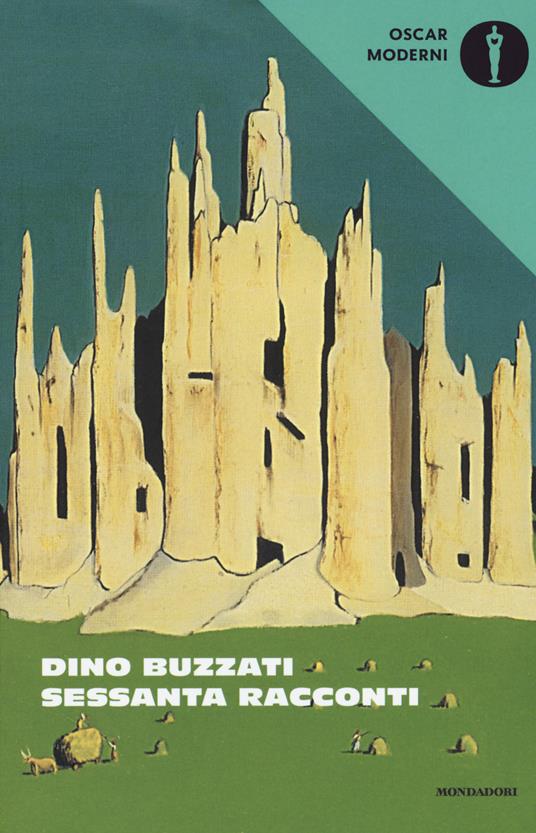
If the architect built his autobiography through the memory of form, the novelist wrote his through the form of memory itself. His narrators often move through dreamlike versions of real streets: Corso Venezia, via Senato, piazza della Repubblica. The city flickers between recognition and estrangement. Like Rossi, he composed from fragments, but his medium was narrative rhythm rather than geometry. The repetition of office hours, the slow march of trams, the rain-streaked windows become architectural patterns, as if time itself were a building he could inhabit.
Both, in different ways, made Milan into a mental landscape, an interior city projected onto the real one. For Rossi, drawing became a method of remembering; for Buzzati, storytelling became a way of mapping the invisible. Their works are autobiographical because they turn the city — my city — into a memory system where thought, loss, and imagination leave traces as tangible as stone.
3. Typologies and Topographies of Memory
Both Aldo Rossi and Dino Buzzati moved through Milan without seeking the spectacular or the new, but rather trying to find the persistent: the repeated façade, the modest courtyard, the corridor lit by a single window. Their imagination thrived on what Walter Benjamin once called the dialectical image, that instant when the past flashes up within the present. For both, architecture and narrative became techniques for catching those flashes before they disappeared.
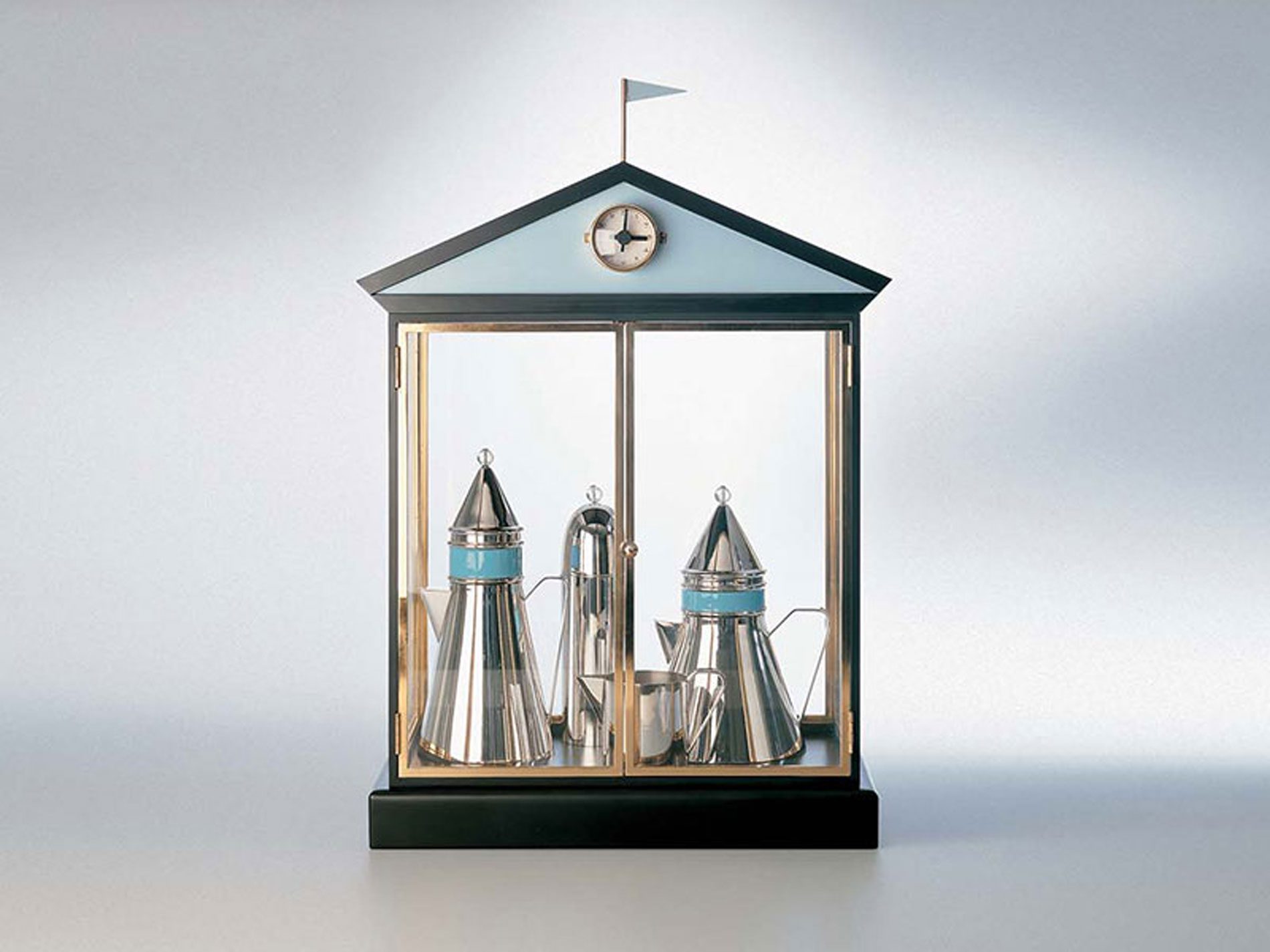
Rossi’s famous typologies were never the abstract exercises they’re sometimes pictured to be. The “house” shaped how a children would draw it, the “monument” coming straight out of De Chirico, the “theatre” as theatrical as a theatre can be, the “cemetery” were not categories of function but containers in charge of juggling memory because, when you’re unclattered by fancy shapes, the mind is free to unlead whatever it is that you connect with the primal, archetypical concept of a house. In L’architettura della città, he writes that “the collective memory becomes the city’s structure, just as the individual memory is the structure of the self.” Hence his fascination with recurring forms: the cubic volume, the pitched roof, the porticoed façade. And the coffee pot, of course, which embodies them all. These forms persist like habits of thought, outlasting styles and programs. In Milan, one could find their echoes in the quiet rationalism of via Fatebenefratelli, in the arcaded order of piazza Mercanti, in the melancholy geometry of the Cimitero Monumentale. Rossi saw continuity in these repetitions: the way a city remembers through rhythmic form.
Buzzati, too, worked through repetition. His stories unfold in recurring spaces — staircases, elevators, attics — typologies of the psyche rather than of urbanism. The office corridor, a motif that returns obsessively, is the modern descendant of Rossi’s colonnade: both are transitional spaces where the visible world thins, revealing the metaphysical beneath. In Il colombre or Il crollo della Baliverna, ordinary Milanese settings — a newsroom, a street corner, a construction site — become thresholds between reality and its double. The topography is familiar but altered, as if the city had slipped slightly out of sync with itself.
In both, the act of mapping is inseparable from the act of remembering. Rossi’s “analogous city” — a collage of architectural fragments drawn from different times and places — mirrors Buzzati’s narrative mosaics. Each is a city of analogies, where one fragment calls forth another, the typological becomes topographical — and vice versa — as form and story fuse in the shared effort to hold time still for an instant.
Milan, for both intellectuals, offered an ideal terrain for this poetics of recurrence because, as we’ve seen before, it’s a city built on overlapping orders as much as LEGO’s Ninjago City (and if you got this, come and claim your beer): Roman walls beneath medieval churches, Renaissance cloisters beside modern towers. Its memory is palimpsestic, never fully erased and yet not quite there. In Rossi’s drawings, Milan’s fragments recombine into impossible yet strangely plausible wholes, the familiar rearranged into a dream logic that would please Lovecraft’s most glorious Randolph Carter. In Buzzati’s tales, the city’s rational façade conceals a labyrinth of invisible thresholds.
Ultimately, both sought the same architecture: one where the visible and invisible, the past and the present, coexist without resolution. Their typologies are not monuments but devices for remembering and ways of giving form to what cannot otherwise be held. The corridor, the courtyard, the tower, the wall, the banana: in their hands, these become mnemonic instruments, architectures of the mind.
4. The Architecture of Narrative
So, as I’ve tried to establish, I feel that reading Buzzati and looking at Aldo Rossi’s drawings is to enter a constructed space. Their works are deliberate compositions of rhythm, repetition, and pause. Both believed that meaning arises not from ornament but from structure: from the way parts relate, echo, and create intervals of silence.
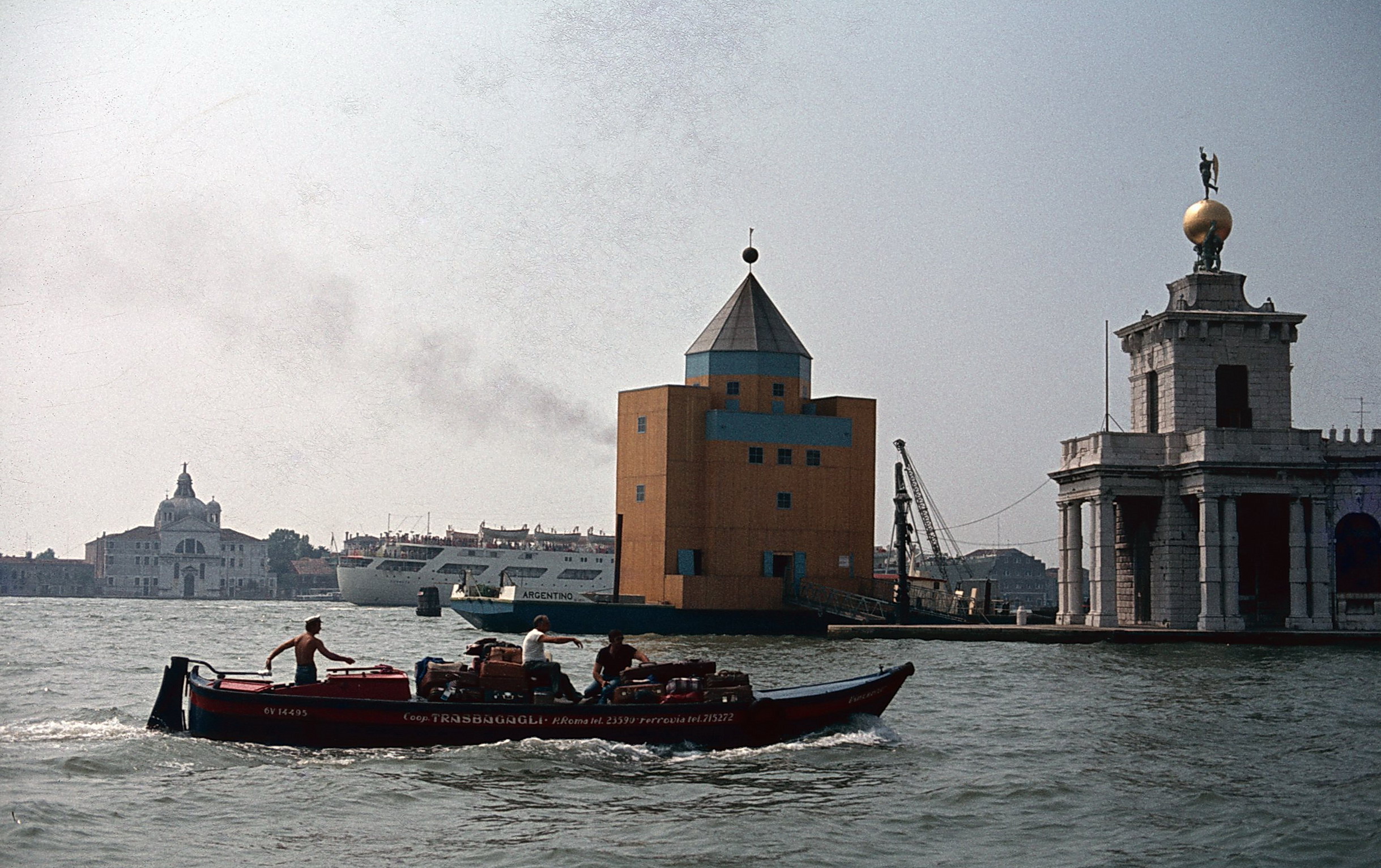
In Aldo Rossi, this architectural sense of narrative is literal. His buildings unfold like stories: the repetition of elements functions as a refrain, the void becomes a moment of suspension. The Teatro del Mondo in Venice — a floating wooden theatre that appeared and disappeared with the tides — was both a physical object and a narrative gesture: a memory in motion. Its geometry was simple, almost archaic, yet it carried the weight of myth, recalling travelling theatres of the Renaissance, and by extension, the transience of all human creation. Rossi thought architecturally, but he also wrote architecturally: his Autobiografia scientifica reads like a collection of scenes, fragments of a life reconstructed through spatial memory. The discipline of drawing and the discipline of writing converge in the same act of arranging fragments until they resonate.
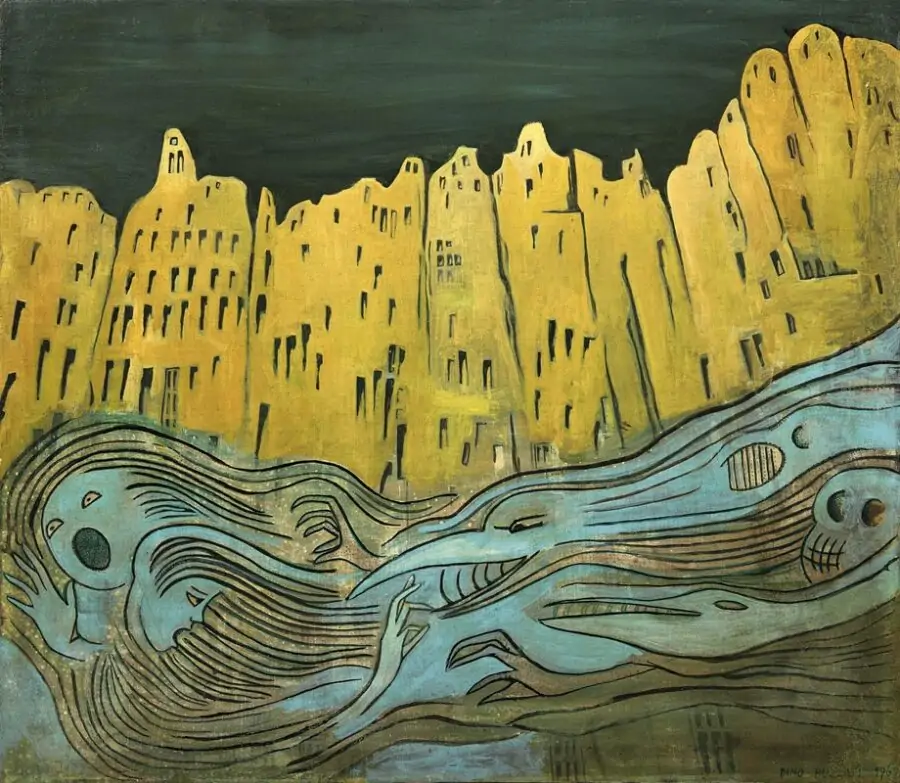
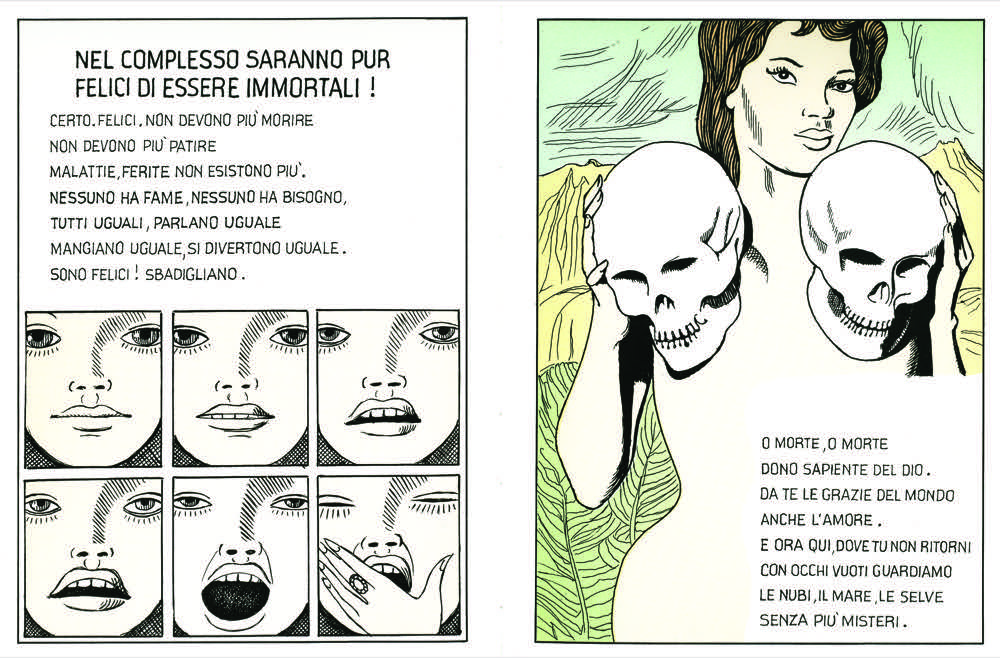
Buzzati’s architecture of narrative works in reverse: he writes like an architect. His stories are built with the precision of plans. Rooms, stairs, and corridors are not settings but structural devices, ordering the flow of time. Each story, no matter how brief, has the rigour of a planimetric drawing with its controlled proportions, exact transitions, a measured distribution of light and shadow. In Il deserto dei Tartari, the fortress is itself the novel’s architecture: each corridor in the symmetrical layout mirrors a season of waiting, each window a view toward absence. In Poema a fumetti, this sense of design becomes explicit: Buzzati uses panels and framing like floor plans, constructing a descent through Milan’s underworld that mirrors both Dante and Rossi’s notion of the city as a memory system.
Both intended form as a way of thinking. Rossi’s grids and Buzzati’s repetitions are disciplines, attempts to order the unorderable: in a time when modernity celebrated the transparency of glass offices that assume nobody actually works there, they reintroduced opacity, ritual, and stillness. Their works resist the flow of time through structure: the column, the sentence, the façade, the refrain.
Even their relationship to the unfinished reveals this shared intuition. Rossi’s sketches often stop before the line is closed. Buzzati’s endings, likewise, often trail into ambiguity: the story concludes, but meaning remains suspended. Both construct open forms, spaces where the reader or inhabitant becomes a co-author.
In this sense, architecture and literature are not separate arts but parallel grammars of remembering. Each uses repetition to resist disappearance and silence to preserve meaning. For both, Milan is not simply the context but the syntax. A city whose rational grid contains infinite variations of melancholy, and whose fog allows imagination to take form.
5. Between Real and Imagined
There comes a moment, walking through Milan, when the real city and its invisible twin seem to overlap. It might happen on a foggy winter morning in piazza Leonardo da Vinci, where Aldo Rossi’s rational geometries once met the echo of the Politecnico’s classrooms; or on a late summer afternoon in via Solferino, where Dino Buzzati’s newsroom windows once framed the slow procession of trams. In those moments, the line between memory and matter thins and the city becomes a palimpsest of ghosts. This still is the spooky season, isn’t it?
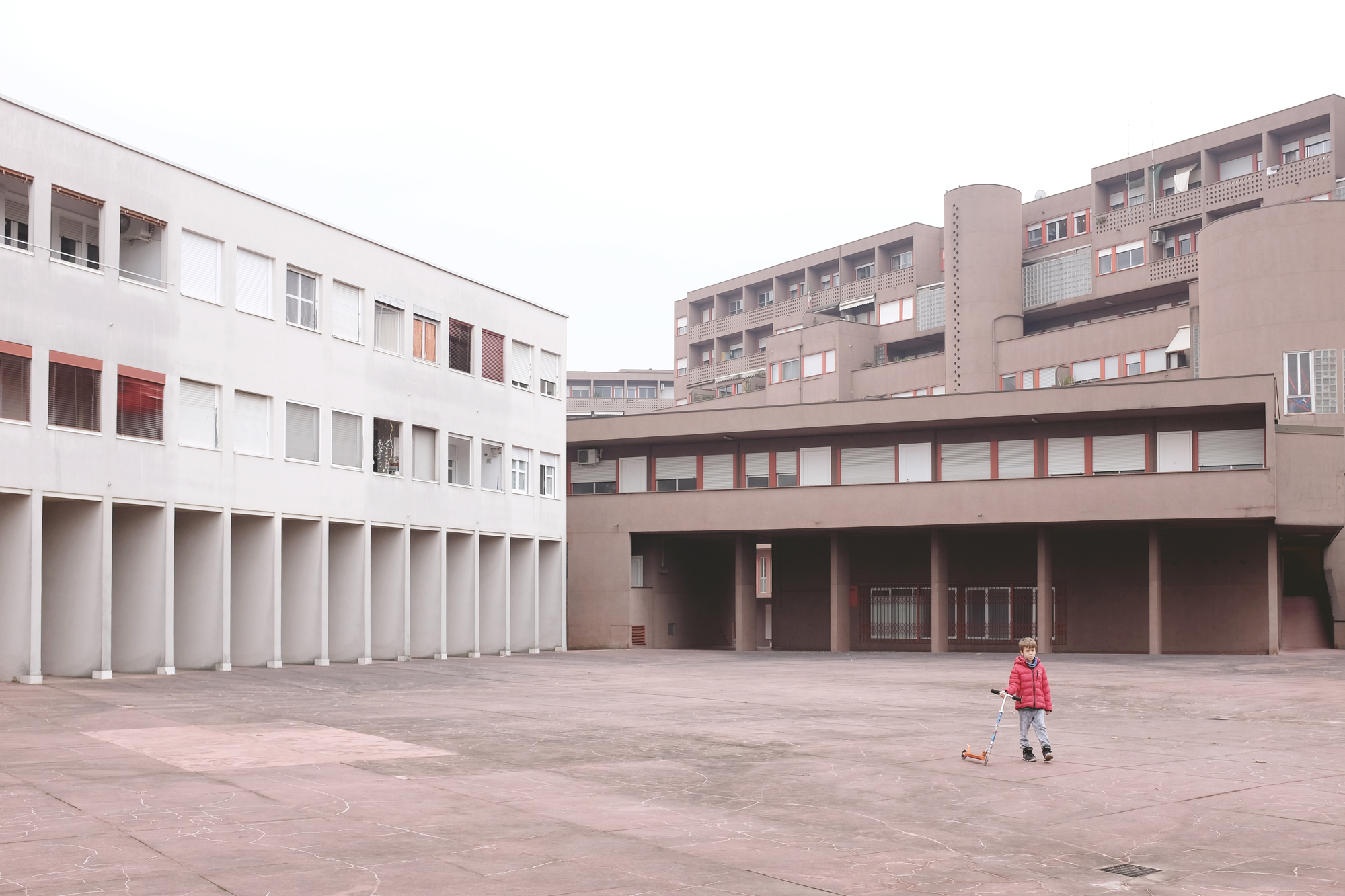
Rossi’s Milan begins in the east, around the Politecnico, where he studied and later taught. The campus, with its measured courtyards and pale walls, embodied what he called l’ordine milanese: a sense of restraint, of geometry as discipline. Yet only a few minutes away stands one of his most eloquent urban interventions — the Quartiere Gallaratese, designed with Carlo Aymonino in the late 1960s. A district that seems to spring right out (and perhaps should have stayed) a drawing: long arcades framing the sky, staircases that lead both somewhere and nowhere, the interplay of repetition and solitude. The housing blocks seem rational, yet their emptiness has the quiet poignancy of a stage set awaiting its actors. It is modern Milan seen through the lens of metaphysical painting: una città mentale rendered in concrete. Too bad actual people actually have to be there.
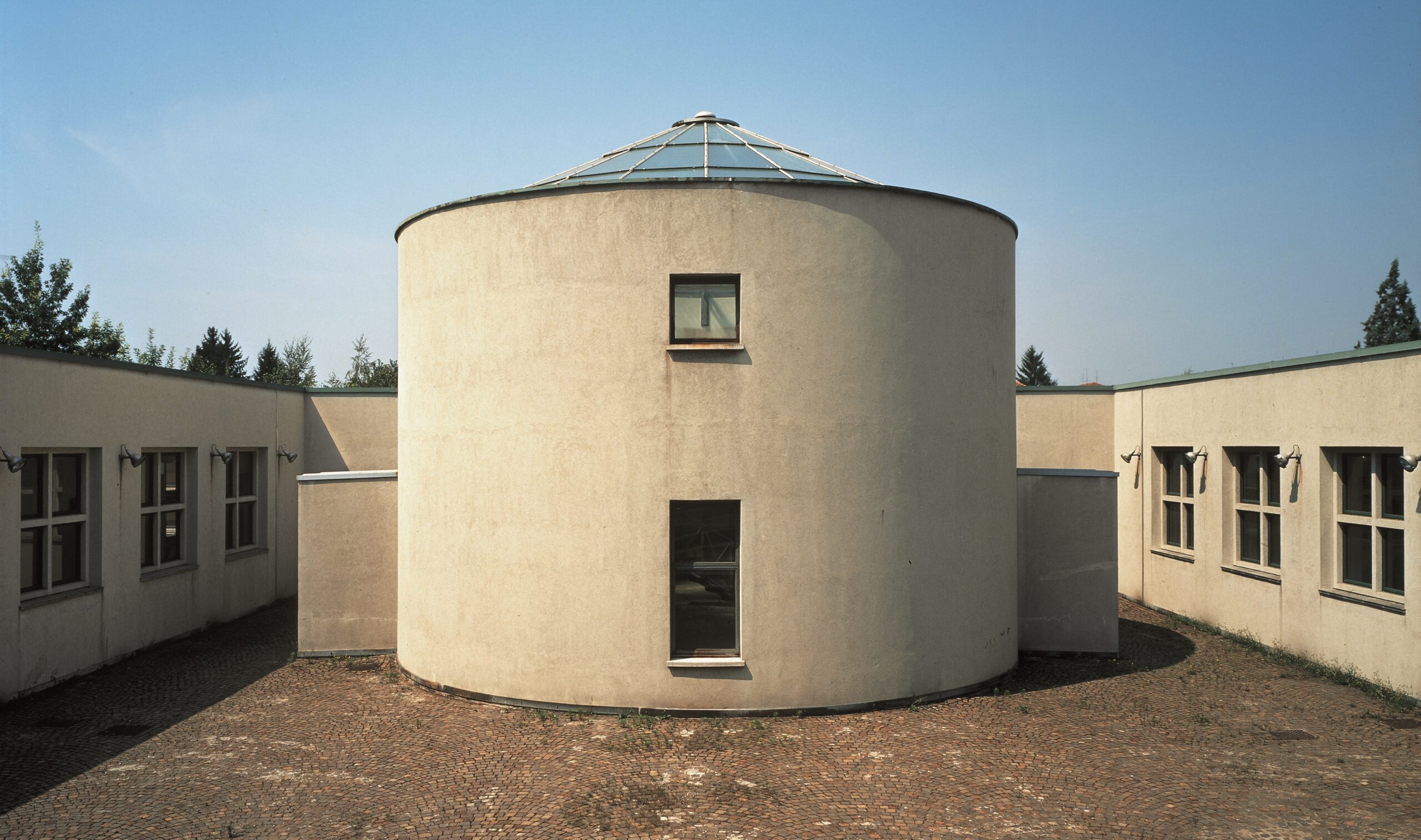
Nearby, his Scuola di Fagnano Olona share the same vocabulary: forms purified to their essence, suspended between monument and memory. Rossi’s Milan is made of such thresholds — places where the everyday becomes archetype. Even his small Monumento ai Partigiani in piazzale Loreto resists spectacle; it is a silent cube of bronze, heavy with memory, positioned where the city once displayed its darkest wounds.
Buzzati’s Milan, by contrast, unfolds from within. The newsroom at via Solferino 28 — headquarters of the Corriere della Sera — still bears traces of his presence. He worked there from 1928 until his death in 1972, often arriving before dawn, his typewriter facing a window over the courtyard. From there, he watched the city awaken: the vendors in Brera, the early trams heading toward Porta Venezia. In those same years, the nearby Galleria Vittorio Emanuele II and piazza Duomo became the backdrop to his daily walks. The Milan of Sessanta racconti is this geography of transitions: the short distance between work and wonder, between logic and hallucination.
Following his steps one winter evening, the city still resonates as it did with the glow of the arcades, the clicking of heels on marble, the faint echo of an invisible story taking shape in one’s mind. Buzzati’s Milan was neither heroic nor picturesque; it was a city of interiors, of small rituals repeated every day like the elevator ride, the waiting room, the office corridor. Yet within that repetition, he found mystery.
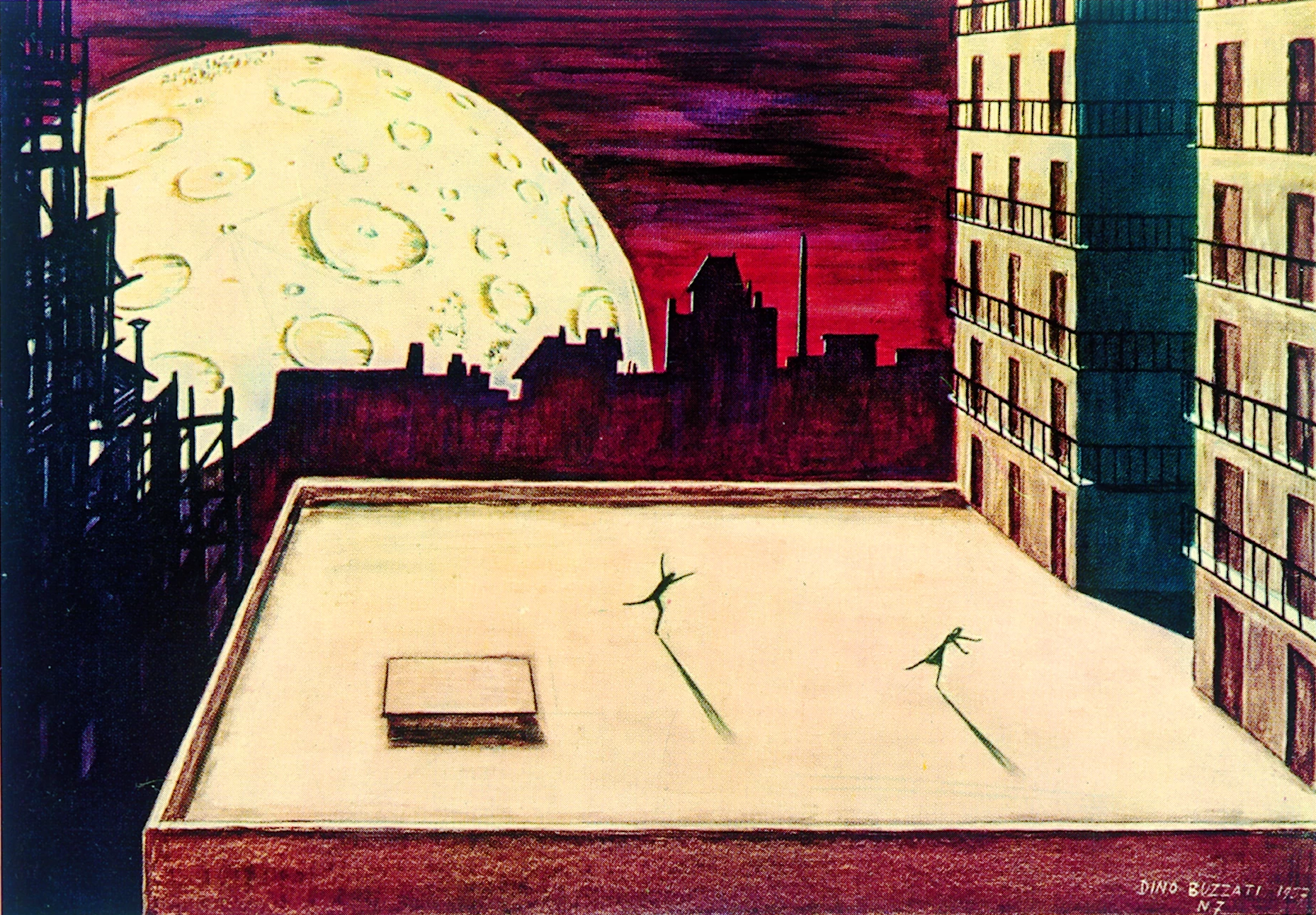
For both men, Milan’s true architecture was temporal. Buildings and stories alike captured not permanence but transformation — the slow sedimentation of memory into form. Their Milan resists the spectacle of the new skyline; it whispers from courtyards, tram stops, and deserted piazzas. The Quartiere Gallaratese and via Solferino, distant yet kindred, embody two halves of the same vision: the rational and the metaphysical, the concrete and the dreamlike.
Walking today between them — from Rossi’s suspended order to Buzzati’s inhabited melancholy — one senses that both still speak to the city’s current dilemmas. Amid the glass towers of Porta Nuova and CityLife, their works remind us that the invisible Milan endures: not in height, but in depth; not in spectacle, but in memory. Theirs is a Milan that does not shout but listens. And you’d hear it if only you would stop shouting about it.

No Comments