
Sulla scrivania di chiunque si occupi di innovazione, in qualunque ambito, non dovrebbe mancare questo libro, già inusuale a partire dal formato e tradotto in Italia come Creare modelli di Business, un titolo nel quale forse si perdono alcune sfumature importanti dello spirito che anima questo manuale.
Alexander Osterwalder & Yves Pigneur, Business Model Generation: A Handbook for Visionaries, Game Changers, and Challengers. Ed. Wiley.

Are you an entrepreneurial spirit? Are you constantly thinking about how to create value and build new businesses, or how to improve or transform your organization? Are you trying to find innovative ways of doing business to replace old, outdated ones?
If you’ve answered “yes” to any of these questions, welcome to our group! You’re holding a handbook for visionaries, game changers, and challengers striving to defy outmoded business models and design tomorrow’s enterprises. It’s a book for the business model generation.
Nonostante lo conoscessi da tempo, si tratta certamente di uno dei libri che mi hanno più influenzata nell’ultimo anno, per il suo approccio allo sviluppo di quello che spesso si limita a essere un documento sterile, che non rispecchia le reali intenzioni, non tiene conto delle reali esigenze e non supporta realmente quello che è o quello che sarà il business di riferimento. Nella ricerca del valore e dei segmenti di mercato che riceveranno la proposta, il modello propone una scacchiera di elementi interconnessi tra loro, chiamati canvas, e lo sviluppo dei singoli tasselli su una superficie che consenta di tenere presente le relazioni tra i vari elementi dell’ecosistema.
Ultimately, business model innovation is about creating value, for companies, customers, and society. It is about replacing outdated models.
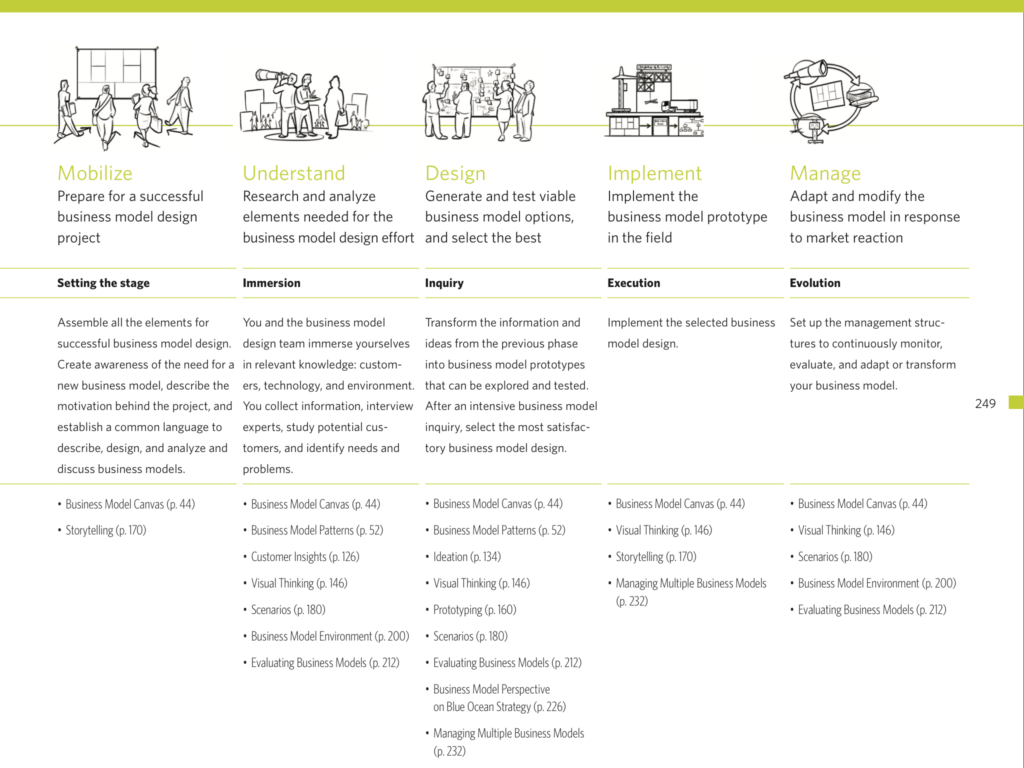
Per fare ciò, gli autori propongono un percorso analogo a quello del design thinking, articolato per cinque fasi:
- La mobilizzazione, durante la quale ci si prepara allo sviluppo e si delinea lo scenario in cui si sta operando;
- la fase di comprensione, durante la quale è necessario fare ricerca e analisi, immergersi tra gli elementi che servirà avere compreso durante lo sviluppo del business model;
- la fase di progettazione vera e propria, in cui viene realizzato il business model e ne vengono testate le diverse opzioni attraverso veri e propri prototipi;
- la fase di implementazione, in cui il modello di business viene portato sul campo;
- la fase di gestione, in cui è fondamentale – secondo quello che probabilmente è il dettame principale dell’Agile, mantenere sotto controllo il modello per essere pronti ad adattarlo e modificarlo alle esigenze sul campo, esplorando costantemente le possibilità di miglioramento e rimanendo in allerta per avvistare tempestivamente i rischi.
Il risultato è un mosaico di 9 blocchi:
- Il segmento di mercato;
- la proposta di valore;
- i canali;
- la relazione con il cliente;
- il flusso di profitto;
- le risorse chiave;
- le attività chiave;
- le partnership chiave;
- la struttura di costo.


È la 33a settimana dell’anno, un anno che definire surreale sarebbe un eufemismo. Ma, almeno, significa che abbiamo già 33 libri nella nostra biblioteca virtuale. Ogni lunedì un libro per iniziare la settimana.






No Comments