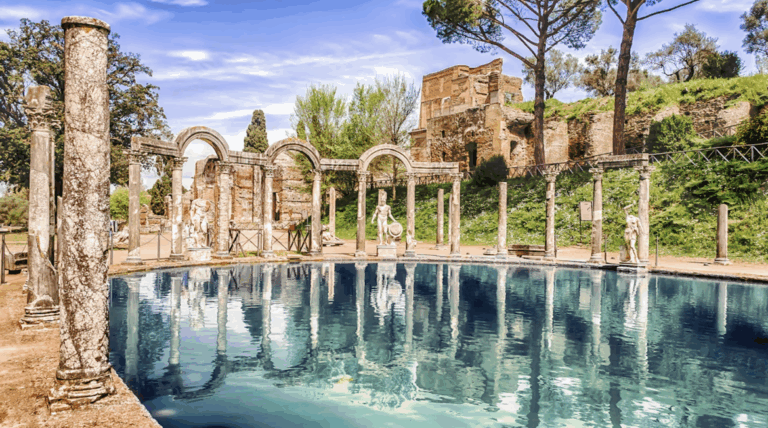
"All this he saw, for one moment breathless and intense, vivid on the morning sky; and still, as he looked, he lived; and still, as he lived, he wondered."

Pride Month 2025 – Story of the Day

Christina of Sweden: The Queen Who Refused to Be a Woman

Crowned queen at the age of six and ruling in her own right by eighteen, Christina of Sweden stood as one of the most enigmatic and transgressive monarchs of the 17th century — a woman who refused marriage, dressed in men’s clothing, and filled her court with artists, philosophers, and female companions.

Christina cultivated a persona that rejected femininity and challenged dynastic expectations. She openly declared herself uninterested in marriage, calling it a “horrible and offensive thing.” She wore trousers, collected weapons, and preferred horseback riding to embroidery. But beneath the politics of refusal lay a more intimate rebellion: Christina was deeply attached to women, particularly Ebba Sparre, whom she called her “bedfellow” and “the object of my love.”

Their letters are saturated with romantic longing. While such language has often been dismissed as “romantic friendship,” Christina’s lifelong refusal of heterosexual norms, her masculine self-fashioning, and the central role of women in her emotional life suggest a queer consciousness articulated through sovereign performance.

In 1654, Christina abdicated her throne, converted to Catholicism, and relocated to Rome, where she lived as a patron of the arts and philosophy – continuing to inhabit liminal spaces of gender, faith, and sexuality until her death. She was buried in the Vatican, one of the few women to receive such honour – though she had spent her life rejecting the identity that burial presumed.

architecture, engineering and construction

Ruins and Memory

Every text this week has been trying to answer some version of the same question: what, exactly, does a ruined building (or district, or city) owe the people still standing near it, and what do we owe to the ruin itself out of respect for

Read More »
Summertime

The Prison and the Railway Station

We already encountered W.G. Sebald with his The Rings of Saturn, and today I’d like to bring you his last novel, Austerlitz, published in 2001. The story follows a man named Jacques Austerlitz while he slowly uncovers the truth about his origins and his traumatic

Read More »
Summertime

Someone Has to Clean Up

Wisława Szymborska was a Polish poet, essayist, and translator, born in 1923 and awarded the Nobel Prize in Literature in 1996 for poetry marked by a sharp, ironic awareness of human life and history. Map: Collected and Last Poems is an English-language volume of Szymborska’s

Read More »
Share on LinkedIn
Throw on Reddit
Roll on Tumblr
Mail it
No Comments

Post A Comment

This site uses Akismet to reduce spam. Learn how your comment data is processed.

RELATED POSTS

Ruins and Memory

Every text this week has been trying to answer some version of the same question: what, exactly, does a ruined building (or district, or city) owe the people still standing near it, and what do we owe to the ruin itself out of respect for

Read More

The Prison and the Railway Station

We already encountered W.G. Sebald with his The Rings of Saturn, and today I’d like to bring you his last novel, Austerlitz, published in 2001. The story follows a man named Jacques Austerlitz while he slowly uncovers the truth about his origins and his traumatic

Read More

Someone Has to Clean Up

Wisława Szymborska was a Polish poet, essayist, and translator, born in 1923 and awarded the Nobel Prize in Literature in 1996 for poetry marked by a sharp, ironic awareness of human life and history. Map: Collected and Last Poems is an English-language volume of Szymborska’s

Read More