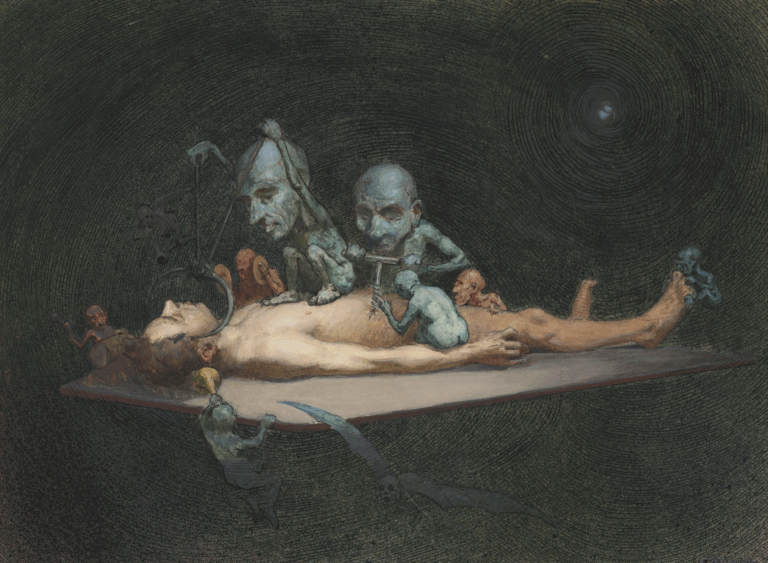
"All this he saw, for one moment breathless and intense, vivid on the morning sky; and still, as he looked, he lived; and still, as he lived, he wondered."

Pride Month 2025: Story of the Day

Wallada bint al-Mustakfi: the Caliph’s Daughter Who Loved Women and Lived Free

Wallada bint al-Mustakfi (Córdoba 1001 – 1091), daughter of a deposed Umayyad caliph, was not merely a noblewoman—she was a poet, provocateur, and cultural icon in the intellectually radiant courts of Al-Andalus. Refusing to live within the confines of her class or gender, Wallada established her own literary salon, wore men’s clothing in public, embroidered her verses into her robes, and engaged in romantic relationships with both men and women.

Her most famous affair was with the poet Ibn Zaydun, but lesser-known texts suggest her intimate companionship with women—relationships filled with desire, wit, and defiance. In a society that oscillated between religious conservatism and poetic license, Wallada carved a space for queer autonomy through language, performance, and visibility.

She is said to have worn a robe inscribed with the verse “I am made for greatness and walk proudly.” And on the hem: “Forsooth I allow my lover to kiss my cheek / and bestow my kisses on him who craves it.“

Wallada’s life was not without danger—her choices were scandalous even by the standards of a cosmopolitan court—but she never sought invisibility. Instead, she offered a pansexual model of unapologetic self-expression, where love and literature intertwined in acts of personal and political resistance. Wallada reminds us that queer history isn’t just about survival—it’s about brilliance, power, and self-fashioning. Her poetry and presence prove that queer women have long claimed space in the public eye—not in spite of their gender and desire, but through it.

books and literature

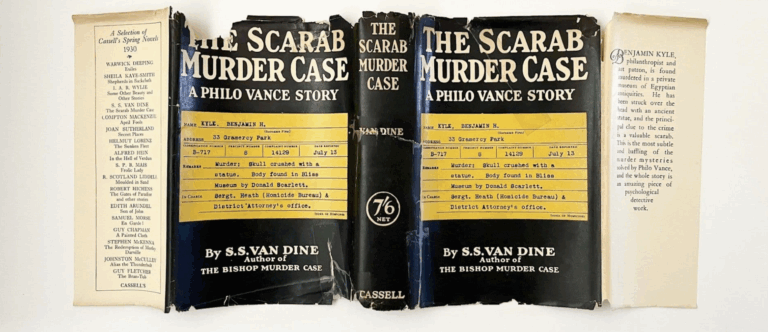
S.S. Van Dine’s The Scarab Murder

S.S. Van Dine was the pen name of Willard Huntington Wright (1888–1939), an art critic, editor, and novelist from the US who created Philo Vance, apparently one of the defining amateur detectives of the Golden Age of detective fiction. The Vance series ran to twelve

Read More »
books and literature

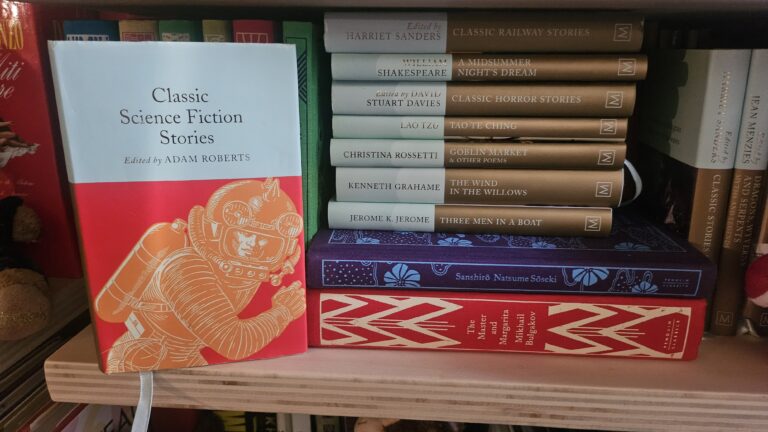
Classic Science Fiction Stories

This is the third collection I read from these charming little light-blue books with the golden pages, and they’re uneven at best. Once again, as such, I have mixed feelings about this collection and I’ll have to proceed scientifically to give a rating, so here

Read More »
architecture, engineering and construction

Artificial Integrity in the Age of Anxiety

In 1947, British-American poet W.H. Auden published The Age of Anxiety, a long poem subtitled “A Baroque Eclogue”. In a nutshell, four strangers meet in a bar on Third Avenue in Manhattan, on All Souls’ Night, so it’s even seasonal, in the middle of a

Read More »
Share on LinkedIn
Throw on Reddit
Roll on Tumblr
Mail it
No Comments

Post A Comment

This site uses Akismet to reduce spam. Learn how your comment data is processed.

RELATED POSTS

S.S. Van Dine’s The Scarab Murder

S.S. Van Dine was the pen name of Willard Huntington Wright (1888–1939), an art critic, editor, and novelist from the US who created Philo Vance, apparently one of the defining amateur detectives of the Golden Age of detective fiction. The Vance series ran to twelve

Read More

Classic Science Fiction Stories

This is the third collection I read from these charming little light-blue books with the golden pages, and they’re uneven at best. Once again, as such, I have mixed feelings about this collection and I’ll have to proceed scientifically to give a rating, so here

Read More

Artificial Integrity in the Age of Anxiety

In 1947, British-American poet W.H. Auden published The Age of Anxiety, a long poem subtitled “A Baroque Eclogue”. In a nutshell, four strangers meet in a bar on Third Avenue in Manhattan, on All Souls’ Night, so it’s even seasonal, in the middle of a

Read More