"All this he saw, for one moment breathless and intense, vivid on the morning sky; and still, as he looked, he lived; and still, as he lived, he wondered."

Pride Month 2025: Story of the Day

Singing for the Goddess: the Queer Voices of Inanna’s Gala Priests

Long before modern notions of gender came into form, the streets of ancient Sumer — in what is now southern Iraq — roamed with people whose identities didn’t feel the need to toe the lines of male or female. Among the most enigmatic and compelling were the Gala priests of Inanna, goddess of love, war, and transformation.

The Gala were individuals born as male, who adopted feminine speech patterns, wore women’s clothing, and performed ritual lamentations and songs in the goddess’s temples. In particular, they composed and recited sacred poetry in the eme-sal dialect — a register of Sumerian associated with female voices and deities — and were believed to channel Inanna’s power through song, grief, and ecstasy. Their role was of official cult functionaries, often held in high esteem.

Texts from the third millennium BCE describe them as “having neither father nor mother” — divine rather than natural. Some were described using words that modern scholars have interpreted as signalling gender-affirming surgery, homosexuality, or gender nonconformity, though these categories must be approached with cultural caution. What’s clear is that the Gala occupied a space well outside normative masculinity, and that this affirmation was not only accepted, but sacralized. Inanna herself was a non-conforming deity: fierce yet seductive, nurturing yet destructive, known for descending into the underworld and emerging transformed. Her followers mirrored this dynamic — living embodiments of fluidity, transformation, and the refusal to conform to fixed gender roles.

The story of the Gala priests reminds us that gender variance is not a modern deviation, but an ancient tradition — honoured, institutionalised, and spiritually powerful. In the temples of Ur and Uruk, queerness was not condemned; it was divine.
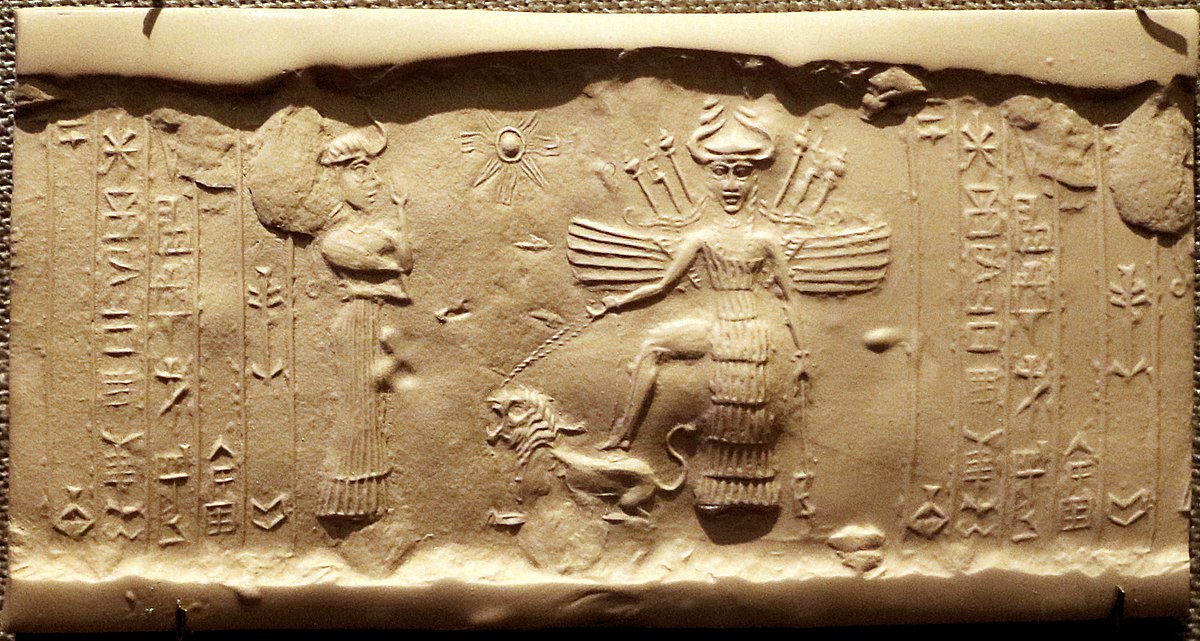

Impression of an Akkadian cylinder seal with Inanna resting her foot on a lion while Ninšubur stands before her in obedience, c. 2334- 2154 BC.

books and literature

Tracy Chevalier’s Remarkable Creatures

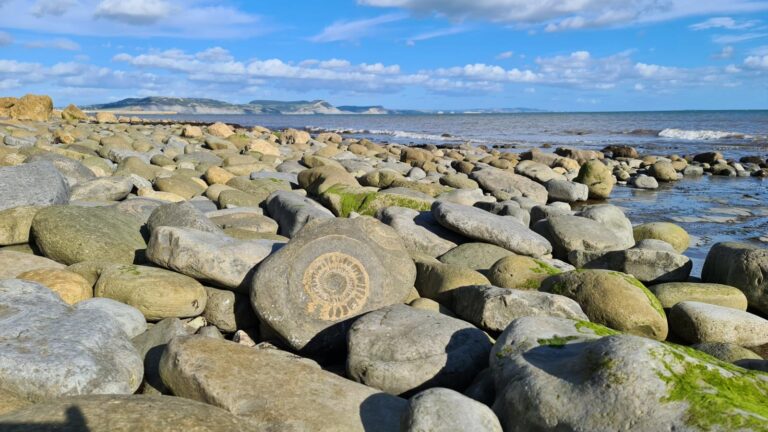
You might say that this is a historical novel about two pioneer women hunting for fossils on the famed beach of Lyme, one of them being paleontology legend Mary Anning and the other being the less famous fossil hunter and collector Elizabeth Philpot.You’d be wrong,

Read More »
books and literature

Cixin Liu’s Hold Up the Sky

This is a really splendid collection of stories, some shorter than other, and I wouldn’t have collected them this way: you have proper sci-fi stories and fairy tales, stories about science (with very little fiction), a story on coal mines and a war tale. But,

Read More »
architecture, engineering and construction

The Answer’s in Your Model (and yet, it might be wrong)

A few weeks ago, in one of those happy convergences of life, I was reading an Italian essay on Italo Calvino and artificial intelligence (I wrote about it here), and there’s a very interesting set of passages that have to do with our contemporary obsession

Read More »
Share on LinkedIn
Throw on Reddit
Roll on Tumblr
Mail it
No Comments

Post A Comment

This site uses Akismet to reduce spam. Learn how your comment data is processed.

RELATED POSTS

Tracy Chevalier’s Remarkable Creatures

You might say that this is a historical novel about two pioneer women hunting for fossils on the famed beach of Lyme, one of them being paleontology legend Mary Anning and the other being the less famous fossil hunter and collector Elizabeth Philpot.You’d be wrong,

Read More

Cixin Liu’s Hold Up the Sky

This is a really splendid collection of stories, some shorter than other, and I wouldn’t have collected them this way: you have proper sci-fi stories and fairy tales, stories about science (with very little fiction), a story on coal mines and a war tale. But,

Read More