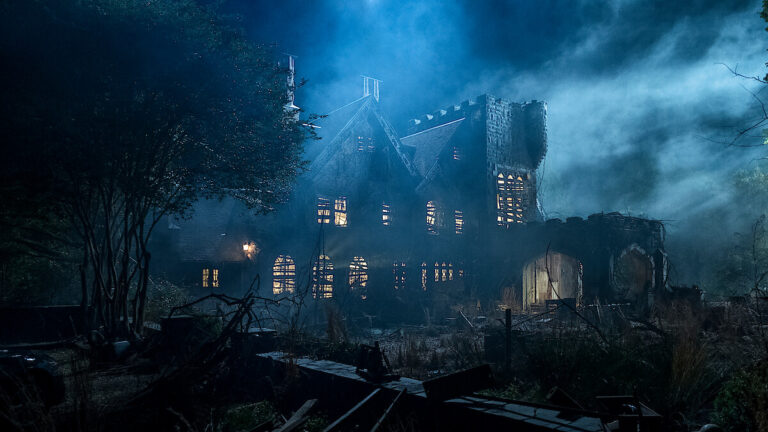
"All this he saw, for one moment breathless and intense, vivid on the morning sky; and still, as he looked, he lived; and still, as he lived, he wondered."

The Family of the Ghoul

Easter/time rejection! While I have two agents looking at the full manuscript, yet another one answered “thanks but no thanks”, so my Patrons get their festive story featuring spring, bunnies and butterflies.

Well, no, not really.

Aleksey Konstantinovich Tolstoy (1817-1875) was a prominent Russian intellectual who worked as poet, novelist, playwright, and diplomat. He ventured into historical fiction with works like Prince Silver, a novel set in the time of Ivan the Terrible, and Tsar Fyodor Ioannovich, which explored a period of political turmoil in 16th-century Russia. His main contribution, as far as we’re concerned, rests however in his exploration of Gothic themes with two novellas: The Family of the Ghoul, translated in this short volume, and The Vampire, published in Saint Petersburg in 1841 under the pseudonym of Krasnorogsky.

The Family of the Ghoul was originally written in French, in 1839, during a trip to France from Frankfurt where Tolstoy was working in the Russian Embassy. It was translated into Russian by Boleslav Markevich and published in January 1884, while the original French text was printed in 1950. My translation of course comes from the French version.

The word vourdalak appears first in the words of Alexander Pushkin’s poem Wurdulac, part of the Songs of the Western Slavs cycle from the early 19th century, and it’s the distortion of words used in the slavic areas to indicate blood-sucking creatures. It’s sometimes left untranslated. Since it’s a creature who returns from the grave, I’ve decided not to use “vampire”, as many do, and I preferred the term “ghoul”.

I think the novella is simply astonishing.
Enjoy!
architecture, engineering and construction

The Sustained Path

Every text this last few days has, in one way or another, been circling around the same question: what’s a path and what makes a path? Not a road already drawn and simply walked afterward, but a path in the sense that seems to keep

Read More »
Summertime

The Road is Made by Walking

Antonio Machado was a major Spanish poet and playwright, associated with the Generation of ’98, a group of writers who reflected on Spain’s identity and crisis at the turn of the 20th century. He was born in Seville in 1875 and died in 1939 in

Read More »
Summertime

Kathleen Jamie on Attention and Corridors

Kathleen Jamie is a Scottish poet and essayist, born in 1962, known for her prose and poetry about landscape, place, and everyday life. Findings is her essay collection of personal reflections, first published in 2005, and it moves through nature and cities, archaeology, hospitals, family

Read More »
Share on LinkedIn
Throw on Reddit
Roll on Tumblr
Mail it
No Comments

Post A Comment

This site uses Akismet to reduce spam. Learn how your comment data is processed.

RELATED POSTS

The Sustained Path

Every text this last few days has, in one way or another, been circling around the same question: what’s a path and what makes a path? Not a road already drawn and simply walked afterward, but a path in the sense that seems to keep

Read More

The Road is Made by Walking

Antonio Machado was a major Spanish poet and playwright, associated with the Generation of ’98, a group of writers who reflected on Spain’s identity and crisis at the turn of the 20th century. He was born in Seville in 1875 and died in 1939 in

Read More

Kathleen Jamie on Attention and Corridors

Kathleen Jamie is a Scottish poet and essayist, born in 1962, known for her prose and poetry about landscape, place, and everyday life. Findings is her essay collection of personal reflections, first published in 2005, and it moves through nature and cities, archaeology, hospitals, family

Read More