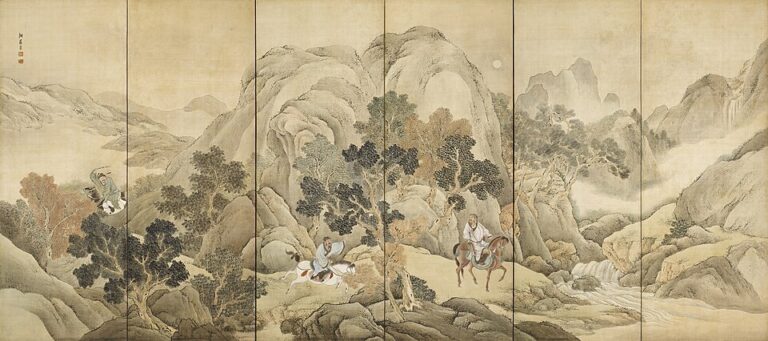
"All this he saw, for one moment breathless and intense, vivid on the morning sky; and still, as he looked, he lived; and still, as he lived, he wondered."

Kyokuto Kitan

Avete presente Yu Kinutani? Il disegnatore ed autore di Amon e Devilman: Strage Days, entrambi spin-off del Devilman firmato Go Nagai. Quello della seconda serie del manga di Ghost in the Shell, Standalone Complex. Quello di White Dragon con Shinji Wada. Ha realizzato anche un manga di Final Fantasy III, oltre ai disegni di manga come Leviathan, edito in Italia dalla D/books, e Steamboy, dal film di Katsuhiro Otomo, edito in Italia dalla Star Comics.
È un personaggino dal curriculum abbastanza corposo, ma dallo stile piuttosto variegato, poco omogeneo, seppur in generale abbastanza piacevole e con un grande amore per il dettaglio che non posso non apprezzare. La GP publishing ci propone ora un suo fumetto del 2007, in tre volumi: Kyokutō Kitan, un’epica storia a metà tra mondo reale e mondo onirico in cui si muove Kuki, una sorta di Mushishi con la pistola.

«Cosa distingue il mondo degli uomini da quello degli incubi, in cui il sovrannaturale diventa reale e la realtà l’eco di un sogno lontano? Solo Kuki, lo strano medico errante capace di curare le malattie più misteriose, potrebbe dirlo, ma è troppo preso dalla sua ricerca, che lo porta a indagare sulla scomparsa del popolo della tartaruga e sull’avvento della marea che presto sommergerà il Giappone. Fra quartieri a luci rosse, piante antropogame e vittime sacrificali, inizia il viaggio alla scoperta delle leggende dell’estremo oriente. Tre volumi onirici magistralmente tratteggiati da Yu Kinutani, il disegnatore di Strange Days – The Apocalypse of Devilman, Amon (sì… proprio quelli scritti dal maestro Go Nagai) e Leviathan, per una miniserie adatta a tutti gli amanti del manga d’autore.»

Sul sito della GP è possibile sfogliare l’anteprima del primo volume e immergersi nella particolarissima atmosfera e nelle frenetiche sequenze di quest’opera che sembra promettere bene.


20120307-140927.jpg

Summertime

The Voice of Things

Francis Ponge, a French poet mostly concentrated on everyday objects, wrote Le Parti pris des choses in seclusion during the German occupation of France, and published it in 1942. The title is usually translated into English as Taking the Side of Things (or The Nature

Read More »
architecture, engineering and construction

The Sustained Path

Every text this last few days has, in one way or another, been circling around the same question: what’s a path and what makes a path? Not a road already drawn and simply walked afterward, but a path in the sense that seems to keep

Read More »
Summertime

The Road is Made by Walking

Antonio Machado was a major Spanish poet and playwright, associated with the Generation of ’98, a group of writers who reflected on Spain’s identity and crisis at the turn of the 20th century. He was born in Seville in 1875 and died in 1939 in

Read More »
Share on LinkedIn
Throw on Reddit
Roll on Tumblr
Mail it
No Comments

Post A Comment

This site uses Akismet to reduce spam. Learn how your comment data is processed.

RELATED POSTS

The Voice of Things

Francis Ponge, a French poet mostly concentrated on everyday objects, wrote Le Parti pris des choses in seclusion during the German occupation of France, and published it in 1942. The title is usually translated into English as Taking the Side of Things (or The Nature

Read More

The Sustained Path

Every text this last few days has, in one way or another, been circling around the same question: what’s a path and what makes a path? Not a road already drawn and simply walked afterward, but a path in the sense that seems to keep

Read More

The Road is Made by Walking

Antonio Machado was a major Spanish poet and playwright, associated with the Generation of ’98, a group of writers who reflected on Spain’s identity and crisis at the turn of the 20th century. He was born in Seville in 1875 and died in 1939 in

Read More